



Buying a Used Walk-In Cooler or Freezer: What to Check
Buying a used walk-in cooler or freezer in Ontario? Check panel foam, cam-locks, door hardware, and refrigerant first. New R-22 supply ends January 1, 2030.
A used walk-in cooler or freezer in Ontario is worth buying on four conditions: dry panel foam, cam-locks that pull tight, door hardware that can be rebuilt, and a refrigerant a technician can still buy. Check those four before you look at the price. This guide covers each one, what a refurbished warranty covers that a private listing does not, and what happens when you move a used box or try to make it bigger.
Key takeaways
- Panels first, price last: foam that has taken on water and cam-locks that are missing or stripped turn a cheap box into a replacement job.
- The door can be rebuilt: hinges, latches, closers, gaskets, and sweeps are replacement parts. A warped leaf or a rusted frame is not.
- Refrigerant decides the future: Canada’s allowance for new R-22 ends January 1, 2030, and only reclaimed gas remains after that, so an R-22 unit is a retrofit waiting to happen.
- Refurbished means checked: a technician has already run this inspection and replaced what failed it. WFE used stock is refurbished and sold with a 3-month warranty.
- Moving a box is a rebuild: teardown labels, new gaskets, ceiling spans, and refrigeration sizing all come back into play at the new site.
When does a used walk-in make sense?
Used makes sense when the site is temporary, when the footprint you need matches a box that already exists, or when a technician can inspect it before money moves. It stops making sense when the panels are wet, the box needs to grow, or the refrigeration runs on a refrigerant that is being phased out.
- Short-term sites: seasonal operations, pop-ups, and leases you may not renew are the natural home for a used box. A 15-year asset is wasted on a 2-year site.
- Standard footprints: 6 by 6, 6 by 8, 8 by 8, 8 by 10, and 10 by 10 boxes, measured in feet, come through the resale market constantly. A 9 by 12 with an offset door and a ceiling height to match your rack plan does not.
- Cooler over freezer: a used freezer adds an insulated floor, a heated door frame, and defrost hardware to the list of things that can have failed. The walk-in freezer buyer’s guide covers that hardware.
- No inspection, no deal: a seller who will not run the unit, show the data plate, or let you open the door with a flashlight is telling you something.
What should you inspect on used walk-in cooler panels?
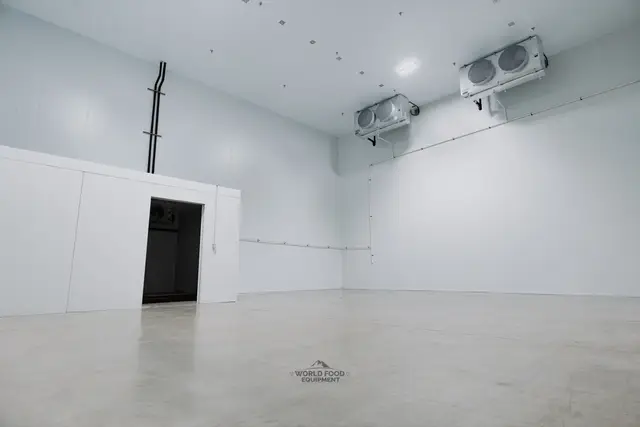
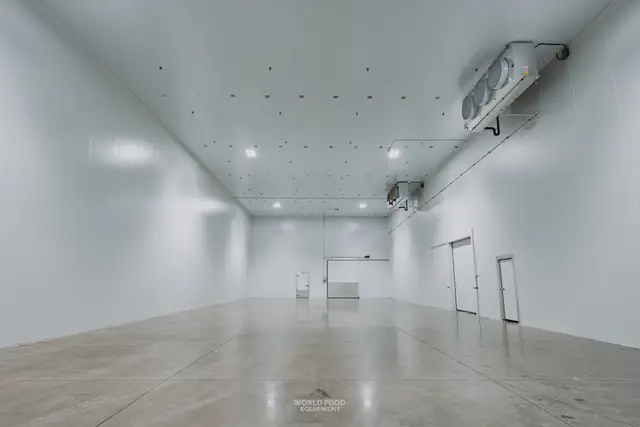
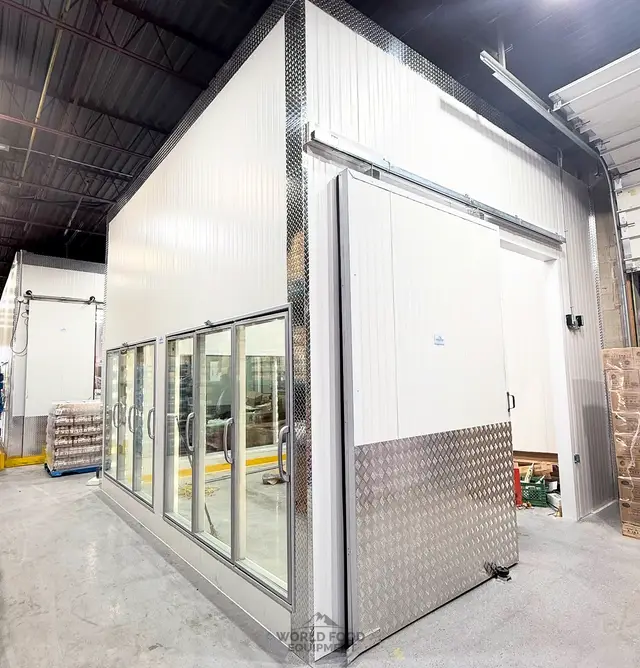
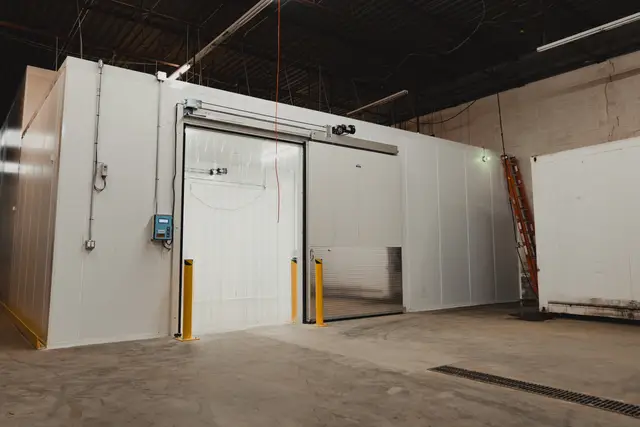
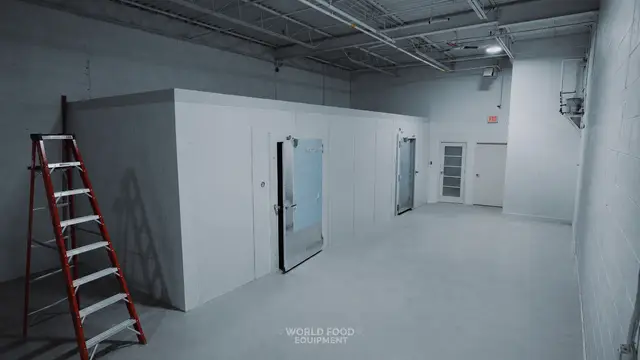
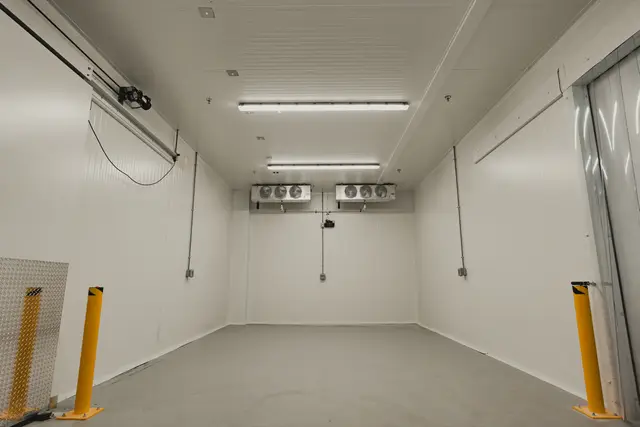
The panels are the part of a used walk-in you cannot cheaply fix. Look for wet foam, delaminated skins, missing or stripped cam-locks, and hard or torn edge gaskets. Any one of them means a panel you will be replacing, and a replacement has to match the thickness and joint profile of the set.
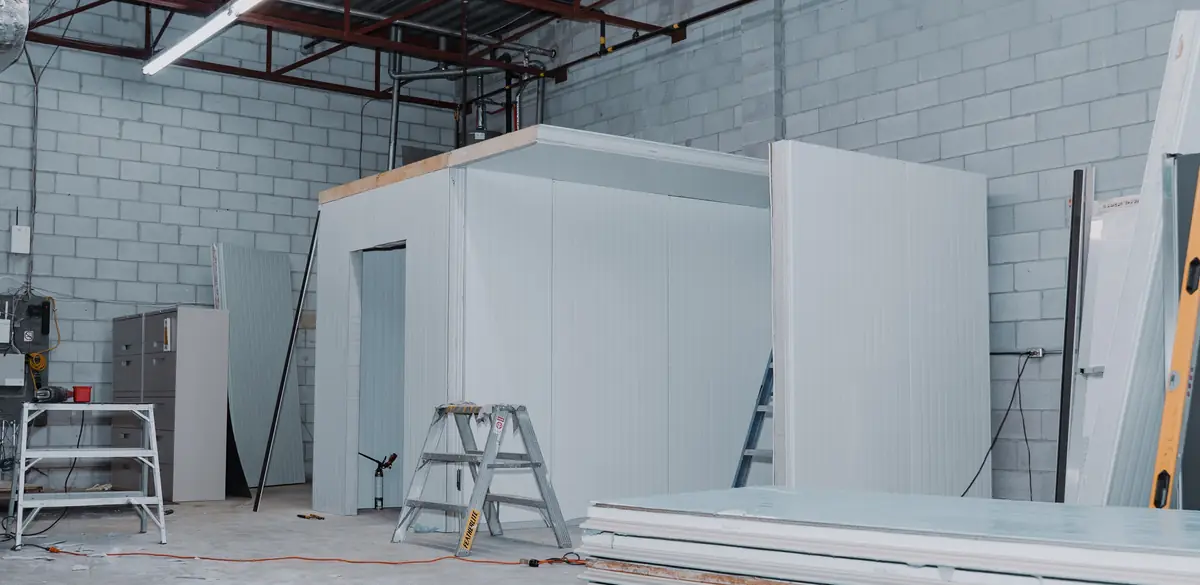
- Foam core: a urethane core that has taken on water is heavier than its neighbours, and in our experience the insulating value does not come back when it dries. On a running box, a cold or sweating patch on the outside skin is the tell. NRCan’s building guidance states the principle plainly: “Uncorrected moisture problems will reduce the effectiveness of insulation”.
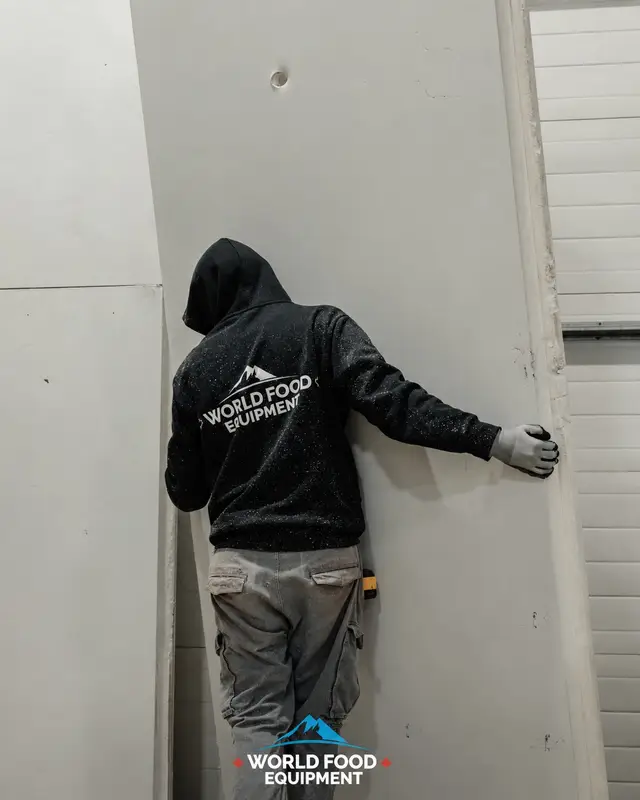
- Cam-locks: mating panel edges carry cam-locks that hook into the neighbouring panel and pull the joint tight. Count them, check the hex key access holes still have plugs, and treat a stripped cam as a joint that never seals.
- Edge gaskets: the tongue-and-groove joint carries a gasket. Hard, torn, or missing means a joint that breathes warm air and grows a frost line inside.
- Panel thickness and R-value: ask for both. US federal law sets the minimum at R-25 for cooler walls and R-32 for freezers, and Canada has required the same minimums on walk-in panels and doors made since June 5, 2017, so check the build date on older panels.
A panel that fails any of these is a replacement, not a repair. Our panels and R-values guide explains what 4-inch versus 5-inch buys you.
What wears out on a cooler or freezer door?
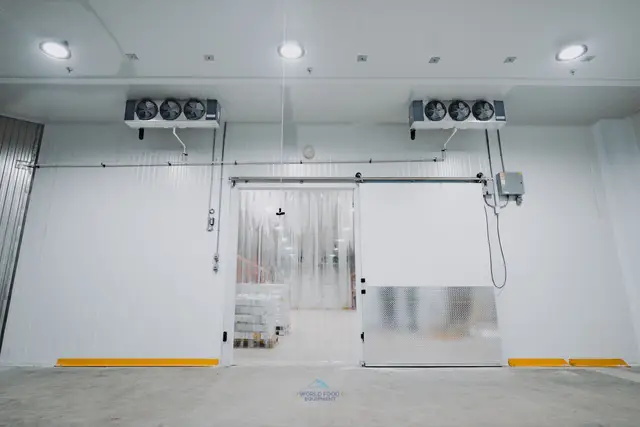
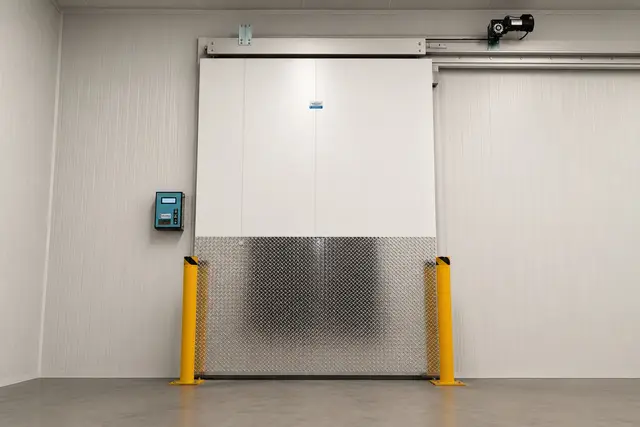
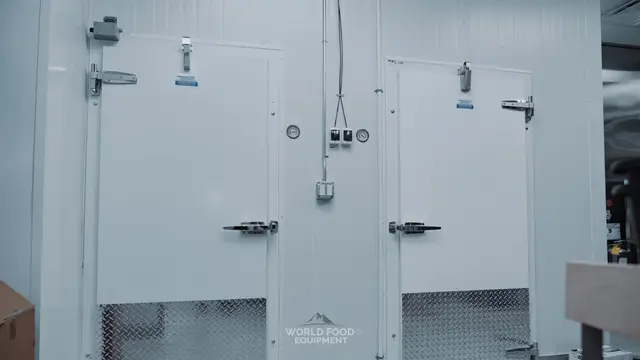
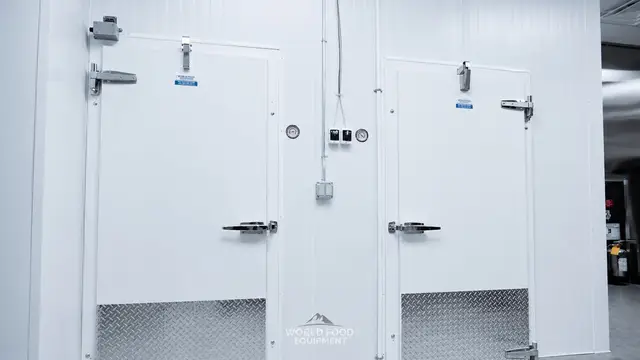
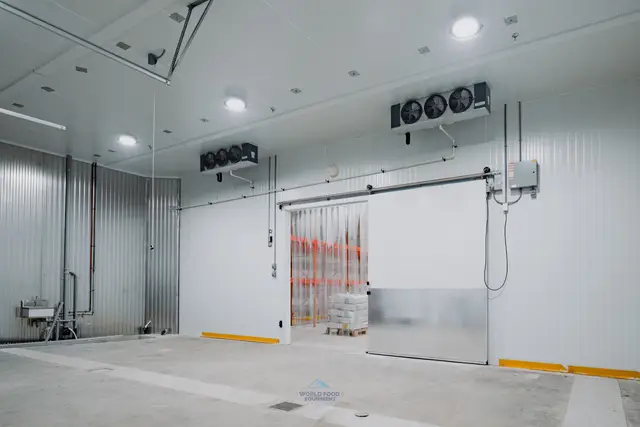
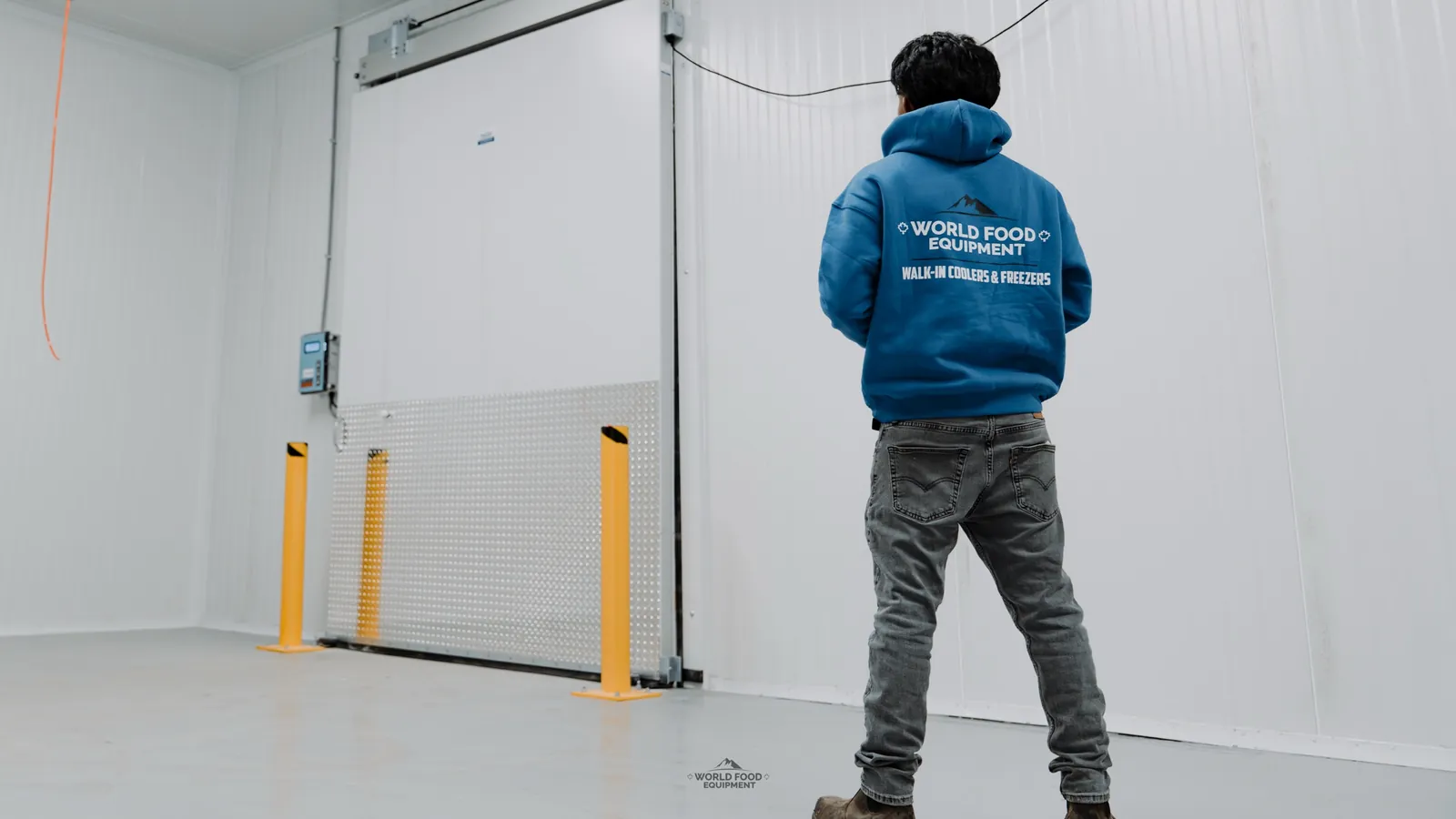
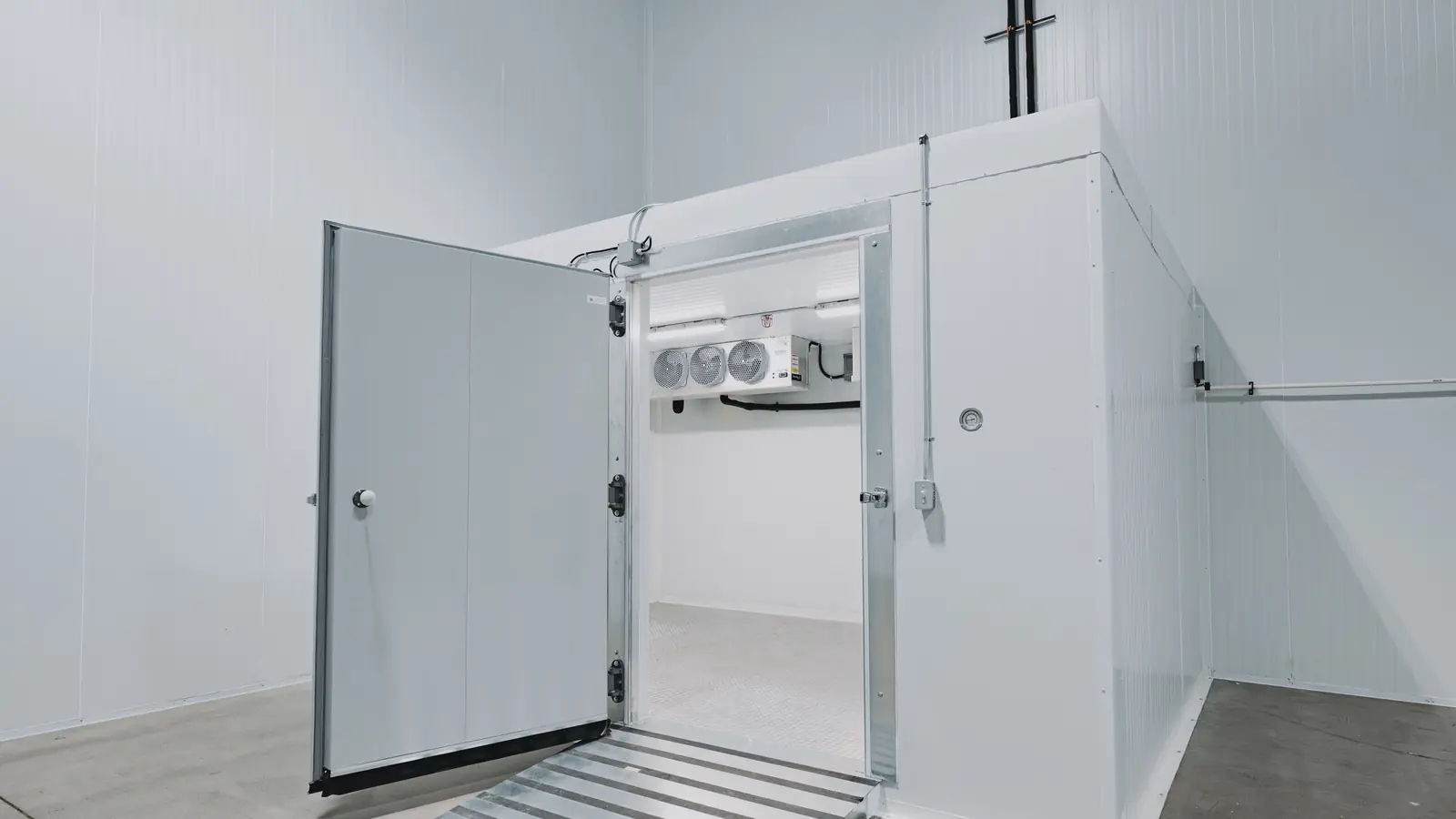
The door works harder than anything else on the box and is the easiest part to bring back. On a Coldmatic door with Kason hardware, hinges, latches, closers, gaskets, and sweeps are all replacement parts. What you cannot rebuild cheaply is a warped leaf, a frame that has rusted through, or a dead heater circuit in a freezer frame.
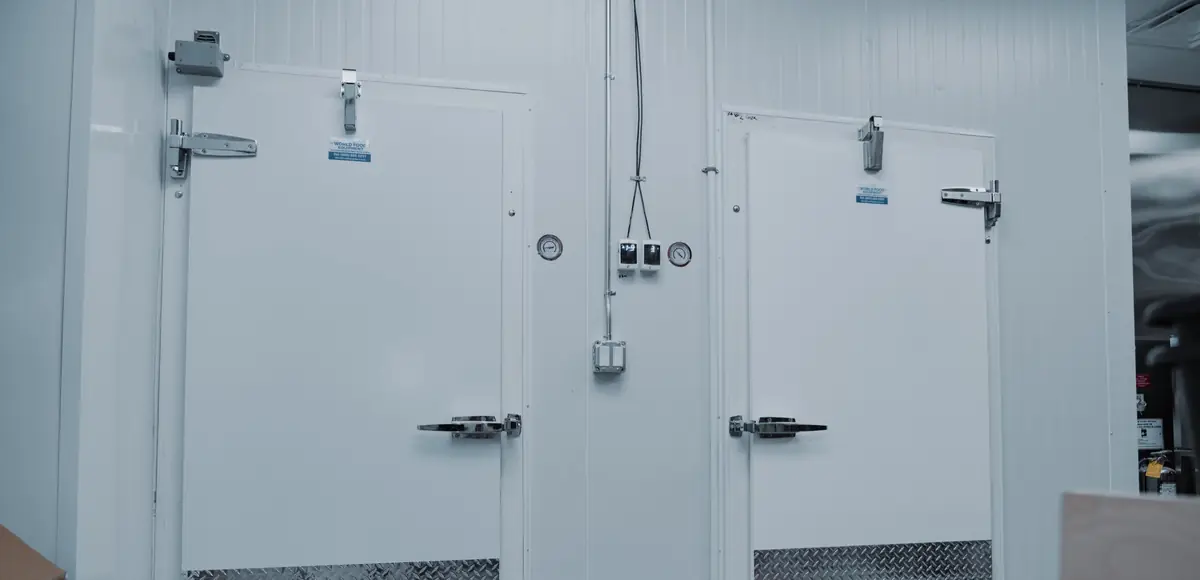
- Frame heater on freezers: a freezer door frame and threshold carry electric heat so the gasket seals against warm metal instead of freezing to it. With the box running below zero, the frame should feel slightly warm to the hand. A dead heater means a door frozen shut in the first week.
- Closer: the same US rule requires “automatic door closers that firmly close all walk-in doors that have been closed to within 1 inch of full closure.” Ontario does not impose it, but a closer that will not self-latch is a fault on any box. Open the door an inch, let go, and watch what happens.
- Hinges and latch: cam-lift hinges raise the door as it opens and drop it onto the gasket as it closes. A leaf that drags the threshold has sagged, and the latch must have an inside safety release.
- Gasket test: use NRCan’s check. “If a sheet of paper placed in the door slides around or slips out, or if light from a flashlight placed inside can be seen through the seals, replace the seals.”
- Pressure-relief port on freezers: a dead port heater shows up as a door that will not open for a minute after closing. Our freezer ice guide covers what failed door heaters look like in service.
Run every one of these checks with the box cold. A door that behaves at room temperature tells you nothing.
The refrigeration side: age, refrigerant, evaporator condition
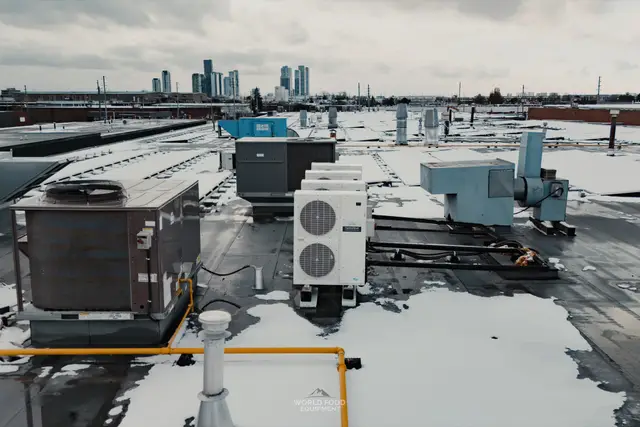
The refrigeration is where a used walk-in gets expensive. Three checks tell you most of what you need: the age on the condensing unit’s data plate, the condition of the evaporator, and the refrigerant the unit runs on. WFE quotes the refrigeration on used boxes and panel kits as its own line for exactly this reason.
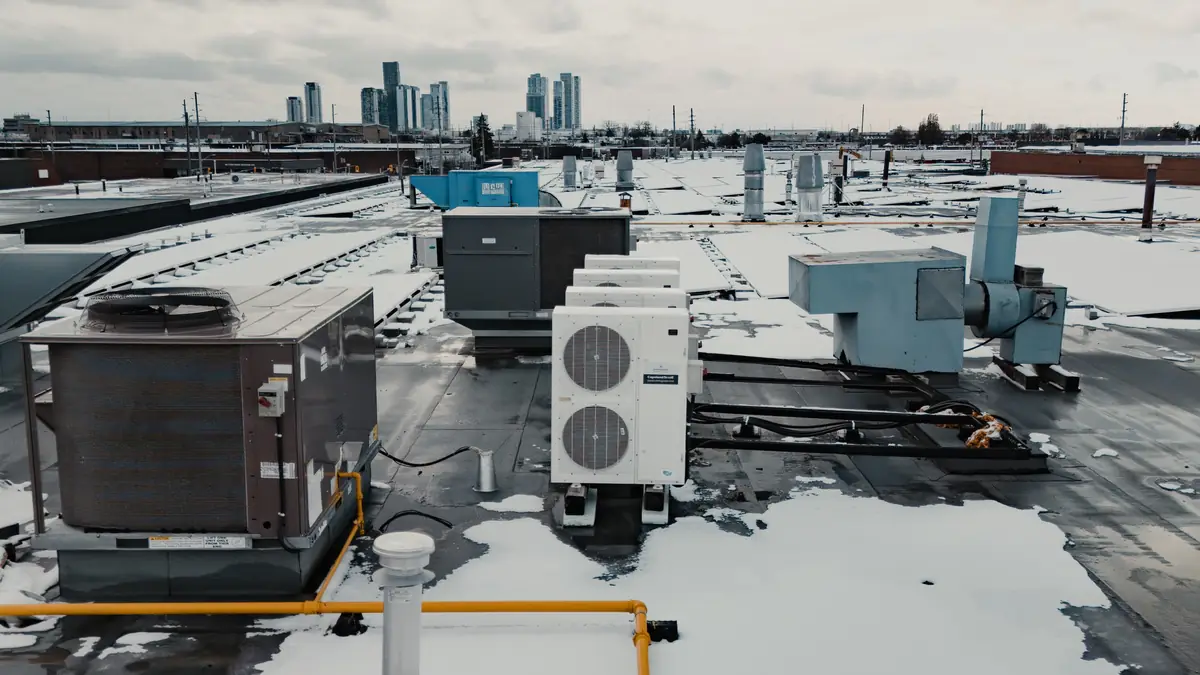
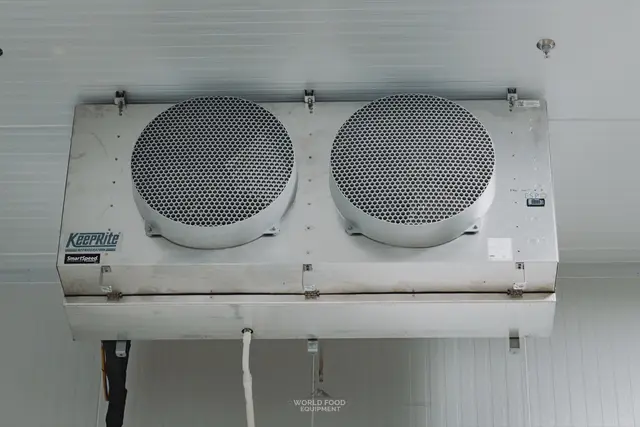
- Age from the data plate: Copeland, Tecumseh, and KeepRite units carry a date code in the serial number, so ask the seller to photograph the plate. A compressor past 15 years still runs, but you are buying its failure, not its service life.
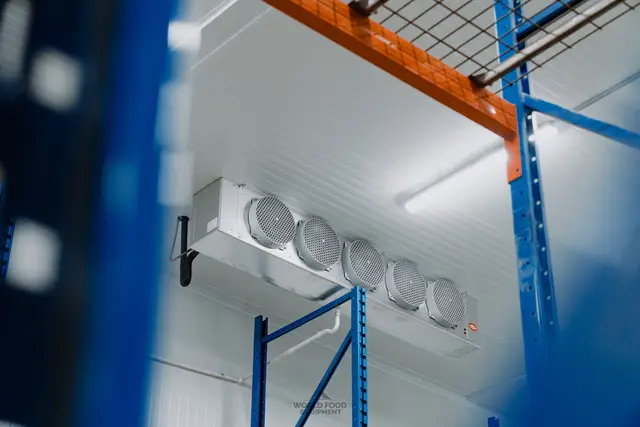
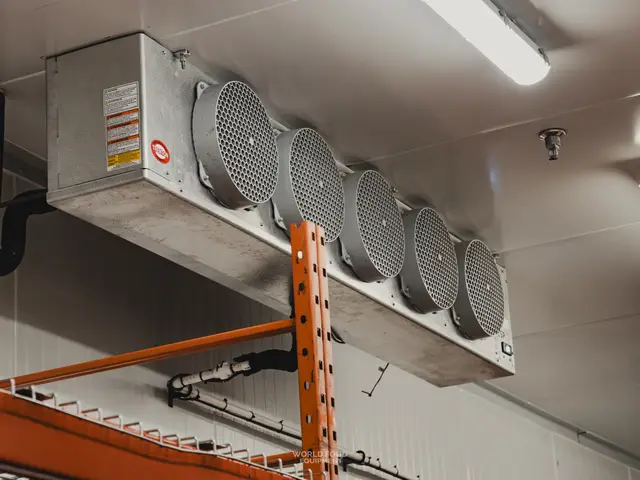
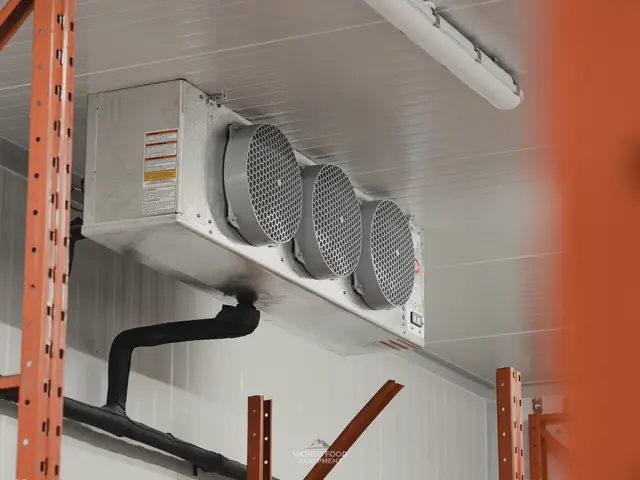
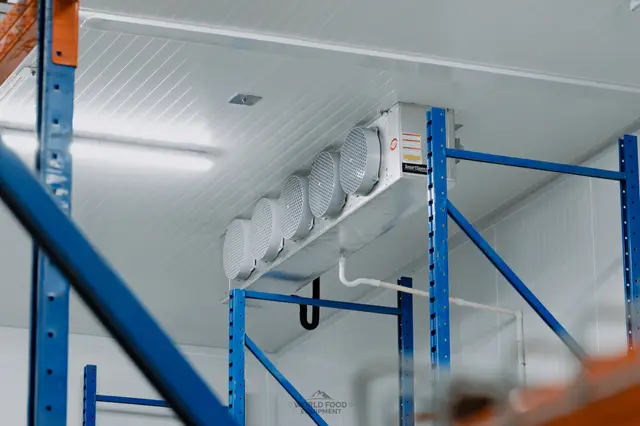
- Evaporator: look at the fins for crushed or corroded sections, run every fan, and check that a freezer coil still has its defrost heaters and drain-line heat tape. A coil that stays iced between defrost cycles is a worn or misconfigured evaporator.
Which refrigerant is on the data plate?
The data plate names the refrigerant, and that name decides whether the unit has a future. Canada’s Ozone-depleting Substances and Halocarbon Alternatives Regulations (SOR/2016-137) name the refrigeration product categories that may no longer contain an HCFC. Importing or manufacturing those products has been prohibited since January 1, 2020.
The same rules cap new stand-alone medium-temperature systems at a GWP of 1,400 and new condensing units at 2,200. On the HCFC side, Environment and Climate Change Canada says developed countries agreed to complete the phase-out by 2020 “while allowing for the continued use of 0.5% for servicing until 2030.” Canada carries that servicing tail through the same regulations, and reclaimed refrigerant sits outside it.
- R-22: a retrofit with a deadline. Canada’s consumption allowance for new HCFCs, set by section 55 of those regulations, runs through 2029 and reaches zero on January 1, 2030. The box stays legal on reclaimed refrigerant, but every recharge gets harder and costlier to source.
- R-404A: legal but on the way out. The US EPA lists R-404A at a global warming potential of 3,922 and R-507A at 3,985, while R-448A and R-449A sit under 1,400 on the same table. A technician can still service a used R-404A unit, but its replacement will run a different refrigerant, which usually means new components on the evaporator side too.
Who does the hookup on a used walk-in in Ontario?
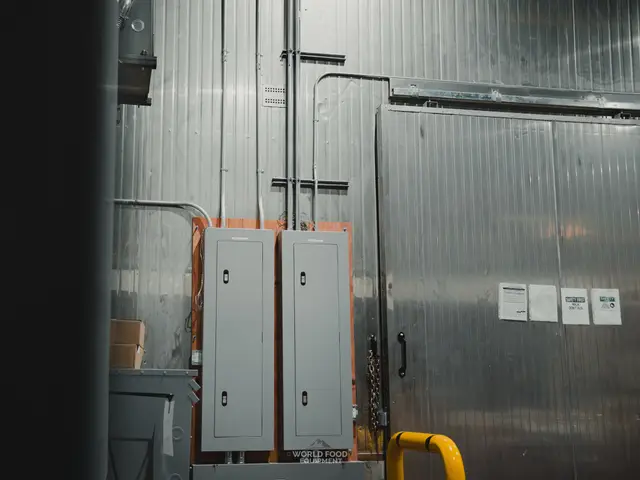
Licensed trades only: in Ontario, Refrigeration and Air Conditioning Systems Mechanic (313A) is a compulsory trade. The province is explicit that “You cannot work on or fix refrigeration equipment with only an ODP certificate card.” The electrical supply is a Licensed Electrical Contractor’s job, and our installer licensing checklist shows how to verify both.
What does “refurbished with a 3-month warranty” actually cover?
A refurbished unit and an as-is listing are different purchases even when the boxes look identical. Refurbished means a technician has already run the checks above, replaced what failed them, and put a warranty behind the result. As-is means the risk moves to you the moment the payment clears.
- Tech-checked: on WFE used stock, our technicians inspect and refurbish the refrigeration plant, panels, door gaskets, and hardware. They test powered equipment before anything ships.
- 3-month warranty: every refurbished used unit from WFE carries a 3-month warranty, and nothing sells as-is. The used equipment page sets out the new-build and refurbished lanes side by side.
- What as-is means: on a private listing there is no recourse once the unit is paid for. Delivery, rigging, the refrigeration hookup, and the first repair all land on top of the sticker.
- Get it in writing: whoever you buy from, ask what the warranty covers and for how long, and get the answer in writing before you pay. A warranty on “the compressor” is a different promise from one on the unit as sold. Neither covers a slab that heaves or a circuit that cannot carry the load.
Used versus new: the cost logic
Used wins on the day of purchase and new wins over the life of the box. The gap between the two is the delivery, install, first repair, and lost refrigeration life that the used sticker leaves out. Compare cost per year of service, not stickers.
| Factor | Used, private listing | New, built to order |
|---|---|---|
| Sticker | Lower, equipment only | Higher, one quoted number |
| Left out of the sticker | Delivery, rigging, reassembly, refrigeration hookup, first repair | Nothing, if the quote covers supply, install, and commissioning |
| Warranty | Usually none | 1-year workmanship, 1-year equipment, optional compressor coverage up to 5 years |
| Fit | Your floor plan works around the box | Built to the floor plan, door swing, and load |
| Service life ahead | Whatever is left, and you do not get to pick which part was spent | 15 to 20 years from commissioning |
WFE’s new made-to-order boxes start at $5,100 supply-only for a 6 by 6 box with a Coldmatic door, current as of September 2026. Installed ranges and the price list by size are in the walk-in cooler cost guide and the walk-in freezer cost guide. The spec decisions on a new build are in the restaurant walk-in buyer’s guide.
Can a used walk-in be relocated or made bigger?
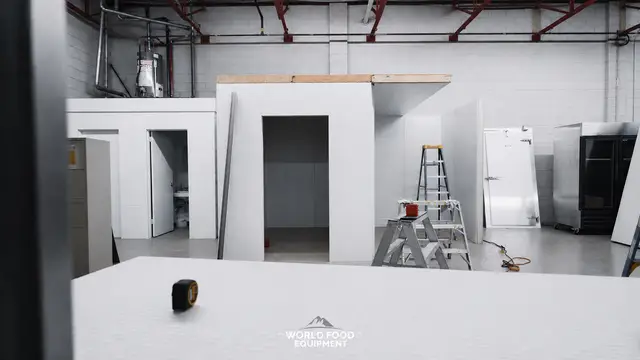
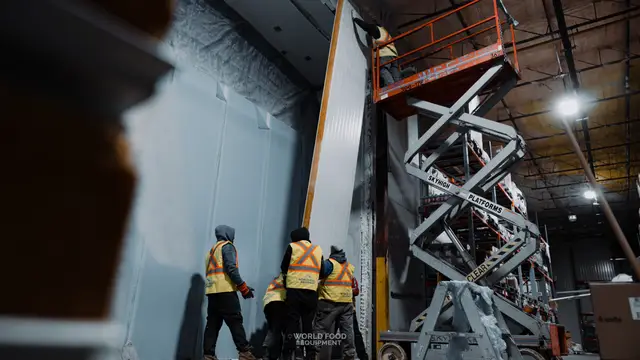
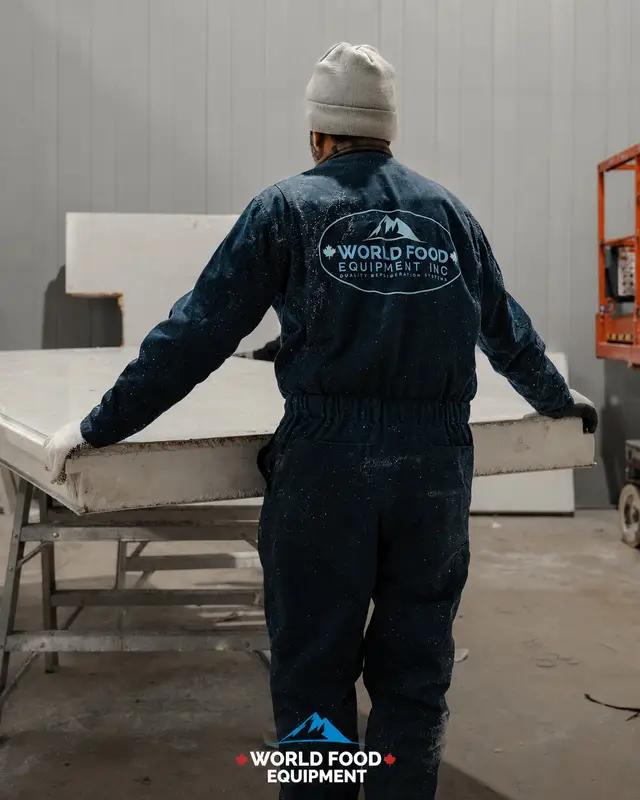
Moving a used walk-in is a rebuild, not a delivery, and making it bigger at the same time is a separate project. The crew releases the cam-locks, labels every panel, and reassembles them in the same order at the new site. Every gasket and sealant bead is a chance for the second assembly to leak where the first one did not.
- Label everything: the crew writes a position code on every panel as it comes off the box. Without those teardown labels, reassembly is guesswork, and budget new gaskets and a full re-seal either way.
- Ceiling spans: the factory cuts ceiling panels to the width of the box. A wider box needs longer ceiling panels or a support structure, and neither comes with the used set.
- The bigger-box question: a recent inquiry from Northern Ontario is typical: relocate an existing 9 by 12 walk-in and end up with a bigger one. New panels have to match the thickness, joint profile, and manufacturer of the existing set, the ceiling panels usually do not carry over, and the installer sized the refrigeration for the old volume. The realistic answers are to reuse the door and matching wall panels alongside new ones, or to price a new box against the whole exercise.
- The floor at the new site: a freezer set on a bare slab drives frost into the soil beneath it. The National Research Council’s Canadian Building Digest on frost heave in cold storage buildings is the reference. Our outdoor versus indoor placement guide covers site prep.
- Refrigeration re-sizing: more volume and more door traffic mean more load. Whether the existing unit carries it is covered in our self-contained versus remote guide.
The 13-point inspection checklist
Take this list to the seller’s site. If you cannot complete an item, treat it as a fail until you can.
- Panel core dry: no cold or sweating patches on the outside skin of a running box, no panel noticeably heavier than its neighbours.
- Skins intact: no bubbling, no skin lifting from the core, no rust climbing the bottom edge.
- Cam-locks complete: every mating edge has its locks, every access hole has its plug, and a hex key turns each cam.
- Edge gaskets supple: no hard, torn, or missing gaskets in the panel joints, no frost lines on the inside face.
- Floor or slab sound: on a floored box, no soft spots, delamination, or crushed sections in the floor panel. On a floorless freezer, confirm the slab at your site has under-slab insulation or heat before you commit.
- Interior cleanable: smooth interior skins with no exposed foam or rust. NSF/ANSI 7 is the sanitation standard that prefabricated walk-ins and their panels are certified to, and NSF-listed equipment is what a health inspector expects to see.
- Door straight and heated: leaf does not drag the threshold, frame is not rusted through, and on a freezer the frame heater is warm with the box running.
- Panel and door labels: read the maker and the cooler or freezer rating on each panel and door label, then look the model up in NRCan’s list of compliant products. A panel or door made before June 5, 2017 predates Canada’s R-25 and R-32 floor, and an unlabelled one cannot be checked at all. Our walk-in door guide explains the door ratings.
- Closer and gasket pass: the door closes itself from 1 inch open, and the paper and flashlight tests both pass.
- Refrigerant identified: the data plate names it. R-22 means a retrofit budget or a pass; R-404A means the replacement condensing unit will not match.
- Running test: watch the unit pull the box down and hold it. The CFIA’s benchmarks for stored food are 4°C or less refrigerated and minus 18°C or less frozen, and a box that cannot get there empty will not get there loaded.
- Voltage and phase match: the condensing unit’s data plate names the voltage and phase it needs. A 208V three-phase unit landing on a single-phase service is a common and expensive surprise, so check it against the service at your site before you buy.
- Paperwork: warranty terms in writing, a panel count against the quoted footprint, and a named 313A mechanic and Licensed Electrical Contractor for the hookup.
How WFE handles used stock
WFE keeps a rotating stock of used commercial refrigeration at the Mississauga warehouse alongside the new built-to-order boxes. Every used unit goes through the inspection above before we list it.
- Stock rotates: the equipment catalog lists the used units on the floor right now alongside the made-to-order boxes, with pricing where it is set and a quote where it is not.
- Panel kits: on a used panel kit, we verify the panel count and door size with you at the warehouse before payment, and we test any powered equipment before it leaves.
- Refrigeration on its own line: we pair a used box or kit with a matched system, sized to the box you are actually building. That is either a tested used unit from stock or a new KeepRite or Heatcraft package.
- Same crew, same standard: the in-house crew that installs our new walk-ins can deliver, reassemble, and commission a used one with a 313A-licensed technician on the refrigeration. On a replacement project the old unit can earn a trade-in credit, and a failing existing box gets the repair or replace assessment first.
Check the panel foam, then the cam-locks, then the door hardware, then the refrigerant, in that order. A used walk-in that passes all four is a sound buy for the right site. One that fails any of them is a project, and the price should say so.
Frequently asked questions
How long does a used walk-in cooler last?
It depends on what has already been spent. Insulated panels that have stayed dry can serve 15 to 20 years, so a 10-year-old box with sound panels has real life left in the envelope. The refrigeration is the shorter clock: a condensing unit past 15 years is close to the end however well the box around it has held up, so budget for it separately.
What refrigerant should a used walk-in cooler have?
Look for R-448A or R-449A on the data plate. R-404A units can still be serviced, but they exceed the GWP caps Canada sets for new medium-temperature systems and condensing units, so the replacement unit will not match. R-22 is an HCFC whose new supply ends on January 1, 2030, leaving only reclaimed gas, so an R-22 box needs a retrofit budget or a pass.
Can a used walk-in cooler be moved to a new location?
Yes, though the work is closer to a small construction job than a delivery. The crew releases the cam-locks, labels every panel, transports them flat, and reassembles them in order with new edge gaskets and a full re-seal. A 313A mechanic reconnects the refrigeration, a Licensed Electrical Contractor reconnects the power, and a freezer needs the slab at the new site checked before it goes down.
Is it possible to make a used walk-in bigger?
Sometimes, and it is rarely as simple as adding panels. New panels have to match the thickness, joint profile, and manufacturer of the existing set; the ceiling panels only fit the old width; and the installer sized the refrigeration for the old volume. Reusing the door and matching wall panels alongside new ones works in some cases; in others, a new box built to the size you need costs less than the compromise.
What does a refurbished walk-in cooler warranty cover?
Ask, and get the answer on the invoice. On WFE refurbished stock, our technicians inspect and refurbish the unit, test any powered equipment, and back it with a 3-month warranty. A warranty covers the equipment as sold; it does not cover site conditions such as an undersized electrical circuit or a slab that heaves, which is why the hookup belongs with licensed trades.
How do I know a used walk-in was properly refurbished?
Ask what the seller inspected, what they replaced, and who did the refrigeration work. Expect answers on paper: a 313A mechanic’s name, the refrigerant on the data plate, new gaskets where the old ones failed, and warranty terms on the invoice. A seller who cannot produce that record is selling as-is under a different name.
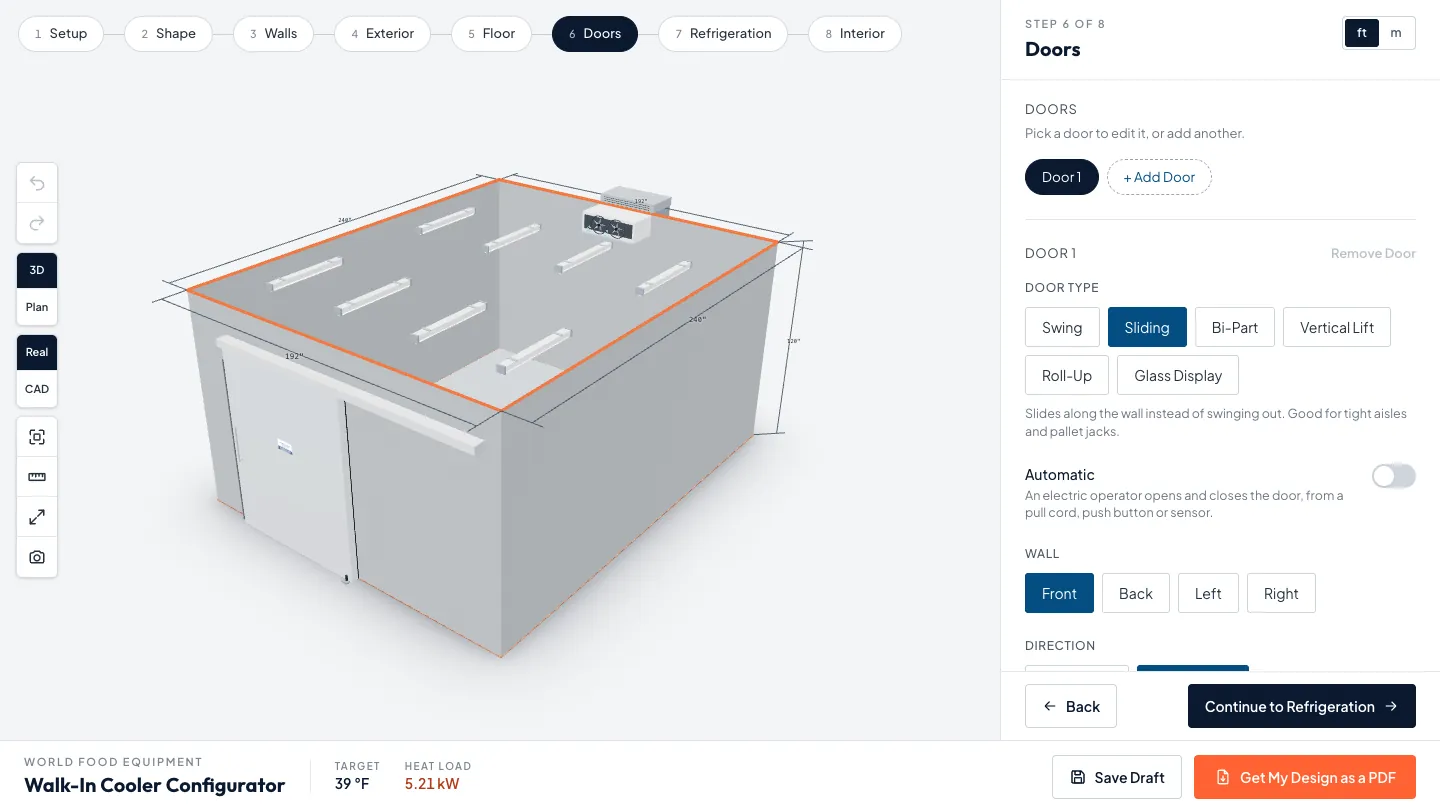
Plan Your Build
Size your walk-in in the configurator.
Set dimensions, doors, and refrigeration in 3D, then download the spec sheet to share.
Read Next
Plan a Walk-In Cooler or Freezer in 3D: 8 Decisions
The eight decisions that shape every walk-in cooler or freezer, and where to make each one in our free 3D configurator: size, type, panels, floor, doors, refrigeration, racking and lights.
Industrial Walk-In Freezers: What to Plan Before You Build
What changes when a walk-in freezer gets big enough for pallets and forklifts: the slab, the clear height, the doors, the refrigeration plant, and the Ontario rules that start to apply.
Walk-In Cooler & Freezer Doors: Types, Sizes, Options
Swing, sliding, pallet and roll-up doors for walk-in coolers and freezers: which one fits your traffic, the sizes we build to, what a freezer door adds, and the Canadian rule every walk-in door has to meet.
Walk-In Coolers — Custom Builds
See the service page for sizing, anatomy, and what's included in a WFE install.