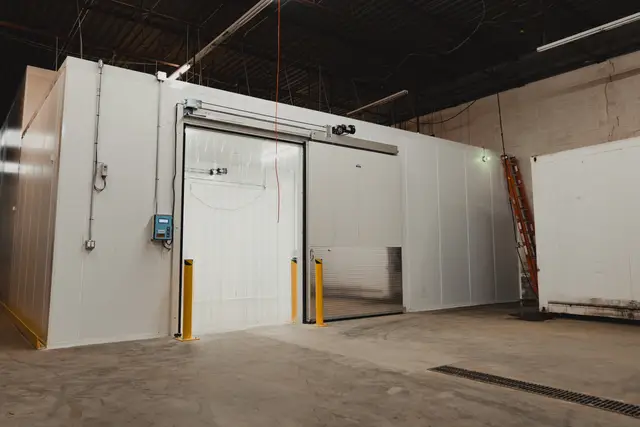
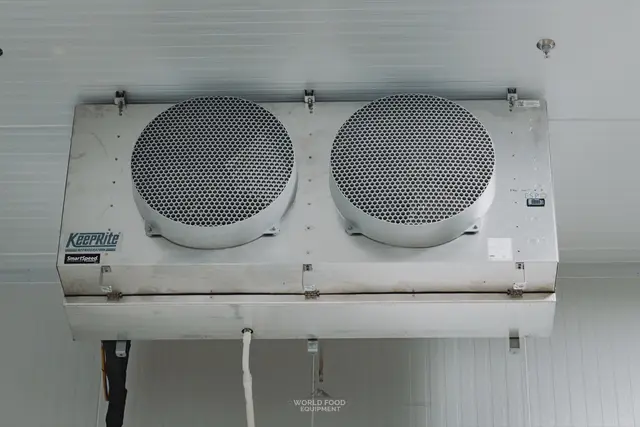
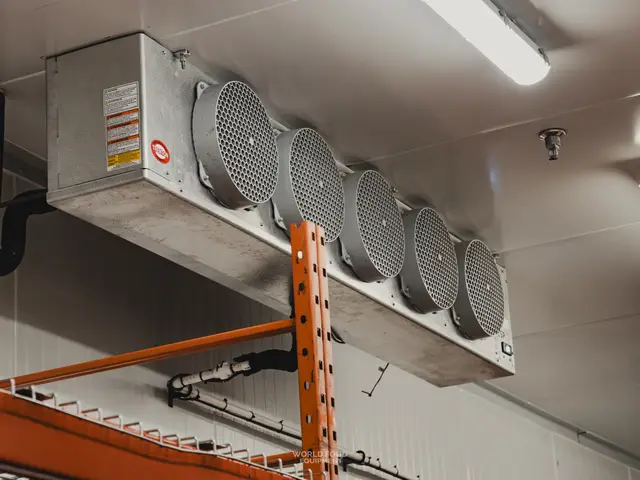
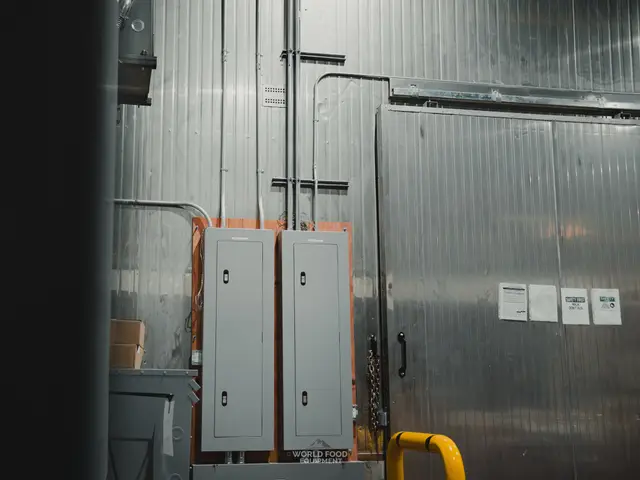
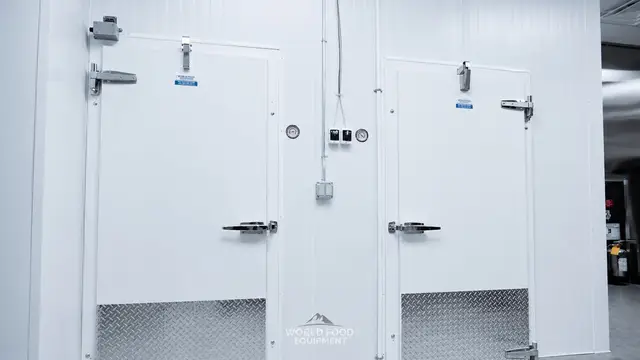
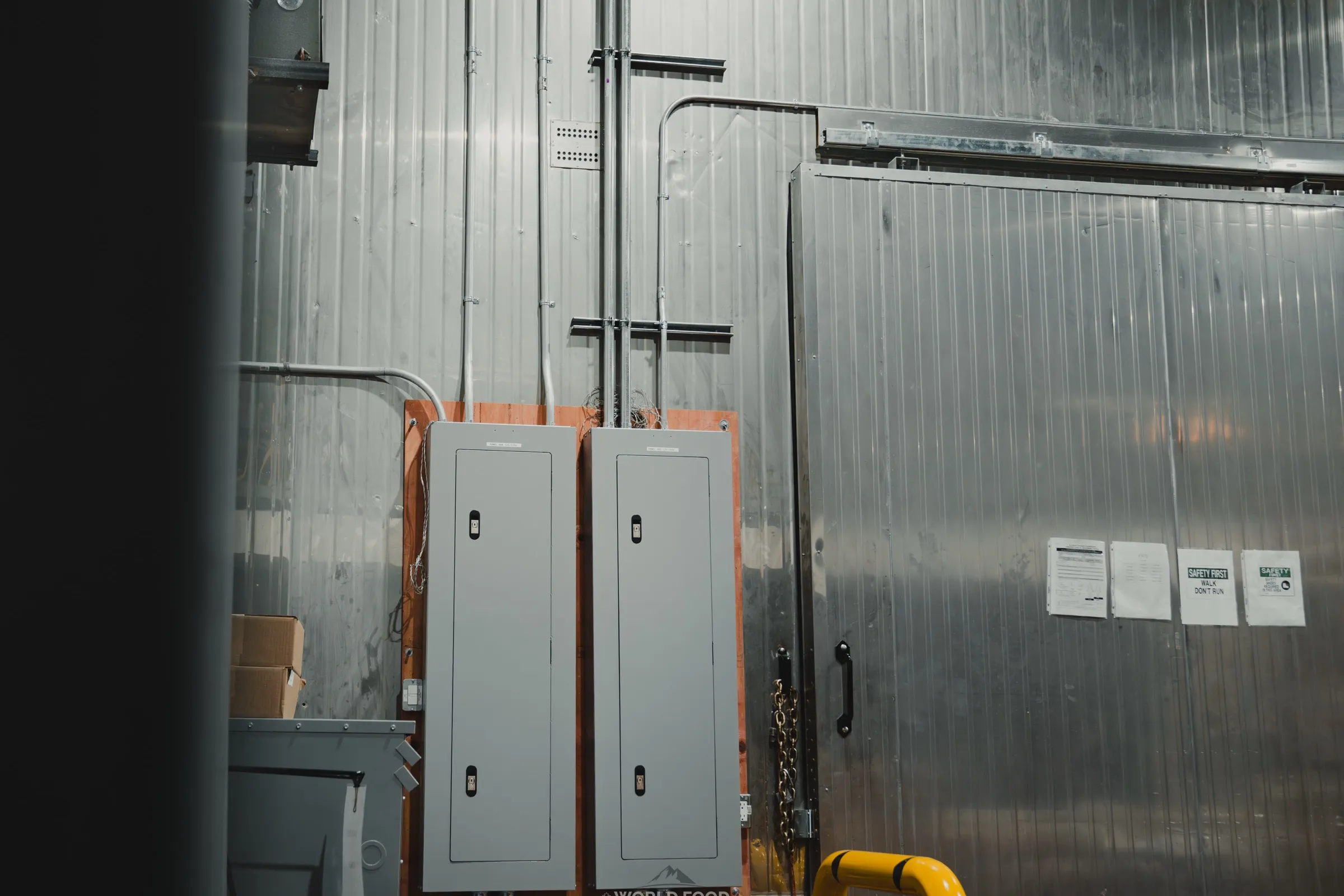
Two grey electrical distribution panels mounted on a plywood backboard beside a stainless-clad walk-in freezer door, EMT conduit runs rising to the ceiling, at the Stainless Steel project in Ontario, World Food Equipment

Service / Commercial Electrical

Commercial electrical for walk-in coolers and freezers.

A walk-in cooler needs a dedicated circuit and a disconnect at the condensing unit. A walk-in freezer adds defrost heaters, a heated door frame, heat-traced drains, and often a heated floor, each on its own circuit. WFE runs that electrical as part of the build: feeds, disconnects, controls, alarms, and vapour-proof lighting, pulled under permit by ESA-licensed 309A electricians on our own crew and inspected before start-up. Commercial and industrial sites only.

Scope

Circuits, panels, and controls. The electrical side of a cold-storage build.

A freezer has more circuits than a kitchen line. Every one of them is sized, labelled, and inspected before the box is cooled.

01
Circuits and disconnects

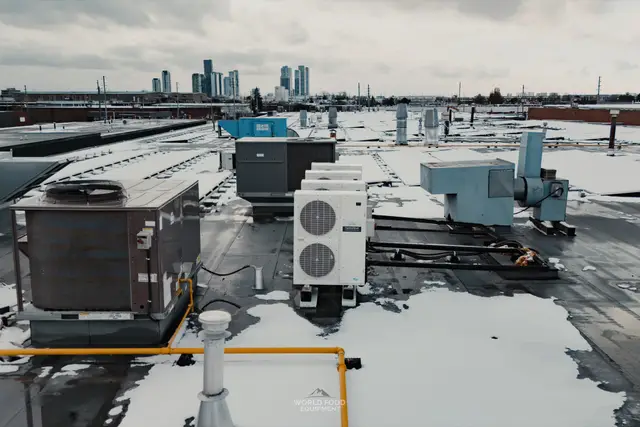
Dedicated circuits, disconnects, and the feed to the roof

Every condensing unit gets a dedicated circuit and a fused or non-fused disconnect within sight of the unit, on the roof or at grade. Evaporator fans, defrost heaters, door-frame heaters, drain heat trace, and floor heat each get their own circuit sized to the nameplate, never daisy-chained off a kitchen panel.

Walk-in freezer builds
02
Panels and feeds

Sub-panels, transformers, and 600V to 208V feeds

Warehouse racks and multi-compressor systems run on 600V three-phase; controls, lighting, and small evaporators run on 208V or 120V. We set the sub-panel, the step-down transformer, and the feeders so a refrigerated building has the capacity it needs on day one and room for the next expansion.

Custom cold storage
03
Controls and lighting

Controllers, alarms, door operators, and vapour-proof LED

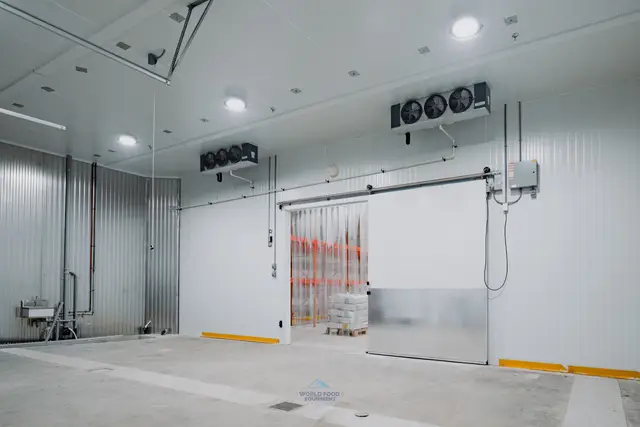
Temperature controllers and defrost timers wired and set, high-temperature alarms with a dry contact for your monitoring, motorized sliding-door operators with safety edges, and vapour-proof LED fixtures rated for the box temperature. The same crew wires the door it just hung.

Walk-in cooler builds

Circuits by box

One circuit per load. A disconnect at every unit.

The circuit list grows with the box temperature. This is what gets pulled, by box type, on a WFE build. Five boxes, from one circuit to a sub-panel.

01

Walk-in cooler

Condensing unit, evaporator fans, lighting

Disconnect at the unit, controller on the door side

02

Walk-in freezer

Condensing unit, fans, electric defrost, door-frame heater, drain trace, floor heat

Defrost heaters on their own breaker, heated floor on a GFCI-protected circuit

03

Blast-freeze zone

Dedicated low-temp system and high-velocity coil on separate feeds

Built into a custom freezer, not a cabinet

04

Cold room or process room

Multiple evaporators, washdown-rated fixtures, GFCI receptacles

NEMA 4X boxes where the room is hosed down

05

Refrigerated warehouse

600V rack feed, step-down transformer, lighting and control sub-panel

Load calculation submitted with the permit

By site

  • Restaurant kitchens: a dedicated circuit and disconnect so the walk-in never shares a breaker with the fryers
  • Grocery and convenience: rack feed, case lighting, and alarm contacts wired to the store monitoring
  • Food processing plants: washdown-rated fixtures, sealed boxes, and heat trace on every wet room
  • Distribution freezers: 600V feeds, heated floor circuits, door operators, high-temperature alarms

Who, what, and the paper

Licensed electricians, a defined scope, an ESA certificate.

What the inspector, your insurer, and the next technician want to see on the electrical side of a cold-storage build.

Who does the work

  • ESA-licensed 309A electricians: Ontario construction and maintenance electricians on the WFE crew pull the feeds, set the disconnects, and wire the controls under an ESA permit.
  • 313A refrigeration mechanics: The mechanic commissioning the system checks amp draws against the nameplate and signs the start-up sheet with the electrician.
  • Same crew as the box: No electrical sub waiting on the panel crew. The people who hung the door wire its heater and its operator.

What is in scope

  • Electrical on a cold-storage build: Circuits, disconnects, panels, transformers, controls, alarms, heat trace, door operators, and lighting for a walk-in, cold room, or refrigerated building.
  • Replacement and upgrade: A new disconnect and circuit for a replacement condensing unit, or a panel upgrade when an existing box is expanded, any brand.
  • Commercial and industrial only: Restaurants, grocers, processors, distributors, and institutions. We do not wire houses or take on general building electrical away from a cold-storage project.

What you get on paper

  • ESA permit and inspection: Electrical Safety Authority permit filed for the work, inspection booked to the install window, certificate left with the build record.
  • Load calculation: Connected load and demand submitted with the permit on warehouse and multi-system builds, so the feed is right the first time.
  • Start-up amp readings: Compressor, fan, and heater amp draws logged at commissioning and compared to nameplate before handover.
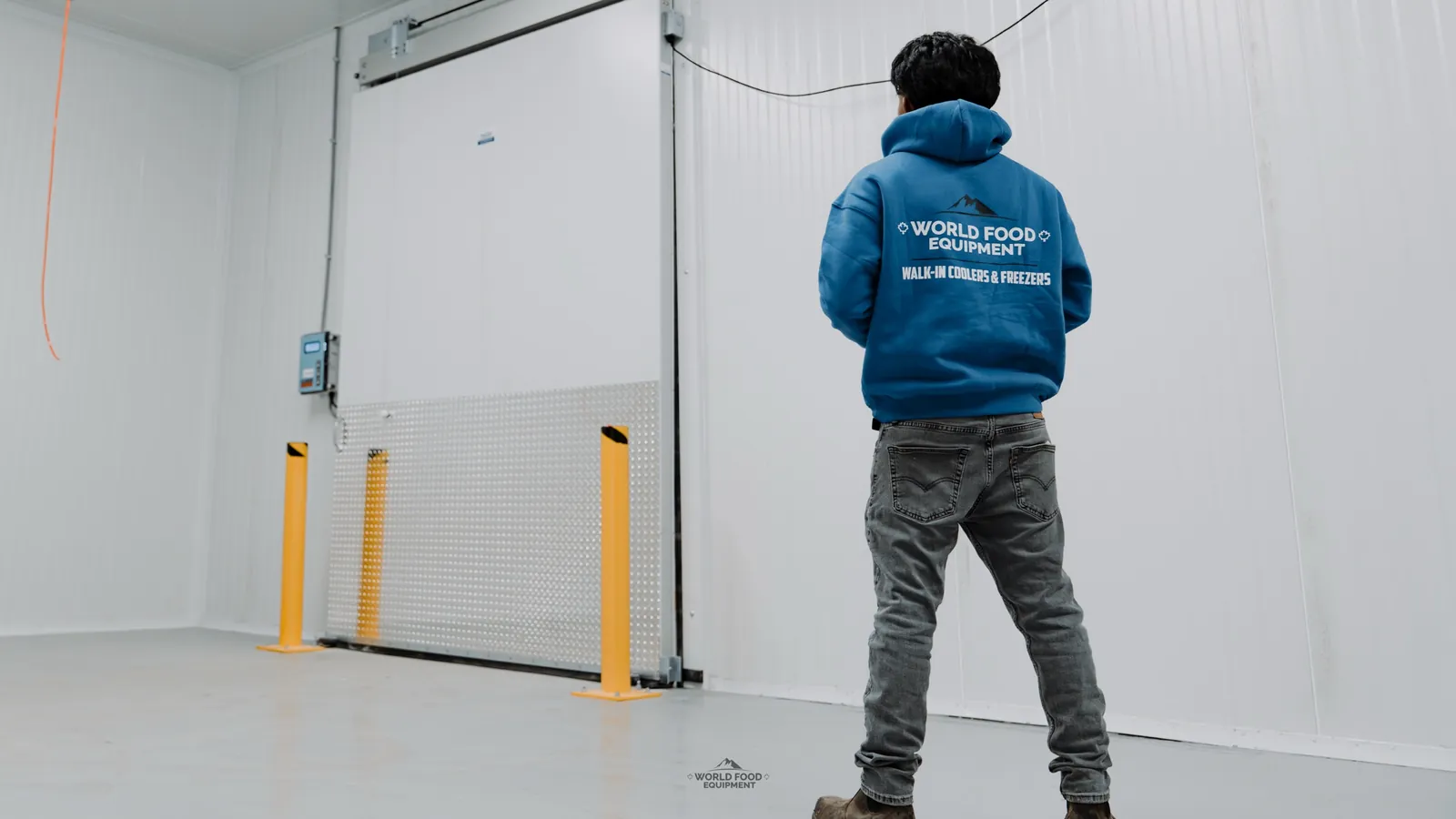
World Food Equipment crew member in a blue WFE hoodie at a walk-in cooler door at the Food Junction install in Mississauga, Ontario, with EMT conduit and a junction box mounted on the white panel wall above the door hardware

Why WFE for the electrical

The crew that has wired 2,000+ walk-ins.

  • No electrical sub: the electricians are on the WFE crew, so the door heater is wired the day the door is hung.
  • Sized from the nameplate: every circuit matched to the equipment it feeds, with the defrost and heater loads counted, not guessed.
  • Inspected before start-up: ESA permit filed, inspection booked to the install window, certificate in the build record.
  • Reachable controls: controllers, disconnects, and alarms mounted outside the box in conduit, where a technician can get at them.

  • Amp draws on record: compressor, fan, and heater readings logged at commissioning so the next service call starts from known numbers.

On site

Fed, fused, labelled, inspected.

Real WFE installs across Ontario. No renders on this page.

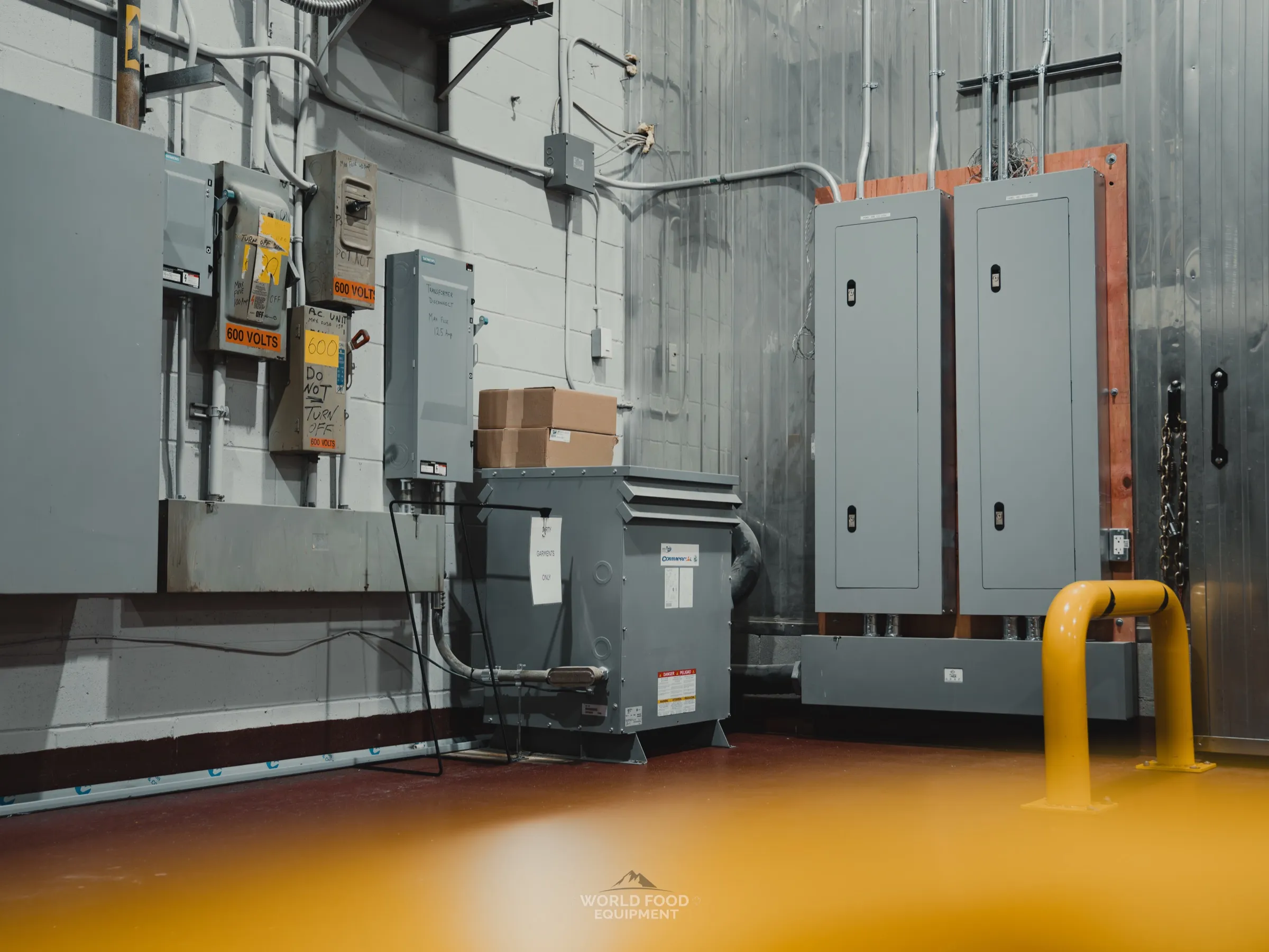
Electrical room at the Stainless Steel project in Ontario: fused disconnect switches labelled 600 volts, a dry-type transformer, and two distribution panels on a plywood backboard beside a yellow bollard, World Food Equipment
Disconnects and feed

600V disconnects, a step-down transformer, and the distribution panels that feed the refrigeration and the rooms around it.

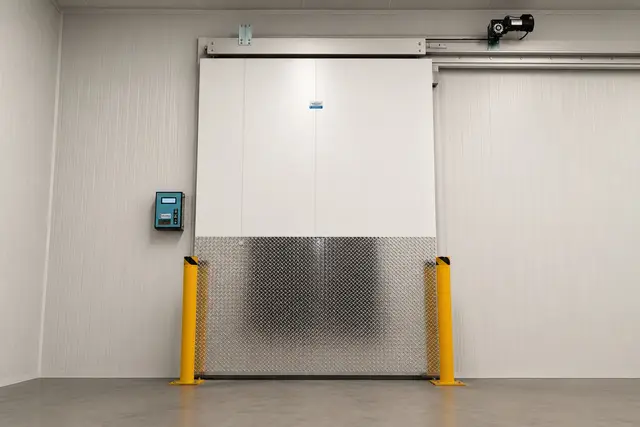
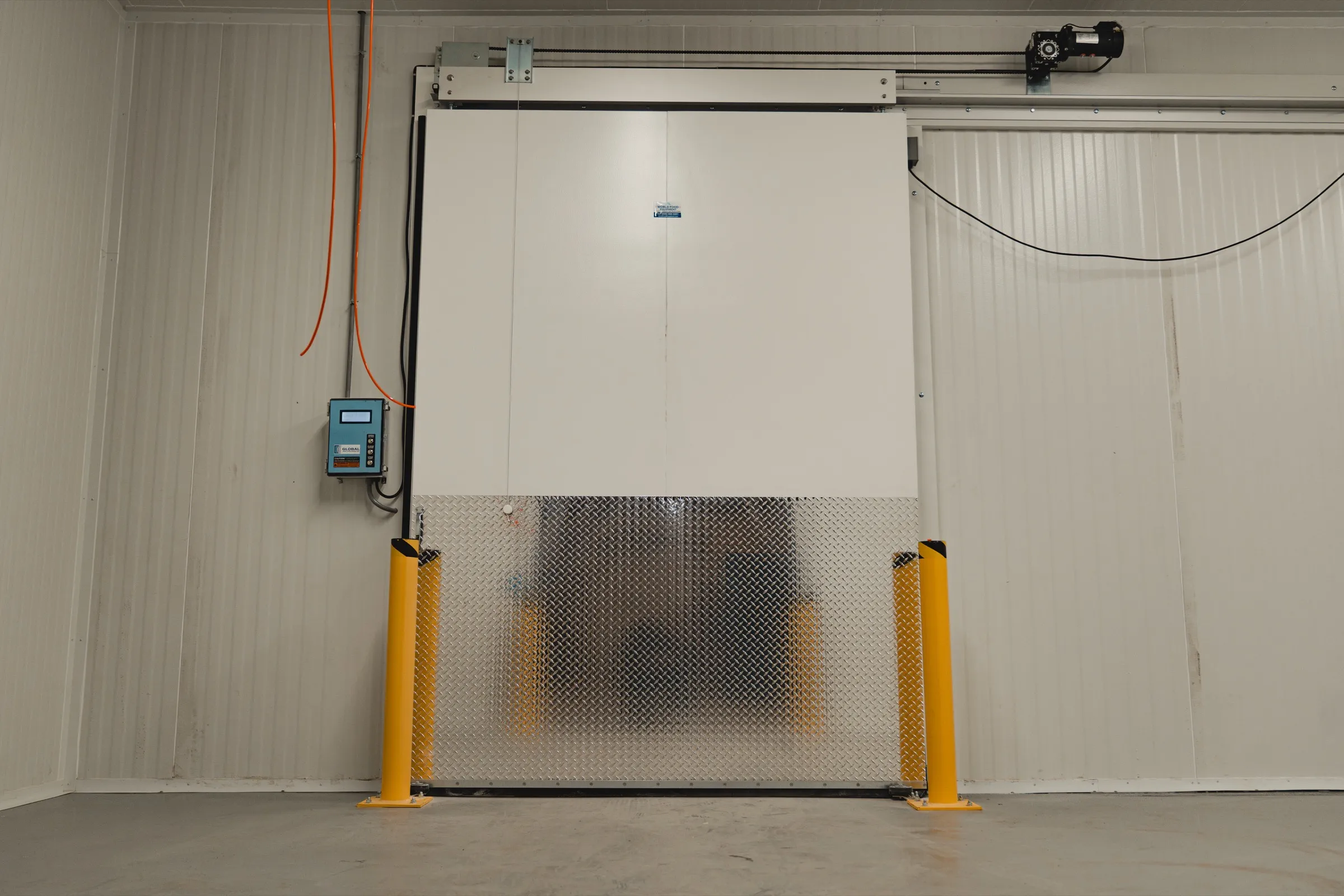
Motorized sliding insulated freezer door at the SKOR Crestlawn install in Ontario, door operator motor on the top rail, wall-mounted door controller in conduit, diamond-plate kickplate and yellow bollards, World Food Equipment
Door operator

Motorized slider with a safety edge, its operator and controller wired by the crew that hung the door.

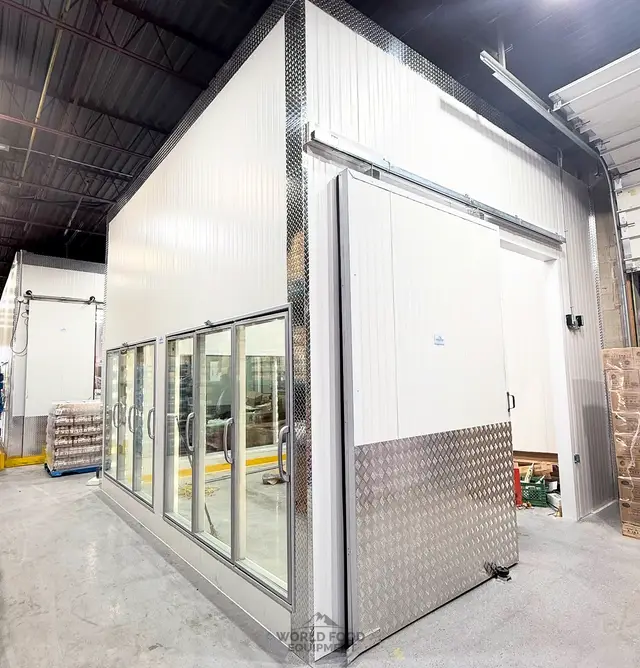
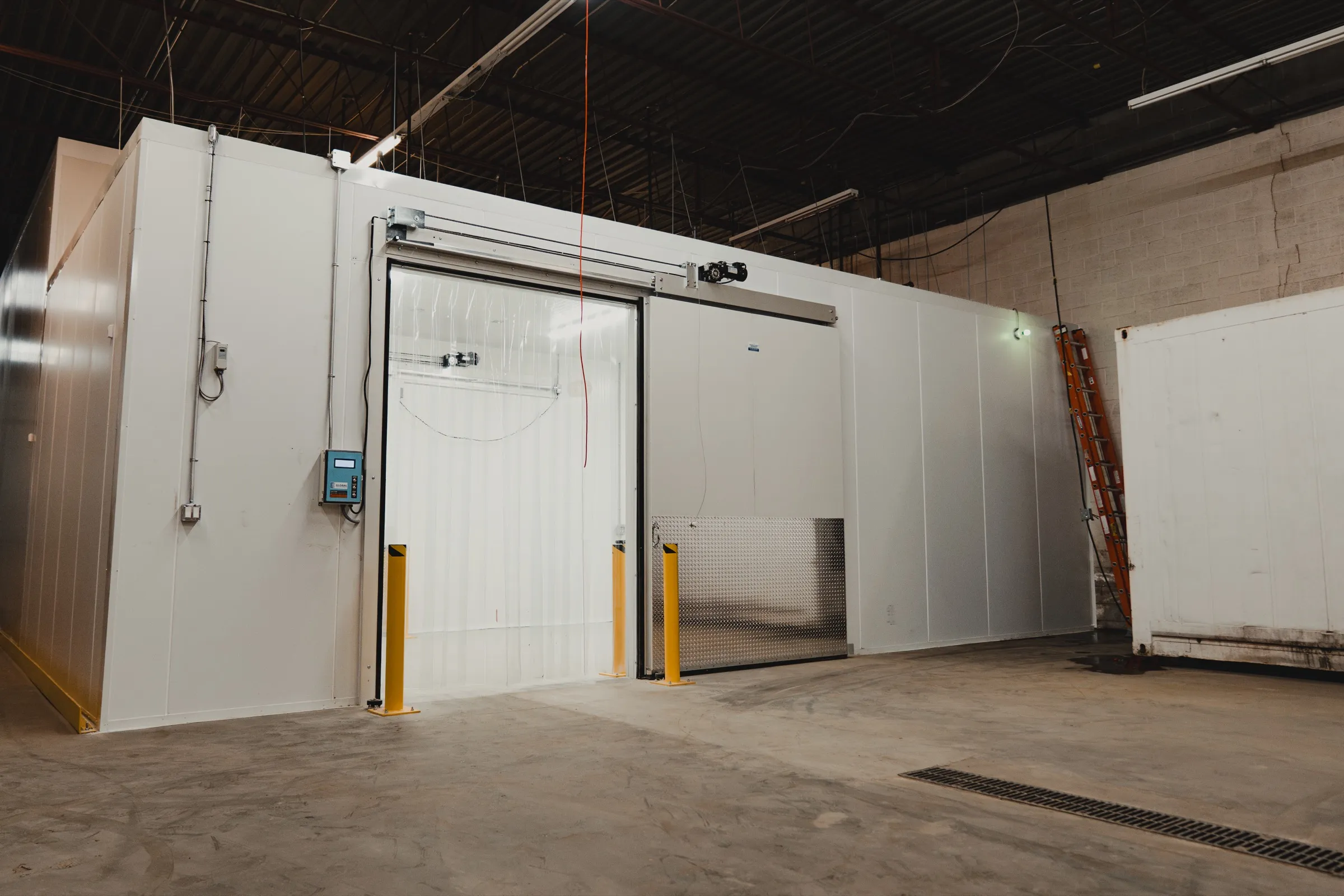
Finished commercial freezer exterior at the SKOR Crestlawn install in Ontario with a motorized sliding door, vinyl strip curtain, wall-mounted temperature controller in conduit, and yellow bollards, World Food Equipment
Controls

Controller, door operator, and alarm wired in conduit on the outside of the box, where a technician can reach them.

Deep Dive

More on cooler circuits, freezer heaters & warehouse feeds.

Walk-In Cooler Electrical Requirements: Circuit, Disconnect, Controls

The electrical requirements for a walk-in cooler come down to a dedicated circuit sized to the condensing unit nameplate, a disconnect within sight of the unit, a separate circuit for the evaporator fans and lighting, and a temperature controller mounted where staff can read it. A self-contained unit on a small restaurant walk-in may run on a single 208V or 240V circuit; a remote rooftop unit needs a feed to the roof and a disconnect up there.

Sharing a breaker with kitchen equipment is the mistake we see most on boxes built by others: the fryer trips and the cooler goes dark. The walk-in cooler page covers the rest of the build.

Walk-In Freezer Electrical Requirements: Defrost, Heaters, and Heat Trace

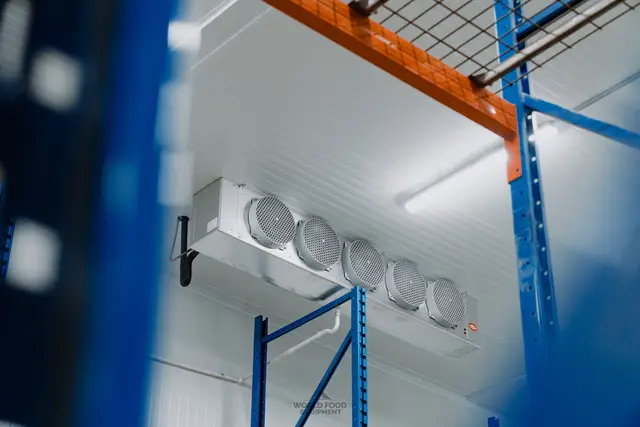
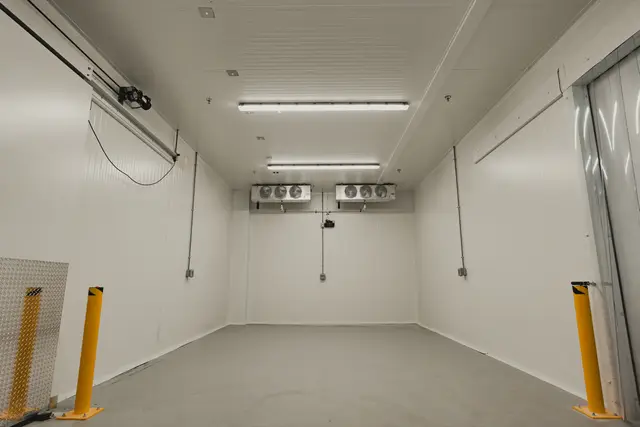
A walk-in freezer carries everything a cooler does plus the circuits that keep it from icing shut: electric defrost heaters in the evaporator, a heated door frame so the gasket does not freeze to the jamb, self-regulating heat trace on the drain line, and on slab-on-grade builds a heated floor or under-slab heat to stop frost heave. Each of those is its own circuit, and the defrost heaters draw more than most people expect.

We size the panel for the total, wire the heaters on their own breakers, and log the amp draws at commissioning. The walk-in freezer page covers floors, doors, and panels; the commercial plumbing page covers the drain the heat trace protects.

Disconnects, Sub-Panels, and 600V Feeds for Refrigerated Warehouses

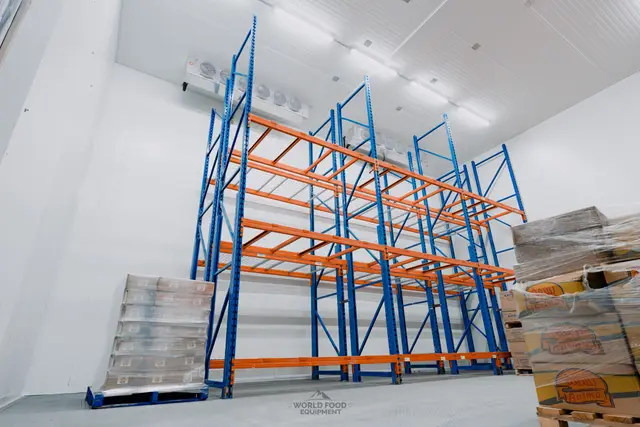
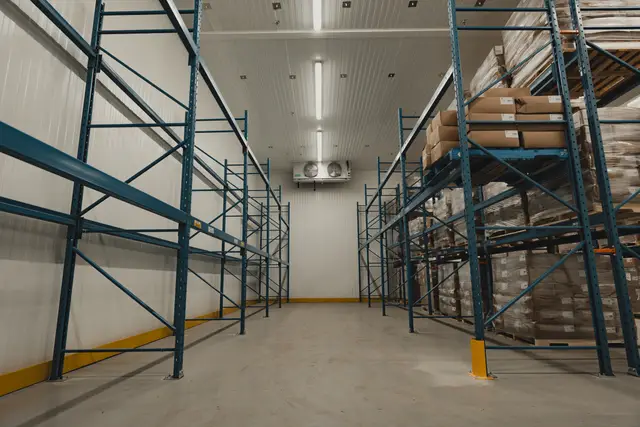
Warehouse-scale cold storage runs on 600V three-phase. A multi-compressor rack, a remote condenser, and a row of long-throw evaporators each need a fused disconnect and a feeder sized from a real load calculation, plus a step-down transformer and sub-panel for the 208V and 120V loads: controls, lighting, door operators, alarms, and receptacles.

We submit the load calculation with the ESA permit, stage the electrical with the racking so nothing lands behind a pallet position, and commission zone by zone. See custom cold storage for the envelope and commercial HVAC for the machinery the feeds serve.

FAQ

Questions about circuits, panels, and controls.

Is WFE a general commercial electrical contractor?

No. WFE runs the electrical that comes with a cold-storage project: dedicated circuits, disconnects, panels and feeds, defrost and heater circuits, heat trace, controls, alarms, door operators, and lighting for walk-ins, cold rooms, and refrigerated buildings. If the job is cold storage, the electrical is in scope and quoted with it. General building electrical away from a cold-storage project is not something we take on.

Who does the electrical work, and is it inspected?

ESA-licensed 309A electricians on the WFE crew pull the work under an Electrical Safety Authority permit, and the inspection is booked to the install window. The certificate stays with your build record. Licences are held by the electricians on the crew.

What are the electrical requirements for a walk-in cooler?

A dedicated circuit sized to the condensing unit nameplate, a disconnect within sight of the unit, a separate circuit for evaporator fans and lighting, and a controller mounted where staff can read it. Small self-contained units run on one 208V or 240V circuit; remote rooftop units need a feed to the roof and a disconnect there. Never share the breaker with kitchen equipment.

What extra circuits does a walk-in freezer need?

Electric defrost heaters in the evaporator, a heated door frame, heat trace on the drain line, and on slab-on-grade builds a heated floor, each on its own circuit. Defrost heaters draw more than most people expect, so the panel is sized for the total and the amp draws are logged at commissioning.

Can you add a disconnect and circuit for a replacement condensing unit on an existing walk-in?

Yes. Replacement systems on any brand of walk-in get a new disconnect and a circuit sized to the new nameplate, pulled under permit and inspected. Our own 313A-licensed technicians handle the refrigeration side of that replacement. The line is answered 24/7, and after hours calls forward to our on-call phone. Details on the repair-or-replace page.

Do you wire temperature alarms and monitoring?

Yes. High-temperature alarms with a local sounder and a dry contact for your monitoring or building system are wired on request, along with door-open alarms on freezer sliders. The controller settings and alarm set points are recorded on the start-up sheet.

Free Quote — No Obligation

Get a Quote
Within One Business Day.

Tell us what you need. One of our senior project advisors will personally review your requirements and respond within one business day, with a ballpark number, not a runaround.

Free Site Assessment

We visit your location and measure. No assumptions, no surprises.

In-House Crews Only

Our long-tenured in-house team does the install. No third-party subcontractors.

Custom-Designed to Your Floor Plan

Every unit engineered to your exact dimensions, not pulled from a catalog.

Prefer to talk? Call us directly, answered 24/7:

(289) 813-5293

Tell us about your project

We respond within one business day. No spam, no sales pressure.

Call Now Free Quote