



Case Study · Video Walkthrough
Food Junction — Toronto Restaurant Walk-In Cooler Install
The Build
A Toronto walk-in cooler that had to fit a working prep kitchen
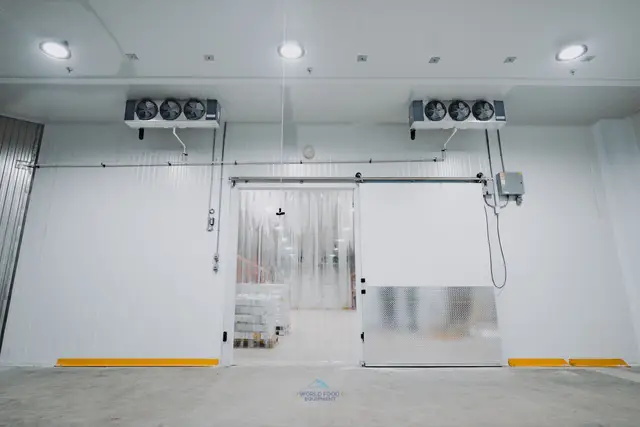
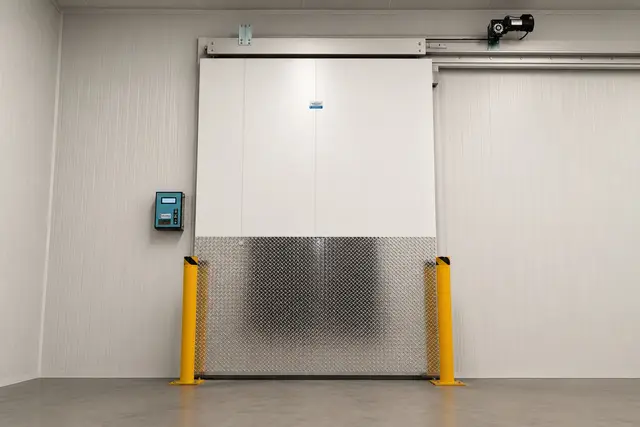
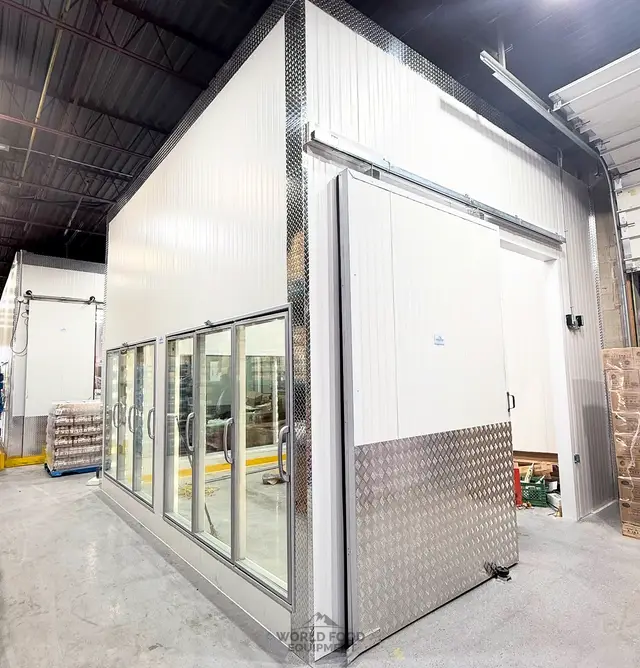
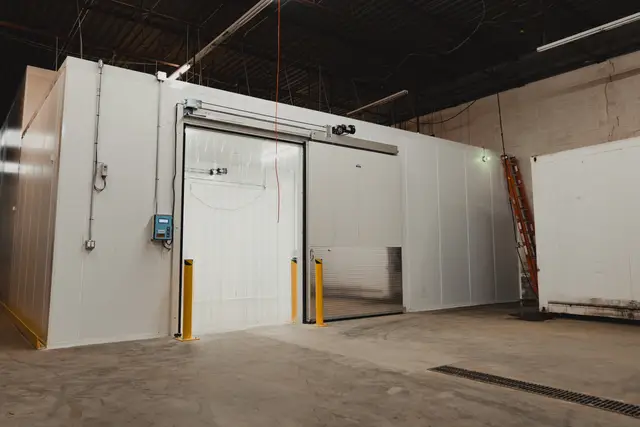
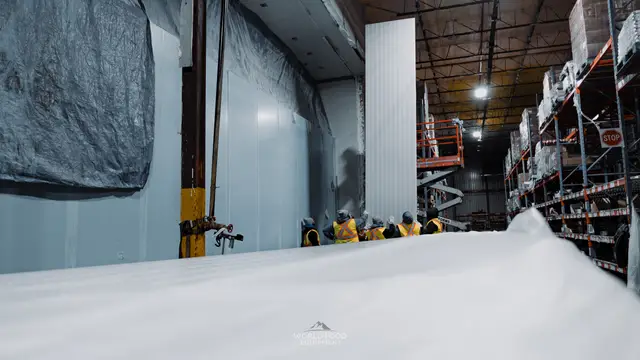
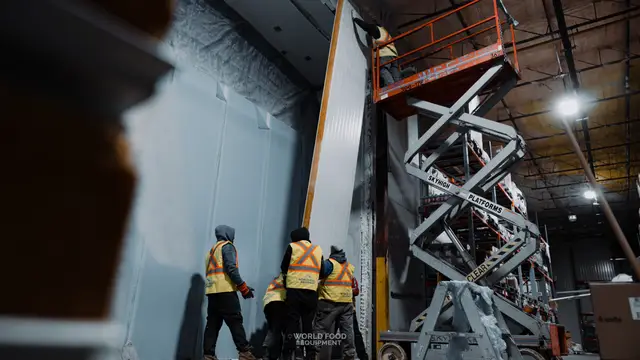
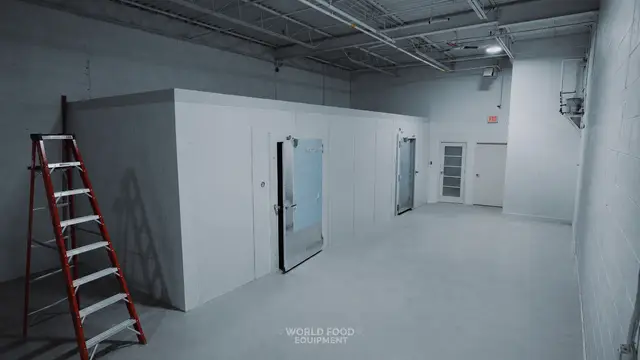
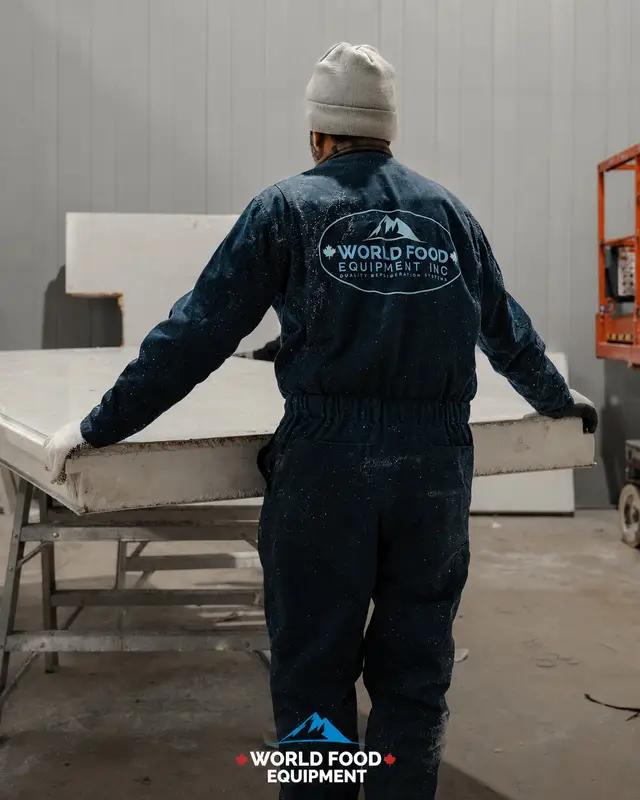
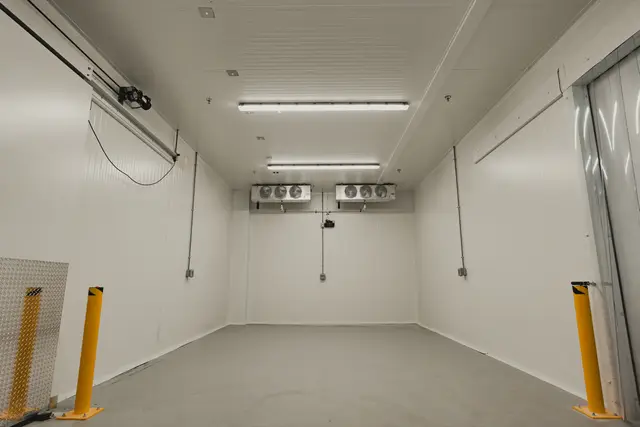
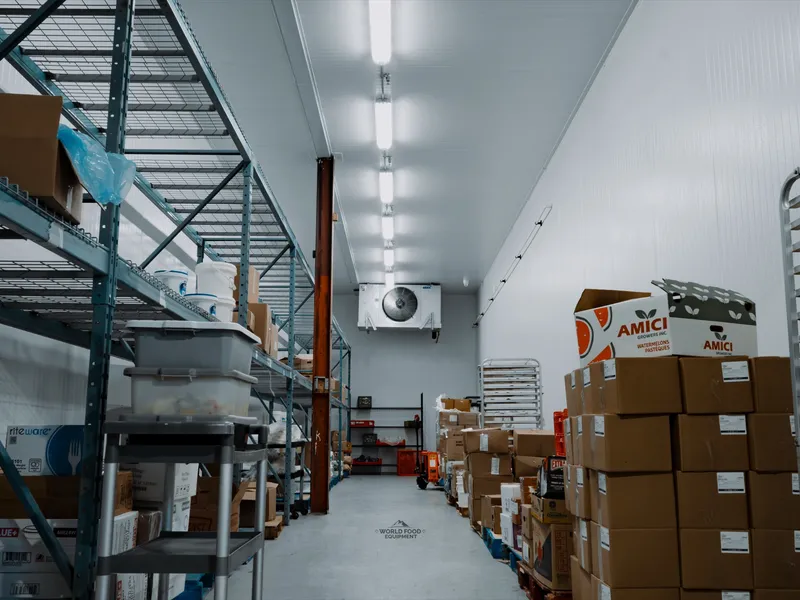
The cooler and the prep kitchen were being built at the same time, by two contractors on one schedule. WFE coordinated the panel layout against the prep-line footprint so the cooler's sliding door opened directly onto the prep zone, where cold product moves from cooler to line, and ran the refrigeration line up and out before the ceiling closed in.
Detail Gallery
Operational, in detail.
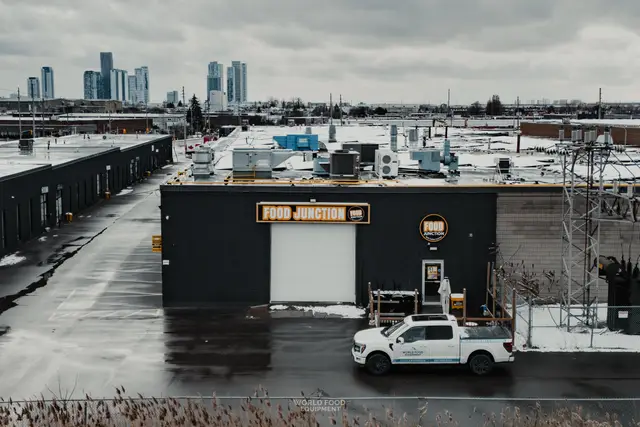
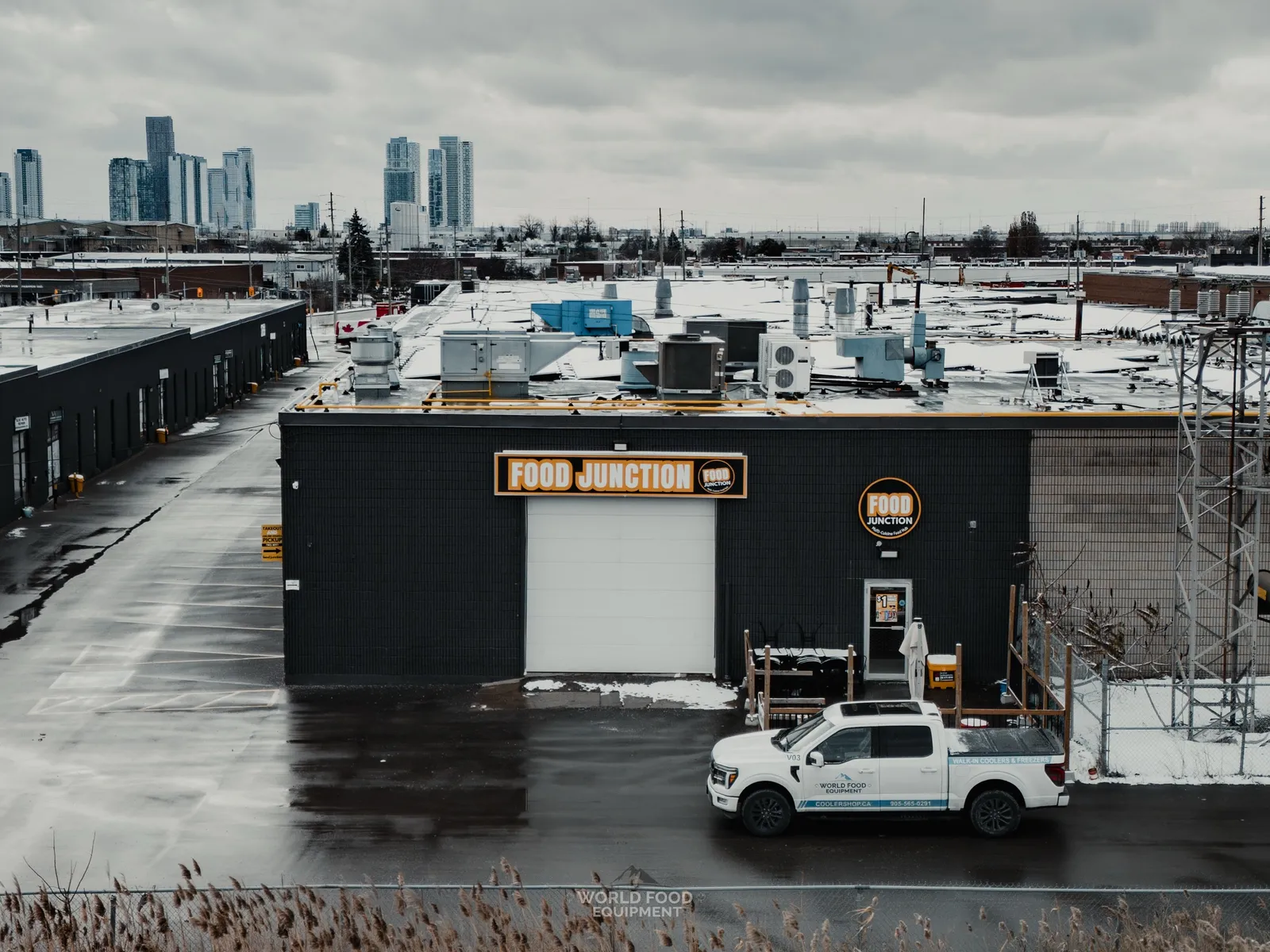
The Food Junction storefront in Toronto. WFE truck on site for service follow-up after the build.
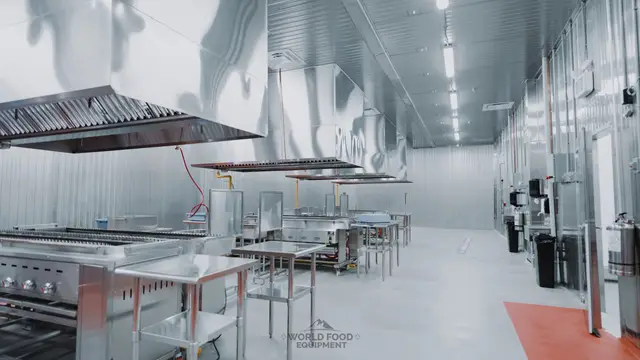
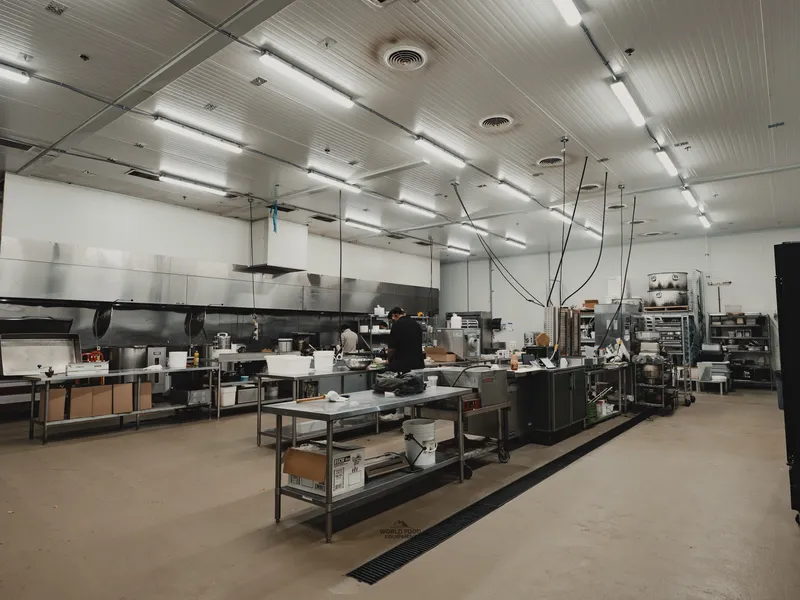
Commercial prep kitchen behind the storefront. The walk-in cooler sits behind the back wall, sized against this prep line.
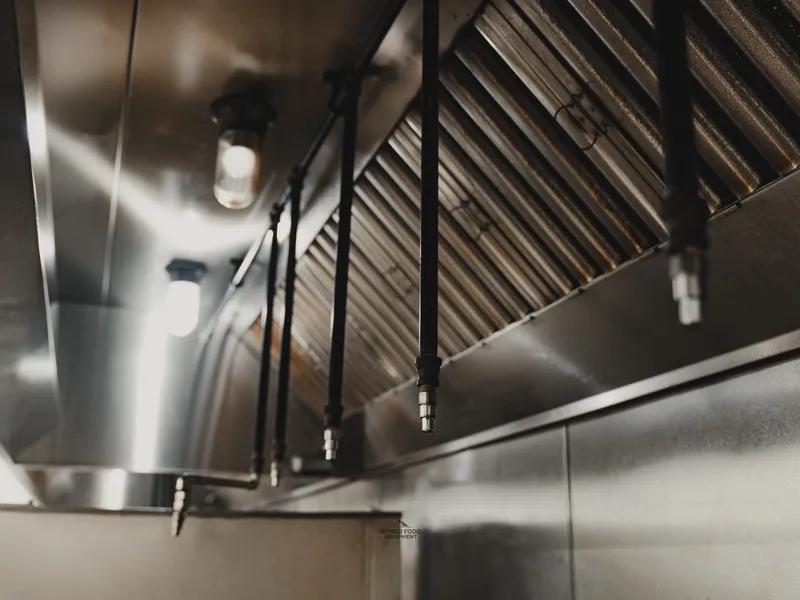
Stainless exhaust hood detail. Coordinated with the kitchen contractor so vent routing did not interfere with cooler line placement.
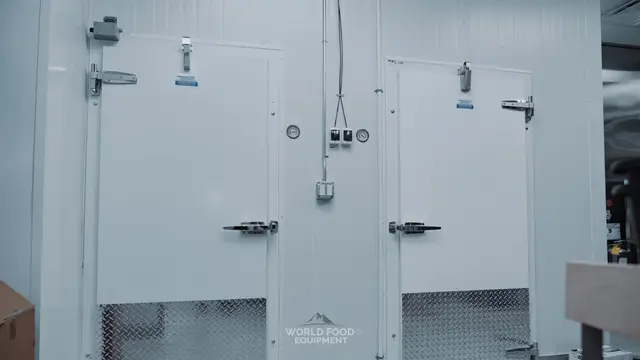
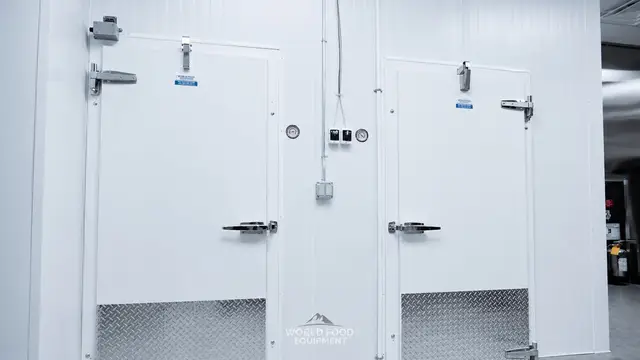
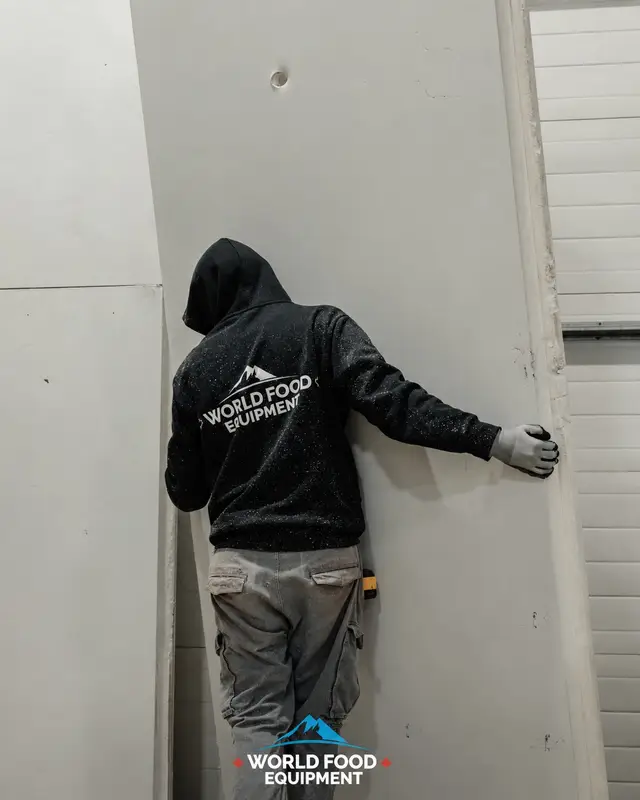
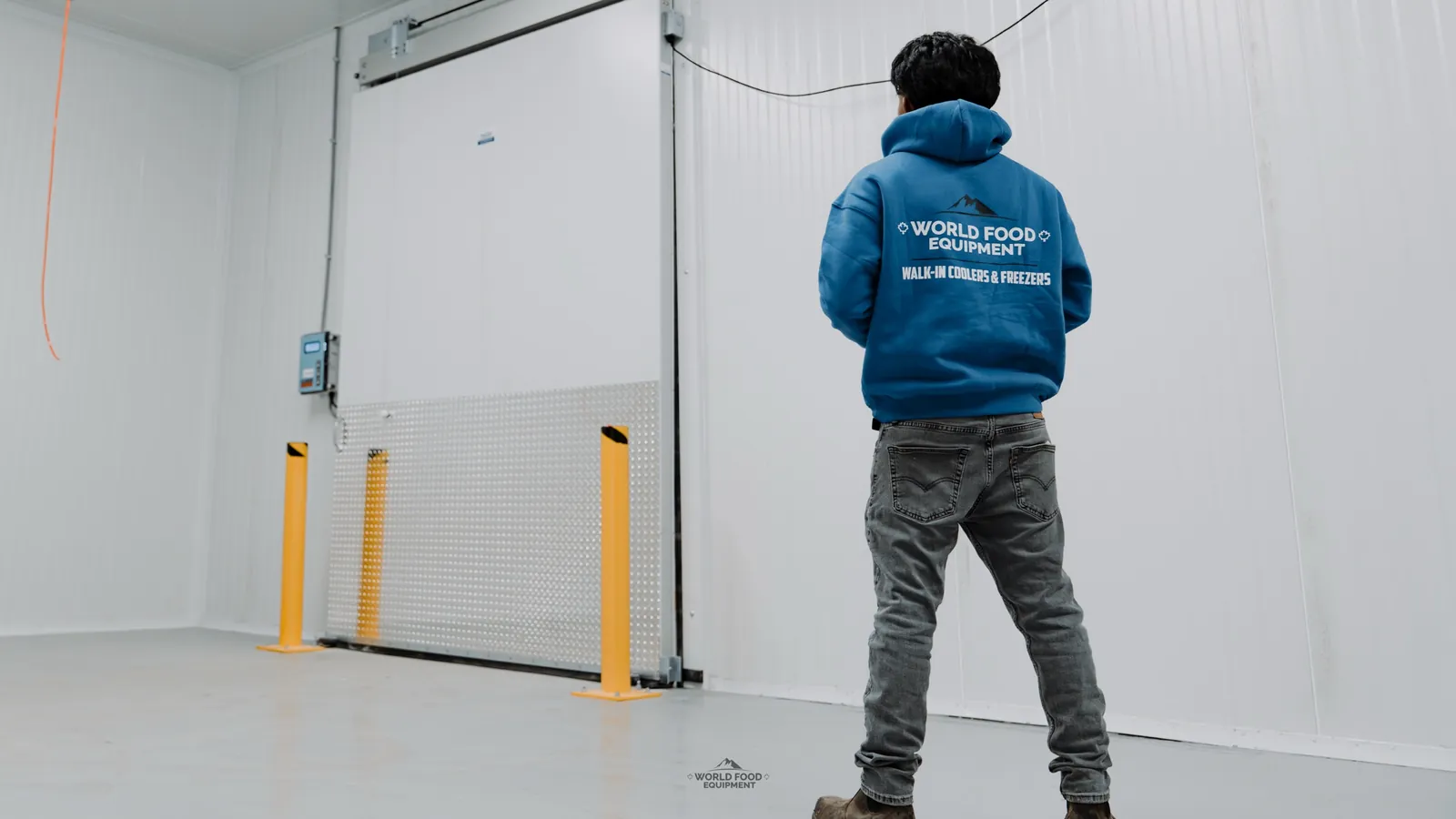
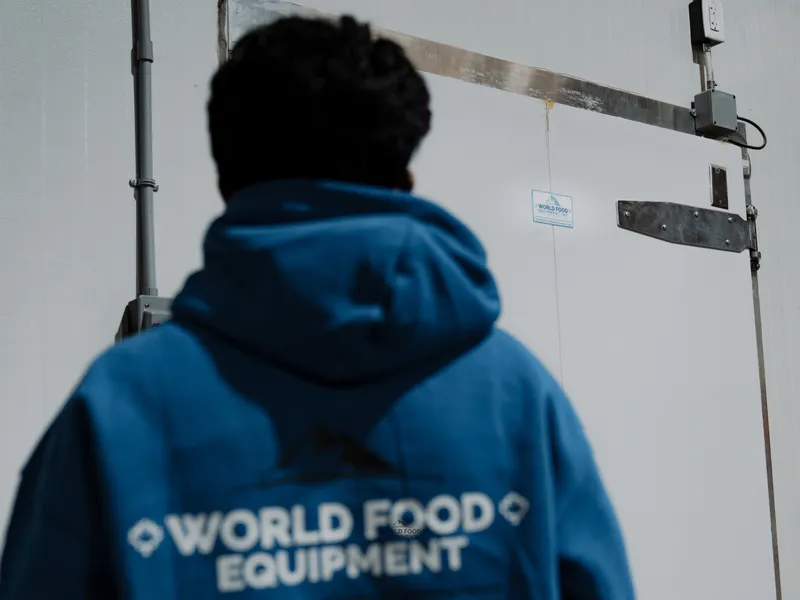
At the WFE-installed cooler door. WFE sticker on every walk-in we build, a service-line cue for whoever inherits the equipment.
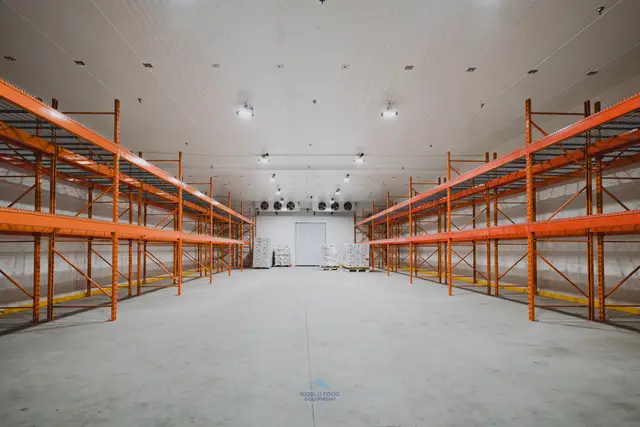
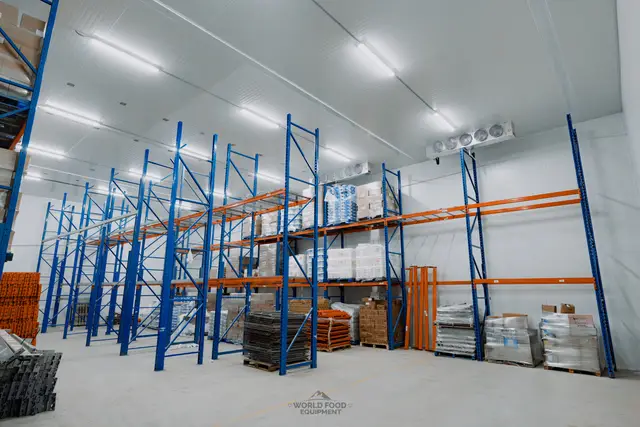
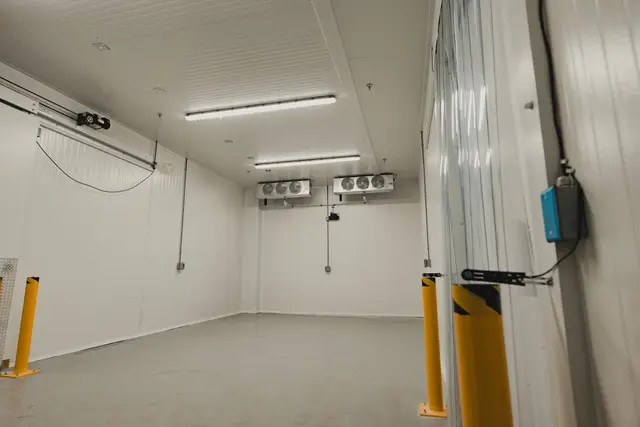
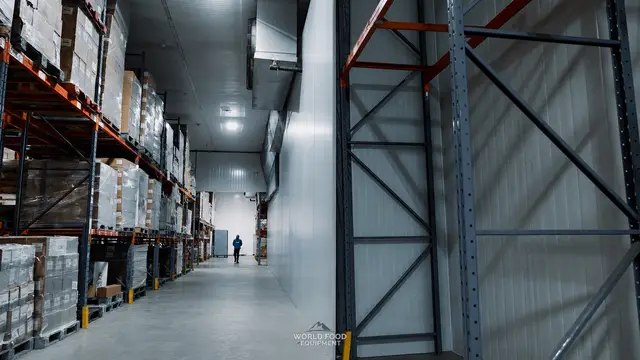
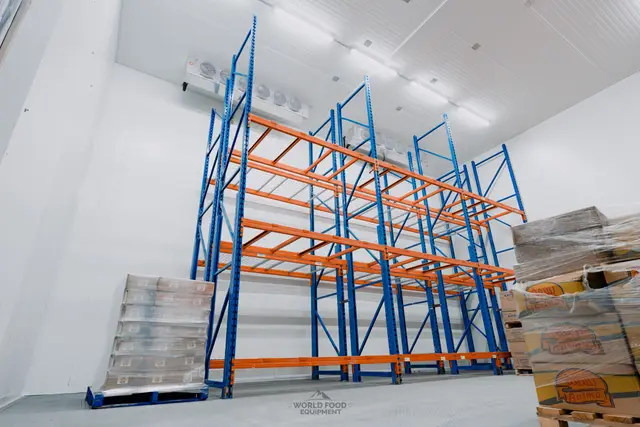
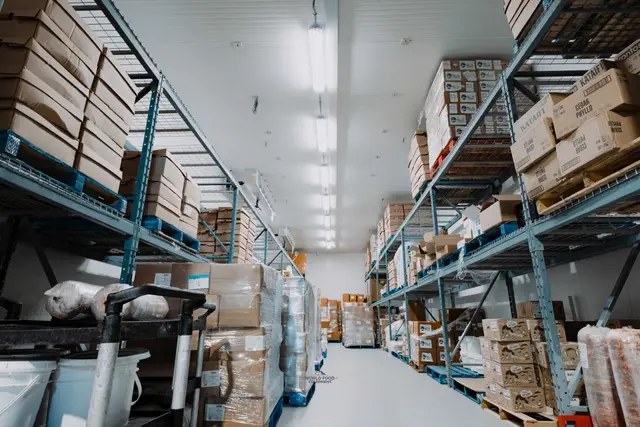
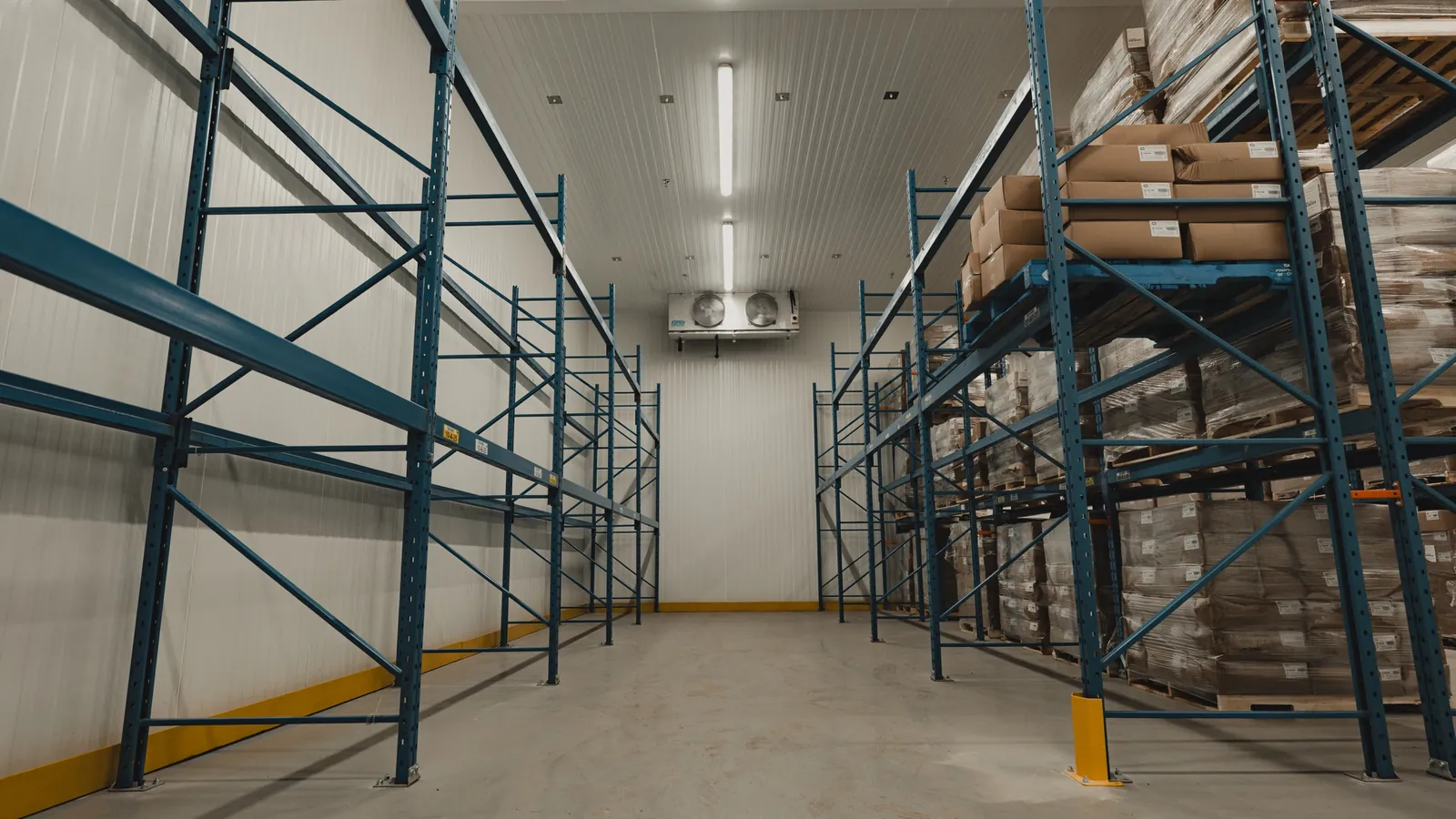
Inside the cooler, stocked and running. Pendant lights spec'd for cooler interiors so they survive the cold cycle.
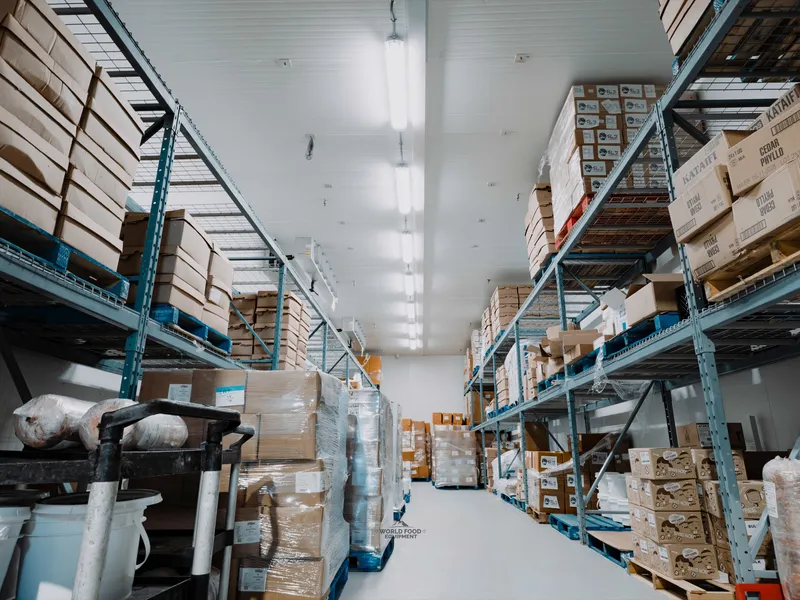
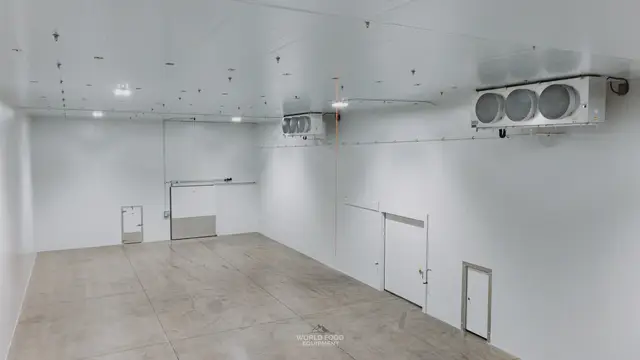
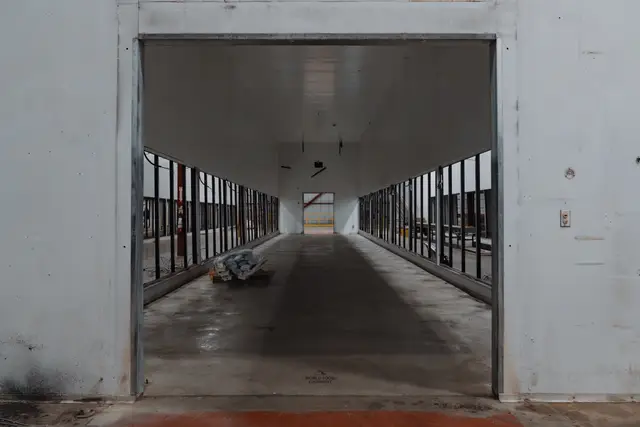
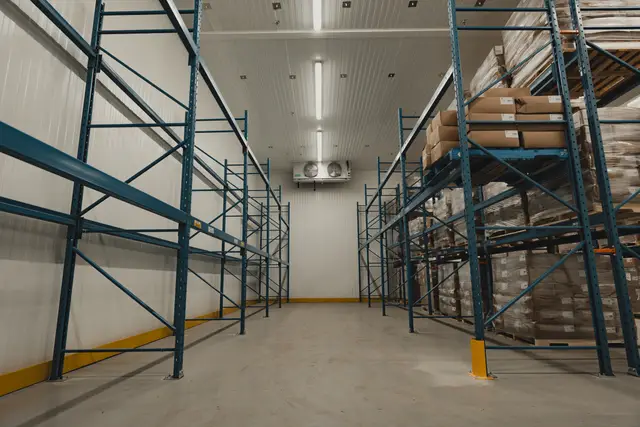
Adjacent cold-room aisle. Smaller-throughput zone with its own ceiling-mounted unit overhead.
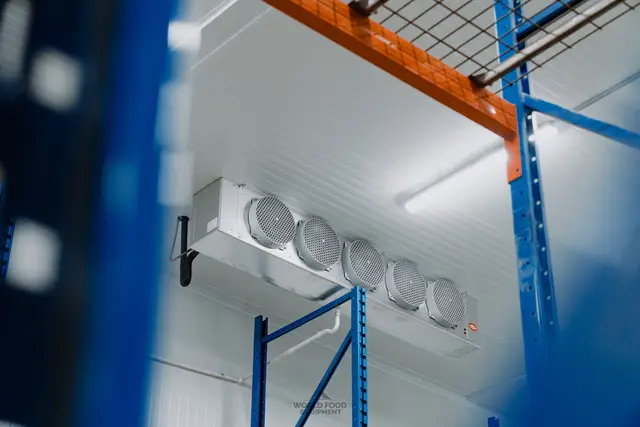
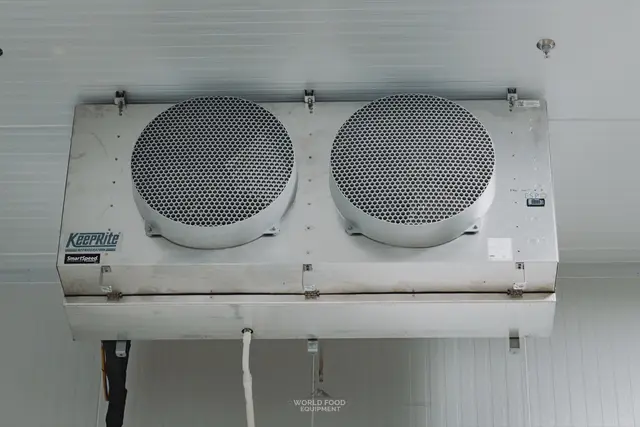
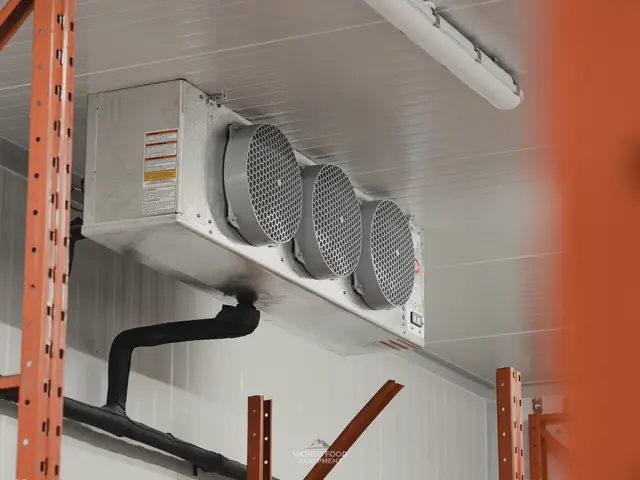
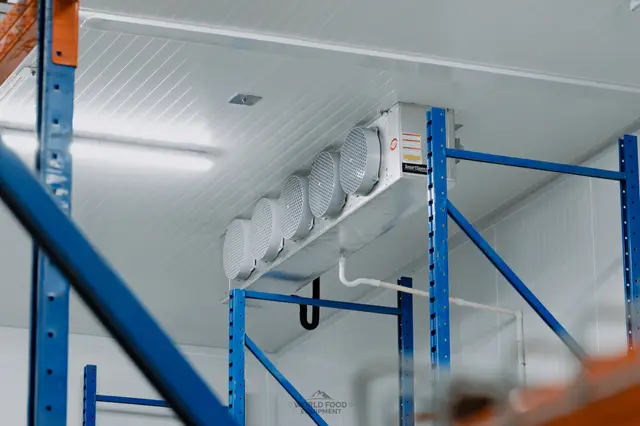
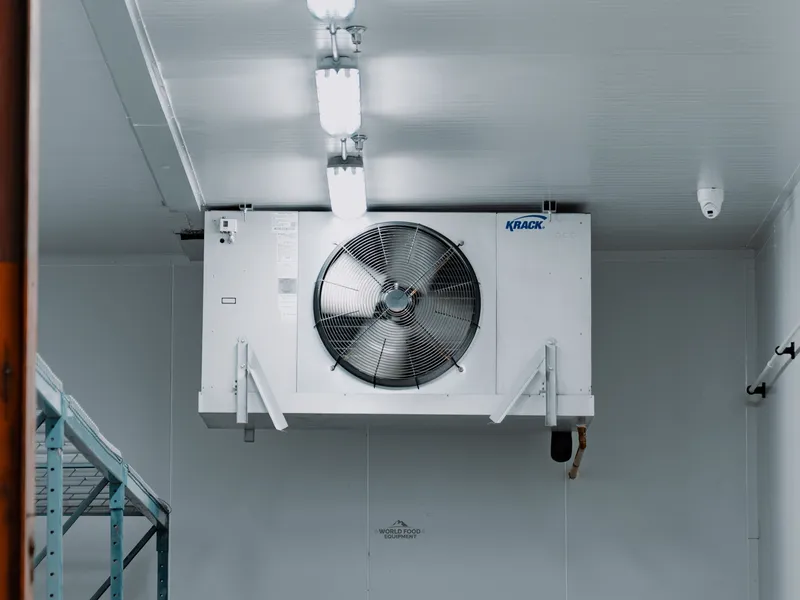
KRACK single-fan ceiling evaporator. Sized to the cooler's door-cycle and load profile, fed from the rooftop condenser.
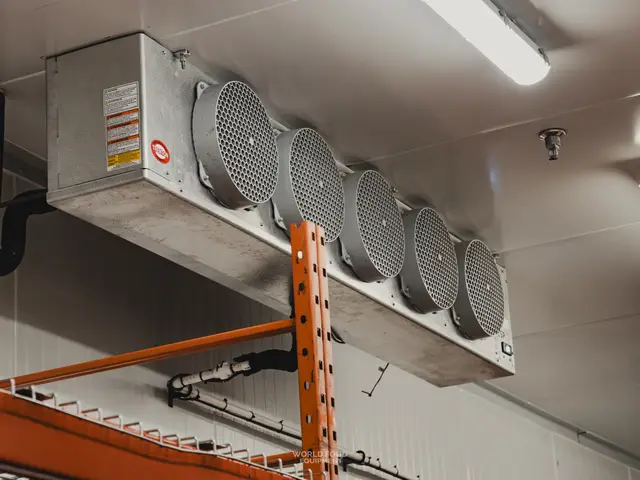
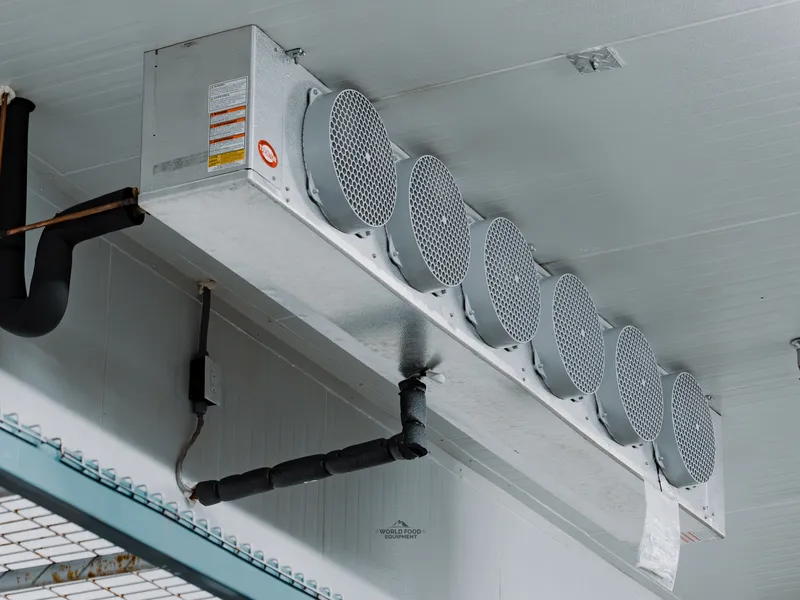
KRACK seven-fan unit overhead. Higher-capacity refrigeration serving the larger cold-storage section alongside the single-fan unit.
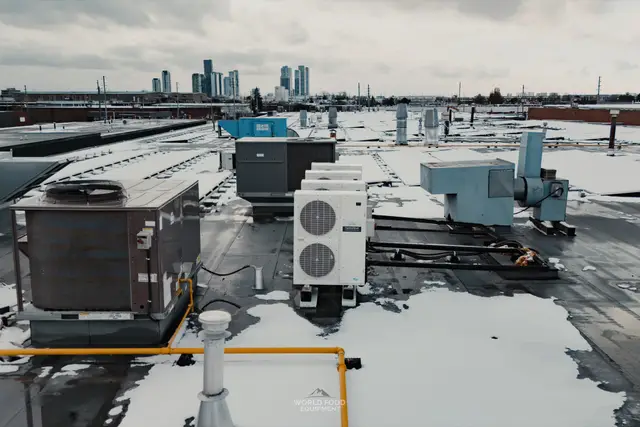
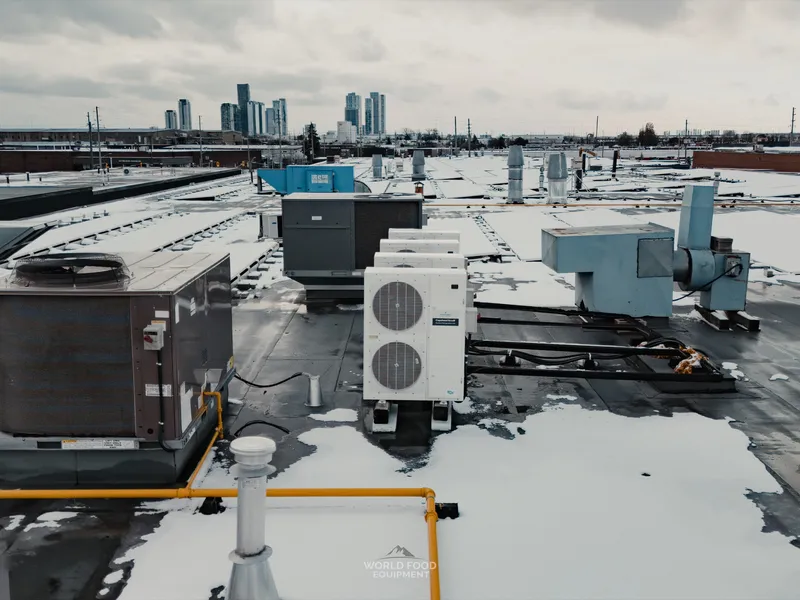
Rooftop condenser plant. Refrigeration lines routed inside the building wall up to the units on the roof.
What's in the Build
Spec'd for the work.
Every component sized for the project's actual load, door-cycle profile, and shift volume. Nothing pulled from a catalogue.
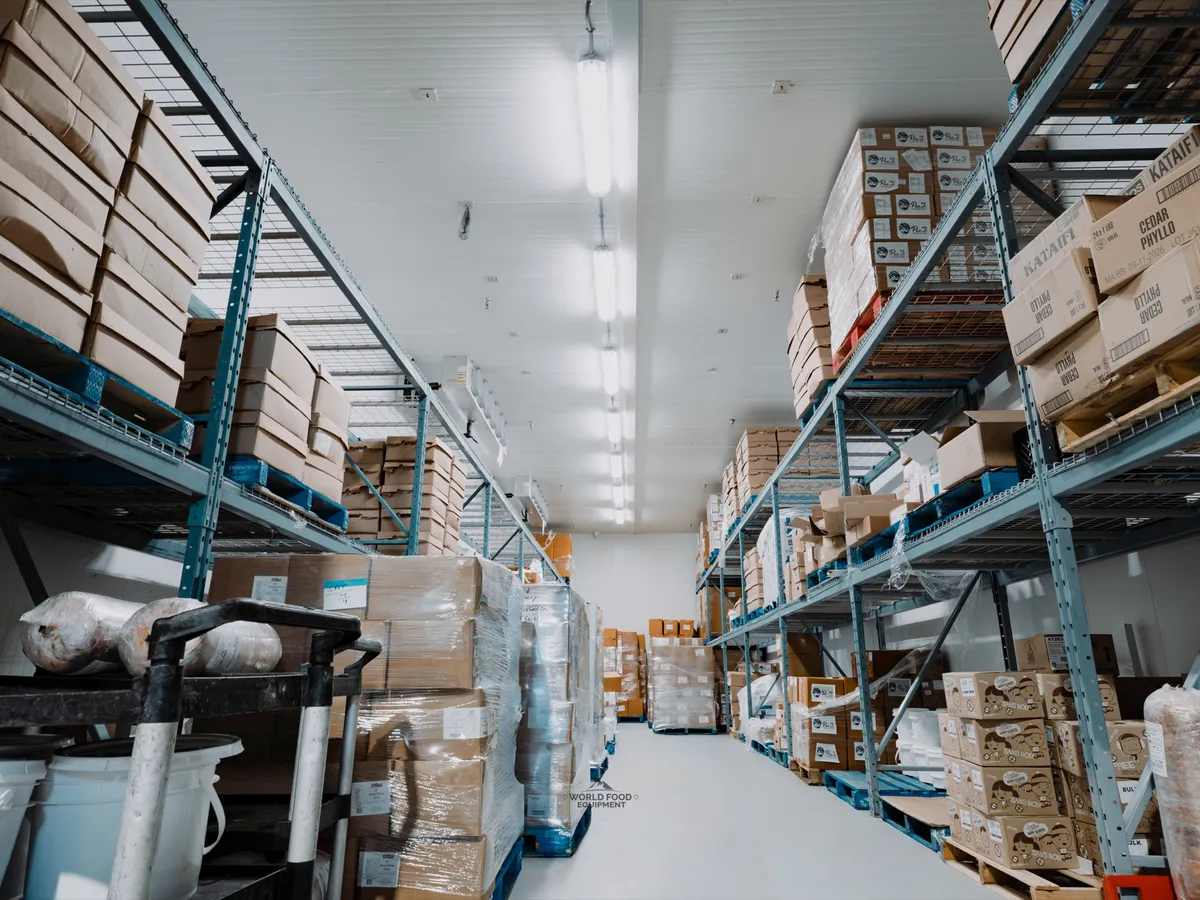
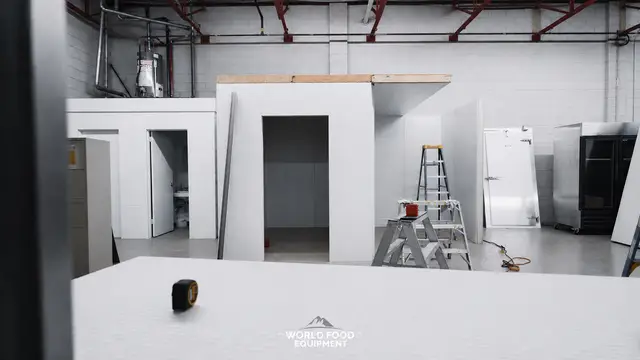
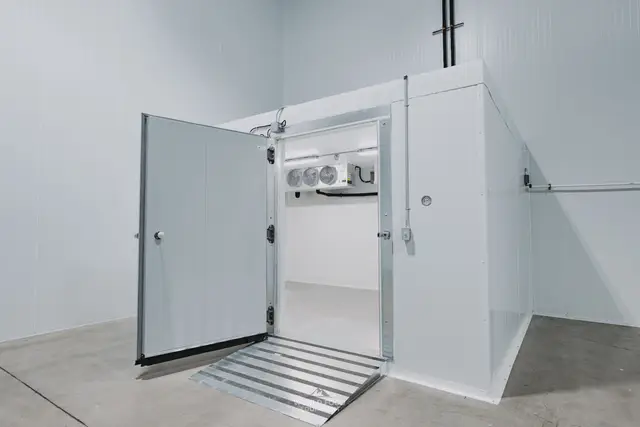
Walk-in cooler installed inside an operating Toronto restaurant fit-out. Build sequenced around the kitchen contractor so the prep line could function from day one.
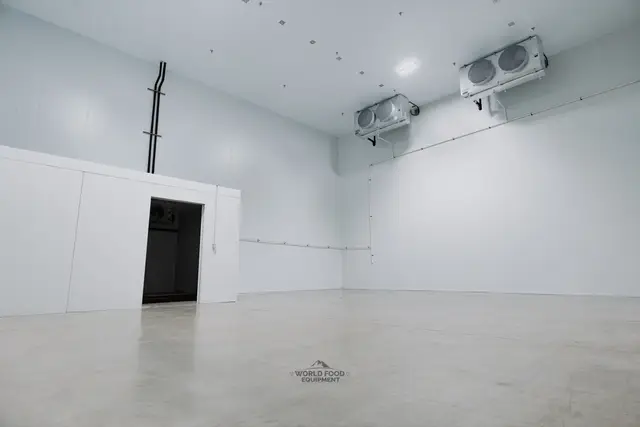
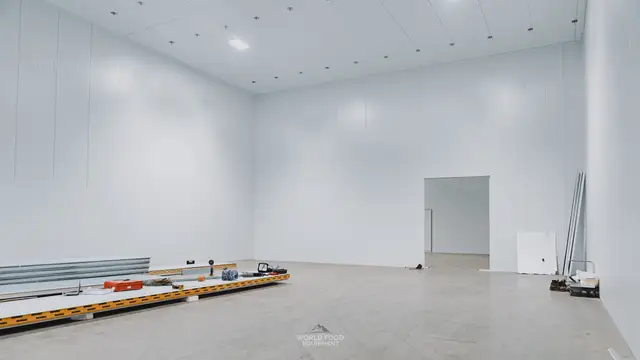
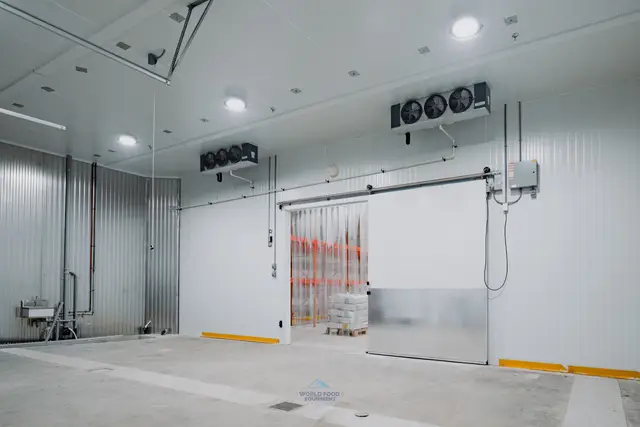
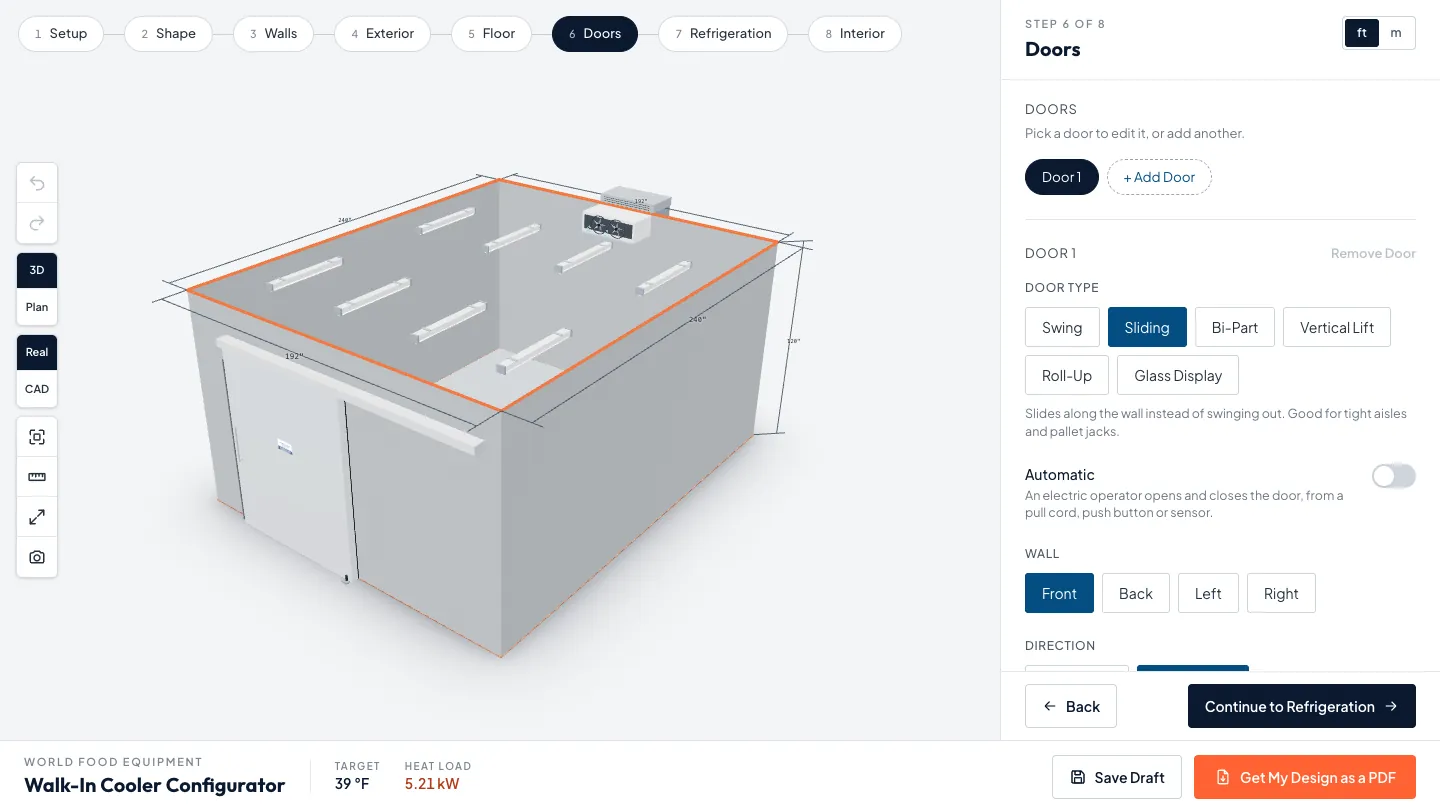
Insulated panel cooler envelope with sliding insulated door at the kitchen-facing entry. Wall layout designed against the prep-line footprint, not retrofitted around it.
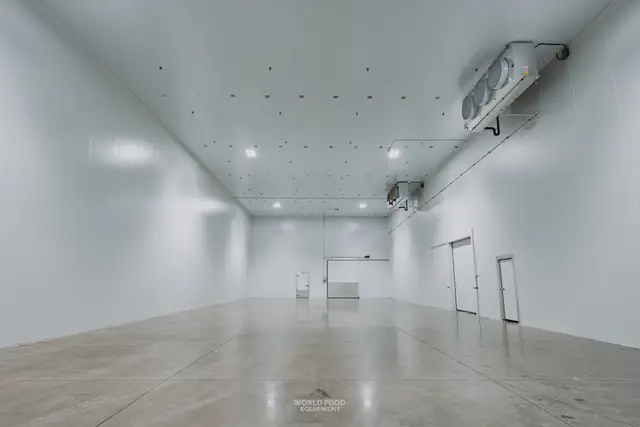
Two KRACK ceiling-mounted evaporators sized to the restaurant's cold-storage load: a single-fan unit on the prep-line cooler and a higher-capacity multi-fan unit on the larger storage section. Refrigeration lines routed up and out to rooftop condensing units. BTU-matched on commissioning.
Standard insulated swing door at the cooler entry. Strip curtain hung from above to maintain temperature during high-traffic prep windows.
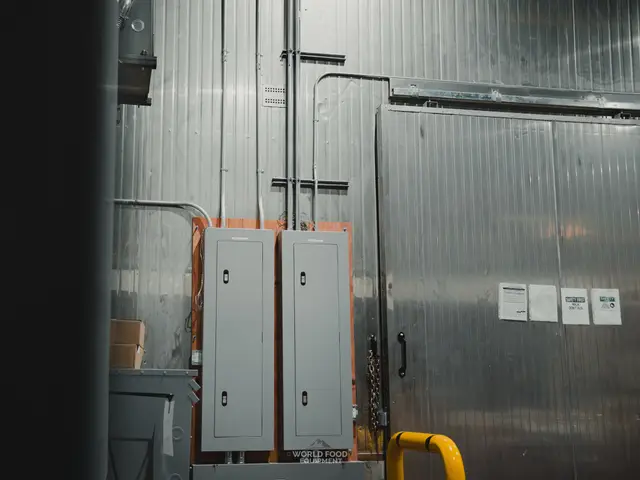
Refrigeration electrical routed in coordination with the restaurant's service panel. All wiring run before drywall closed in.
Permits coordinated with City of Toronto Building. Toronto Public Health spec followed for food-service cold storage.
Equipment Sourced From
Manufacturers listed are representative of WFE's standard build kit; exact units sized per project.
Outcome
How it landed.
Food Junction went operational on schedule with the prep kitchen and the walk-in cooler commissioning together. The restaurant has been running for months with full inventory stocked in the cooler. The sliding door opens directly onto the prep zone. The refrigeration plant holds spec through the lunch and dinner rushes when the door is cycling every 60 seconds.
Deep Dive
Why downtown Toronto installs are harder than they look
A walk-in cooler install in a downtown Toronto restaurant runs into things that don't exist on a greenfield build: timing panel deliveries against street access, routing the refrigeration line through a building you don't own, and putting condensing units on a roof that belongs to the landlord. Food Junction is one of dozens of restaurant cooler installs WFE has sequenced through those downtown access constraints.
Refrigeration plant detail
KRACK ceiling-mounted evaporator sized to the cooler's door-cycle profile (a Toronto restaurant prep cooler runs 150 to 200 door cycles per shift). Condensing unit installed on the building rooftop, refrigeration line routed inside the wall before drywall closed in. BTU-matched on commissioning, pull-down tested with the kitchen operational.
Project FAQ
01 How do you work around restaurant hours during a Toronto install?
On new restaurant builds like Food Junction, the install runs straight through on a fixed schedule before opening. On retrofits inside operating Toronto restaurants, WFE schedules panel setting overnight or during off-hours when the kitchen is closed, and coordinates refrigeration crossover so the operator can keep selling food during the swap. The approach depends on whether the operator is opening fresh or retrofitting around active service.
02 What does Toronto Public Health require for restaurant cold storage?
Toronto Public Health spec for restaurant walk-in coolers covers panel finishes (food-grade, non-porous, washable), drainage (floor sloped to a sealed drain), temperature monitoring (a thermometer visible from outside the cooler), and door-cycle integrity (the unit has to hold 41°F or colder through the operational door-cycle). WFE builds to all of those defaults. The Toronto Public Health inspector signs off as part of restaurant opening.
03 How long is a Toronto restaurant walk-in install?
A restaurant-scale walk-in cooler install in downtown Toronto typically runs about two weeks from quote approval to commissioning, longer when the building adds coordination: street access for delivery, refrigeration-line routing through the building, condensing-unit placement on the roof, and permit alignment with the restaurant's overall opening schedule. The panel install itself takes a week or less.
04 Does WFE handle Toronto rooftop condensing units?
Yes. Most Toronto restaurant walk-in cooler installs need the condensing unit on the building roof, which requires coordination with the landlord, the roofing contractor, and sometimes the building's structural engineer if the roof load needs verification. WFE has done this dozens of times in downtown Toronto and handles the coordination as part of the install scope.
This Build Maps To
Service. Market. Coverage area.
Free Quote — No Obligation
Get a Quote
Within One Business Day.
Tell us what you need. One of our senior project advisors will personally review your requirements and respond within one business day, with a ballpark number, not a runaround.
Free Site Assessment
We visit your location and measure. No assumptions, no surprises.
In-House Crews Only
Our long-tenured in-house team does the install. No third-party subcontractors.
Custom-Designed to Your Floor Plan
Every unit engineered to your exact dimensions, not pulled from a catalog.
Prefer to talk? Call us directly, answered 24/7:
(289) 813-5293Tell us about your project
We respond within one business day. No spam, no sales pressure.