

World Food Equipment logo, walk-in coolers and freezers, Ontario
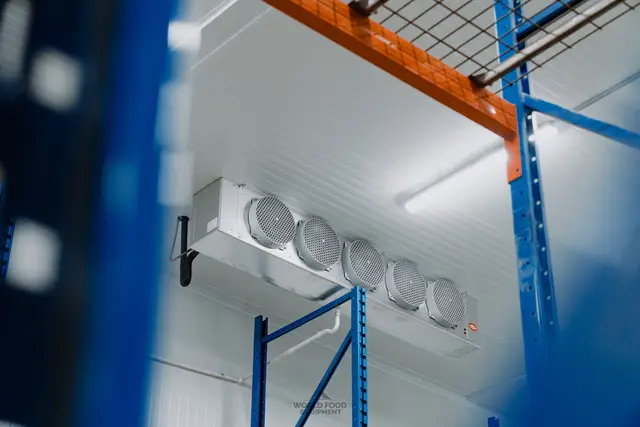
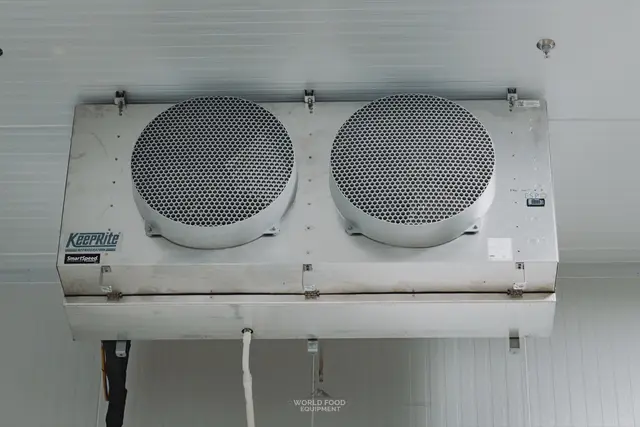
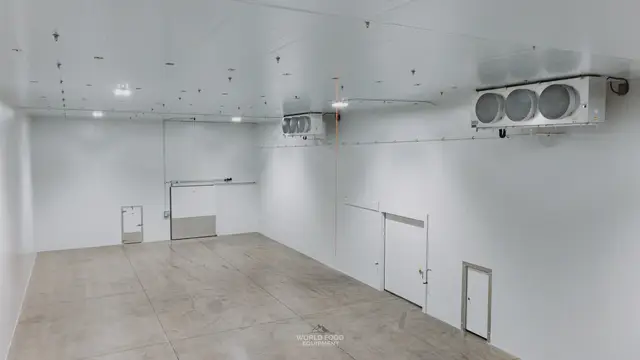
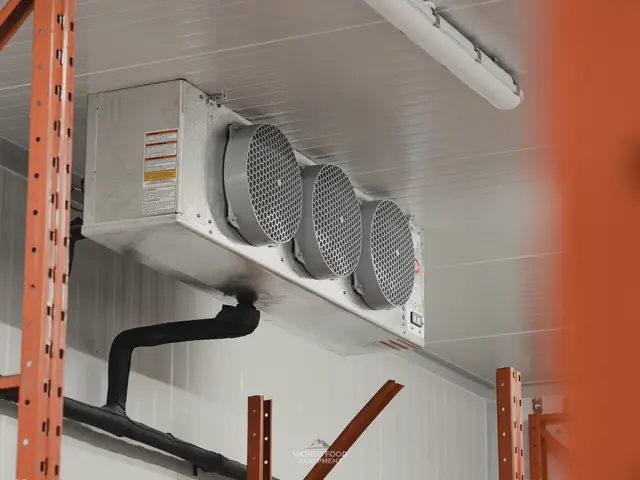
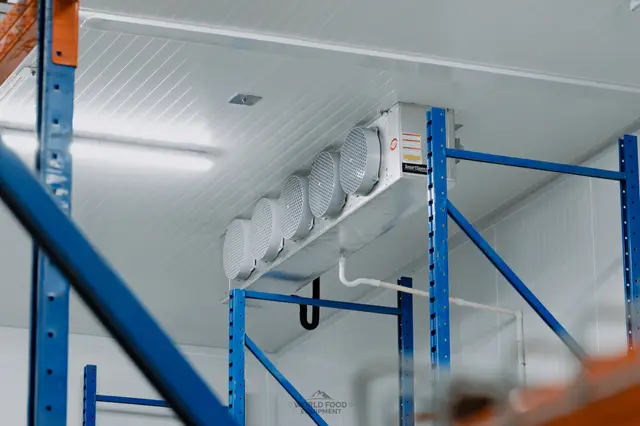
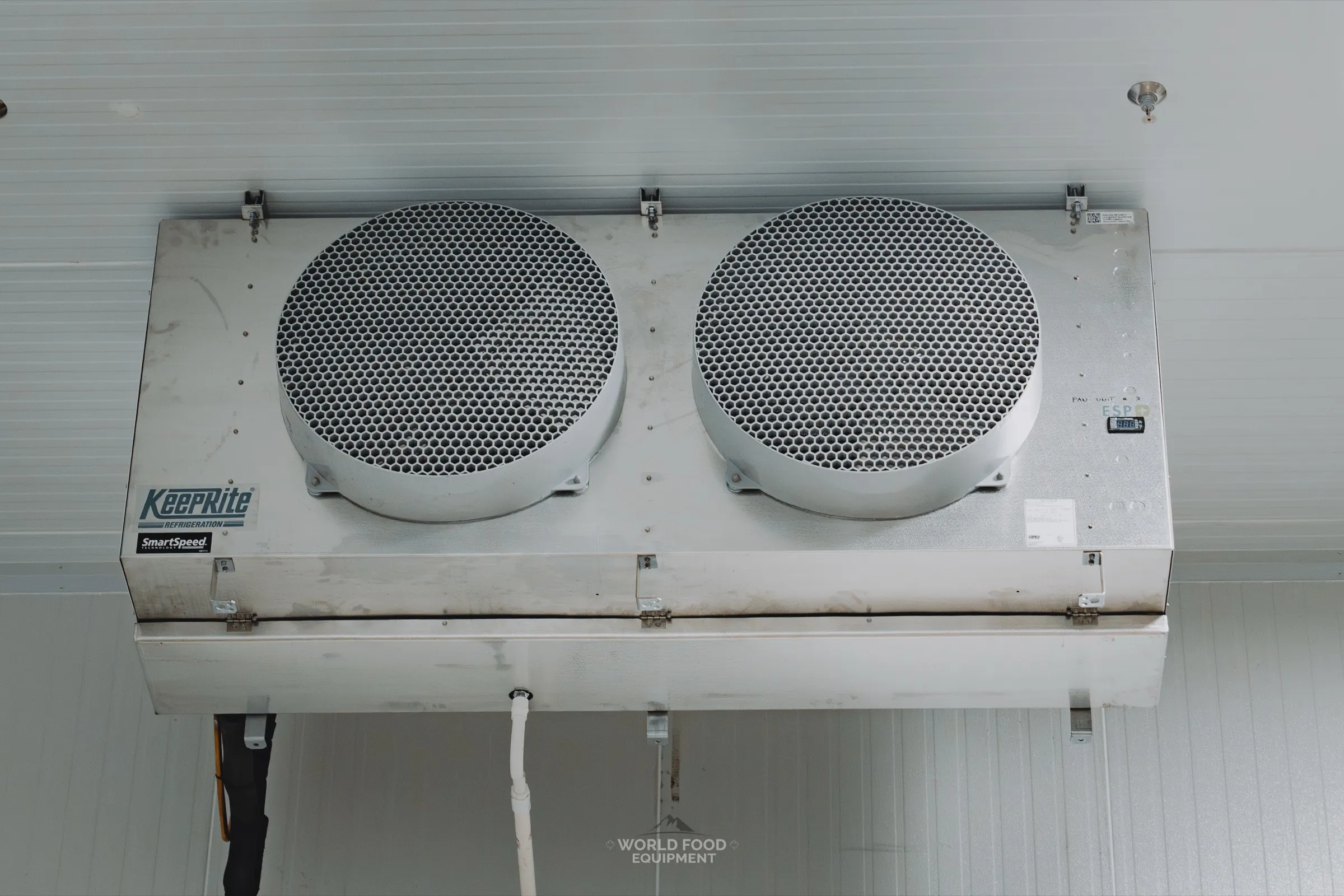
Close-up of a single KeepRite SmartSpeed evaporator unit ceiling-mounted in a finished operational walk-in, brand decal visible on the front housing, dual fan grilles, refrigerant line set with foam insulation routed below, ceiling sprinkler head, Pacer Air Freight install, Ontario, World Food Equipment.

Scheduled PM · WFE Contract

Walk-in cooler & freezer maintenance with a paper trail.

If WFE installs it, WFE maintains it. Scheduled preventative maintenance and commercial refrigeration tune-ups on the walk-in coolers and walk-in freezers our crew built, run on a quarterly, semi-annual, or annual cadence against the duty cycle of the unit. Coil cleaning, gasket inspection, refrigerant charge checks, drain treatment, controller calibration. A written service log on every visit, filed against your install record.

100%
In-house crew

Same techs as the install crew. No third-party PM rotation.

313A
Licensed

Ontario refrigeration & air-conditioning trade certification.

14pt
Visit checklist

Coil to controller. Same scope every visit, signed off.

24h
Quote response

PM contract quoted inside one business day.

Step 1 · Find your cadence

Your duty cycle decides
your PM cadence.

Pick your operation. The calendar strip below redraws to show your recommended PM schedule, the same recommendation we make on the install handover call.

Your annual PM schedule
Quarterly — 4 PM visits / year
Next visit
Mar 15
PM visit (signed log) No visit scheduled Scope: 14-point inspection + written log + recommendation list

Step 2 · What you actually get

One PM visit.
One signed log.
Filed against your unit.

Every PM visit produces a service log like the one below. It lives in your install file. When a health inspector or CFIA auditor asks for maintenance records, you forward the file and the paper trail is already in order.

◆ World Food Equipment ◆ Mississauga ON
PM Service Log · Walk-In Cooler
Ticket #WFE-2026-Q1-08412
Site
Pacer Air Freight — Mississauga
Unit / Asset ID
WIC-08412 · 10×12 cooler
Cadence
Quarterly · visit 1 of 4
Date / Arrival
Mar 15, 2026 · 09:12
Technician
313A-licensed · WFE in-house
Same as install crew
Yes — knows this unit
14-point inspection
Condenser coil cleaned & vacuumed Brush + chemical clean. Coil clear, head pressure verified.
Condenser fan motor Amp draw vs nameplate. Bearing noise + blade balance.
Evaporator coil + ice check Coil clean, no abnormal frosting, drain pitch correct.
Evaporator fan motors Amp draw logged per motor. Replace EC-candidate noted.
Door & gasket inspection (all 4 sides) Seal contact tested, hardening flagged for next visit.
Door closer + hinge + latch Self-close timing verified. Strike plate condition logged.
Refrigerant charge (subcool / superheat) Within manufacturer spec. Leak indicators noted.
Drain line flushed + pan treated Biofilm treatment applied. Pitch + flow verified.
Electrical disconnects + contactors Disconnects checked. Contactor pitting flagged if present.
Compressor amp draw + run-time Vs nameplate, vs last visit. Trend logged.
Controller setpoint calibration Verified against an independent reference thermometer.
Defrost cycle timing + termination Cycle count, duration, end-on-temp validated.
Air infiltration / strip curtain check If equipped. High-traffic doors flagged for curtain swap.
Service log written + filed Recommendations routed to your project file.
Box temp (running)
36.2°F
Suction pressure
38psig
Head pressure
210psig
Amp draw (compressor)
11.8A
Field notes

Door gasket showing early hardening on bottom-right corner. Recommend swap at next visit (Q2). Everything else within spec.

Recommendations forwarded to project file
FYI
Door gasket wear noted. Not failing yet, monitor at Q2 visit, budget swap by Q3.
Flag
Condenser louvre at 65% airflow. Recommend free-air clearance check on next visit.
Quote
EC-motor upgrade payback inside 18 months on current runtime. Quoted separately on request.

Sample log shown. A service-only company logs "PM completed." This is a build-crew log: measurements tied to the install spec, recommendations routed back to the project file, recognised by every WFE crew that follows.

Step 3 · Don’t confuse the lanes

Maintenance ≠ Warranty ≠ Repair.

Operators who keep the three categories straight end up with longer-lived units and smaller surprise bills. Here is how WFE separates them.

Lane 1 Maintenance
What it covers
Wear and tear over the life of the unit: coil cleaning, gasket inspection, drain treatment, controller calibration.
Who pays
You, under a scheduled PM contract.
Who does the work
WFE in-house crew. Same techs as the install crew.
Lane 2 Warranty
What it covers
Defects in workmanship (WFE) or in the manufactured components (Heatcraft, KeepRite, Copeland, etc.) inside the coverage window.
Who pays
No charge inside the coverage window.
Who does the work
WFE for workmanship; manufacturer-authorised tech for components.
Lane 3 Repair
What it covers
A component failure outside the warranty window and outside normal PM scope.
Who pays
You. Refrigeration repair partner call-out rates apply.
Who does the work
Refrigeration repair partner network. WFE coordinates.

Upgrades surfaced during PM

When the math pays back,
we tell you. Otherwise we don’t.

PM visits surface upgrade opportunities. We only quote when the payback is real. Payback ranges below are Ontario typical; the actual quote runs against your unit’s real runtime.

Upgrade
Why it pays back
Typical payback
EC evaporator fan motors
Replaces shaded-pole motors on high-runtime units. Lower draw, less heat shed inside the box, longer compressor life.
12 – 24 mo
LED interior retrofit
Cuts direct electricity draw AND the cooling load. Every watt of light inside a cold box is heat the unit has to remove.
14 – 20 mo
Electronic controller upgrade
Programmable defrost, alarm contacts, remote monitoring. Less wasted runtime, earlier failure warning.
36 – 48 mo
Strip curtains on traffic doors
Reduces door-open heat load on high-traffic boxes. One of the largest energy leaks on a busy walk-in.
14 – 18 mo

No-pressure rule: upgrades are only quoted when an upgrade-side observation appears on the PM log. We do not surprise-quote.

Out of scope

What a WFE PM contract
does not cover.

WFE specialises in scheduled care on units our crew built. Some things are someone else’s lane. We say so up front so there are no surprises.

Not us
After-hours emergency service
PM is scheduled care, not 24/7 dispatch. Critical-cold-chain emergencies route to refrigeration repair partners with on-call trucks.
Not us
Supermarket display-case refrigeration & case cleaning
Different equipment category, different service network. Refrigeration case cleaning on retail merchandiser display cases is handled by case-specific service contractors, and we can refer.
Not us
Residential refrigeration & stand-alone ice machines
Outside the commercial walk-in lane. Refer to a residential appliance service contractor.
Not us
Stand-alone reach-in commercial coolers
Reach-ins are sold and supplied through WFE, but service runs through the unit’s manufacturer warranty network, not our PM crews.

Deep Dive

More on PM cadence, compliance, and same-crew maintenance.

Expand any section for the full take on maintenance vs warranty vs repair, cadence logic, compliance documentation, and the upgrades a PM visit can surface.

Maintenance, warranty, and repair are three different things.

These three get blurred constantly, which is where confusion about who pays for what comes from. Warranty covers defects in how the unit was built or in the components the manufacturer supplied, at no charge inside the coverage window. Maintenance covers the wear that is just the cooler doing its job for years, handled on a schedule under a PM contract instead of in a panic. Repair sits in between, for a failure outside both; WFE routes most repair calls to a refrigeration partner network, and when the cost approaches replacement the conversation flips to repair-or-replace.

A PM contract is not insurance; it is preventative care. A warranty is not a maintenance plan; it does not cover the gasket that wore out at year four. Operators who keep the categories straight end up with longer-lived units and smaller surprise bills.

Why same-crew maintenance matters.

Most maintenance contracts in Ontario are sold by service-only refrigeration companies. The technician shows up, opens the panel, and works from generic site notes. They do not know how the line set was routed, why the evaporator is mounted where it is, or which condenser was specced for this duty cycle. They do their best with what they can see. WFE crews come to the PM visit with the install file: panel layout, line set route, refrigerant charge at commissioning, evaporator and condenser model numbers, controller setpoint history, and any quirks from the original build. The PM visit takes less time and catches more because the crew is not learning the unit from scratch.

How often should a walk-in cooler get maintenance?

Walk-in cooler maintenance cadence tracks duty cycle: quarterly for high-load grocery, busy restaurant, food-processing, and cannabis cure rooms; semi-annual for moderate-use restaurant and grocery walk-ins; annual for low-use units like florist coolers in slow-season businesses. We set the cadence at install handover and adjust it from what the first year of service logs reveals.

Maintenance and compliance audits.

Health board inspections, CFIA audits for food processors, and ESA inspections for any electrical work do not specifically require a PM contract, but they do require evidence that equipment is being maintained. A WFE service log on every PM visit serves as documentation: temperature readings, calibration records, gasket and door condition, drain status, refrigerant charge, electrical readings. When an inspector asks for maintenance records, the log goes in the file. We have built that documentation pattern for grocery operators under CFIA oversight, food processors managing HACCP plans, and restaurants tracking food-safety compliance for board inspections. The PM contract is the cleanest way to keep the paper trail in order.

Energy-efficiency upgrades during PM visits.

Older walk-ins running pre-2010 components often have headroom on electricity costs that a PM visit can capture. Shaded-pole evaporator fan motors swapped to electronically commutated (EC) motors typically pay back inside 12 to 24 months on a high-runtime unit. Fluorescent or incandescent interior lighting upgraded to LED cuts both the direct electricity draw and the cooling load (lights generate heat that the unit has to remove). Controller upgrades from analog thermostats to modern electronic controllers add programmable defrost cycles, alarm contacts, and remote monitoring. We do not push upgrades that do not pay back, but when a PM visit surfaces an EC-motor opportunity on a 24-hour grocery walk-in or an LED retrofit on a back-of-house unit running 16-hour days, we quote it cleanly so the operator can make the call. Common swap components come straight from our refrigeration parts stock: motors, controllers, gaskets, and door hardware.

FAQ

What operators ask first.

What does a WFE maintenance visit include?

A 14-point preventative-maintenance visit: condenser coil cleaning, condenser and evaporator fan-motor amp draw, evaporator coil and ice inspection, door and gasket condition on all four sides, door closer and hinge check, refrigerant subcooling and superheat readings, drain line flush and condensate pan treatment, electrical disconnect and contactor inspection, compressor amp draw vs nameplate, controller calibration against an independent reference thermometer, defrost cycle timing and termination, and a written service log filed against your install record. Typical visit runs 60 to 90 minutes per walk-in for a single-compartment unit; multi-compartment installs run longer.

How often should I schedule walk-in cooler maintenance?

Three cadences cover most use cases. Quarterly (four visits per year) for high-duty-cycle units: grocery walk-ins, busy restaurant cold storage, food processing rooms, cannabis cure rooms. Semi-annual (two visits) for moderate-use restaurant and grocery walk-ins. Annual (one visit) for low-use units like florist coolers or seasonal hospitality. We help pick the right cadence at install handover and adjust based on what the service logs reveal after the first year.

Does WFE maintain walk-ins that were not installed by WFE?

Primarily we maintain units WFE installed, because our crew already knows the panel layout, line set routing, refrigerant charge history, and controller setup. That history is what makes a same-crew PM visit faster and catch more than a generic service call. For walk-ins installed by other contractors, we run case-by-case PM contracts after a first-visit baseline inspection where we document the install as it stands, identify any pre-existing issues, and quote a maintenance plan from there. Contact us to discuss a non-WFE-installed unit specifically.

What is the difference between maintenance, warranty, and repair?

Warranty covers defects: install workmanship inside the first year (panels, seals, doors, line set), or manufacturer defects on the refrigeration unit inside the coverage window (a 1-year guarantee on new equipment, with an optional manufacturer compressor warranty up to 5 years). Maintenance covers wear and tear: gaskets hardening, coils getting dirty, drain lines clogging, controllers drifting. Repair covers component failures outside warranty and outside normal PM scope, like a compressor failing at year 8 or a contactor pitting after years of cycles. WFE handles warranty in-house, runs scheduled PM contracts, and routes most repair calls to a refrigeration partner network. When repair cost approaches replacement, the conversation moves to our repair-or-replace decision framework.

What happens if maintenance finds a problem bigger than a PM scope?

The service log flags the issue and we quote the repair separately. If the failure is inside the warranty window, the claim gets filed with the manufacturer and the repair happens at no charge. If it is wear-and-tear beyond standard PM (a failed contactor, a compressor running outside spec, a controller that needs replacing rather than calibrating), we quote the repair and the operator decides whether to authorize it. For larger failures where the repair cost approaches a meaningful percentage of replacement, the conversation moves to our repair-or-replace decision framework. Maintenance visits catch most problems before they get to that point.

Free Quote — No Obligation

Get a Quote
Within 24 Hours.

Tell us what you need. One of our senior project advisors will personally review your requirements and respond within one business day, with a ballpark number, not a runaround.

Free Site Assessment

We visit your location and measure. No assumptions, no surprises.

In-House Crews Only

Our long-tenured in-house team does the install. No third-party subcontractors.

Custom-Designed to Your Floor Plan

Every unit engineered to your exact dimensions, not pulled from a catalog.

Prefer to talk? Call us directly:

(905) 565-0291

Tell us about your project

We respond within 24 hours. No spam, no sales pressure.

Call Now Free Quote