










Walk-In Freezer Ice Build-Up: Causes and Fixes
Walk-in freezer ice is humid air that got in. Why the coil, door, and floor ice differently, why coils defrost 4 times a day, and which fixes need a 313A tech.
Ice in a walk-in freezer is never the freezer making ice. Ice build-up is moisture that came in from outside, usually through the door, and froze on the first cold surface it touched. Where the ice shows up tells you what let the moisture in and what stopped clearing it.
This guide walks the three places ice builds: the evaporator coil, the door, and the floor. It covers the design details that keep each one dry, and the line between what an operator can fix and what needs a licensed refrigeration mechanic (313A in Ontario).
Key takeaways
- Moisture is the root cause: the CFIA describes condensation forming “when warm humid air is drawn in from openings (such as doors, windows or ventilation systems)” and hits colder surfaces. In a freezer that condensation becomes frost.
- Coil frost is designed for: a freezer evaporator runs below freezing and frosts on purpose; scheduled defrost melts it off.
- Door ice means door hardware: heated frames, gaskets, closers, and strip curtains exist to stop humid air at the doorway. Ice on the jamb is a heater or seal problem.
- Floor ice means drains or the slab: freezer drain lines carry heat tape for a reason, and a freezer on grade needs frost protection under it.
- Chipping ice fixes nothing: the moisture path is still open. Find the entry point, then get the right person to close it.
Where walk-in freezer ice build-up actually comes from
Cold air holds very little moisture, so a properly sealed freezer running at minus 18°C has almost nothing inside it to freeze. Every time the door opens, warm kitchen air rushes in carrying humidity, and that humidity has to go somewhere. It lands on the coldest surfaces first: the evaporator coil, then the door frame, then the floor near the threshold.
- Door traffic: NRCan puts it plainly: “Cold air spills out quickly, forcing the cooling system to work harder to achieve the desired temperature.” The air that replaces it is the moisture source.
- Condensation mechanics: the CFIA’s condensation guidance recommends “reducing the flow of warm air into refrigerated areas” as the primary control, before any cleanup step.
- Warm product: pallets that arrive above freezing carry moisture on their surfaces. It evaporates off them and freezes onto the coil as they pull down.
- Failed seals: a gasket that no longer closes the gap is a door that is slightly open all day.
- Freezer versus cooler: a cooler above 0°C sheds this moisture as water down the drain. A freezer turns it into ice, which is why the cooler versus freezer decision changes the whole hardware list.
Ice on the walk-in freezer evaporator coil
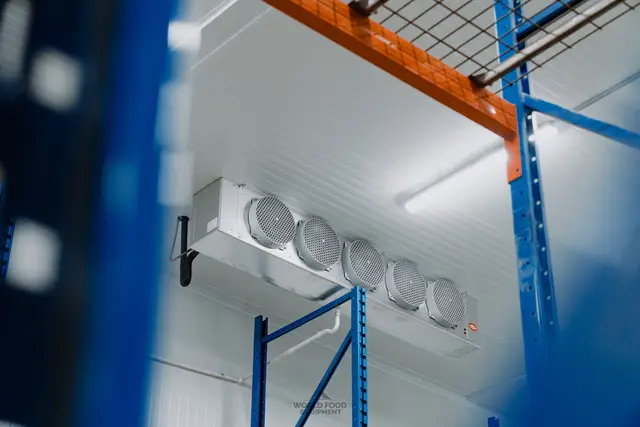
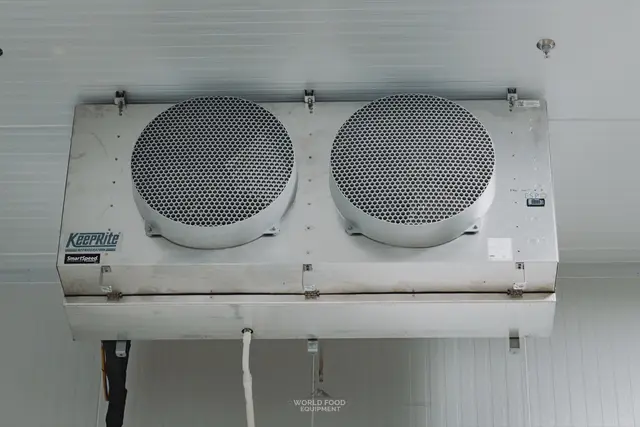
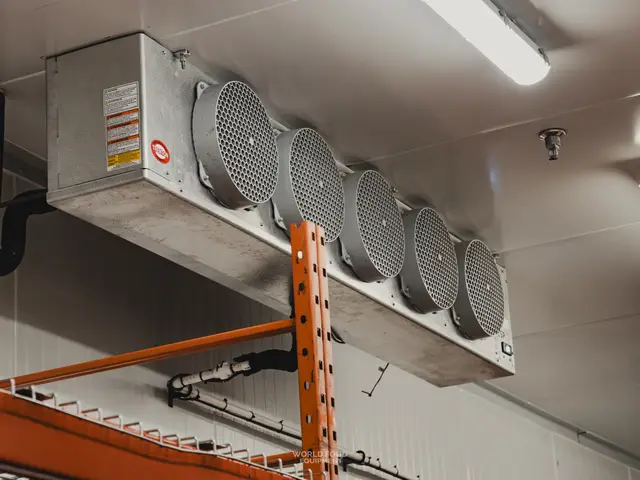
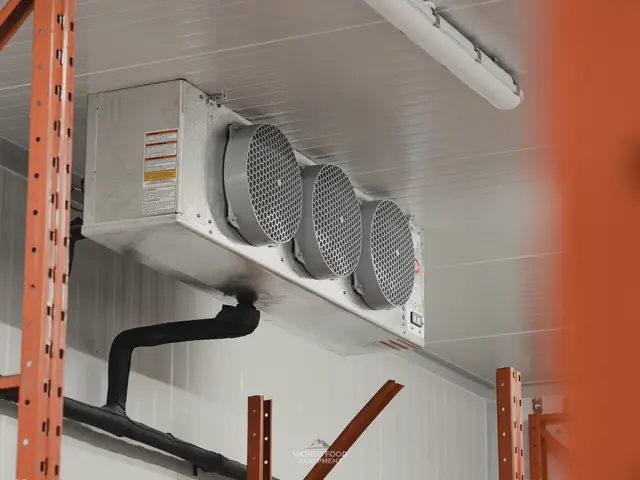
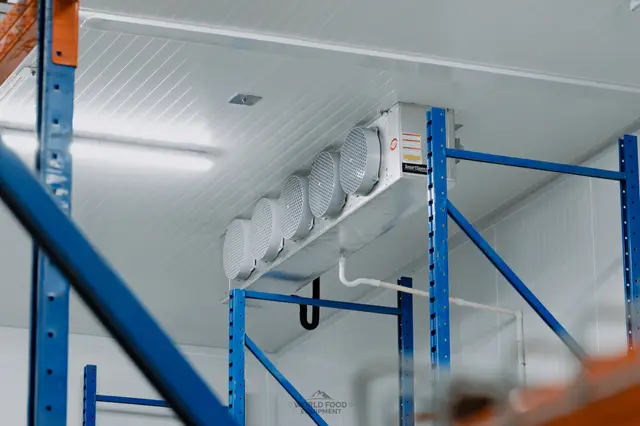
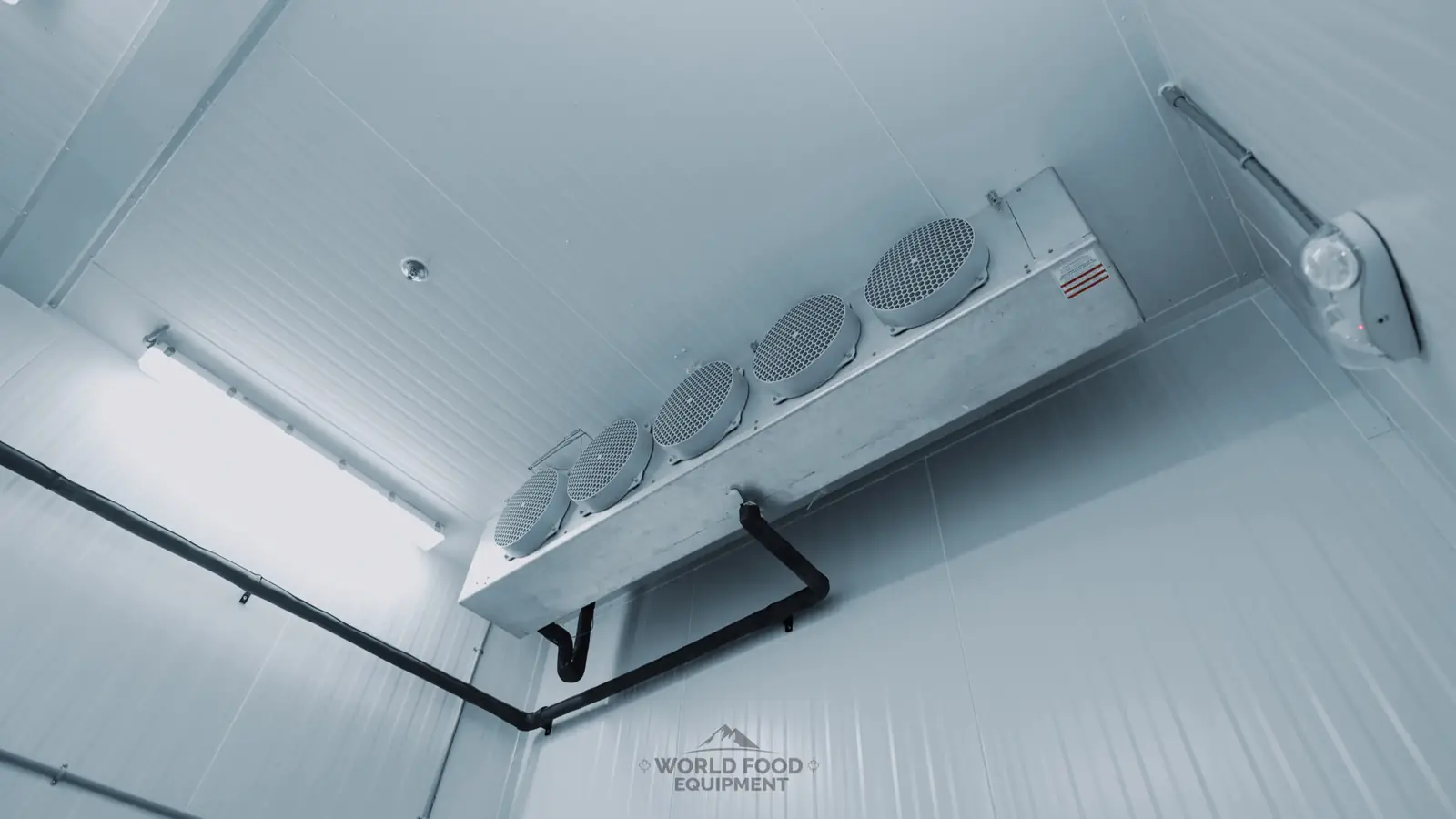
Frost on a freezer coil is normal and expected. The coil runs colder than the room, moisture freezes onto it, and a timed or demand defrost cycle melts it off before it chokes airflow. A coil that stays iced between cycles, or ices into a solid block, means defrost is not keeping up.
- Why it matters: frost on a heat exchanger “acts as an insulating layer, hindering heat transfer efficiency and increasing energy consumption.” The compressor runs longer to do the same work.
- How often freezers defrost: the US Department of Energy’s walk-in test procedure assumes four defrosts per day for freezer unit coolers and zero defrost energy for coolers. That gap is the whole difference between the two duty cycles.
- Electric or hot gas: freezer coils use electric heaters or hot-gas defrost because off-cycle air defrost cannot melt anything in a room held below freezing. Heatcraft’s smart-defrost controls are specified for electric-defrost freezers set up for three or more scheduled defrosts a day.
- Fail-safe timing: Heatcraft’s unit-cooler manual has technicians set the fail-safe at the defrost length plus 25 percent, with the worked example of a 20-minute defrost and a 25-minute fail-safe. A defrost that terminates early leaves ice behind every cycle.
- Demand defrost: NRCan notes that demand-defrost controls, which fire only when the coil needs it, can improve energy efficiency by up to six percent.
- Too much defrost is also a fault: every cycle adds heat to the box. Over-defrosting swings the room warm, which is one of the drift causes in our walk-in temperature guide.
Defrost settings live on the controller and the timer, and the refrigerant circuit sits right behind them. That is licensed work in Ontario, covered further down. Ice never fixes itself.
Ice around the door
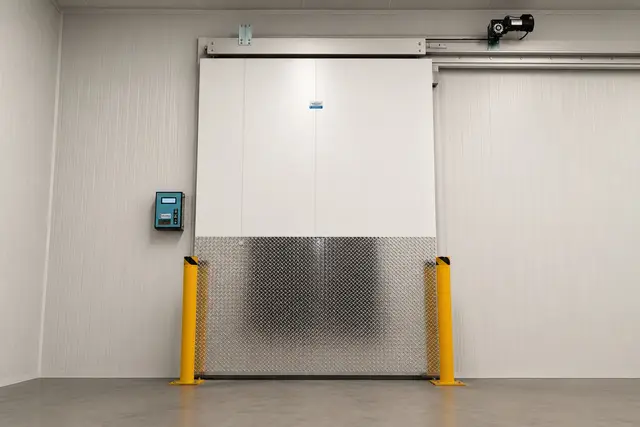
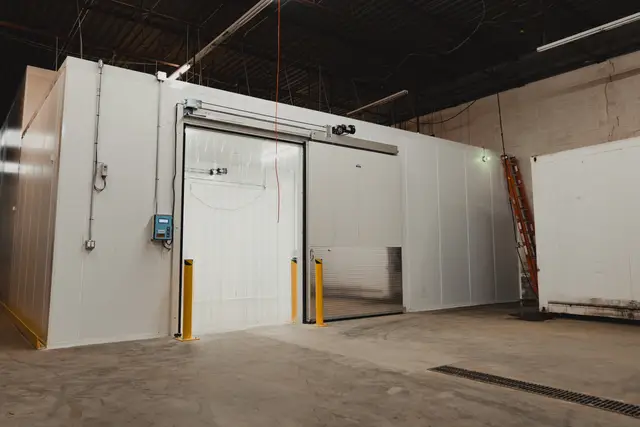
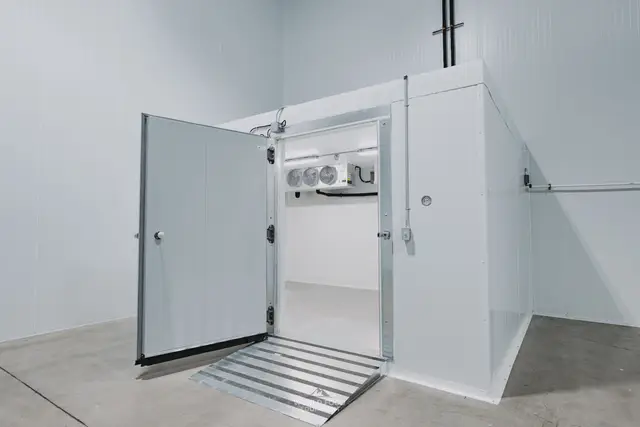
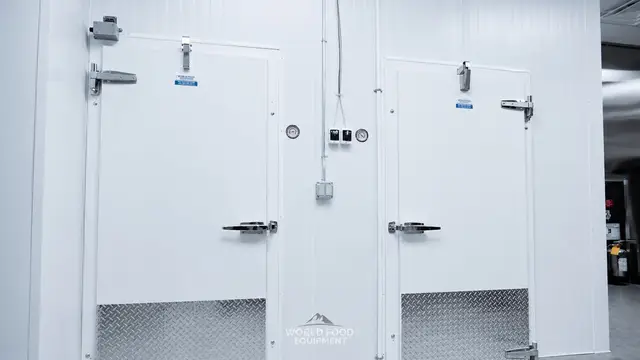
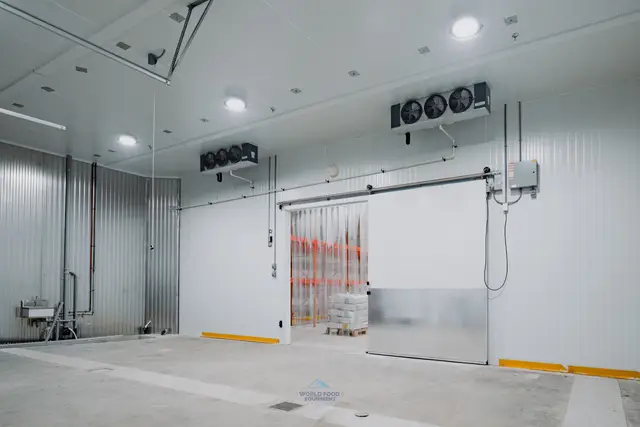
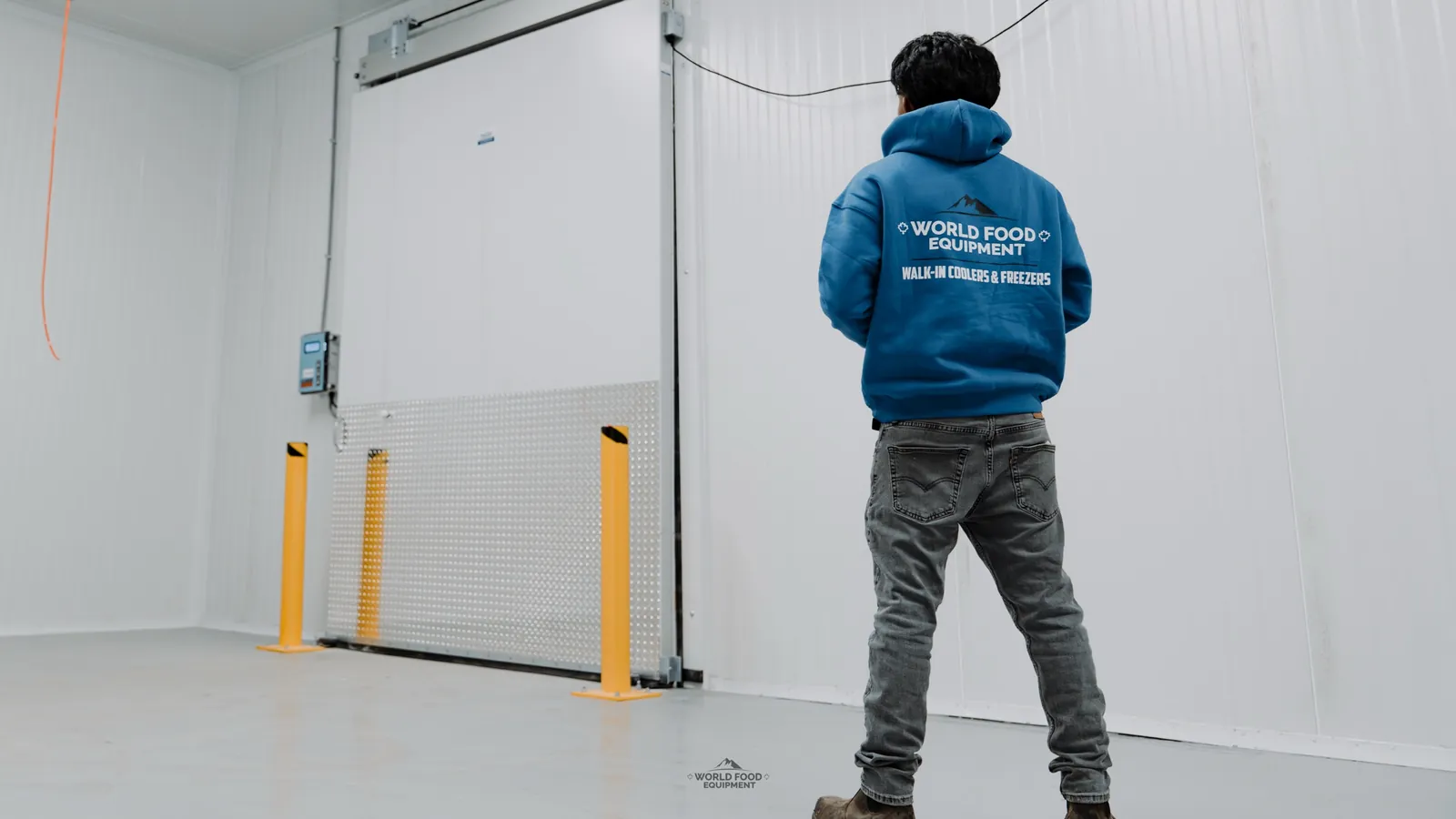
The door opens; nothing else in the envelope does, so it carries the most hardware. A freezer door frame, jamb, and threshold are electrically heated so the gasket seals against metal instead of freezing to it. Ice on the jamb, frost on the gasket, or a door that sticks shut usually means one of those heaters has failed or the seal has gone.
- Anti-sweat heater limits: US efficiency rules cap anti-sweat heaters at 7.1 watts per square foot of door opening on freezer display doors, against 3.0 on cooler doors. The alternative the rule allows is humidity-sensing controls.
- Heater controls: NRCan states that anti-sweat heater controls that sense humidity can improve system energy efficiency by two to four percent. A heater running flat out in a dry February is wasted, and a heater that is off in a humid August builds ice.
- Gaskets: ENERGY STAR lists leaky walk-in gaskets and freezer doors that do not shut among the “energy leaks” that “add up to money wasted each month.” Run a hand around the gasket; any cold draft is a moisture path.
- Closers: the same US rule requires automatic closers “that firmly close all walk-in doors that have been closed to within 1 inch of full closure.” Rutgers’ grocery guidance credits closers with ensuring that doors are sealed tight.
- Strip curtains: the rule also requires “strip doors, spring hinged doors, or other method of minimizing infiltration when doors are open.” NRCan recommends a strip curtain and closers on high-traffic units to “reduce heat loads that can overwork the compressor.” We have not found a regulator-published savings figure for strip curtains, so treat vendor percentages with care.
Pressure-relief port frost
- Pressure-relief port: warm air that enters a freezer contracts as it cools and can vacuum-lock the door. A heated relief port lets air back in so the door releases.
- Port frost: Norbec’s installation note for its port says “some condensation is unavoidable” and that ports “can be expected to generate some moisture or frost during humid weather conditions.” It belongs where entering air does not hit a cold surface, and heavy ice at the port usually means its heater has failed.
The heater capacities above are US federal law and not an Ontario code requirement, but they are the baseline most door hardware sold in Canada is built to. Coldmatic door systems on our builds carry heated frames as standard, which the freezer buyer’s guide covers in the hardware section.
Ice on the floor or at the threshold
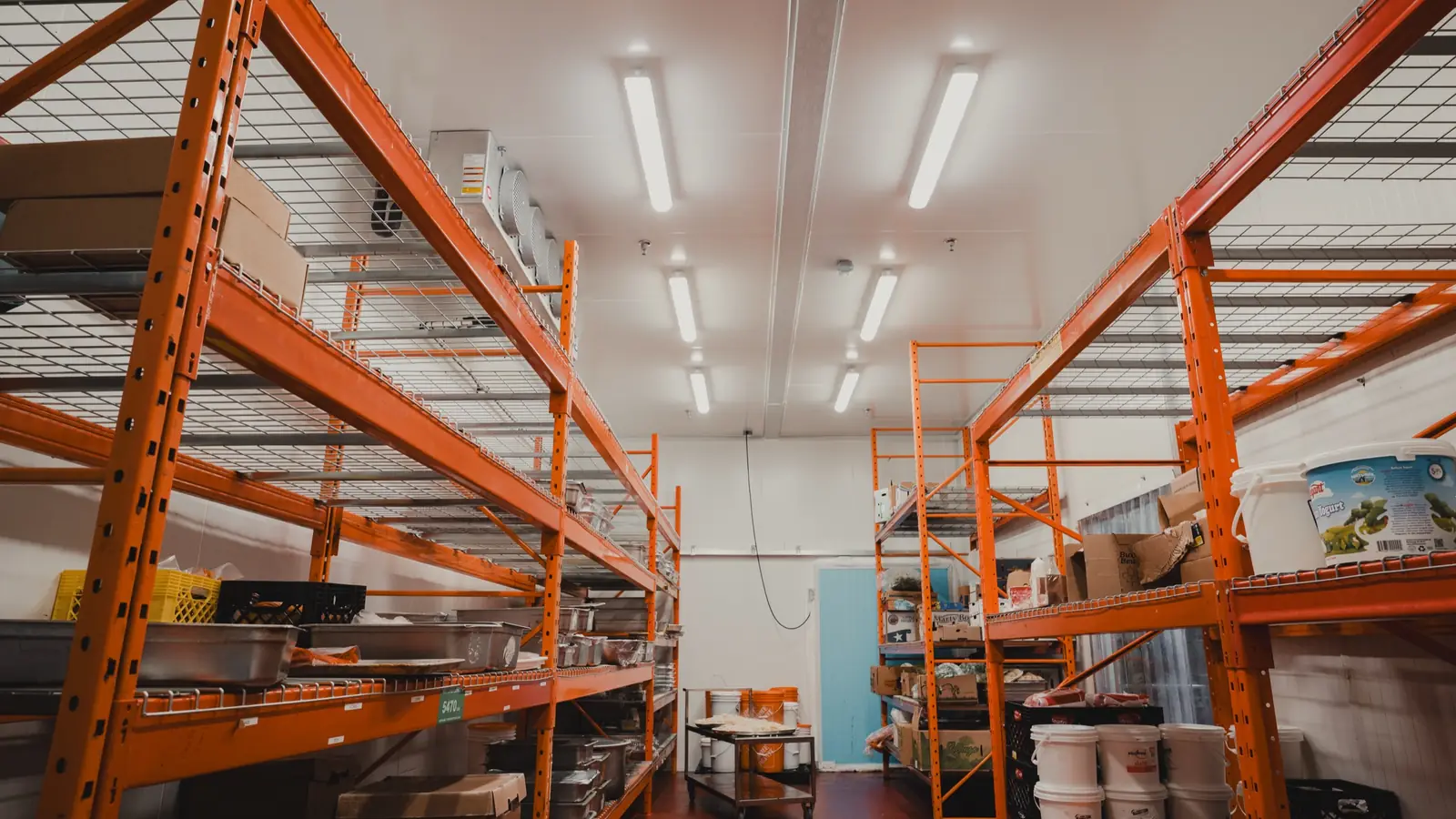
Floor ice comes from two directions. Meltwater from above that never reached the drain, and ground frost from below. Both are design questions settled at install, and both get worse the longer they run.
- Drain lines freeze: defrost water leaves the evaporator drain pan through a line that runs through a room held at minus 18°C. Heatcraft specifies 20 watts per linear foot of drain-line heat for 0°F rooms and 30 watts for minus 20°F rooms, with the line trapped, insulated, and pitched a quarter inch per foot. A dead heat tape sends every defrost cycle onto the floor as ice.
- Drain pan heaters: the pan under the coil carries its own heater on freezer units. When it fails, the pan fills, overflows, and the floor under the evaporator becomes a rink. Check the pan first.
- Frost heave: a freezer on a bare slab drives the freezing plane into the soil. The National Research Council’s Canadian Building Digest on frost heave directs builders to “either replace the frost-susceptible soil or prevent it from being frozen by supplying heat or insulation, or a combination of both.” Insulated floor panels do the second part, and the freezer cost guide explains why they are not optional.
- Threshold condensation: the strip of floor at the door sits between a heated frame and a frozen room, and slush there is usually a gasket or closer problem upstream, not a floor problem.
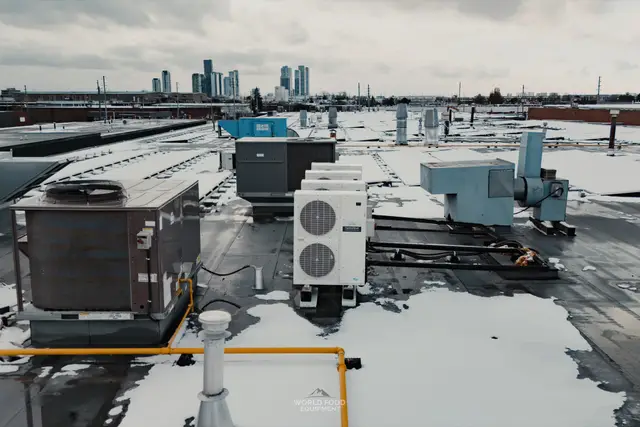
- Outdoor boxes: an exterior freezer adds meltwater at the door and snow load overhead to the same list, covered in outdoor versus indoor placement.
Reading the ice: symptom to cause
| Where the ice is | Most likely cause | Who fixes it |
|---|---|---|
| Thin, even frost on the coil that clears each cycle | Normal operation | Nobody, this is working |
| Coil iced solid, weak airflow, temperature drifting up | Defrost not initiating, terminating early, or failed heater | 313A refrigeration mechanic |
| Ice on the door jamb, gasket frozen to the frame | Door frame heater failed, or gasket torn | Gasket: maintenance visit. Heater: electrician or refrigeration tech |
| Frost line around the door from the inside | Gasket not sealing, door not closing fully, closer out of adjustment | Maintenance visit, often one trip |
| Ice under the evaporator or a wet floor after defrost | Drain line or pan heater failed, drain blocked | Refrigeration tech |
| Ice at the pressure-relief port | Port heater failed or humid-season load | Refrigeration tech |
| Slab cracking or the box lifting at one corner | Frost heave under an uninsulated or unheated floor | Structural fix, involves the installer |
| Frost on product and walls near the door only | Door left open, strip curtain missing or parted | Operator, today |
Layout mistakes that build ice from day one
Some freezers ice from day one because nothing failed; the hardware is simply in the wrong place. These are install decisions, and they are cheaper to get right on the drawing than to correct after the box is running. Paper is cheap.
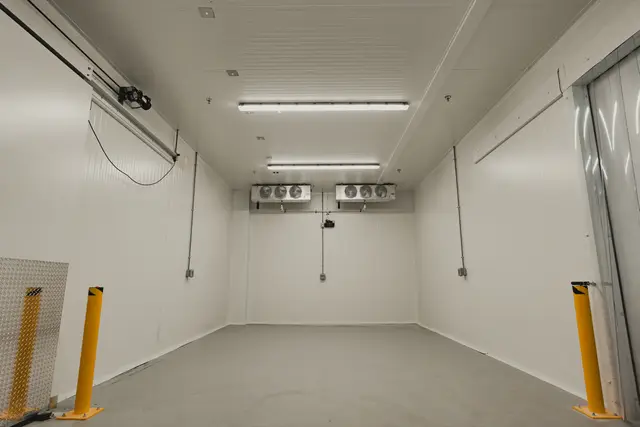
- Evaporator over the door: Heatcraft’s placement rules are direct: “NEVER locate evaporators over doors.” A coil hung above the doorway pulls every door-open slug of humid air straight through itself and ices faster than any defrost schedule can clear.
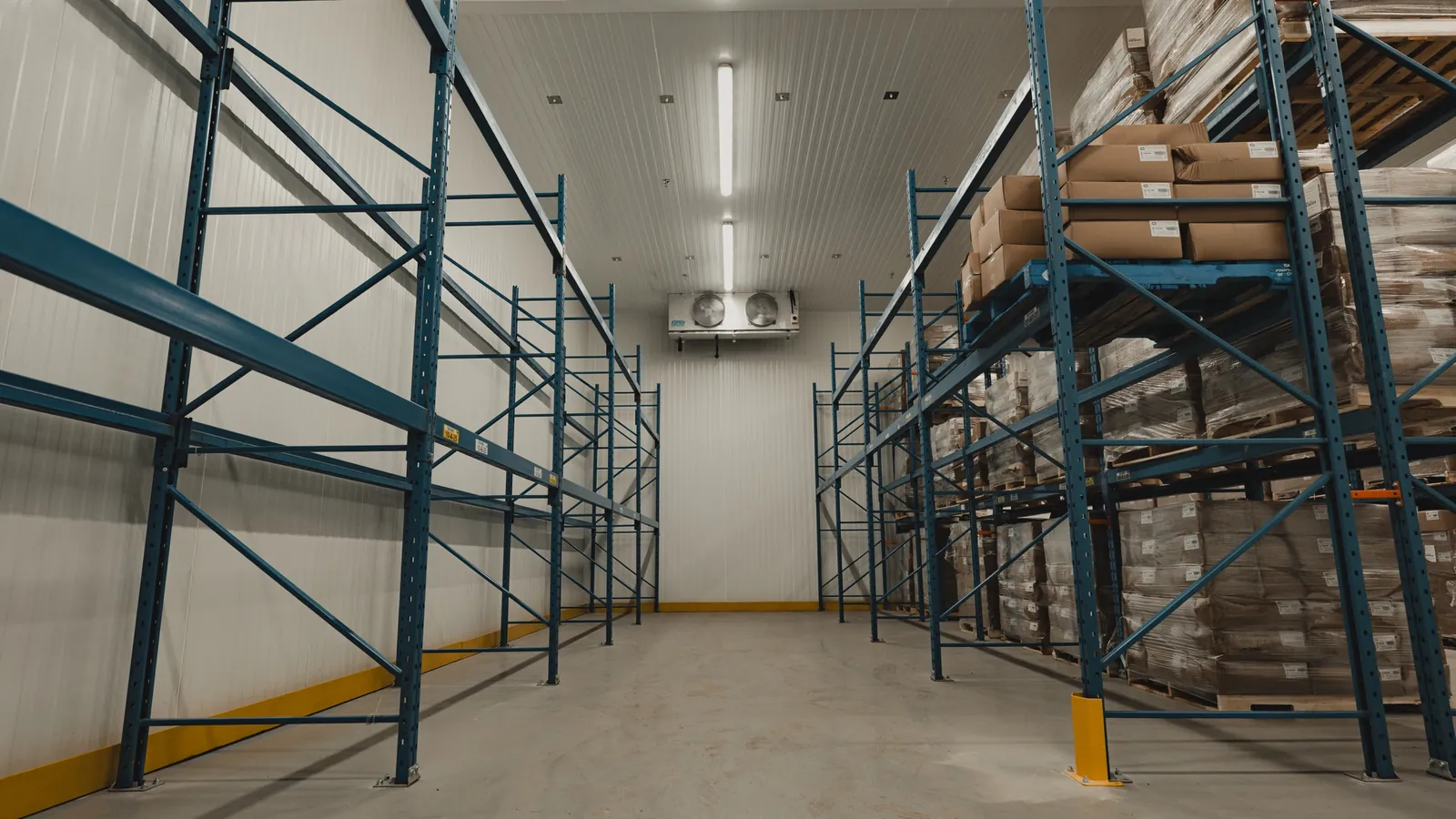
- Airflow blocked: the same rules require the air pattern to cover the entire room. Product stacked against the coil discharge, or racking that walls off a corner, creates dead zones where frost never gets cleared.
- Undersized for traffic: a box specified on volume alone, with no allowance for door openings per hour, spends its capacity fighting infiltration. Sizing questions belong in the self-contained versus remote refrigeration guide.
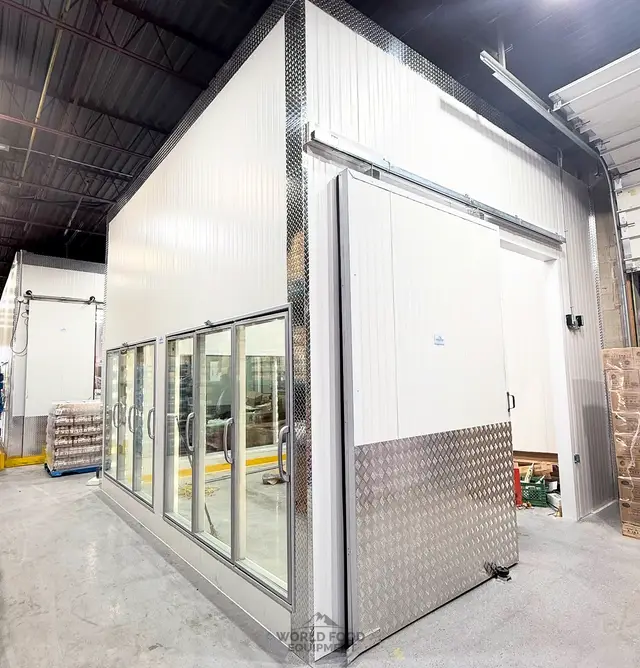
- No vestibule on high-traffic doors: a freezer that opens straight onto a hot dish pit or a loading dock breathes humid air on every cycle. A cooler in front of the freezer, or an air lock, is the standard fix on grocery and distribution builds.
- Panel joints: a wet panel core loses R-value and frosts on the inside face. Joint sealing and vapour barriers are covered in the panel and R-value guide.
What you can do today, and what needs a licensed tech
Operators can close the moisture path. Licensed technicians fix the hardware that was supposed to close it. Knowing the line keeps you from voiding a warranty or doing work that Ontario reserves for a licensed trade.
- Operator, today: keep the door shut between trips, restore any parted strip curtain, wipe gaskets and check them for tears, keep product off the coil discharge, and stop chipping ice off the evaporator with tools. Chipping bends fins and punctures tubes.
- Scheduled maintenance: ENERGY STAR reports that coil cleaning showed a 17 percent average energy reduction across refrigeration types and recommends evaporator and condenser service every six months on walk-ins. Gasket inspection, drain treatment, and defrost verification ride along on the same visit. That is the scope of our walk-in maintenance program.
- Licensed refrigeration work: in Ontario, Refrigeration and Air Conditioning Systems Mechanic (313A) is a compulsory trade, and anyone opening the refrigerant circuit also needs an ozone-depleting-substances card under O. Reg. 463/10. The province is explicit that “You cannot work on or fix refrigeration equipment with only an ODP certificate card.” Defrost controls, heater circuits, and charge all fall on that side of the line.
- Verify the credential: how to check a technician on the public register is in our installer licensing checklist.
- Repair or replace: a box that ices at the door, the floor, and the coil at once is usually telling you the envelope has failed, not one heater. Work through that call on the repair or replace page before paying for a fourth service visit. Replacement gaskets, heaters, and door hardware are listed on the refrigeration parts page.
How we build a freezer that stays dry
Every ice problem above is cheaper to prevent at install than to chase later, so the hardware list on a WFE freezer is written around moisture. This is what a walk-in freezer from our crew carries as standard, not as an upgrade.
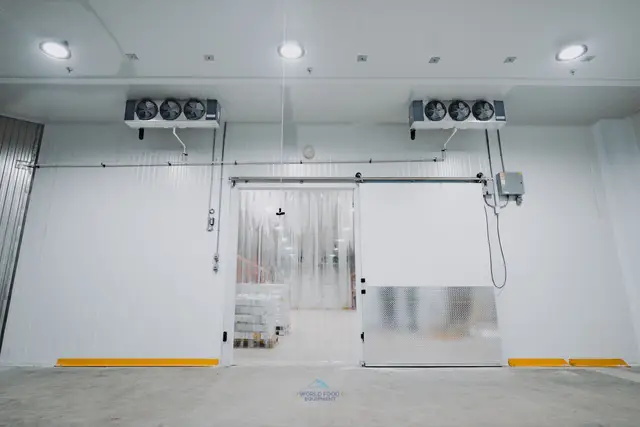
- Heated door package: Coldmatic door systems with heated frame, jamb, and threshold, Kason cam-lift hinges that swing the door shut, and a strip curtain on every traffic door.
- Insulated structural floor: freezer floor panels with a wear surface on every on-grade freezer, with sub-floor heat or ventilation confirmed on site before the box is ordered.
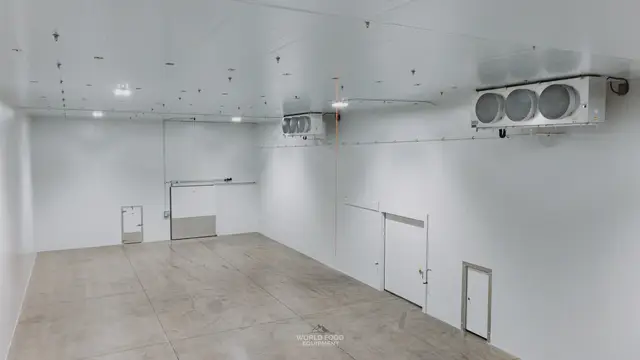
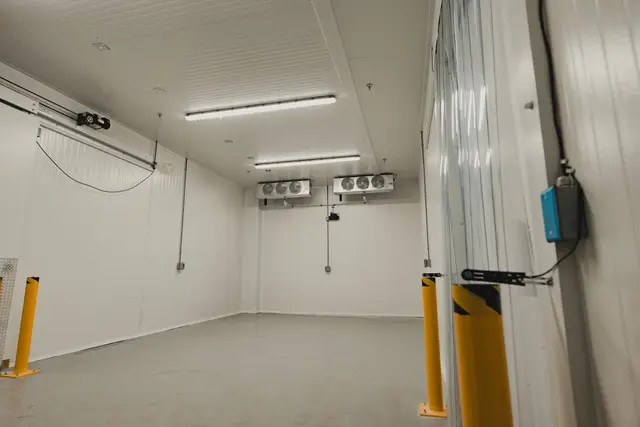
- Evaporator placement: coils positioned for full-room air coverage and never over the door, with drain lines trapped, heat-taped, insulated, and pitched to an open drain.
- Commissioning: pull-down to design temperature, defrost initiation and termination verified on the controller, fail-safe set, door heaters and pressure-relief port checked, and a written report at handoff.
- Maintenance after: scheduled coil, gasket, and drain service on the boxes we install, on a quarterly to annual cadence set by the duty cycle, logged against the install record.
The short version
Ice in a walk-in freezer is humid air that got in and froze. Read the location, then match the fix to the right person.
- Coil: frost that clears every cycle is normal; a coil that stays iced is a defrost fault.
- Door: ice at the jamb or gasket is a heater, gasket, or closer problem.
- Floor: ice under the coil or at the threshold is a drain heater, pan heater, or slab problem.
- Who fixes it: operator habits and maintenance for seals and curtains; a 313A mechanic for anything on the refrigeration or control side.
Frequently asked questions
Why is my walk-in freezer icing up?
Because humid air is getting in faster than the system can deal with it. The usual entry points are a door that stands open too long, a torn or unsealed gasket, a missing strip curtain, or a failed door-frame heater. Once inside, that moisture freezes on the evaporator coil first, and if the defrost cycle is not clearing it, ice spreads from there.
How often should a walk-in freezer defrost?
Freezer evaporators typically run several scheduled defrosts a day. The US Department of Energy’s test procedure assumes four per day for freezer coils and none for coolers, and Heatcraft specifies its smart-defrost controls for freezers set up with three or more. The right count for a specific box depends on door traffic, product load, and humidity, and it is set on the controller by a licensed technician, not by the operator.
Is ice on the evaporator coil normal?
A light, even frost that melts off during each defrost cycle is normal and is exactly what the defrost system exists to handle. A coil that is iced solid, that has ice bridging between fins, or that stays iced between cycles is a fault. It usually means defrost is not initiating, is terminating early, or a defrost heater has failed.
Why is there ice around my walk-in freezer door?
Freezer door frames, jambs, and thresholds are electrically heated so the gasket seals against metal instead of freezing to it. Ice on the jamb or a gasket frozen to the frame points to a failed frame heater, a torn gasket, or a door that is not closing fully. Frost forming from the inside along the door edge is a seal problem rather than a heater problem.
Can I chip the ice out of my walk-in freezer?
Not off the evaporator. Chipping ice off the coil bends fins, can puncture a refrigerant tube, and does nothing about the moisture path that built the ice. Loose ice on the floor can be cleared by hand, but the drain heater or seal that let it form still needs attention or it will be back after the next defrost cycle.
Who can fix a walk-in freezer that keeps icing up in Ontario?
Anything on the refrigeration or control side, including defrost timers, heaters wired into the unit, and refrigerant charge, is 313A licensed work in Ontario. Gasket replacement, strip curtains, closers, and coil cleaning fall under routine maintenance. If ice is showing up at the coil, the door, and the floor at the same time, the envelope has usually failed and a repair-or-replace assessment is the right next call.
Plan Your Build
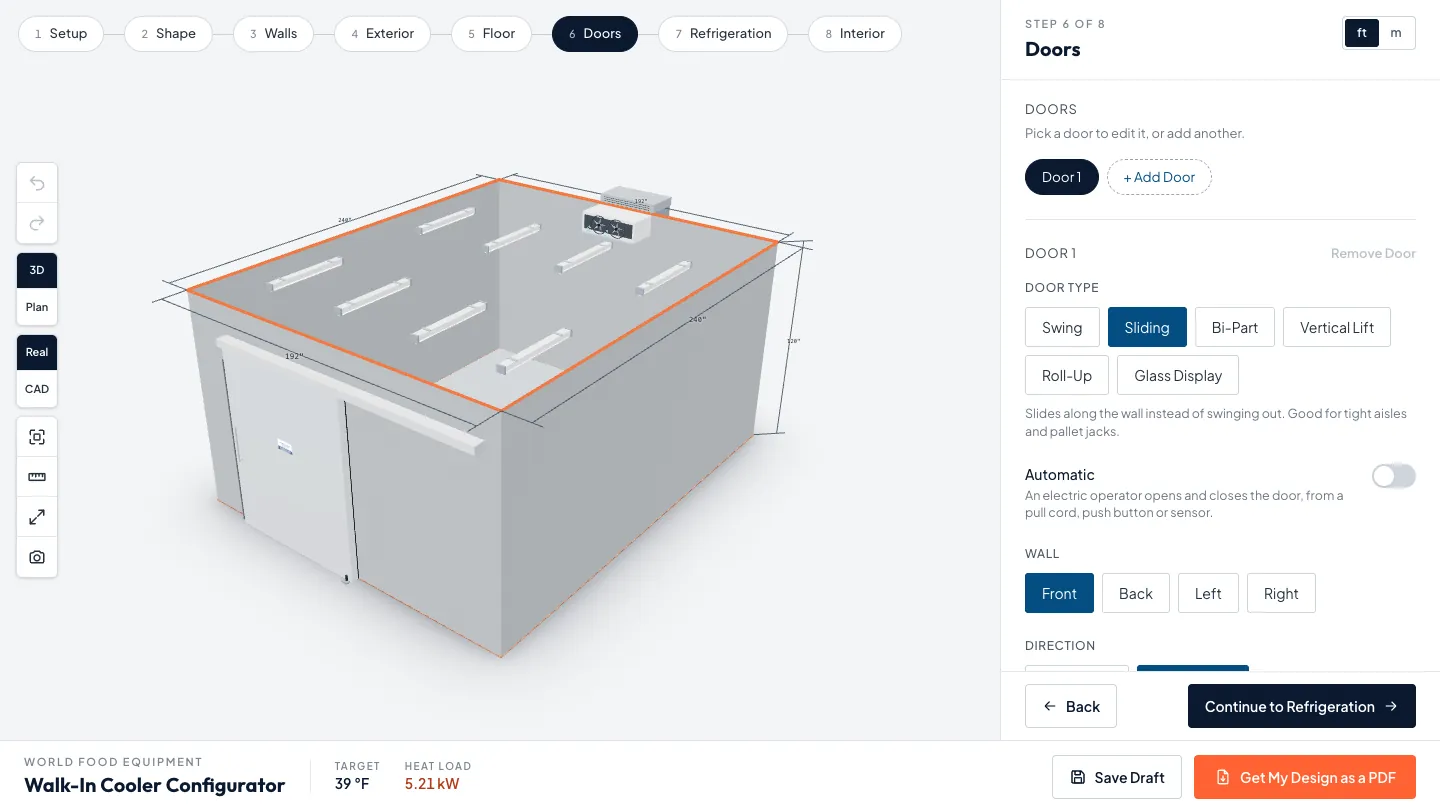
Size your walk-in in the configurator.
Set dimensions, doors, and refrigeration in 3D, then download the spec sheet to share.
Read Next
Plan a Walk-In Cooler or Freezer in 3D: 8 Decisions
The eight decisions that shape every walk-in cooler or freezer, and where to make each one in our free 3D configurator: size, type, panels, floor, doors, refrigeration, racking and lights.
Industrial Walk-In Freezers: What to Plan Before You Build
What changes when a walk-in freezer gets big enough for pallets and forklifts: the slab, the clear height, the doors, the refrigeration plant, and the Ontario rules that start to apply.
Walk-In Cooler & Freezer Doors: Types, Sizes, Options
Swing, sliding, pallet and roll-up doors for walk-in coolers and freezers: which one fits your traffic, the sizes we build to, what a freezer door adds, and the Canadian rule every walk-in door has to meet.
Walk-In Coolers — Custom Builds
See the service page for sizing, anatomy, and what's included in a WFE install.