
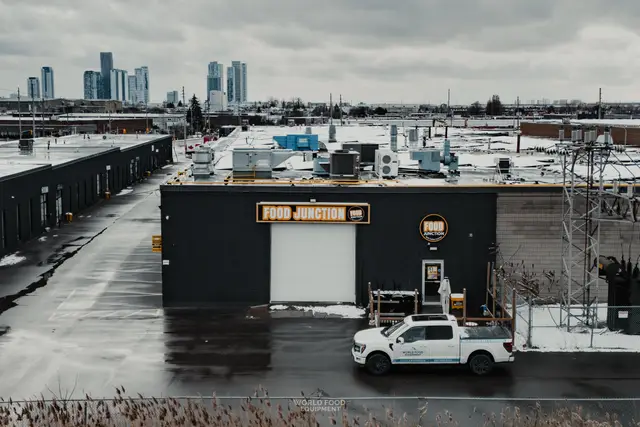
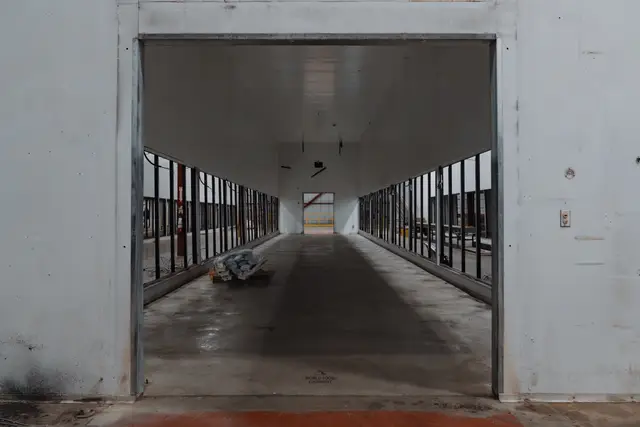
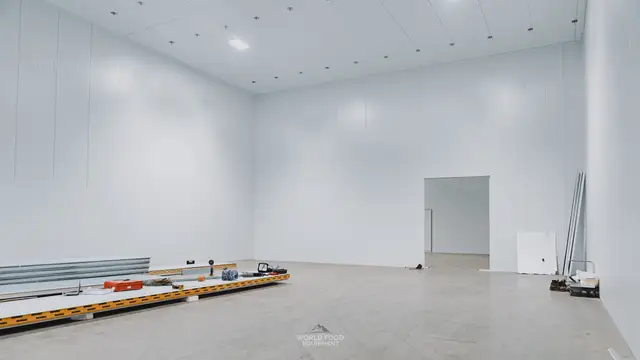
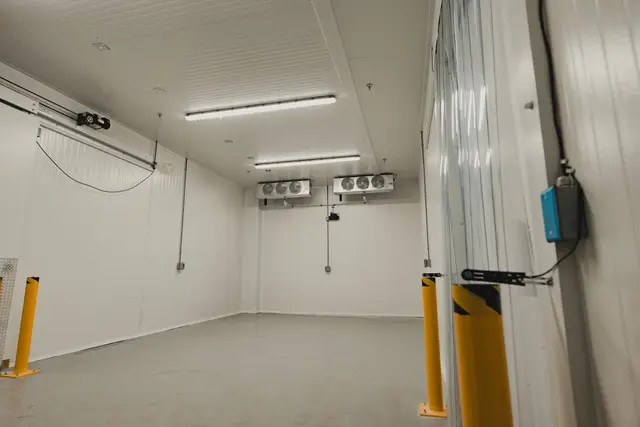
World Food Equipment logo, walk-in coolers and freezers, Ontario
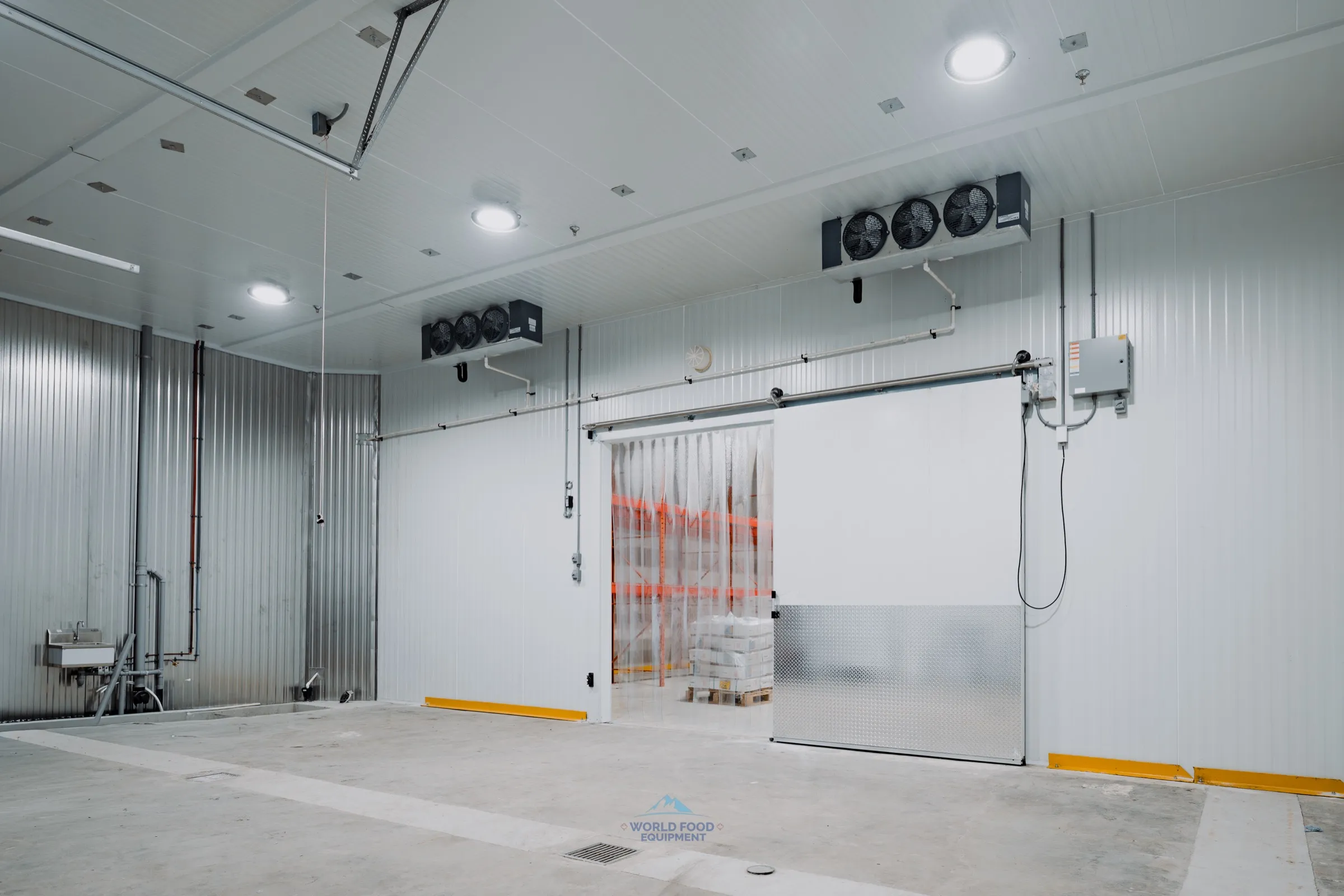
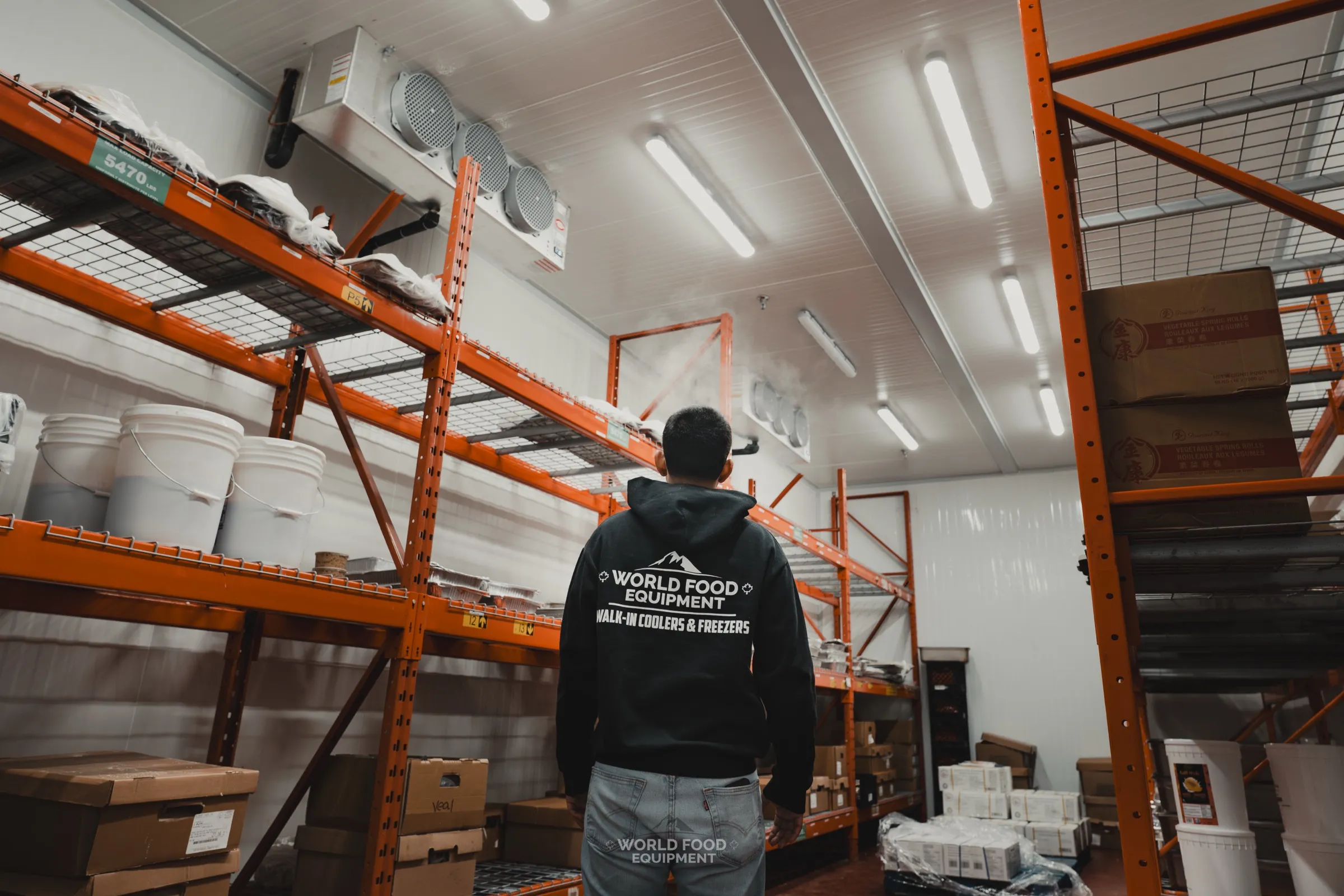
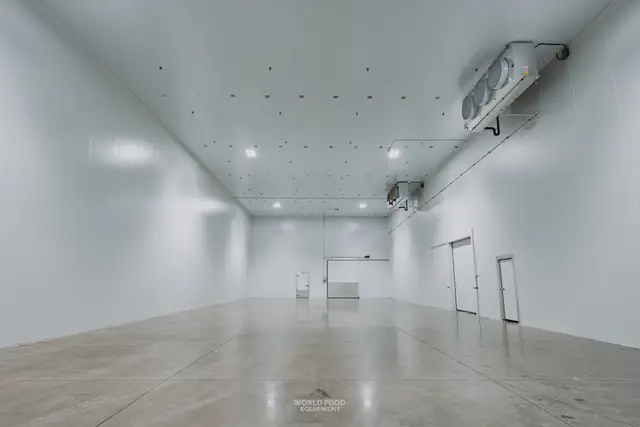
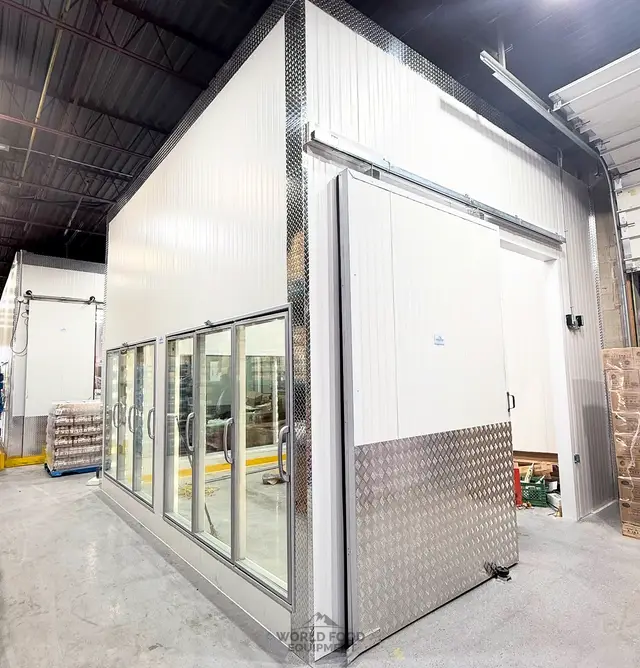
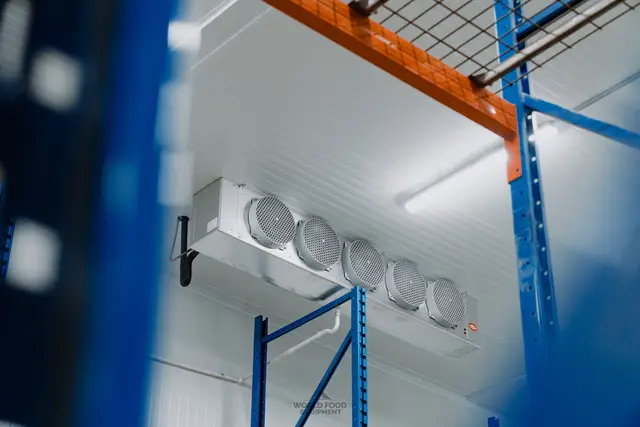
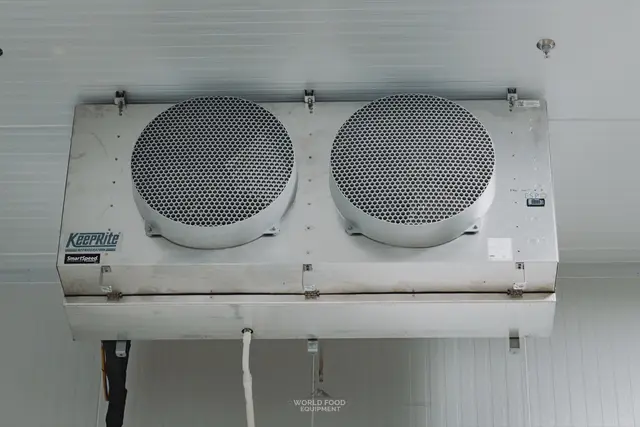
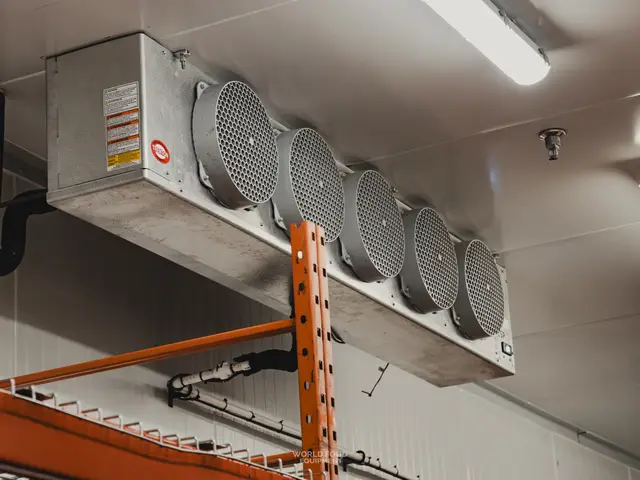
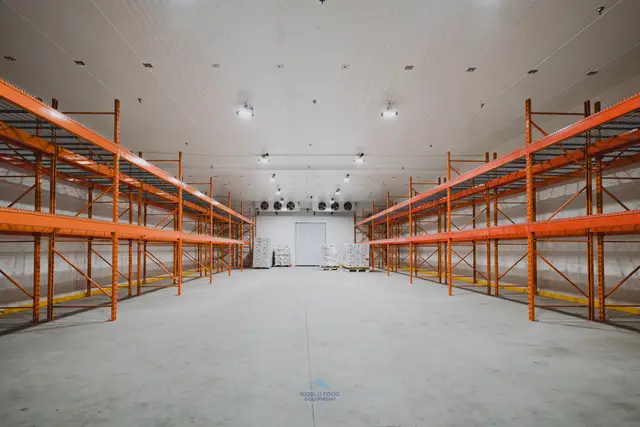
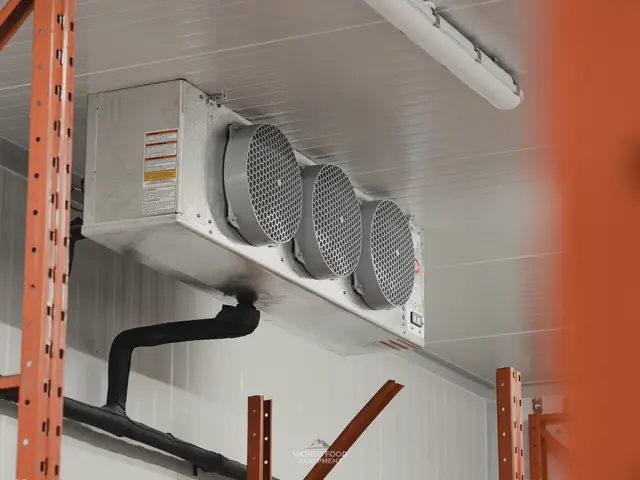
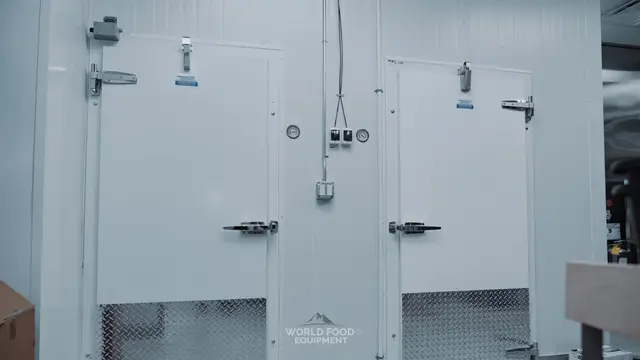
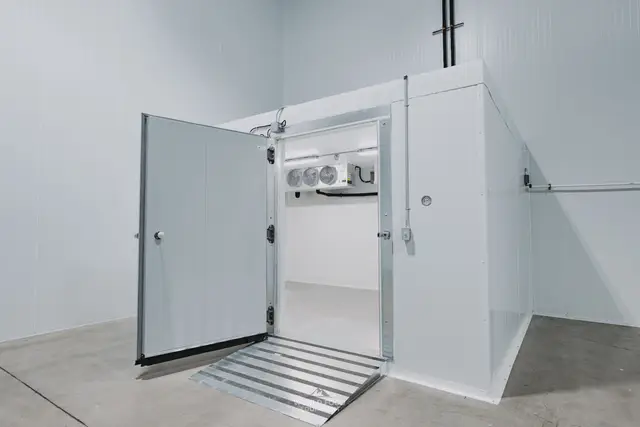
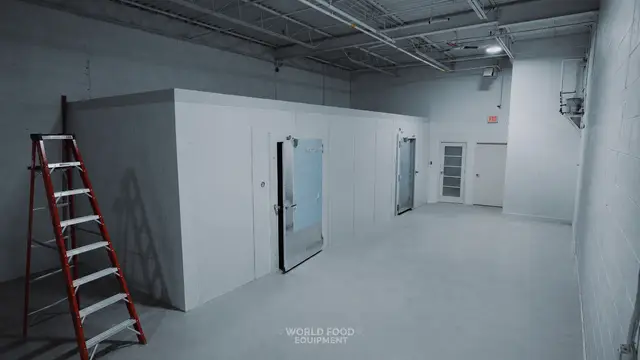
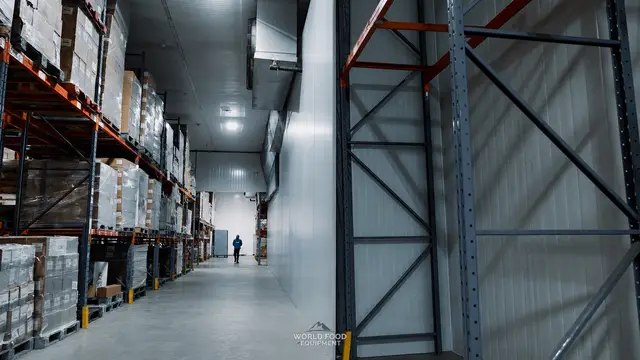
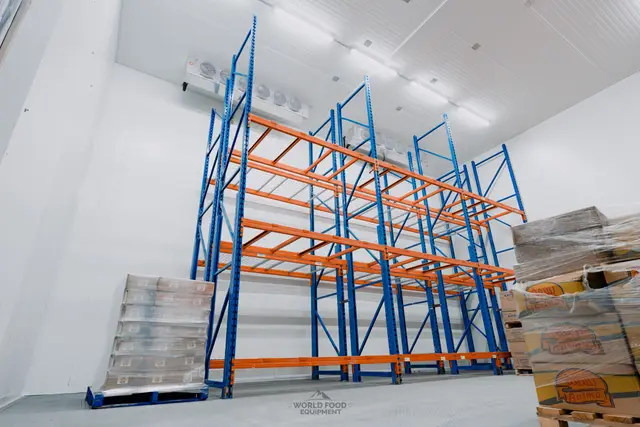
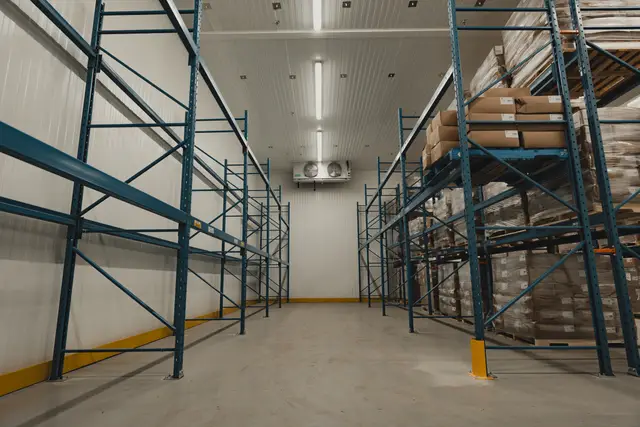
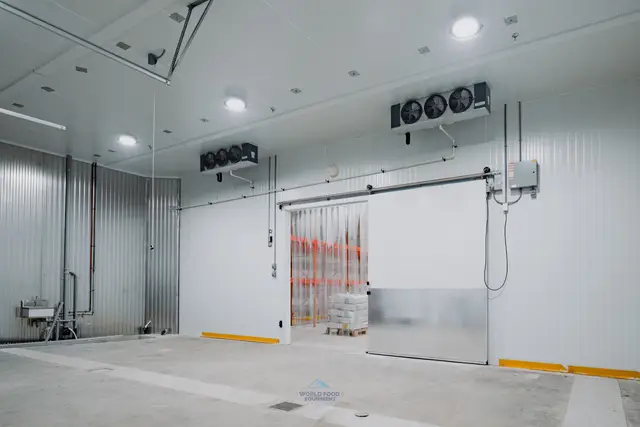
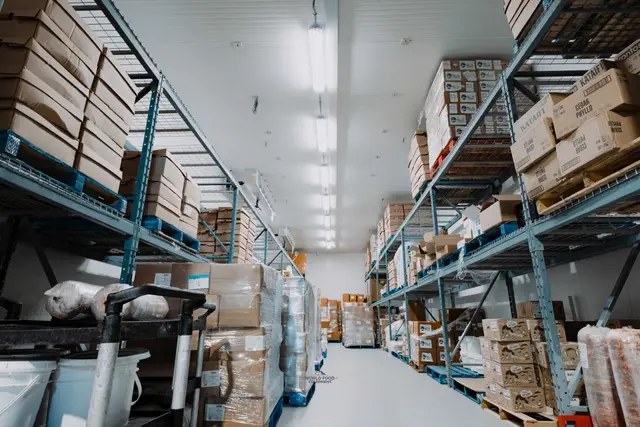
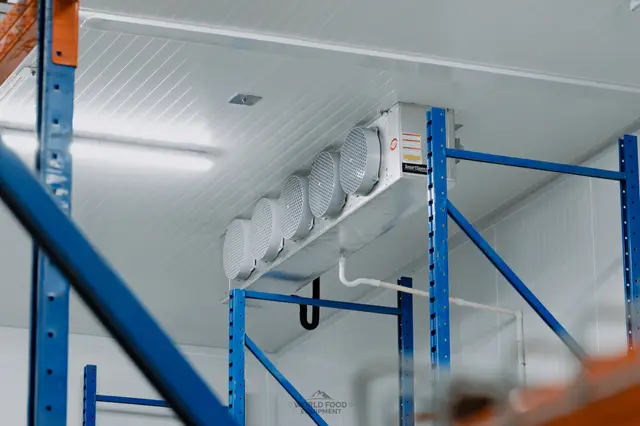
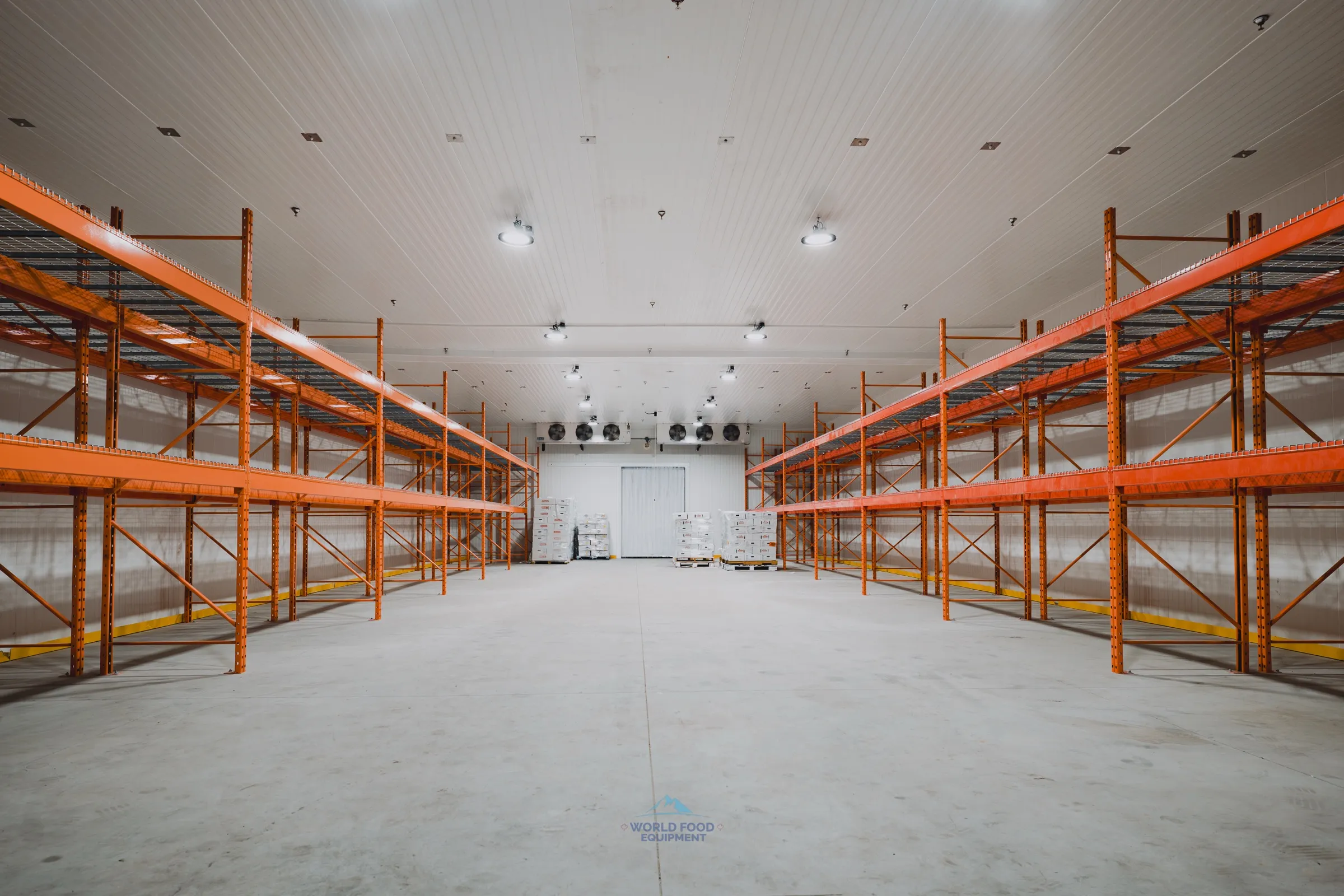
Wide industrial cold storage room in a halal meat processing facility, built by World Food Equipment in Ontario. Twin runs of orange industrial pallet racking on both sides of a central forklift aisle, six ceiling-mounted KeepRite evaporator units lined across the back wall, insulated panel walls and ceiling, polished concrete floor

Market / Food Processing

Industrial cold storage for Ontario plants that run tonnage.

Industrial cold storage for Ontario meat processors, dairy operations, bakery wholesale, and federally inspected food processors. We size industrial freezers, walk-in coolers, and multi-zone cold rooms to the heaviest pull-down hour, CFIA-spec from day one, with an in-house WFE crew. We do both sides of the work: full installs as your industrial refrigeration contractor, and equipment supply to facility teams running their own crew.

Built for
5,000+ lb/week
processing throughput
Spec'd to
CFIA · HACCP
NSF/ANSI 7
Zones
Chill + freeze
under one envelope
Installed by
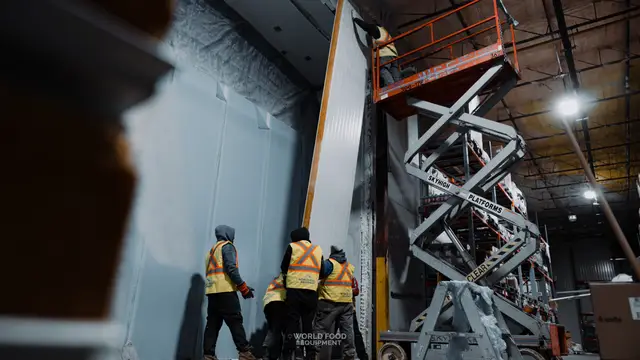
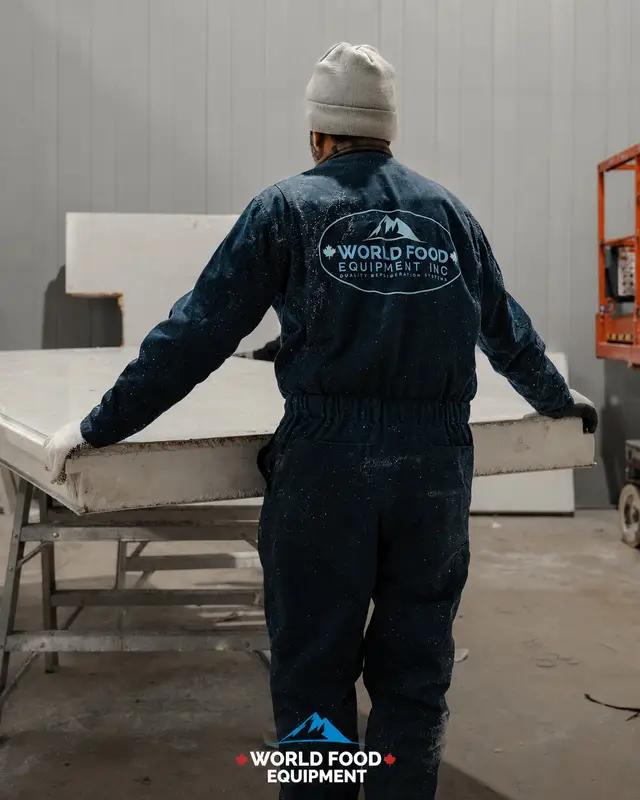
In-house WFE crew.
Never subcontracted.
01 · Est.
30+ years
Ontario · since 1995
02 · Crew
100% in-house
313A licensed · never subbed
03 · Quote
24h turnaround
Senior project advisor
04 · Scope
New + retrofit
Greenfield · brownfield · phased

Cold Storage Challenges

What this market
actually needs
from a walk-in.

A processing walk-in receives hot product directly off the line, so refrigeration sizing, door duty cycles, and CFIA-spec construction all differ from a commercial kitchen build.

01
Refrigeration load

Sized for the heaviest hour, not the average

A processing walk-in pulls hot product to setpoint before the next batch hits. We size condensers to the heaviest expected pull-down event, not against an average cubic-foot estimate. The industrial freezer math is closer to warehouse infrastructure than to commercial.

Load basis
Peak hour
Sizing buffer
+25%
Condenser
Remote
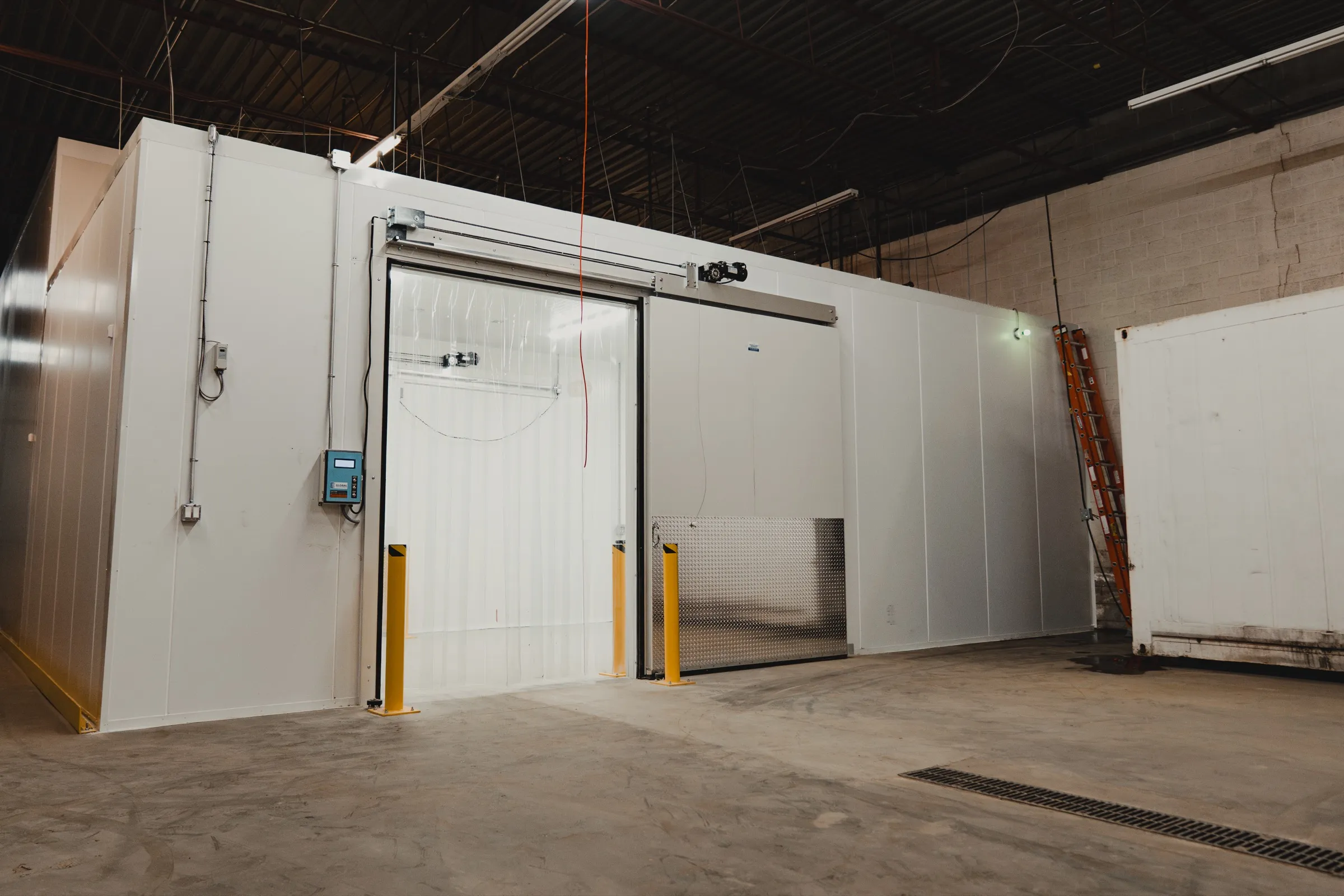
02
Multi-zone storage

Chill and freeze under one envelope

Most operations need chill (28–34°F) and freeze (−10°F) in the same build. Independent temp control, shared mechanical, proper insulation between zones so the two rooms do not fight each other. The chill zones often double as food-processing chillers when operators want cooler plus freezer combinations.

Chill range
28–34°F
Freeze setpoint
−10°F
Envelope
Shared mech
03
CFIA + HACCP

Federally inspected from day one

Federally inspected facilities have stricter requirements than provincial. NSF-certified panels with Type 304 stainless or food-grade PVC washdown interiors, sealed seams, sanitary corners, sloped drainage, continuous temperature data logging. All spec'd in from the start, all documented for your federal inspector at handover.

Panel rating
NSF/ANSI 7
Seams
Sealed
Logging
HACCP
04
Door duty cycles

Rated for 1,000+ cycles a shift

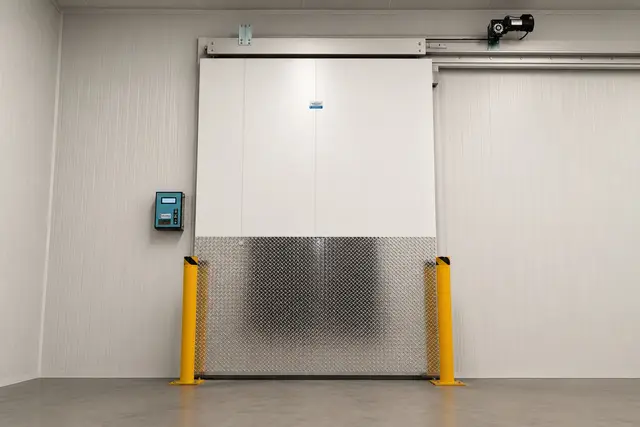
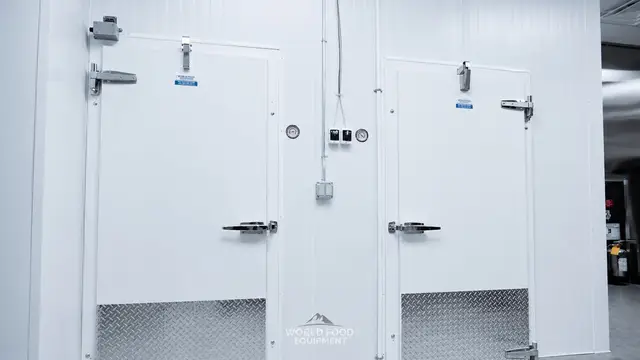
A meat-processing cooler can cycle a door a thousand times in a single shift. Heavy-duty hinges rated for industrial cycling, strip curtains, air doors where forklifts justify them, motorized roll-ups where cycle count demands it. Standard cooler doors do not last 18 months under processing duty.

Cycles / shift
1,000+
Hinge
HD steel
Curtain
Strip + air
05
Floors + drainage

Sealed, sloped, sanitary

Processing floors get washed daily. Sealed-seam floors with sloped drains, sanitary cove base where wall meets floor, corrosion-resistant hardware. Drainage is designed around your wash-down workflow. The cove base is the failed-inspection seam.

Seams
Sealed
Wall base
Sanitary cove
Slope
To drain
06
Specialty certification

Halal, kosher, and federal coordination

Halal and kosher operations have separation and documentation requirements beyond standard CFIA. We coordinate directly with your certification body (HMA, ISNA, IFANCA, OK, OU) so the build fits the certification as well as the federal regulations.

Halal
HMA · ISNA
Kosher
OK · OU
Separation
Designed in

Fig. 01 · Sample build · how product flows

How a build
like yours fits
together.

A 2-zone cold storage build (~2,200 sq ft) that drops onto your existing cut floor. Product moves left to right, off your line into the chill room, down into the freezer, out the dock door. Mechanical lives in its own room so heat stays out of your process.

W
A typical processing build
Two cold zones added onto your existing floor, product moves left to right

What you actually get

Six things we spec
  1. Right-sized refrigeration
    Cooling sized for your peak runs, kept in its own room.
  2. Two independent zones
    Cooler and freezer each hold their own temperature.
  3. CFIA-ready from day one
    HACCP temperature logging, documented for your inspector.
  4. Industrial-grade doors
    Built to take 1,000+ open-and-close cycles a shift.
  5. Wash-down-ready floors
    Sealed floors, with drains placed where you actually wash.
  6. Loading dock + staging
    Pallets stage outside the cold, then straight onto the truck.
Sample layout · we size every build to your product, throughput, and floor
 Sample build · 5,000–15,000 lb/week scale

Fig. 02 · Why generic specs fail

Restaurant / grocery
vs processing walk-in.

Same panels. Processing-scale refrigeration, doors, and CFIA spec underneath.

Generic / commercial
Restaurant or grocery
Spec'd by WFE
Processing walk-in
Product holding
2–3 days prepped
Hot product from line, then weeks
Throughput
Cubic-foot estimate
5,000+ lb/week, plant scale
Compressor basis
Average holding load
Heaviest-hour pull-down + 25%
Compliance
Provincial health board
CFIA · HACCP · NSF/ANSI 7
Door duty
200–400 cycles/shift
1,000+ cycles · HD + strip + roll-up
Floor & drainage
Standard sealed seam
Sanitary cove + daily wash-down spec
Coordination
Direct to operator
GC · process eng · cert body

Fig. 04 · Why processors call WFE

Real reviews.
Real installs.
30+ years in.

Rated 5.0/5 from 40+ Google reviews
"
a year ago
Reliable and efficient refrigeration systems. Great temperature control, quiet operation, and excellent customer service. Highly recommended for food businesses.
K
Kirisan Thavaraja
Verified Google review
Established
Since 1995
Certified
313A techs
Crews
100% in-house
Coverage
All of Ontario

Deep Dive · the long-form spec

Everything else on a
processing-scale cold-storage build.

The detail above covers the build. The detail below covers the rest: CFIA documentation, multi-zone engineering, halal/kosher coordination, GC handoffs, and a recommended starting setup. Open any section.

CFIA-Spec Cold Storage at a Glance

CFIA-registered processing facilities need food-grade industrial refrigeration that meets stricter equipment, sanitation, and documentation requirements than provincially licensed food premises. Baseline requirements include NSF/ANSI 7 certified panel ratings, sealed seams, sanitary cove corners, sloped drainage, and temperature data logging integrated with HACCP records.

WFE specs to CFIA requirements from day one and supplies the documentation your HACCP plan and federal inspector need under the Safe Food for Canadians Regulations.

For washdown and high-moisture rooms we spec USDA-compliant panel finishes: Type 304 stainless steel or food-grade PVC-laminated interiors over an antibacterial, moisture-resistant core. Process rooms typically run 3 to 4 inch panels (about R-27 to R-36), and the assemblies carry FM-approved, ASTM E84, and CAN/ULC-S102 fire and safety ratings.

Why Processing Walk-Ins Need Different Engineering Than Food Service

A restaurant walk-in holds prepped product for 2 to 3 days. A grocery walk-in holds raw product for 12 to 72 hours. A processing walk-in receives a constant feed of warm product from the production line, has to pull it down to setpoint quickly, and then hold inventory for days to weeks at tight tolerance while production keeps running.

The food-processing refrigeration system is sized on heaviest-hour load with margin for production-rate increases, not on average holding load, so the math sits closer to industrial cold storage than to a commercial walk-in. An industrial walk in freezer, or a multi-zone industrial walk in cooler at processing scale, engineers like warehouse infrastructure. For multi-thousand-square-foot builds the project crosses into warehouse-scale cold storage territory: dedicated mechanical rooms, sectioned receiving zones, and integration with existing dock operations.

Halal, Kosher, and Specialty Processing Requirements

Halal and kosher processing operations have facility, separation, and documentation requirements that go beyond standard CFIA preventive-controls compliance. Separate cold storage for halal-certified product, physical separation from non-halal handling, and certification-body inspection access are common.

We have built cold storage for halal processors across Ontario, with the separation and certifier coordination designed into the build.

Working With Your General Contractor and Process Engineer

Most processing cold storage projects are part of larger facility builds or expansions involving a GC, process engineer, mechanical engineer, and possibly an architect. We coordinate directly with all of them as the industrial refrigerator contractor on the project, and we also supply equipment to facility teams who source their own install crew.

We do not expect the GC to chase us for shop drawings, and we do not expect the process engineer to translate our spec sheets. We show up to the design meetings, we provide as-built drawings on schedule, and we sequence our work into the project schedule rather than holding it up. For new facility builds we typically engage 6 to 12 months ahead of the projected install date.

Recommended Setup for a Small-to-Mid Scale Meat Processor

For a small-to-mid scale meat processor handling 5,000 to 15,000 lb/week: a 2-zone cold storage build totalling 1,200 to 2,500 sq ft. Zone 1 (chill room, 28 to 32°F) for receiving and cut-floor staging. Zone 2 (holding freezer, −10°F) for finished-goods inventory.

Remote condensing in a dedicated mechanical room, NSF interior, sealed-seam floors, and HACCP-wired temperature logging throughout. We size up for chain operations running tonnage scale and down for small-batch artisanal processors.

Industrial Refrigeration Contractors — Why the In-House Crew Matters

Most industrial refrigeration contractors in Ontario subcontract the panel work, the refrigeration tie-in, or the controls commissioning, so the job ends up split across three trades on three different schedules. WFE runs an in-house crew across all three: panels, mechanical, and controls.

For a federally inspected facility, that consolidation is the difference between a CFIA pre-operational inspection that signs off on the first walk-through and one that comes back with three corrective actions. The trades have to talk to each other; ours already do.

Fig. 05 · Operator FAQ

Questions
processors
ask first.

Sizing math, line-set routing, and certification coordination come with your quote.

01 Does WFE handle CFIA-registered processing facilities?
Yes. CFIA-registered meat, poultry, fish, and dairy operations have stricter equipment, sanitation, and documentation requirements than provincial inspection. We spec to CFIA from day one (NSF-certified panels, sealed-seam floors with sloped drainage, sanitary cove base, temperature data logging) and supply the documentation your HACCP plan needs for inspection.
02 Can WFE handle multi-zone cold storage with chill and freeze in one envelope?
Yes. Most of our processing builds are multi-zone (chill 28-34°F + freeze -10°F). One building envelope, independent zone control, shared mechanical infrastructure where it makes sense. Costs less than two separate units and uses less floor space. We don't recommend it for small-volume operations, but for processing-scale throughput the shared envelope makes sense.
03 Does WFE build blast freezers for food processing?
Yes, built into a custom walk-in freezer system rather than supplied as a standalone cabinet. For meat, seafood, and bakery operations that need to freeze product down quickly to protect texture and shelf life, we build a dedicated blast-freeze zone as one part of a larger cold-storage build. The refrigeration is sized to your throughput and product load, since a blast-freeze duty cycle is far heavier than static frozen storage. It runs alongside your chill and freeze storage zones in the same envelope.
04 How long does an industrial walk-in install take?
A single-zone processing cooler of 800-1,500 sq ft typically takes 3-5 weeks from panel start to commissioning. A multi-zone build runs 6-10 weeks including refrigeration tie-in, controls commissioning, and CFIA documentation. We schedule around your production calendar so the cold storage is operational before the production line that depends on it goes live.
05 Do you build halal-certified or kosher-certified cold storage?
We build the cold storage. The halal or kosher certification of the facility is separate and is granted by your certifying body. What we do: coordinate with your certifier on facility separation requirements, spec the equipment and layout to certification standards, and provide the documentation the certifier needs. We've worked with halal certifiers (HMA, ISNA, IFANCA) and kosher certifiers (OK, OU) across Ontario.
06 Can a processing walk-in be added to an operating plant without shutdown?
Usually yes, with planning. Most processing plants have shoulder hours or weekly slow days where install work can happen. For full shutdowns we plan around your scheduled maintenance windows. For expansions where the new cold storage attaches to existing infrastructure, we phase the refrigeration tie-in to keep your existing units running through the install. We've done greenfield builds, brownfield retrofits, and full-shutdown rebuilds. Each project starts with a site walk to figure out which approach fits.
07 Does WFE supply equipment to facility teams who source their own install crew?
Yes. WFE acts as a food-processing refrigeration equipment supplier for facility teams running their own crew, supplying condensing units, built-to-spec walk-in panels, and refrigeration components. Same-day quotes on stock refrigeration components and 2-4 week lead times on custom builds. The full install and commissioning service remains a separate engagement.
08 Does WFE supply commercial chillers in Toronto and the GTA?
Yes. WFE builds commercial chillers across Toronto and the GTA as part of food-processing cold-storage systems handling chill and freeze zones in a single envelope. The commercial chillers Toronto operators rely on for dairy, meat, and bakery production integrate as one of multiple zones in a larger walk-in cold-storage build out of our Mississauga workshop.

Free Quote — No Obligation

Get a Quote
Within 24 Hours.

Tell us what you need. One of our senior project advisors will personally review your requirements and respond within one business day, with a ballpark number, not a runaround.

Free Site Assessment

We visit your location and measure. No assumptions, no surprises.

In-House Crews Only

Our long-tenured in-house team does the install. No third-party subcontractors.

Custom-Designed to Your Floor Plan

Every unit engineered to your exact dimensions, not pulled from a catalog.

Prefer to talk? Call us directly:

(905) 565-0291

Tell us about your project

We respond within 24 hours. No spam, no sales pressure.

Fig. 06 · Coverage

Processors
we cover.

GTA next-day site visits. Scheduled-install windows across Ontario. Same crew on every job.

Call Now Free Quote