








Walk-In Panel R-Values and Thickness, Explained
Walk-in panels: R-25 cooler and R-32 freezer minimums, a 2 to 8 inch thickness chart, cam-lock joints, fire ratings, and what changed inside the foam in 2021.
The insulated panel is the part of a walk-in you stop seeing the day it is installed. It is also the spec doing the most work every hour after that. Panel thickness, core type, and joint quality decide how hard the compressor works, what the box costs to run, and whether it passes inspection; this guide explains walk-in cooler panels and walk-in freezer panels the way we spec them on real Ontario builds.
Key takeaways
- R-25 and R-32 are the legal floor. US federal rules require at least R-25 insulation in cooler walls, ceilings, and doors, and R-32 in freezers. Canada has required the same minimums on walk-in panels and doors made since June 5, 2017, so those numbers are the floor in Ontario too.
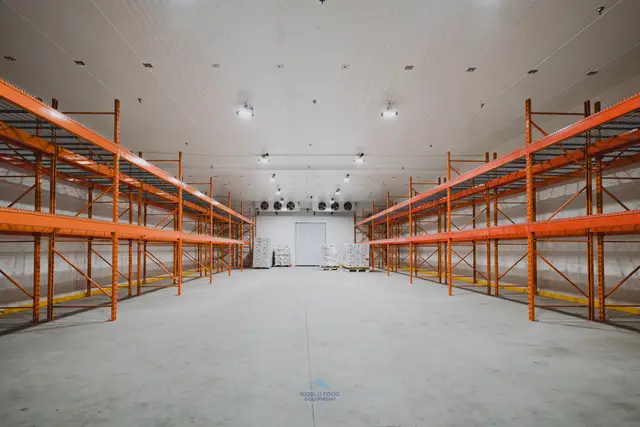
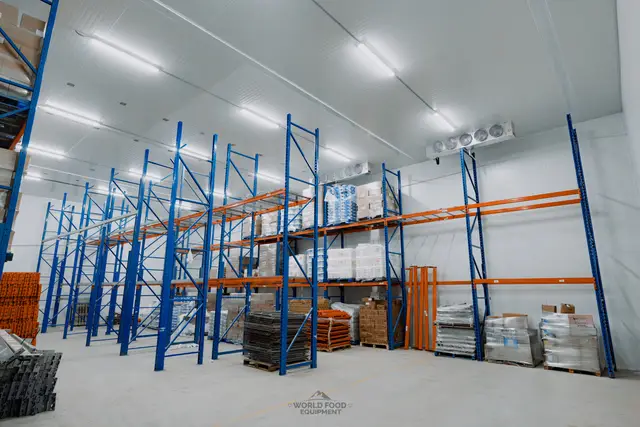
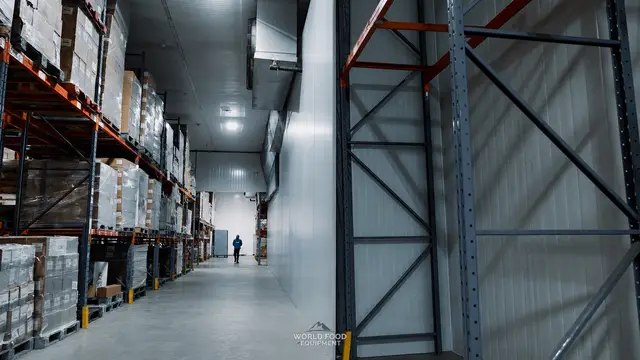
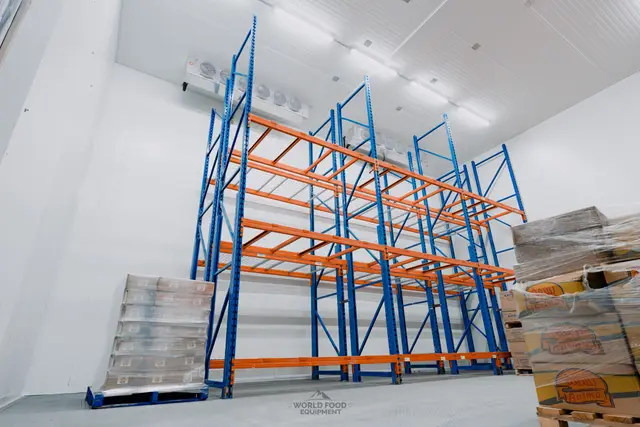
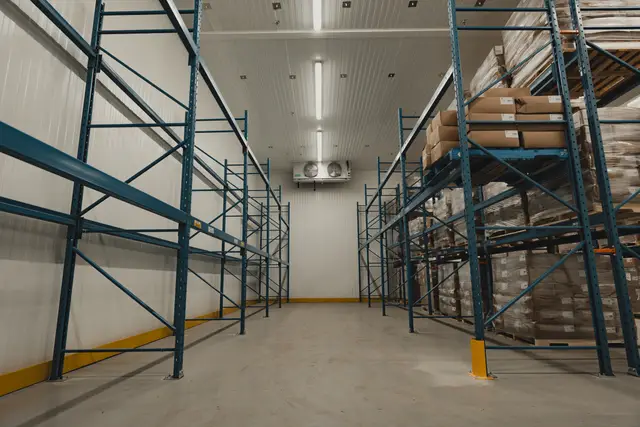
- Thickness maps to duty. Coolers typically run 4-inch panel, freezers 5-inch to 6-inch, blast-freeze zones 6-inch, and refrigerated warehouses up to 8-inch.
- The core rates roughly R-8 to R-9 per inch. Manufacturer-published figures put modern urethane and QuadCore panel cores near the top of the insulation range, so a 4-inch wall lands around R-36.
- Joints matter as much as thickness. Cam-lock connections with gasketed tongue-and-groove seams keep vapour out of the core. A panel that takes on moisture loses R-value permanently.
- The foam itself changed in 2021. Canadian regulations banned high global warming potential HFC blowing agents in rigid foam, so current panels are made with low-GWP foam chemistry.
What a walk-in cooler panel actually is
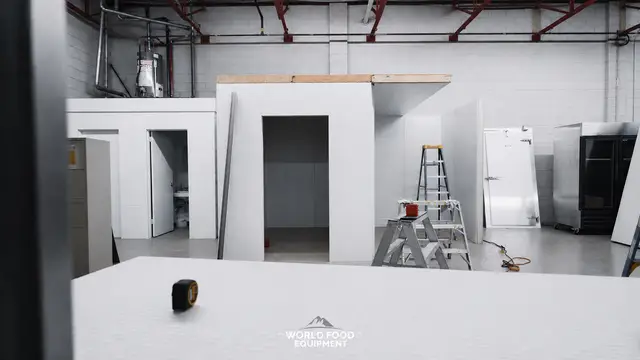
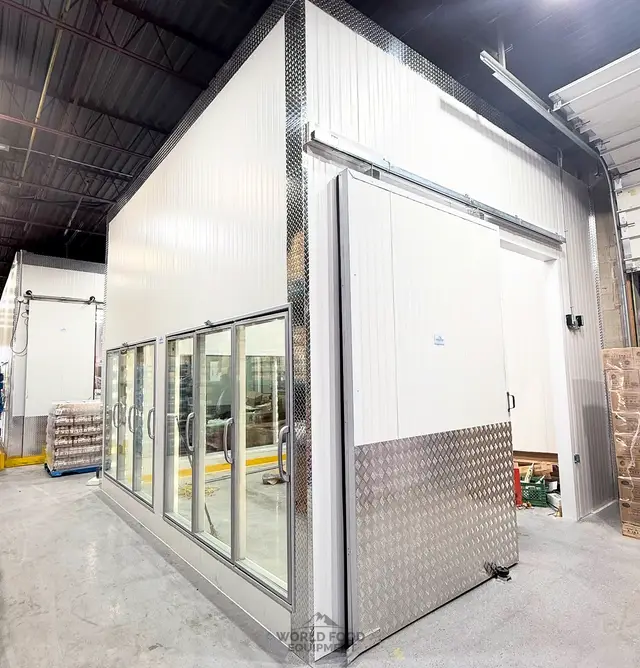
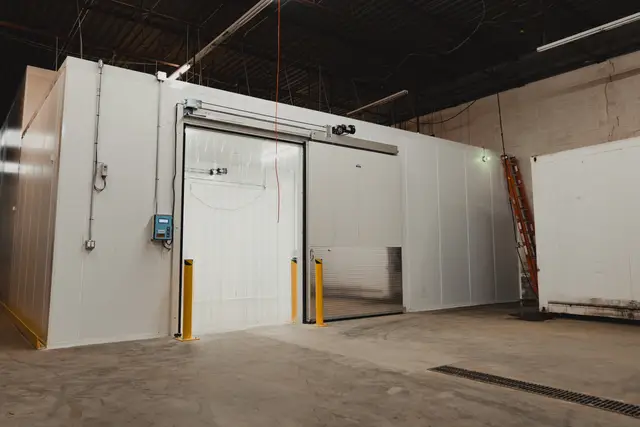
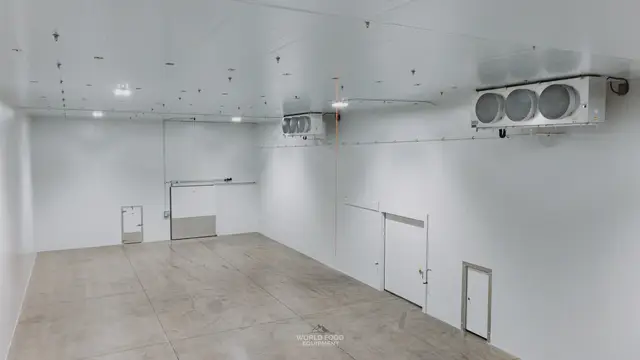
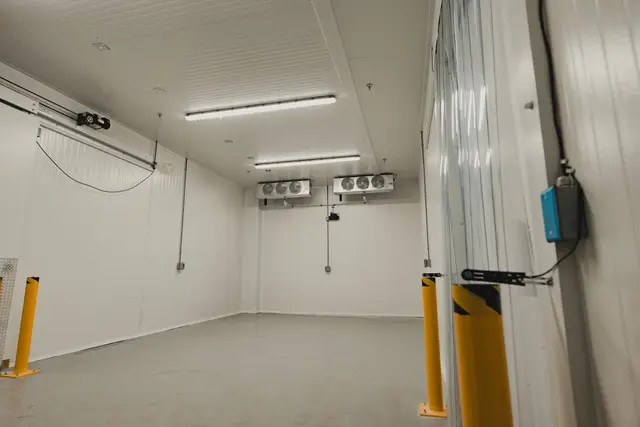
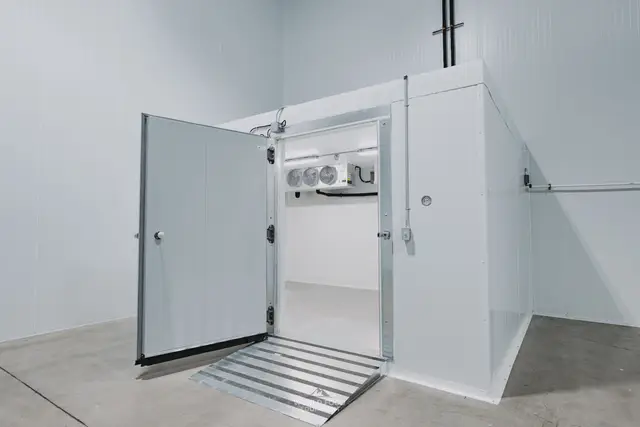
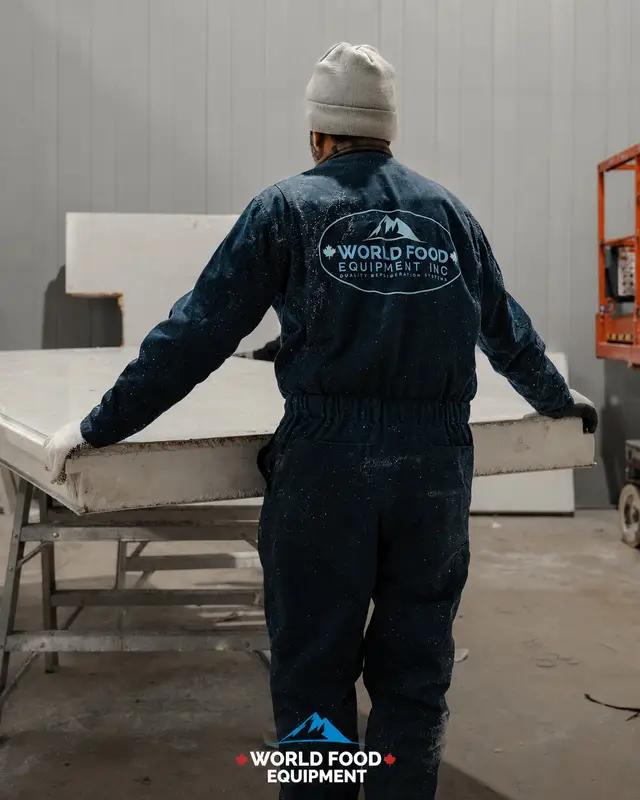
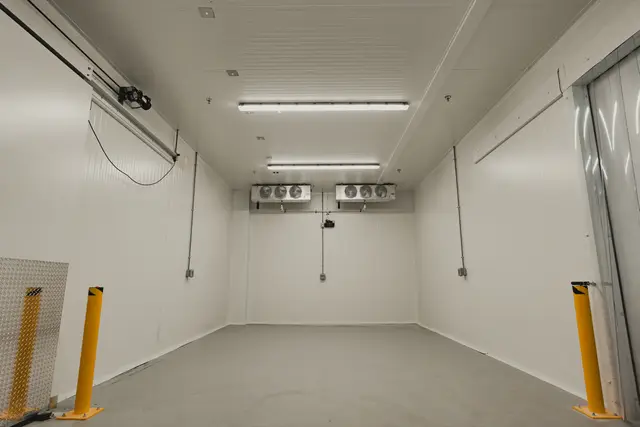
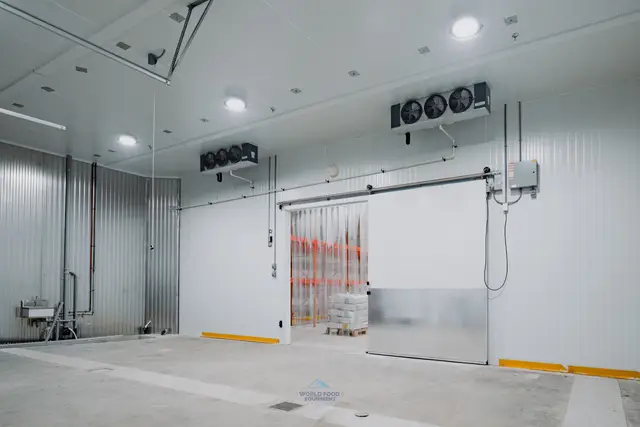
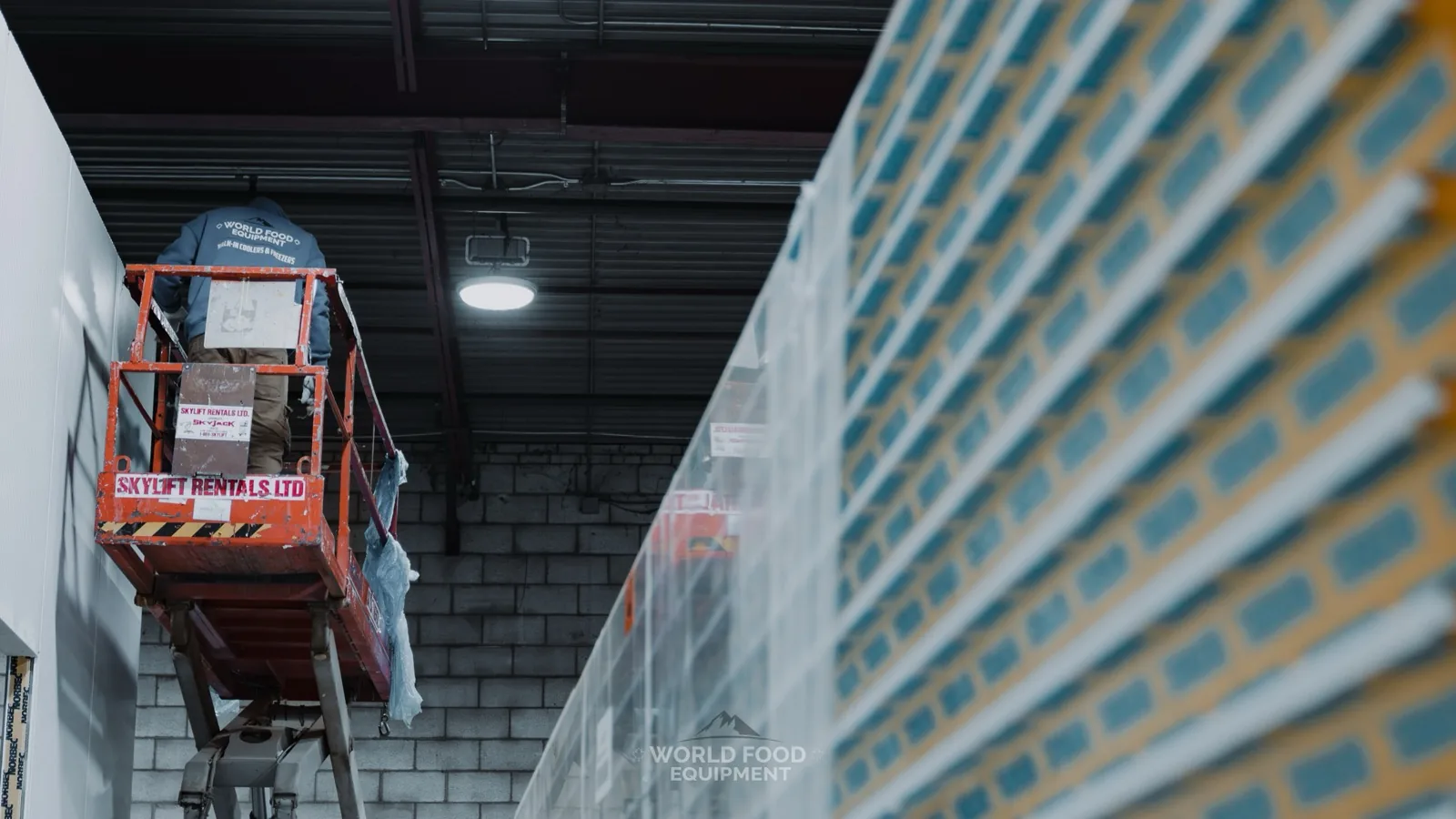
A walk-in panel is a factory-built sandwich: two metal facings bonded to a rigid foam insulation core, edged with tongue-and-groove joints and cam-lock fasteners so panels pull tight to each other on site. The panel is the structure, the insulation, and the food-safe interior surface in one component. What is inside that sandwich:
- Insulation core: high-density polyurethane or Kingspan QuadCore, foamed in the factory for a consistent, void-free fill.
- Metal facings: 26-gauge to 22-gauge prefinished galvanized steel on standard builds, with stainless steel or food-grade PVC laminate available for harder duties.
- Cam-lock joint system: steel cams inside the panel edge hook and pull against the neighbouring panel, compressing the gasketed seam airtight.
- Standard formats: the panel systems we install come in factory widths around 4 feet and lengths from 6 feet to more than 50 feet, which is why walk-ins quote fastest on standard panel increments.
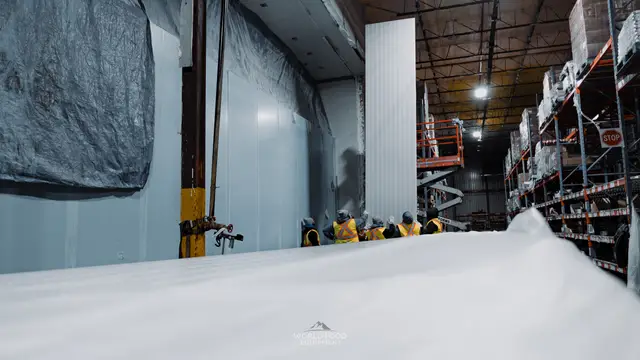
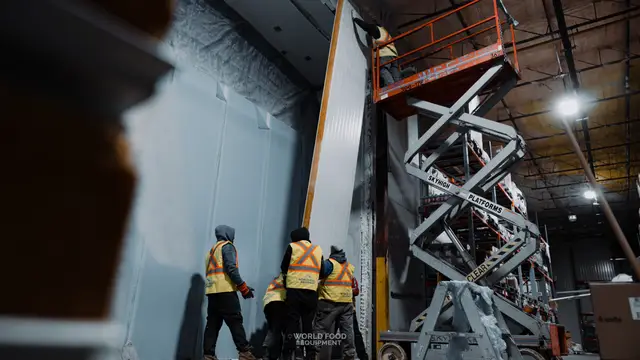
Because the panels connect mechanically instead of being built in place, a walk-in can be assembled in days, expanded later, or relocated. That modularity is also why standard walk-in cooler builds install in about two weeks start to finish.
R-value: the number doing the work
R-value measures resistance to heat flow, so a higher R means heat leaks into the cold box more slowly and the refrigeration system runs less. Panel R-value comes from the core material and its thickness, and the manufacturers publish their figures. Norbec rates its panel cores at R-7.8 to R-8.2 per inch depending on temperature, and Kingspan’s cold storage panels reach up to R-9 per inch measured at 35°F.
Here is how the published Kingspan QuadCore ratings map thickness to R-value, alongside the duty each thickness typically serves on our installs:
| Panel thickness | Published R-value | Typical duty |
|---|---|---|
| 2 inch | R-18 | Light partition walls |
| 3 inch | R-27 | Process and prep rooms |
| 4 inch | R-36 | Walk-in coolers |
| 5 inch | R-45 | Walk-in freezers |
| 6 inch | R-54 | Freezers and blast-freeze zones |
| 8 inch | R-72 | Refrigerated warehouses |
Two practical rules fall out of that table:
- Cooler duty: 4-inch panel at roughly R-36 clears the federal cooler minimum with room to spare, and it is the standard we quote for restaurant and retail coolers.
- Freezer duty: holding minus 18°C justifies the step to 5-inch or 6-inch panel. The colder the box, the faster extra R pays for itself in run time.
If you are still deciding which box you need, the walk-in cooler versus walk-in freezer comparison covers the decision from the menu side.
The legal floor: R-25 for coolers, R-32 for freezers
There is a hard number to hold every panel quote against. US federal energy law requires walk-ins manufactured since 2009 to contain wall, ceiling, and door insulation of at least R-25 for coolers and R-32 for freezers. Freezer floors need at least R-28 on top of that, and the wall minimums cover the doors too.
Canada sets the same floor, and many buyers do not know it. Under Canada’s Energy Efficiency Regulations, walk-in panels and door assemblies made on or after June 5, 2017 must meet RSI 4.40 (R-25) for coolers and RSI 5.64 (R-32) for freezers, with RSI 4.93 (R-28) for freezer floor panels. The rules cover walk-ins under 3,000 sq ft, and the major panel manufacturers build to them for both markets.
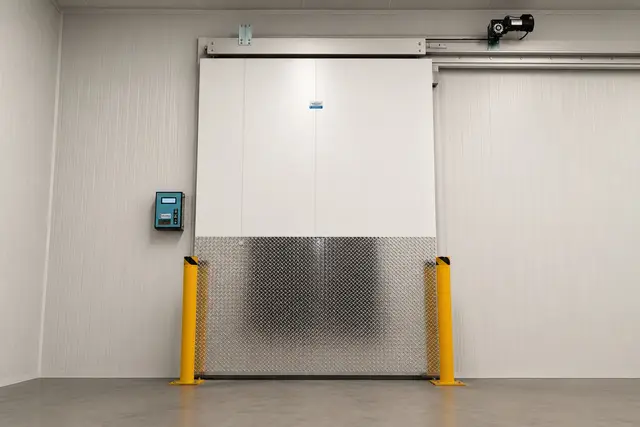
Doors fall under the same regulation; our walk-in cooler and freezer door guide covers the door side.
One fresh development worth knowing: the US Department of Energy published amended standards for walk-in refrigeration systems in December 2024, then withdrew that rule in May 2025. The panel insulation minimums above were not touched and remain in force, so R-25 and R-32 are still the numbers to quote against in 2026.
Why the panel spec shows up on the hydro bill
Refrigeration is one of the biggest loads in a food business. ENERGY STAR reports that refrigeration may use up to 40 percent of a grocery store’s total energy, and a walk-in is usually the single largest refrigerated volume in the building. The panel envelope is the passive half of that equation: every hour of every year, the walls either resist heat gain or pass it to the compressor as work.
Three envelope decisions move the bill:
- Thickness for the duty: stepping a freezer from 4-inch to 6-inch panel raises the wall from the low-to-mid R-30s to the low R-50s, and the compressor feels the difference on every summer day.
- Joint integrity: heat and vapour take the easiest path, which is a loose seam rather than the middle of a panel. Tight cam-lock joints with intact gaskets protect the rated R.
- A dry core: moisture that gets into foam conducts heat far better than the gas trapped in the cells. A soaked panel never recovers its rating, which is the hidden risk in weathered used panels.
The walk-in cost guide covers how these choices land on a quote, and why a cheaper envelope is often the more expensive box.
What changed inside the foam in 2021
Canada re-regulated the insulation chemistry itself, and it is a useful freshness check on any panel you are offered. The federal Ozone-depleting Substances and Halocarbon Alternatives Regulations have prohibited manufacturing or importing rigid foam products with an HFC blowing agent above a global warming potential of 150 since January 1, 2021. Walk-in panel cores are exactly the closed-cell rigid polyurethane foam the regulation names.
What that means for a buyer:
- Current panels use low-GWP chemistry: panels produced for the Canadian market today are blown with compliant low-GWP agents, so a new Norbec or Kingspan panel is current-regulation foam by default.
- Old stock is a question worth asking: a panel system that has been sitting in a yard for a decade predates the rule. Age shows up in gaskets, facings, and absorbed moisture before it shows up on paper.
- The direction of travel is set: foam, refrigerant, and equipment rules keep tightening, and buying current-spec components is the simplest way to stay ahead of them.
Facings, finishes, and passing inspection
The metal skin picks the panel’s career. Standard cooler and freezer builds use prefinished galvanized steel facings, while food processing rooms step up to stainless steel or food-grade PVC laminate rated for daily washdown. The options we install:
- Prefinished galvanized steel: 26-gauge to 22-gauge, stucco embossed or smooth, usually white. The workhorse facing for restaurant and retail walk-ins.
- Stainless steel Type 304: for wash-down environments, meat and dairy rooms, and anywhere sanitation chemicals would attack a painted surface.
- Food-grade PVC laminate: a smooth, non-corroding interior surface used in USDA-style processing rooms.
Inspection is the other reason facings matter. Ontario’s Food Premises Regulation, O. Reg. 493/17 requires food premises floors to be tight, smooth, and non-absorbent, and walls and ceilings to be readily cleanable and kept in good repair. A factory-finished metal or PVC panel interior meets that bar the day it is installed, which is one less argument to have during a health unit visit.
Fire ratings to ask about
Manufacturers test foam-core panels hard for fire behaviour, and the documentation should come with your quote. Three names cover most of what you will see on Ontario panel spec sheets:
- CAN/ULC-S102: the Canadian surface burning characteristics test, which assigns the flame spread and smoke developed values building officials look for.
- ASTM E84: the US counterpart tunnel test for surface burning characteristics, commonly listed alongside S102 on panel data sheets.
- FM 4880: FM Approvals’ fire test standard for Class 1 insulated wall and ceiling panel assemblies, the rating insurers most often ask about on larger cold storage buildings.
You do not need to memorize the test methods. You do need the panel system’s fire documentation in the project file, because your building department or insurer may ask for it years after the install.
Cooler panels versus freezer panels
The panel family is the same; the spec steps up when the setpoint drops below zero. A freezer envelope carries more R, always gets an insulated floor, and pairs with heated door hardware so the gasket seals instead of freezing shut. Side by side:
| Spec | Walk-in cooler | Walk-in freezer |
|---|---|---|
| Federal insulation minimum | R-25 walls, ceiling, doors | R-32 walls, ceiling, doors |
| Typical panel thickness | 4 inch | 5 inch to 6 inch |
| Floor | Sealed slab sometimes acceptable | Insulated floor, minimum R-28 |
| Interior climate | Above freezing, moisture drips | Below freezing, moisture becomes ice |
The freezer floor deserves its own homework: insulated floor panels carry a structural plywood overlay and a protective metal wear surface, and skipping floor insulation risks frost damage to the slab under the box. The walk-in freezer buyer’s guide covers floors, heated doors, and defrost in full, and the temperature guide covers the setpoints each box has to hold.
The panel checklist we quote against
When we spec a walk-in, the panel section of the quote answers six questions in writing. Use the same list on any bid you collect:
- Thickness for the duty: 4-inch for coolers, 5-inch to 6-inch for freezers, more for warehouse-scale rooms in a custom cold storage build.
- Published R-value: the per-inch rating and the wall total, from the manufacturer’s data sheet rather than a verbal claim.
- Joint system: cam-lock connections with gasketed tongue-and-groove seams, so the envelope stays vapour-tight and can be expanded later.
- Facing for the environment: galvanized steel for standard duty, stainless or PVC where washdown or corrosive cleaning is daily reality.
- Fire documentation: S102 or E84 results and FM approval where the project needs it, delivered with the submittal package.
- Core condition: factory-fresh panels, or for used walk-in equipment, proof the panels stayed dry and sealed through their first life.
We build on Norbec and Kingspan panel systems because their published specs hold up against every line above, and a standard walk-in freezer install runs about two weeks on site. Thickness, R-value, facing, and sizing tables for both systems, plus supply-only ordering for contractors, are on our walk-in cooler and freezer panels page. Every build carries our workmanship warranty on top of the manufacturer coverage.

Frequently asked questions
What are walk-in cooler panels made of?
A walk-in cooler panel is two metal facings bonded to a rigid foam core, usually high-density polyurethane or Kingspan QuadCore, with cam-lock fasteners built into the edges. Facings are typically prefinished galvanized steel, with stainless steel and food-grade PVC laminate options for washdown environments. The panel provides structure, insulation, and the cleanable interior surface in one component.
How thick should walk-in cooler panels be?
Four-inch panel is the standard for walk-in coolers, which puts the wall near R-36 with modern cores. Walk-in freezers step up to 5-inch or 6-inch panel because holding minus 18°C makes the extra insulation pay for itself in reduced compressor run time. Process rooms that hold milder temperatures can run 3-inch panel.
What R-value does a walk-in cooler need?
US federal rules set the minimum at R-25 for cooler walls, ceilings, and doors, and R-32 for freezers with R-28 freezer floors. Canada has required the same minimums on walk-in panels and doors made since June 5, 2017, so those figures are the floor for Ontario quotes too. A typical 4-inch panel rated near R-36 clears the cooler minimum comfortably.
Can freezer panels be used for a cooler?
Yes. Freezer-spec panels carry more insulation than a cooler needs, so the box simply runs more efficiently. The reverse is the mistake to avoid: cooler-spec 4-inch walls on a freezer will hold temperature but work the refrigeration system harder for its whole life, and the floor still needs freezer-grade insulation either way.
Are used walk-in cooler panels worth buying?
Used panels are the riskiest part of a used walk-in because moisture absorbed into the foam core reduces its insulating value permanently, and the damage is invisible from outside. Inspect the joints, gaskets, and facings in person, ask how the panels were stored, and ask for the original fire documentation. If the seller cannot answer, price the risk accordingly.
Do walk-in panels need to be fire rated?
Panel systems from major manufacturers are tested to CAN/ULC-S102 and ASTM E84 for surface burning characteristics, and many carry FM 4880 approval for Class 1 insulated panel assemblies. Building departments and insurers can ask for this documentation, especially on larger cold storage projects, so keep the panel submittal package in your project file.
Plan Your Build
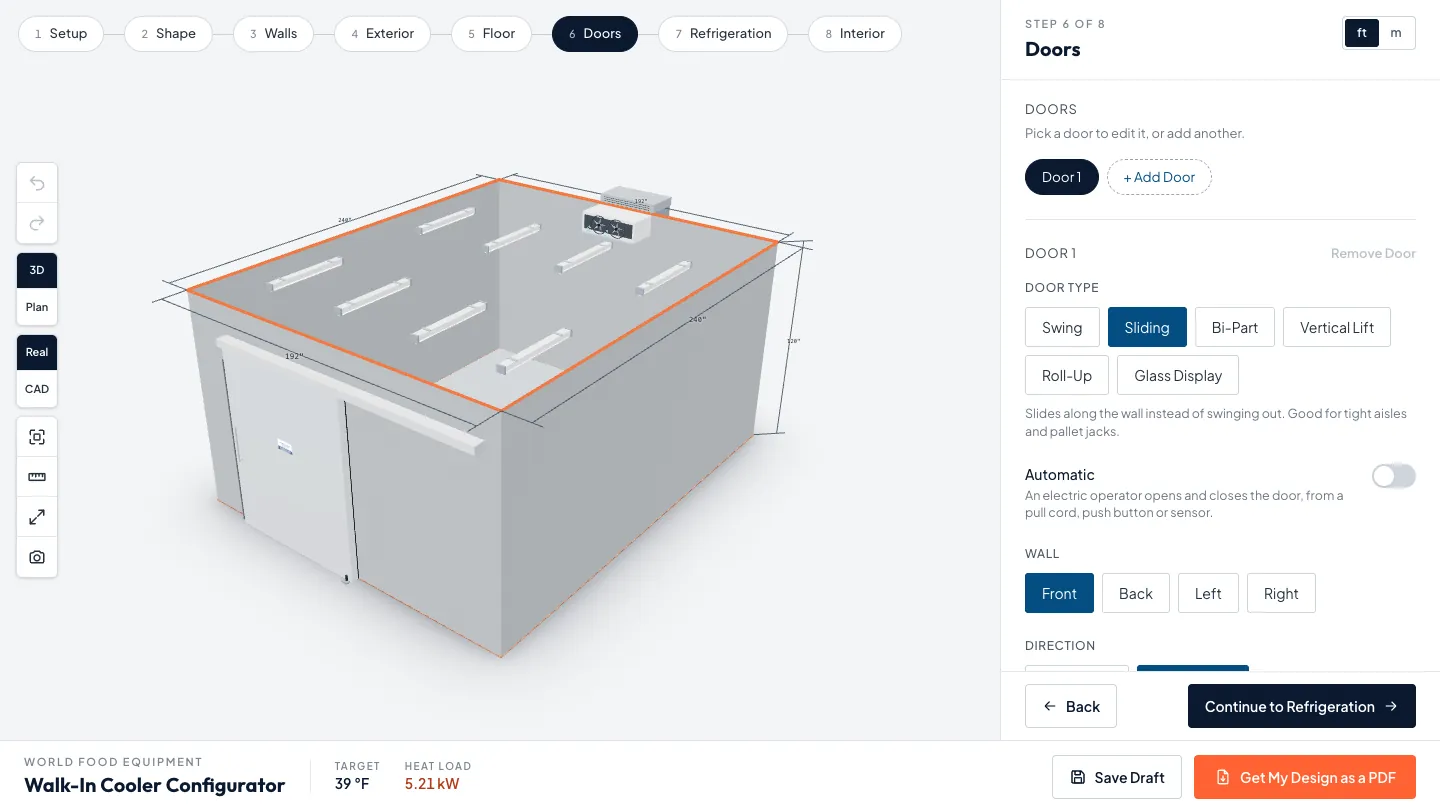
Size your walk-in in the configurator.
Set dimensions, doors, and refrigeration in 3D, then download the spec sheet to share.
Read Next
Plan a Walk-In Cooler or Freezer in 3D: 8 Decisions
The eight decisions that shape every walk-in cooler or freezer, and where to make each one in our free 3D configurator: size, type, panels, floor, doors, refrigeration, racking and lights.
Industrial Walk-In Freezers: What to Plan Before You Build
What changes when a walk-in freezer gets big enough for pallets and forklifts: the slab, the clear height, the doors, the refrigeration plant, and the Ontario rules that start to apply.
Walk-In Cooler & Freezer Doors: Types, Sizes, Options
Swing, sliding, pallet and roll-up doors for walk-in coolers and freezers: which one fits your traffic, the sizes we build to, what a freezer door adds, and the Canadian rule every walk-in door has to meet.
Walk-In Coolers — Custom Builds
See the service page for sizing, anatomy, and what's included in a WFE install.