



Walk-In Cooler Buyer's Guide: Ontario Restaurants 2026
Walk-in cooler buyer's guide for Ontario restaurants. Sizing rules, refrigeration spec, panel choice, doors, 313A permits, and 2 to 4 week install timelines.
A walk-in cooler is usually the second-largest piece of equipment a restaurant ever buys, after the hood line. Get the size wrong and you either lose prep space or waste energy cooling air you do not need.
Get the refrigeration wrong and you replace a compressor on year four instead of year fifteen. This guide is how World Food Equipment talks Ontario restaurant operators through a walk-in cooler purchase before they sign a quote.
Key takeaways
- Legal holding temperature: Ontario law requires hazardous foods to be held at 4°C (40°F) or colder, per Ontario Regulation 493/17 (Food Premises). Your walk-in cooler is the equipment that has to deliver that, reliably, every service.
- Starting sizing rule: for a full-service restaurant, plan on roughly 1 to 1.5 cubic feet of cooler space per seat, then adjust for menu complexity, delivery cadence, and prep workflow.
- Refrigeration mechanic work in Ontario is a compulsory trade (Trade Code 313A), so the installer running your refrigeration lines must be certified. The walk-in cooler installer licensing guide covers how to verify that yourself.
- Install timeline: a standard restaurant walk-in install in the GTA runs 2 to 4 weeks from signed quote to commissioning, longer if the box is custom-fabricated or the building needs a permit pull.
- Five spec decisions: sizing, indoor versus outdoor, self-contained versus remote condensing, swing versus sliding door, and insulated versus reinforced floor are the five spec decisions that drive both cost and how the box performs over a 10 to 15 year life.
Why a walk-in cooler beats a row of reach-ins for most restaurants
Once a kitchen runs more than about 60 covers a service, reach-in coolers stop scaling. Each reach-in has its own compressor, its own door cycle, its own square foot of footprint. Stack four of them along a prep line and you have spent the cost of a small walk-in to get a third of the storage volume and four times the heat dumped into the kitchen.
The other reason restaurants move to a walk-in is workflow. A walk-in is a room.
Crew can stage tomorrow’s prep, rotate deliveries, and run inventory inside the box rather than holding the door open across the kitchen aisle. For multi-zone operations (produce, dairy, meat), one walk-in cooler with a separate freezer (or a combo unit) replaces six or seven reach-ins and frees the prep line.
Restaurants installing or upgrading should also weigh repair-or-replace economics before buying new. WFE covers that decision separately on the repair or replace walk-in cooler page.
Sizing — how big should your walk-in cooler be?
It depends on your menu, your delivery cadence, and how much prep your kitchen does in-house. But operators always want a starting number, so here is the rule of thumb most contractors quote:
Roughly 1 to 1.5 cubic feet of cooler space per restaurant seat, scaled up for menu complexity. A 60-seat bistro with a tight menu sits at the low end. A 120-seat steakhouse running daily butcher work, in-house pastry, and produce-heavy prep sits at the high end.
That converts to footprint as follows (assuming a standard 8-foot interior ceiling):
| Restaurant size | Estimated cooler volume | Typical footprint |
|---|---|---|
| 40 to 60 seats (cafe / bistro) | 60 to 110 cu ft | 6×6 to 6×8 |
| 60 to 100 seats (full-service) | 90 to 180 cu ft | 6×8 to 8×10 |
| 100 to 150 seats (steakhouse / banquet) | 150 to 280 cu ft | 8×10 to 8×12 |
| 150+ seats (multi-zone) | 250+ cu ft | 8×16, often paired with a separate freezer |
The rule misses three things that eat capacity:
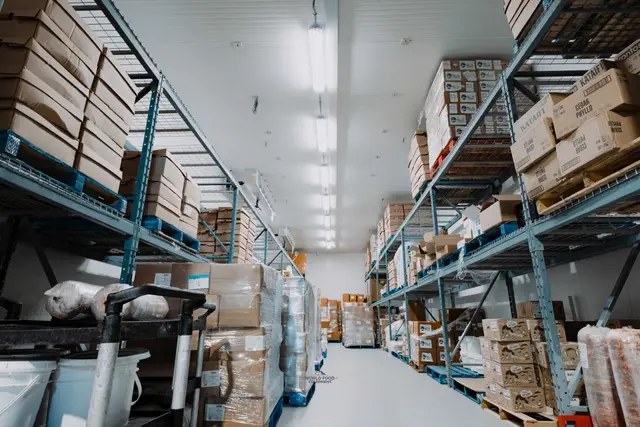
- Bulky case deliveries: lettuce and produce cases consume shelf space out of proportion to their weight.
- Catering and banquet pre-prep: storage spikes on Fridays and before events, not on an average day.
- Door dead zone: the floor immediately inside the door cannot hold product.
Always add 15 to 20 percent on top of the starting number for usable, not nominal, capacity.
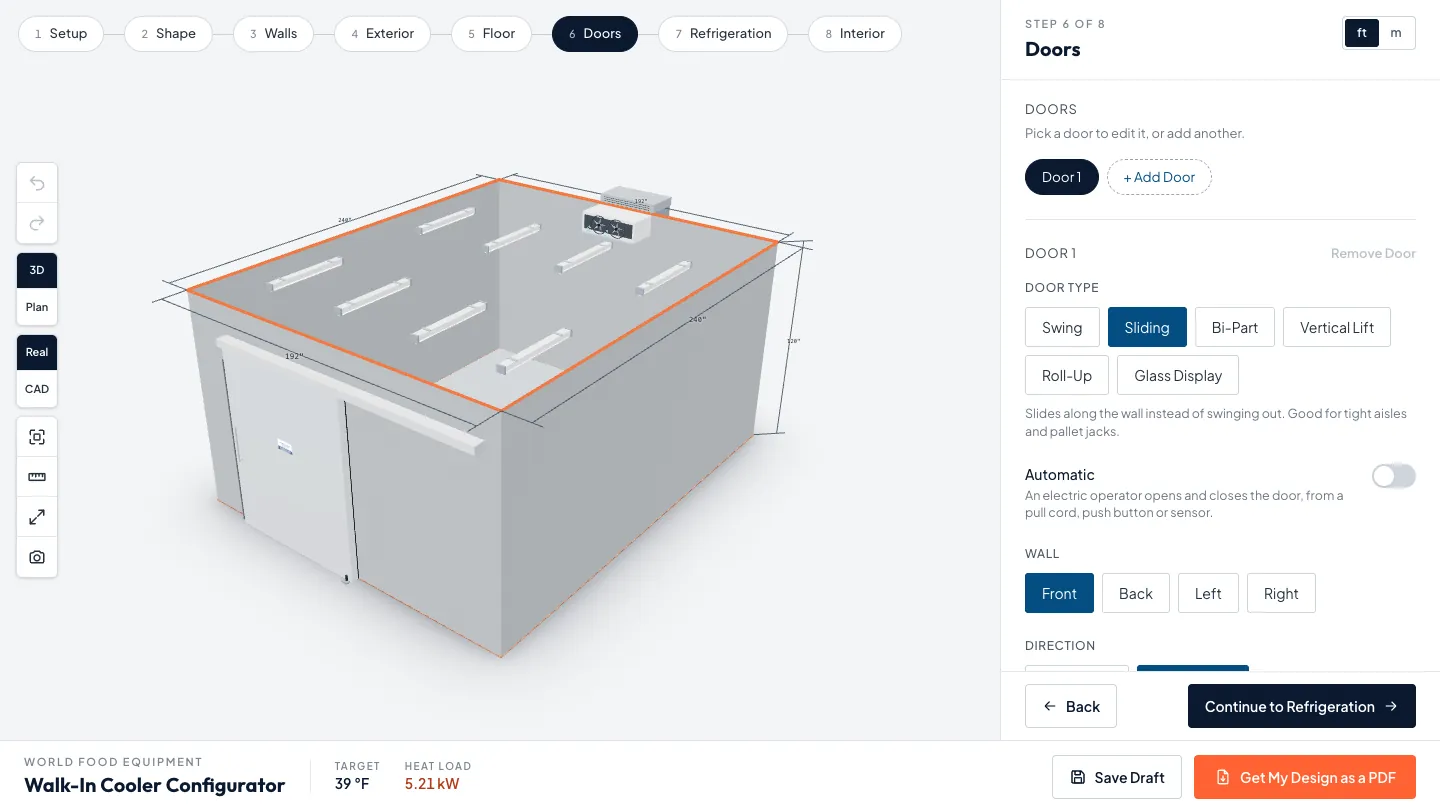
Once you have a starting footprint, our guide to planning a walk-in cooler or freezer in 8 decisions shows how to try it in our free 3D design tool, along with the doors, refrigeration and racking.
Need more depth on cooler-versus-freezer sizing for restaurants with both? See the walk-in cooler service page for spec examples and the walk-in freezer service page for low-temp build details.
Indoor versus outdoor placement
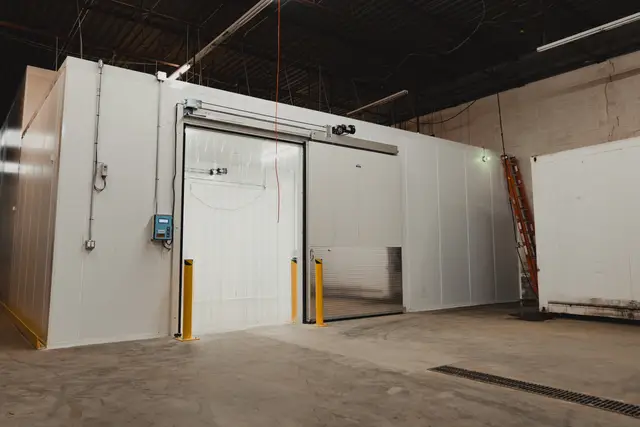
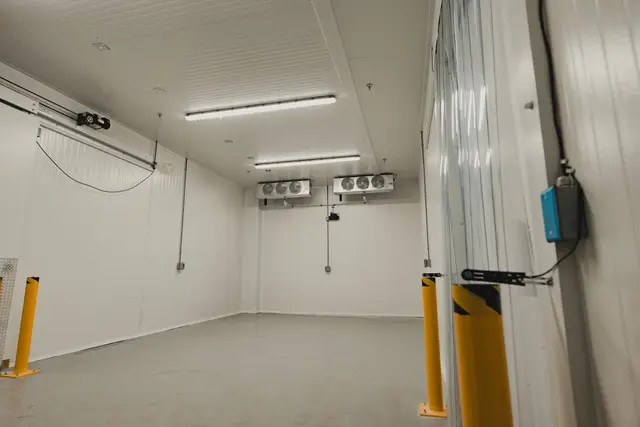
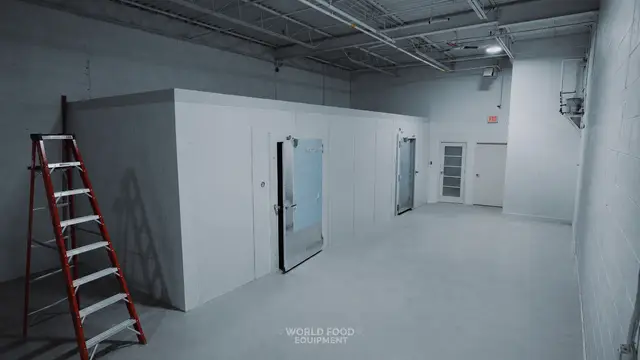
For most Toronto, Mississauga, and Hamilton restaurants, an indoor walk-in inside the building footprint is the default. It is faster to install, easier to clean, and the door is one step from the prep line.
Outdoor walk-ins make sense when:
- No floor space: the kitchen is genuinely out of usable floor space (older downtown footprints, basement kitchens).
- Rear lot or alley: the building has a rear loading area or alley with municipal clearance for a freestanding unit.
- Heat outside: the operator wants the heat dump from a self-contained condensing unit outside the kitchen envelope.
Outdoor units cost more (weatherproof exterior, often stainless or stucco-finished panels, heated door frames for winter), need a concrete pad poured, and may trigger municipal zoning or site-plan review depending on the city. Outdoor placement also affects refrigeration choice (see next section) because Ontario winter operating temperatures can drop a self-contained condensing unit below its low-ambient cutout.
Cooler versus freezer versus combo unit
Three configurations are common for restaurants:
- Cooler-only. Single-zone box held at 4°C or thereabouts. Cheapest install, simplest refrigeration. Right for restaurants whose frozen needs are met by an upright reach-in freezer.
- Separate cooler and separate freezer. Two boxes, two refrigeration systems, two doors. More floor space and more cost up front, but each system runs at its design temperature and either can be serviced without taking the other offline.
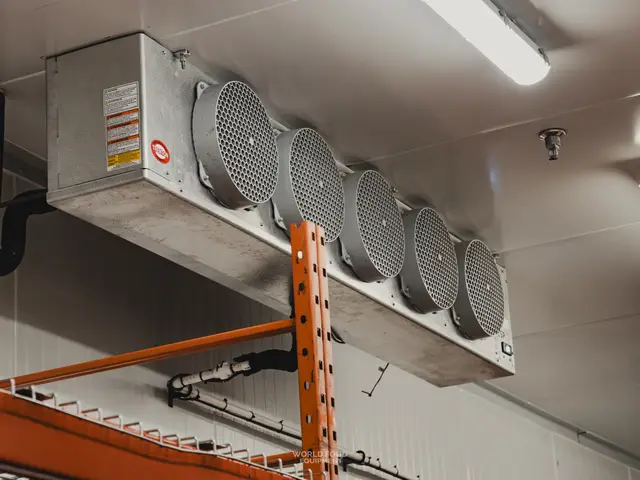
- Combo unit (cooler + freezer in one envelope). A single insulated shell with an internal partition, two evaporator coils, two condensing units. Saves floor space and shares some panel cost. Pays off when floor area is constrained but the operation needs both zones.
The decision usually comes down to footprint. If you have the floor area, two separate boxes are easier to maintain and easier to redesign later. If you do not, the combo unit is the right call.
Refrigeration — self-contained versus remote condensing
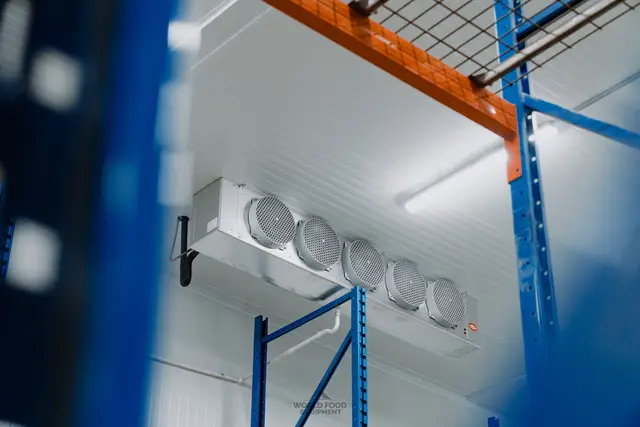
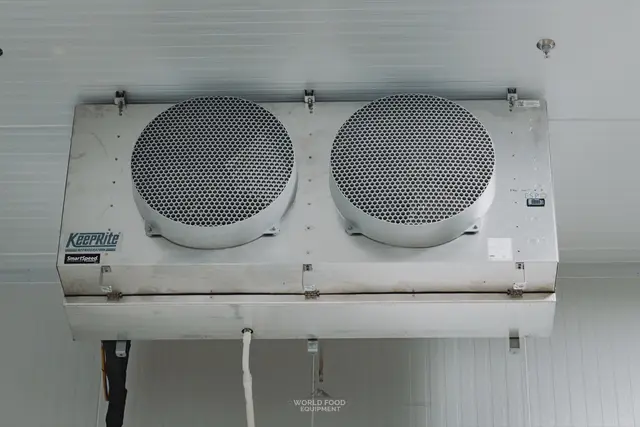
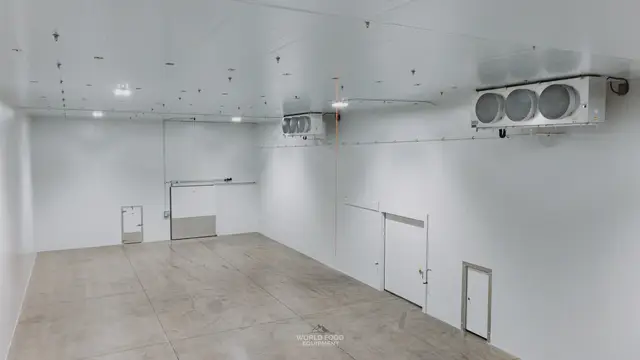
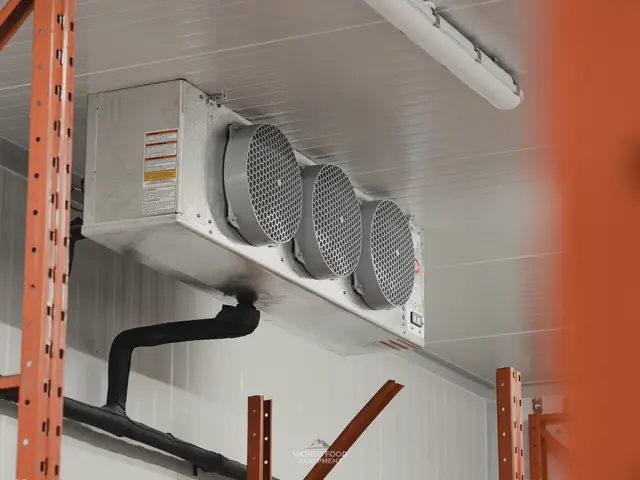
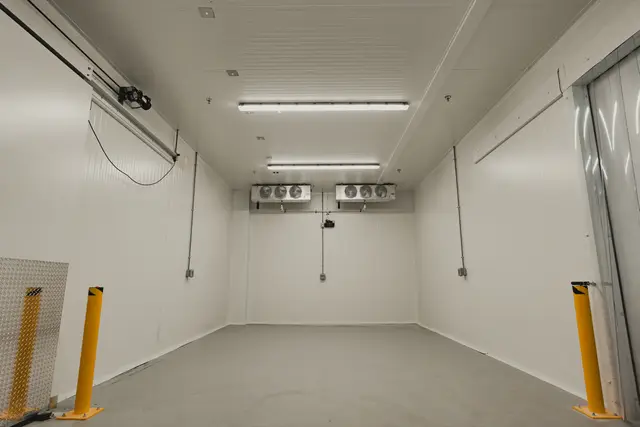
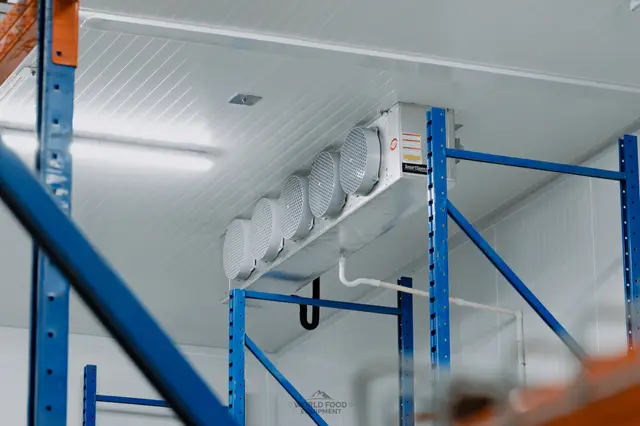
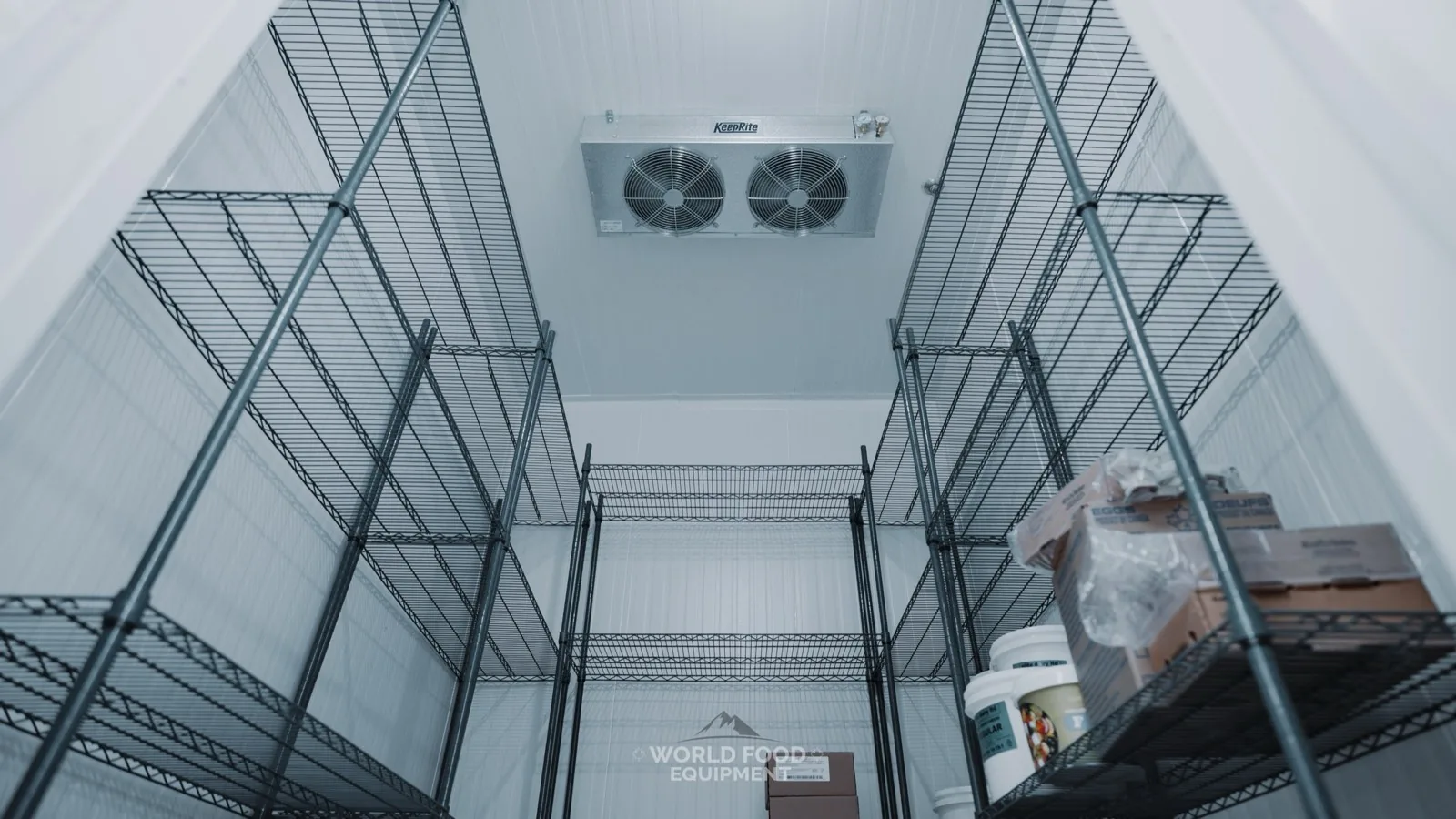
This is the single biggest spec decision after sizing. Every walk-in has two halves: the evaporator inside the box (the unit blowing cold air over the food) and the condensing unit (the compressor and fan dumping heat somewhere). Where you put the condensing unit defines almost everything about how the cooler operates and how much it costs to run.
- Self-contained (top-mount). Condensing unit sits on top of the walk-in. Plug-and-play, simpler install, no refrigerant lines to run through the building. Cost-effective for small to mid-size restaurant coolers. Drawback: the heat dumps into the kitchen ceiling space, which in summer can push HVAC load up.
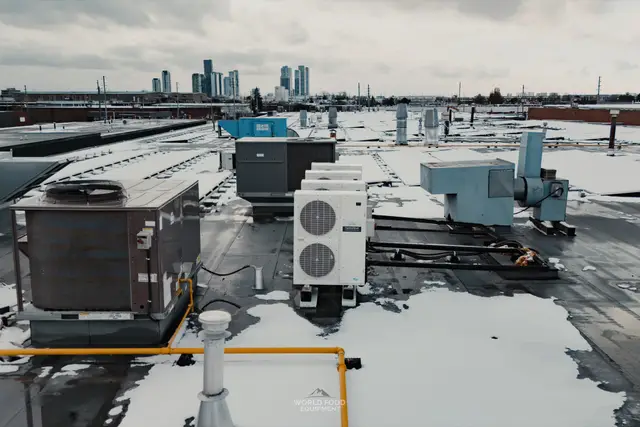
- Remote condensing unit. Condenser sits on the roof, in a mechanical room, or outside the building. Refrigerant lines run between the evaporator and the condenser. Quieter inside the kitchen, more efficient (especially for larger boxes), and the heat is dumped outside the food envelope. Higher install cost (line set, electrical, brazing) and needs more skilled labour to commission.
For restaurants under about 200 cubic feet, self-contained is usually the right call. Above that, a remote condensing unit pays back over the equipment’s life through lower compressor cycling and kitchen HVAC savings. The walk-in cooler refrigeration unit guide covers both system types, sizing, and Ontario winter spec in full.
Panel and insulation spec
Commercial walk-in panels in Ontario are typically 4 inches or 5 inches thick, urethane-foam-insulated, with metal skins on both faces. Standard options:
- 4-inch urethane panel. R-value in the high R-30s. Standard for indoor coolers at 2°C to 4°C. Most common spec.
- 5-inch urethane panel. R-value in the low R-40s. Used for freezers and for outdoor coolers in Ontario winters. The extra inch buys you compressor life and lower hydro bills, especially on a freezer.
Exterior finish options range from painted galvanized steel (cheapest, fine for indoor) to stucco-embossed aluminum (more durable, hides handling marks) to stainless steel (highest cost, required for some food-processing builds and high-touch retail). Restaurants usually default to stucco-embossed aluminum interior and exterior unless the box is on a customer-facing wall.
For CFIA-registered builds, ask the panel supplier for NSF/ANSI 7 certification documentation on the panel skins and sealants. The certification is the cleanest single piece of paperwork to satisfy a federal inspector that the interior surface is rated for direct food contact. Most reputable Ontario panel manufacturers carry it; ask for the certificate number, not just a verbal claim.
Federal minimum energy performance standards for commercial walk-in equipment are set by Natural Resources Canada under the Energy Efficiency Regulations. The standards govern condensing-unit efficiency, evaporator fan motor efficiency, and door anti-sweat heater performance. A spec sheet that doesn’t reference NRCan or DOE minimums is a red flag.
Door choices
Door spec is where small decisions compound. A walk-in cooler door cycles dozens to hundreds of times per service. The door is the single biggest source of energy loss in a well-built box.
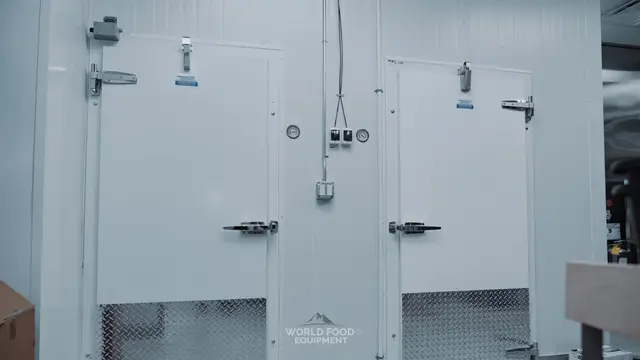
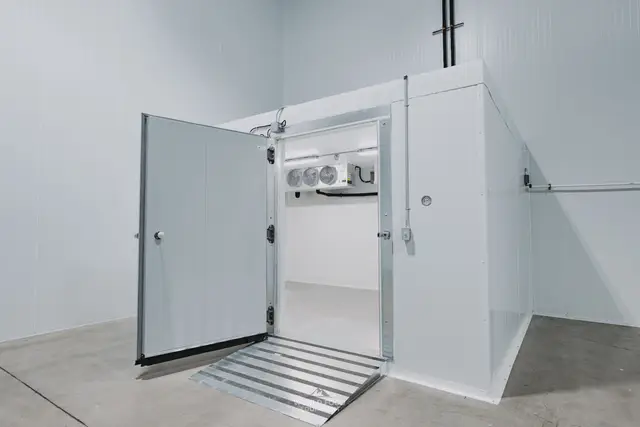
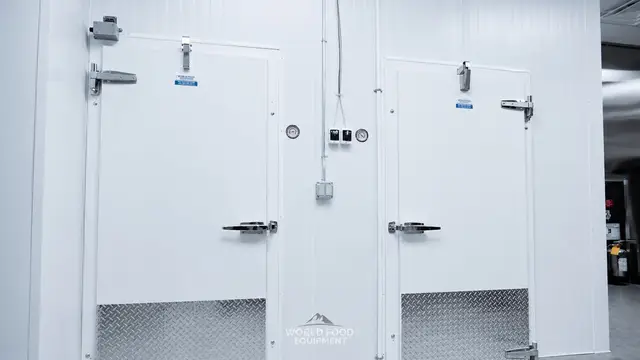
- Swing door (standard hinge). Cheapest, most common, easy to service. Most restaurants choose this.
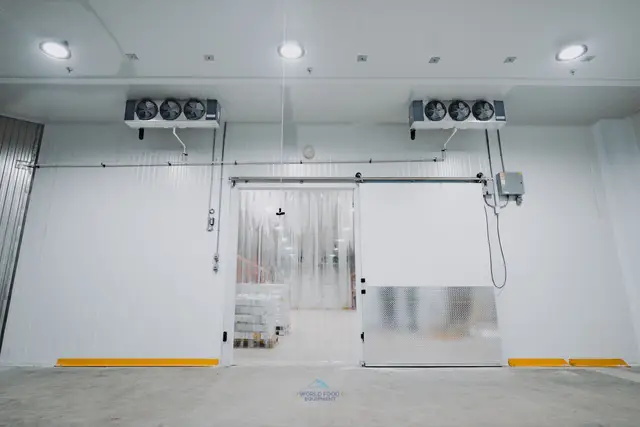
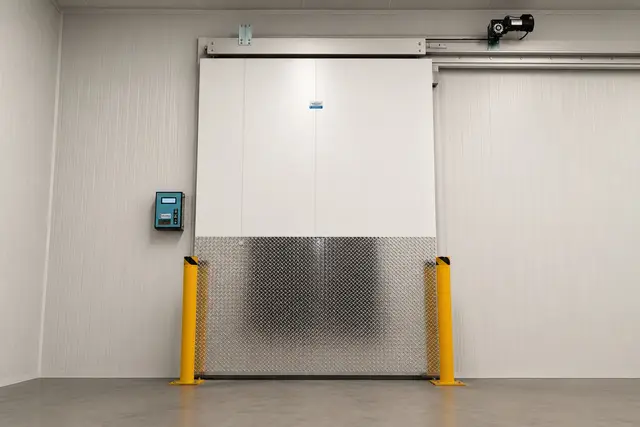
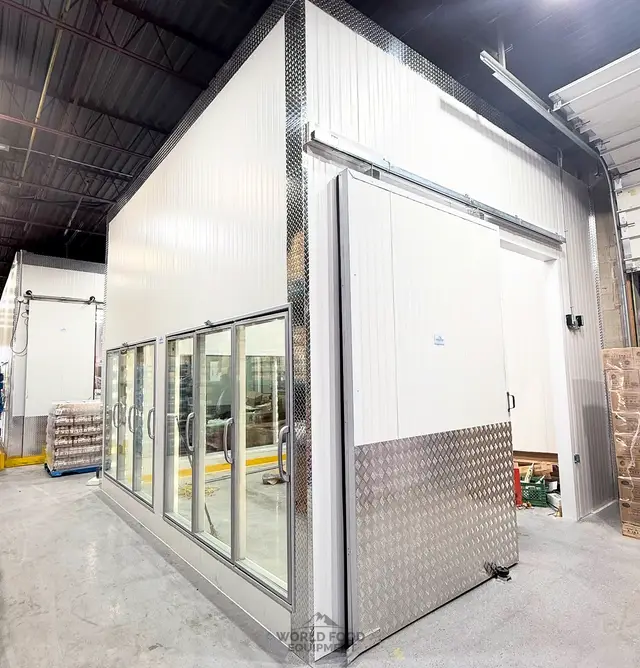
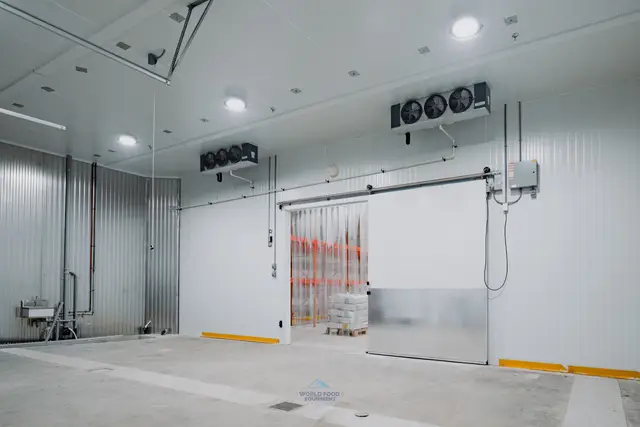
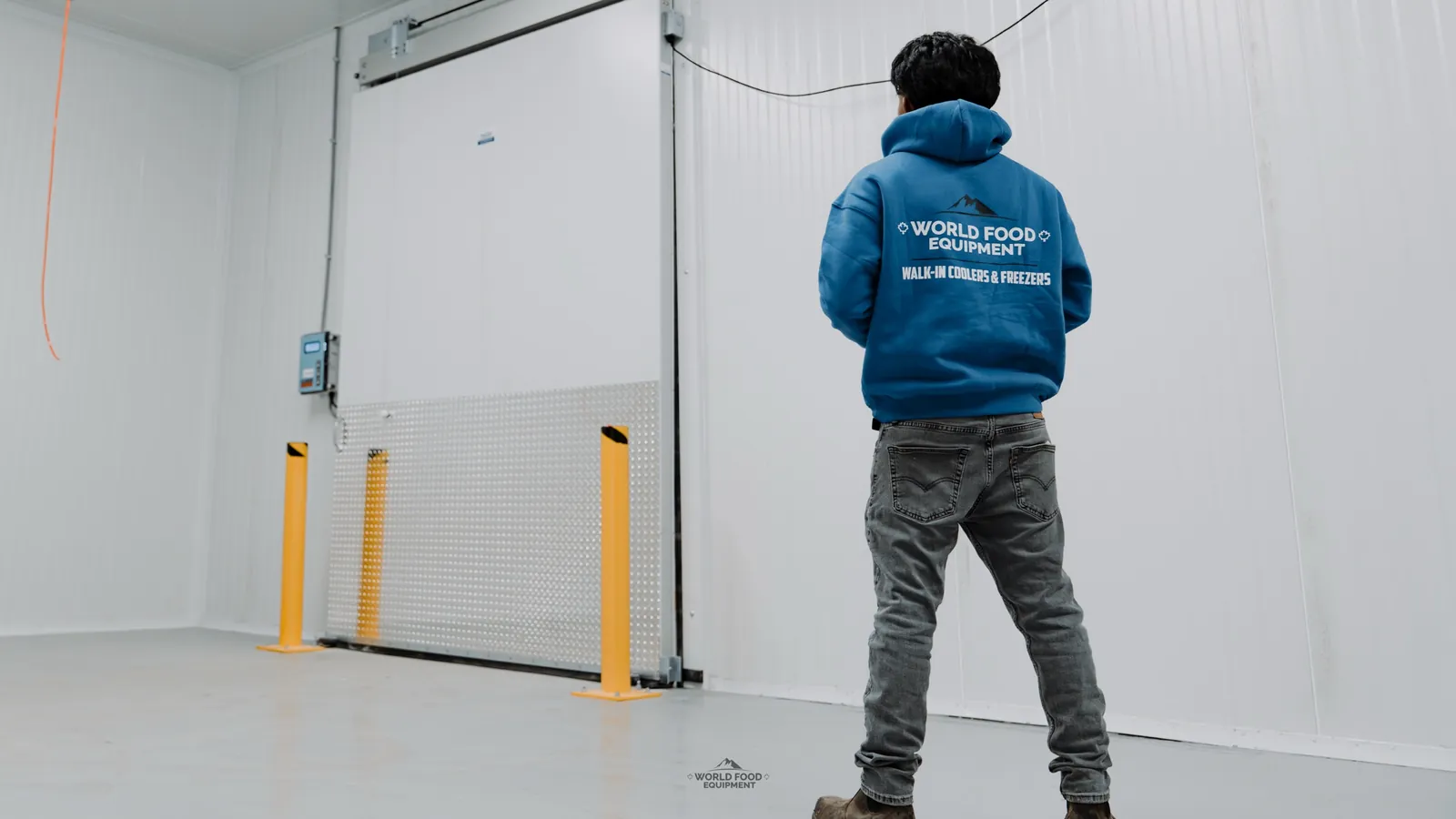
- Sliding door. Used when floor space in front of the door is constrained, or for larger boxes where a swing door would be unwieldy. Adds cost but eliminates the door swing footprint.
- Glass display door. For front-of-house beverage walk-ins or grab-and-go retail. Higher heat load, needs anti-condensation heating in the frame.
- Strip curtain (interior). Cheap retrofit that cuts air loss when the door is held open during deliveries or prep rush. Almost always worth specifying.
Heated door frames are standard on freezers and optional on coolers. In an Ontario kitchen at 28°C ambient with high humidity, an unheated cooler door frame will sweat. Spec the heated frame on any door that opens onto a hot kitchen.
Every door type, standard size, and freezer upgrade we build is covered in our guide to walk-in cooler and freezer doors.
Floor — insulated, no floor, or reinforced
Three options:
- Insulated floor panel. Sits on top of the building slab. Standard for above-grade installs. Easy to clean, sealed against the box.
- No floor (slab-on-grade). The box sits directly on a sealed concrete slab. Lower install cost, but the slab needs to be level, sealed, and properly graded. Public Health inspectors will check that the slab-to-panel joint is sealed against pest intrusion.
- Reinforced floor. Required for forklift traffic, heavy palletized deliveries, or hanging-meat builds. Common in food processing, rare in restaurants.
For most restaurants, an insulated floor panel is the right choice and is what WFE specs by default.
Ontario-specific permits, codes, and licensing
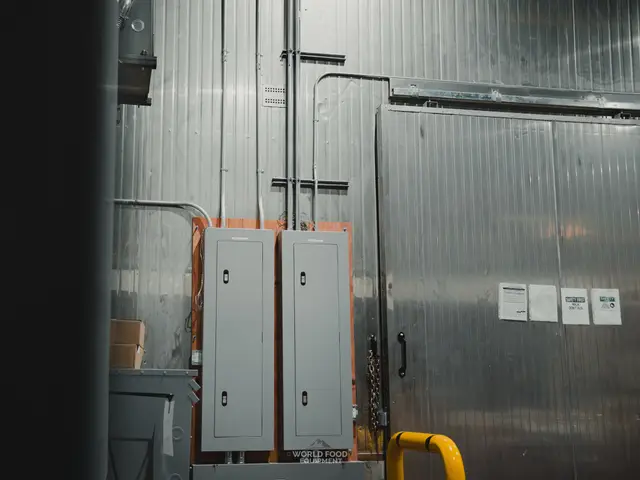
This is where Ontario installs differ from anywhere else in the country, and it is the section most operators underestimate. Three tracks run in parallel: electrical work goes through an ESA notification filed by a Licensed Electrical Contractor, the refrigeration work belongs to the compulsory 313A trade, and building permits depend on what the install touches. The walk-in cooler installer licensing checklist covers each credential, the permit rules, and how to verify all of it yourself before signing.
Public Health inspection under Ontario Regulation 493/17 (Food Premises) will check that the cooler holds hazardous foods at 4°C or colder, that the floor-to-panel joint is sealed, and that drainage routes to a floor drain or a properly trapped condensate line. Source: Ontario Regulation 493/17, e-Laws.
A good installer pulls the ESA notification, schedules the inspection, and walks the inspector through commissioning. Ask if that is included in the quote.
What a restaurant walk-in cooler install actually looks like
A typical WFE restaurant install runs as follows:
- Quote and site visit. Walk the kitchen with the operator. Confirm size, placement, door swing, refrigeration type, electrical capacity at the panel, and access for panel delivery. 1 to 2 days from inquiry.
- Fabrication. Panels are cut to spec, doors are framed, condensing unit is sized to the design heat load. 1 to 3 weeks depending on whether the box is stock or custom.
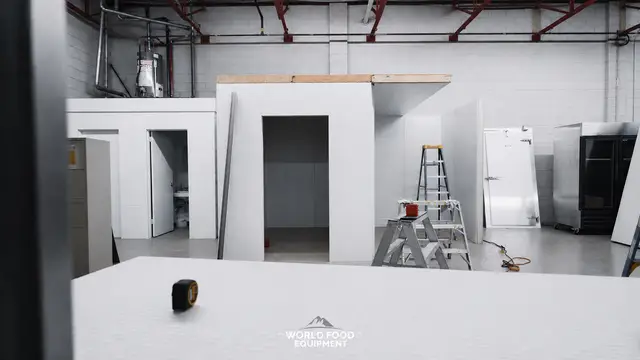
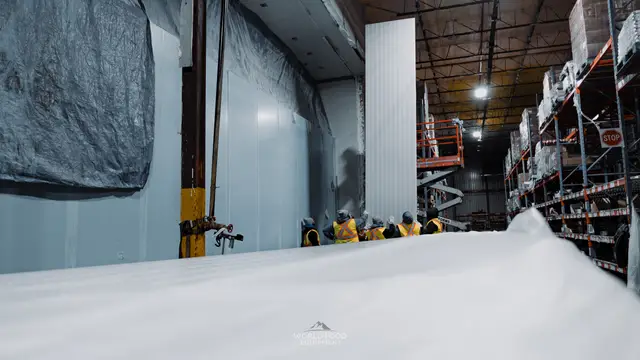
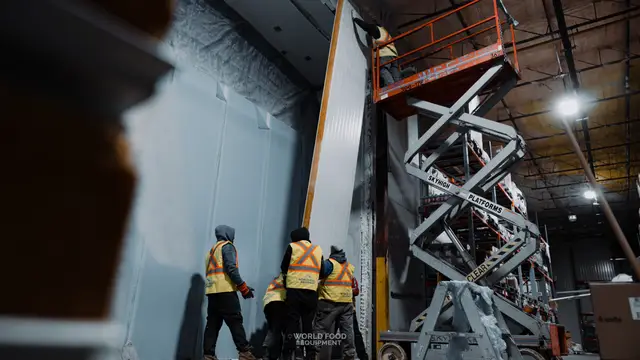
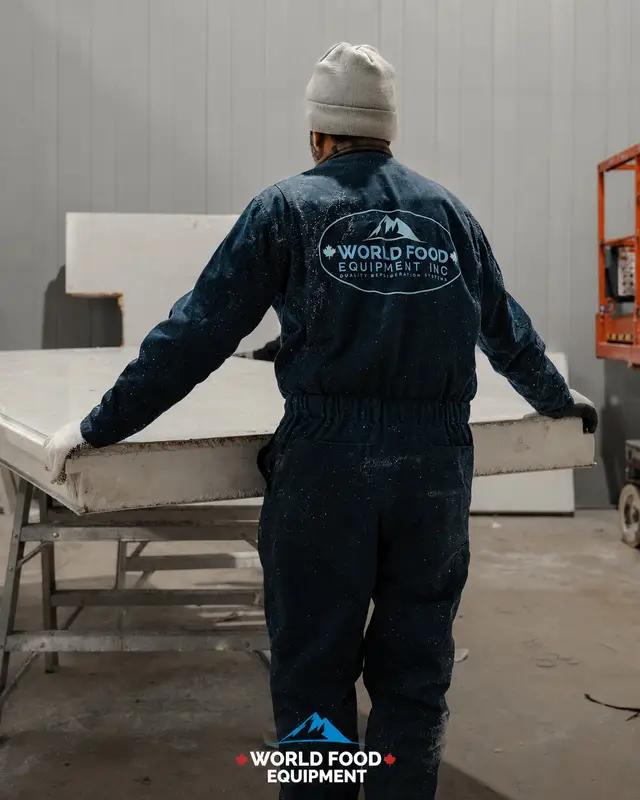
- Install on site. The in-house crew assembles the panel envelope, sets the door, runs refrigeration lines (313A licensed), runs power (ESA-notified), and seals the floor joint. Standard restaurant cooler: 2 to 5 working days on site.
- Commissioning. Pull-down to design temperature, verify defrost cycle, check door seals, set the digital controller, walk the operator through the gauges. Half a day.
- Inspection and handoff. ESA final, Public Health visit if scheduled, written commissioning report.
Total elapsed: 2 to 4 weeks for a stock build, 4 to 8 weeks for a custom box or one that needs a building permit pull.
How much does a restaurant walk-in cooler cost in Ontario?
Costs vary too widely for a single number to be useful. The drivers are box size, refrigeration type (self-contained versus remote), indoor versus outdoor, exterior finish, door spec, and whether a building permit is required.
A small indoor 6×8 walk-in cooler with a self-contained unit, swing door, and insulated floor sits at the low end. A custom 8×16 outdoor combo unit with a remote condensing unit, stainless interior, and sliding door sits 3 to 4 times higher.
WFE covers the cost question in detail on the walk-in cooler cost guide for Ontario, and the financing page lays out the lease-to-own and equipment-finance options most restaurants use to spread the install cost.
What to ask before you sign
After three decades of installing walk-ins for Ontario restaurants, four questions separate a sound installer from a problem one:
- Is the refrigeration work done by 313A-licensed technicians, on your crew or subcontracted? Ask for the certificate by name and check it on the public register. If the answer is vague, walk away.
- Is the panel work done in-house or subcontracted? In-house crews own the schedule and own the finish quality. Subcontracted crews are not always wrong, but you should know which it is.
- Are ESA notification, Public Health coordination, and commissioning included in the quote? These are not optional and they are not free for the installer to handle. A quote that does not mention them is missing scope.
- What is the warranty on the panel envelope, on the refrigeration system, and on labour, separately? Each gets a different number from a different supplier and should be itemized.
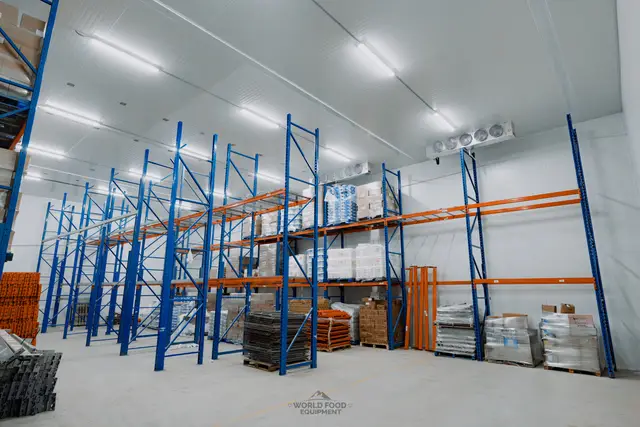
WFE installs walk-in coolers and freezers across Ontario, from the GTA cities (Toronto, Mississauga, Brampton, Hamilton) into Eastern and Northern Ontario. Every install is run by WFE’s in-house crew with 313A-licensed refrigeration technicians, ESA-notified electrical, and a written commissioning report at handoff. See the restaurant refrigeration market page for project examples or the custom cold storage page if the build is larger than a standard restaurant cooler.
Frequently asked questions
How big should a restaurant walk-in cooler be?
Start at roughly 1 to 1.5 cubic feet of cooler space per restaurant seat, then scale up for menu complexity and delivery cadence. A 60-seat full-service restaurant typically fits a 6×8 walk-in; a 120-seat steakhouse with in-house butcher work needs 8×12 or larger. Add 15 to 20 percent on top of the rule-of-thumb number to account for shelving overhead and dead zone in front of the door.
What temperature should a restaurant walk-in cooler maintain?
Ontario Regulation 493/17 (Food Premises) requires hazardous foods to be held at 4°C (40°F) or colder. Most restaurant walk-in coolers are set to a slightly lower setpoint (around 2°C to 3°C) so that door openings and product loads do not push the box above the legal threshold during service.
How long does a walk-in cooler installation take in Ontario?
A stock-build restaurant walk-in runs 2 to 4 weeks from signed quote to commissioning. Custom builds, outdoor units, or installs that need a municipal building permit run 4 to 8 weeks. The on-site install itself (panel assembly, refrigeration, electrical, commissioning) usually takes 3 to 5 working days for a restaurant-scale box.
Which licences does a walk-in cooler installer need in Ontario?
Refrigeration work is a compulsory trade and electrical work needs an ESA-licensed contractor, so the credentials sit with different people on the job. The walk-in cooler installer licensing checklist covers each certificate, the permits, and how to verify them yourself before you sign.
Indoor or outdoor walk-in cooler — which is better for a restaurant?
Indoor is the default for most restaurants because it is faster to install, easier to clean, and keeps the door one step from the prep line. Outdoor walk-ins make sense when interior floor space is genuinely unavailable, when the heat dump from a self-contained unit cannot be absorbed by the kitchen HVAC, or when the operator wants to free up interior square footage for prep or seating. Outdoor units cost more, need a concrete pad, and may need a municipal permit.
Can a single walk-in cooler also handle frozen storage?
Yes, via a combo unit. A combo walk-in is a single insulated envelope with an internal partition that separates a cooler zone (around 2°C) from a freezer zone (around minus 18°C), with two evaporator coils and two condensing units.
It saves floor space versus two separate boxes and shares some panel cost. The trade-off is that a service event on one zone can affect access to the other. WFE specs combo units regularly for restaurants where floor area is tight.
How do I get a walk-in cooler quote from World Food Equipment?
Use the quote form on the home page, or call WFE directly. A site visit follows within 1 to 2 business days, where the WFE team confirms sizing, placement, refrigeration type, and electrical capacity. A written quote covering panel envelope, refrigeration, electrical, ESA notification, Public Health coordination, and commissioning lands inside a week.
Plan Your Build
Size your walk-in in the configurator.
Set dimensions, doors, and refrigeration in 3D, then download the spec sheet to share.
Read Next
Plan a Walk-In Cooler or Freezer in 3D: 8 Decisions
The eight decisions that shape every walk-in cooler or freezer, and where to make each one in our free 3D configurator: size, type, panels, floor, doors, refrigeration, racking and lights.
Industrial Walk-In Freezers: What to Plan Before You Build
What changes when a walk-in freezer gets big enough for pallets and forklifts: the slab, the clear height, the doors, the refrigeration plant, and the Ontario rules that start to apply.
Walk-In Cooler & Freezer Doors: Types, Sizes, Options
Swing, sliding, pallet and roll-up doors for walk-in coolers and freezers: which one fits your traffic, the sizes we build to, what a freezer door adds, and the Canadian rule every walk-in door has to meet.
Walk-In Coolers — Custom Builds
See the service page for sizing, anatomy, and what's included in a WFE install.