



Commercial Walk-In Freezer Buyer's Guide for Ontario
Commercial walk-in freezer guide for Ontario: sizing, panel R-values near R-32 to R-54, insulated floors, heated doors, defrost, and 313A install rules.
A walk-in freezer looks like a walk-in cooler with a colder dial, and that assumption is where most bad freezer purchases start. Holding minus 18°C in an Ontario kitchen changes the panel spec, the floor, the door hardware, the compressor, and even who is legally allowed to install it. This guide covers what a commercial walk-in freezer actually needs, spec by spec, so you can compare quotes on substance instead of price alone.
Key takeaways
- Minus 18°C is the working standard. The CFIA requires federally licensed food businesses to store food that requires freezing at minus 18°C or less, and Health Canada gives the same figure for safe frozen storage.
- A freezer is not a cold cooler. It needs thicker panels, an insulated floor, a heated door frame, active defrost, and about 2x the compressor capacity of a same-sized cooler.
- The floor is the spec buyers miss. An unprotected slab under a freezer can frost-heave over time. Insulation under the box, and in some builds slab heating or venting, is what prevents it.
- Licensing is real in Ontario. Refrigeration work is a compulsory trade (313A), and only technicians holding an Ozone Depletion Prevention card can handle refrigerants.
- Buy for the box you will need in three years. Frozen inventory grows with the menu, and adding capacity later costs more than sizing honestly up front.
What counts as a commercial walk-in freezer?
A commercial walk-in freezer is an enclosed, insulated cold room designed to hold product at minus 18°C (0°F) or colder. That figure is the Canadian benchmark: the CFIA’s preventive control requirements state that food requiring freezing is stored at minus 18°C or less. USDA FSIS holds that food kept constantly at that temperature stays safe indefinitely; only quality declines over time.
The dividing line between a cooler and a freezer is 0°C. Anything designed to run below zero is a freezer, and the full setpoint breakdown by product lives in our walk-in cooler and freezer temperature guide. Typical Ontario buyers are restaurants bulk-buying protein, food processing plants holding finished product, grocery and convenience stores running frozen retail, and bakeries storing par-baked goods.
What changes when the box runs below zero
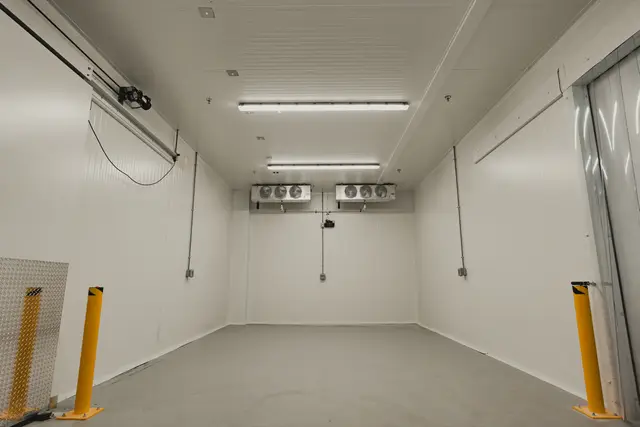
Every major spec steps up when the target drops from 3°C to minus 18°C. The temperature gap the box fights against roughly doubles, and moisture that would drip harmlessly in a cooler turns to ice in a freezer. Concretely, a freezer build adds:
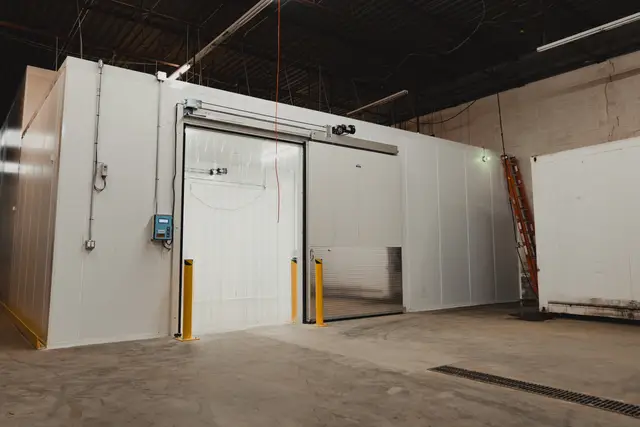
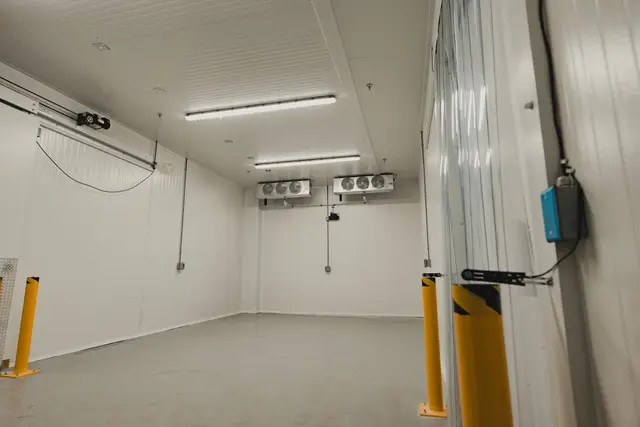
- Thicker panels: freezers run 4-inch to 6-inch insulated panel, where many coolers get by at 4-inch.
- An insulated floor, always: coolers can sometimes sit on a sealed slab; a freezer floor without insulation sweats, ices, and eventually damages the slab.
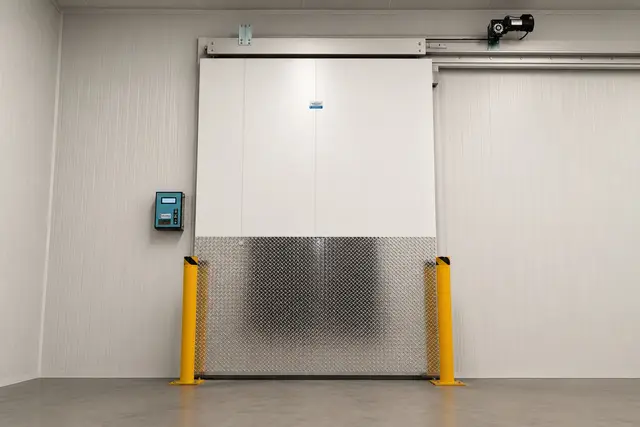
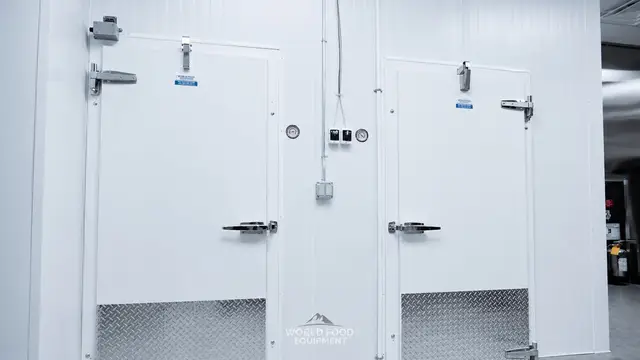
- A heated door package: frame, jamb, and threshold heaters keep the gasket from freezing to the frame.
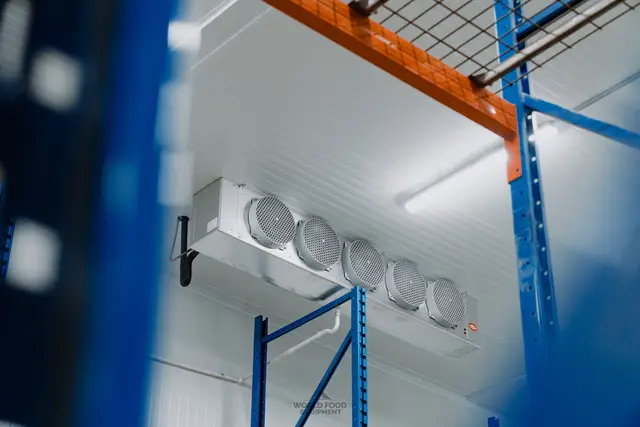
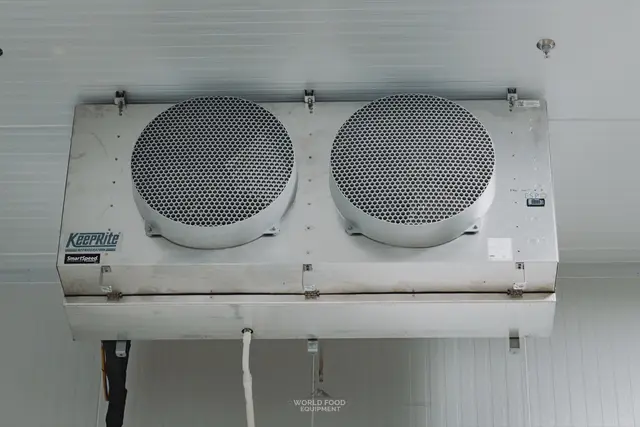
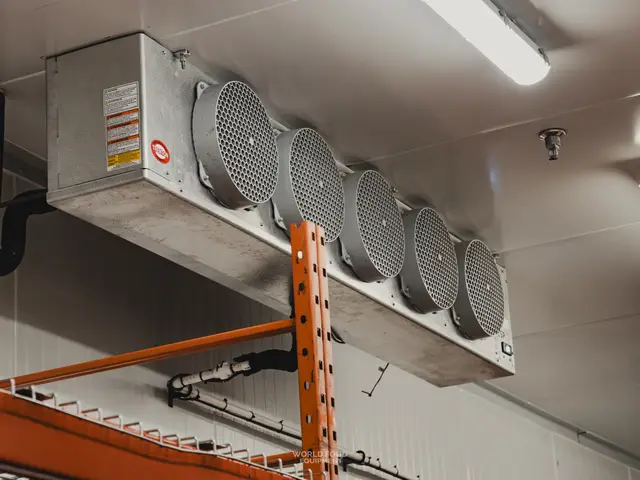
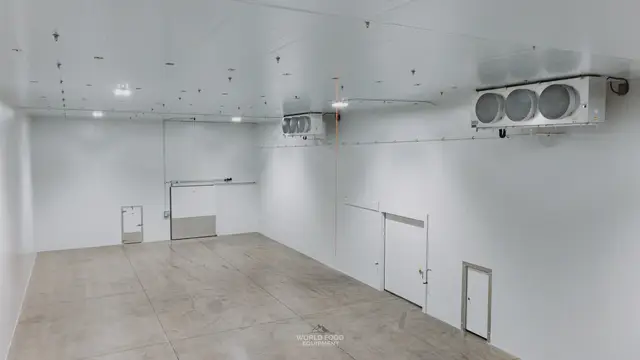
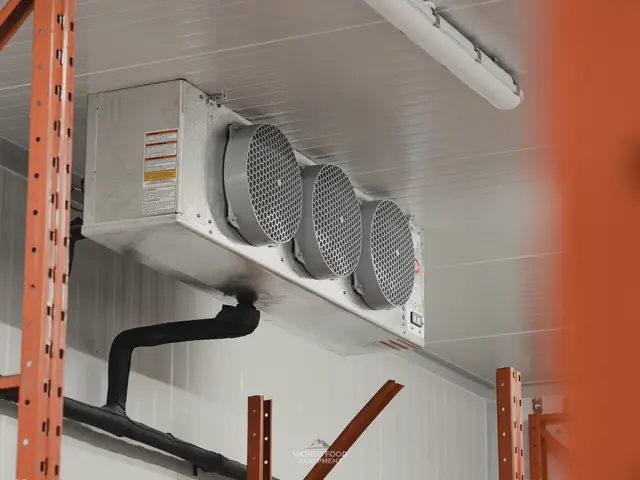
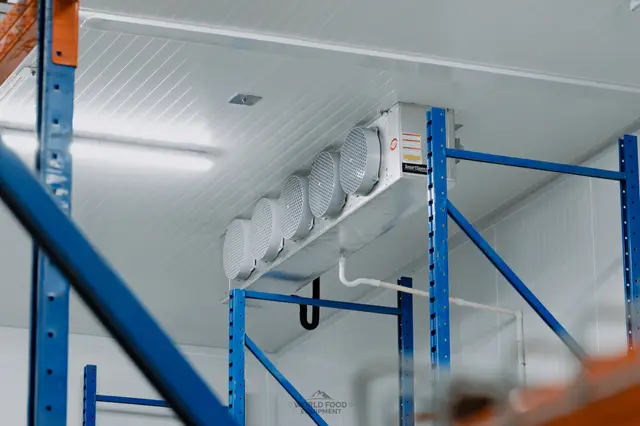
- Active defrost: the evaporator coil runs below freezing, so frost builds on it and has to be melted off on a schedule, usually with electric elements or hot gas.
- Roughly double the compressor: pulling a box to minus 18°C and holding it there through door traffic takes about twice the refrigeration capacity of a same-sized cooler.
If you are still deciding whether you need a freezer at all, or a cooler, or both in one envelope, start with the walk-in cooler versus walk-in freezer comparison and come back here for the freezer spec detail.
How to size a walk-in freezer
Size the box from your frozen inventory at its weekly peak, not its average. Count what is in every reach-in, chest freezer, and rented locker the week before your biggest delivery, add your realistic growth over the next two to three years, and spec to that number. Undersizing shows up within a year as product stacked against evaporators and blocked airflow, and then you pay for cold storage twice.
Three freezer-specific sizing habits pay off:
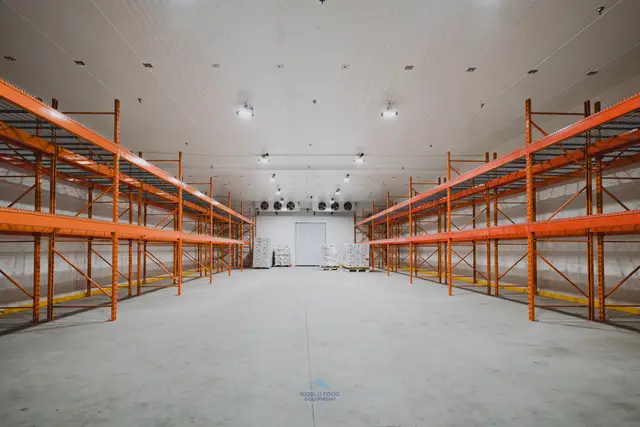
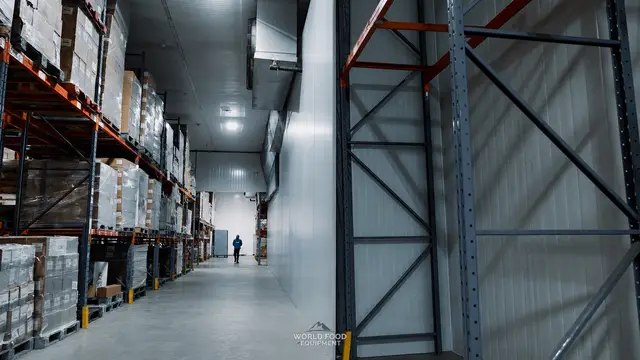
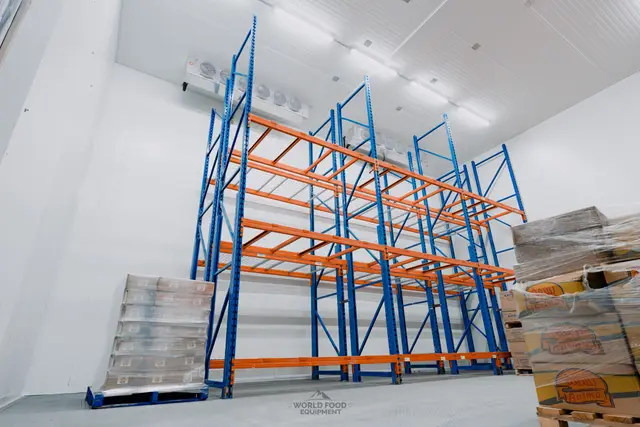
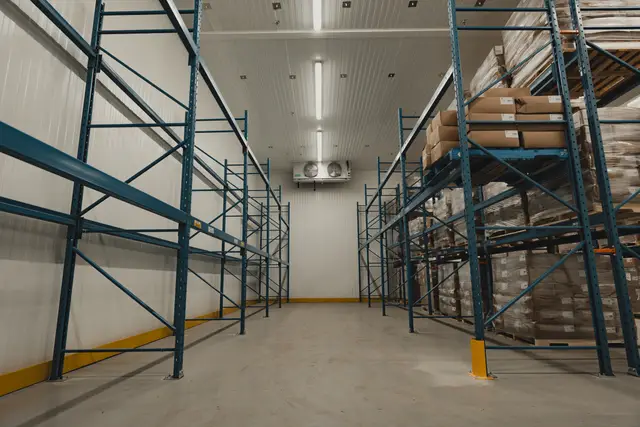
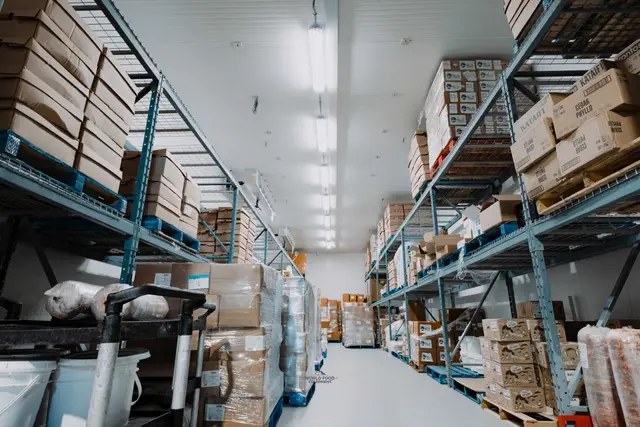
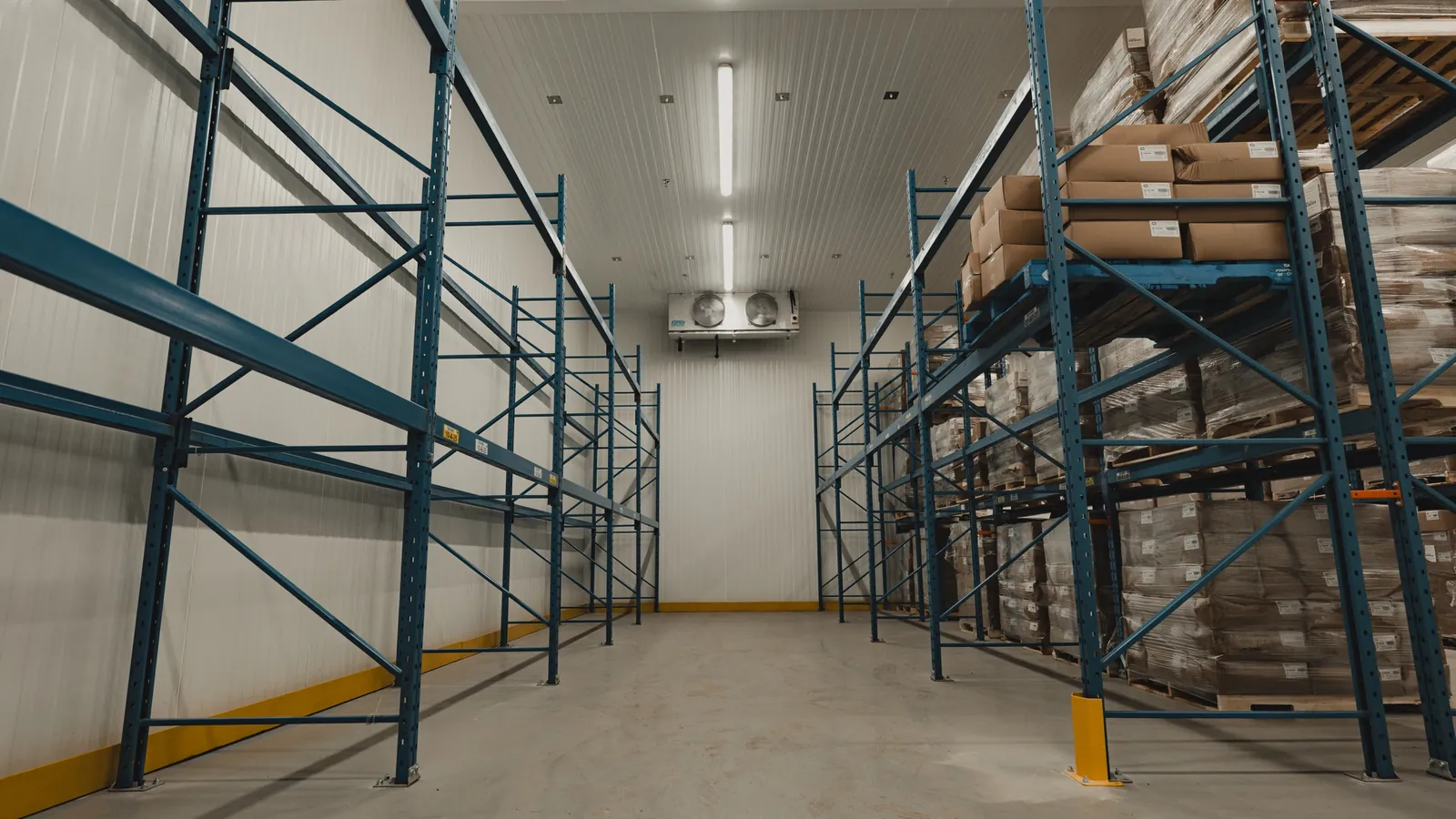
- Plan for density: frozen product stacks. Cases sit six high on shelving or move on pallets, so a freezer stores more per square foot than a cooler if the layout allows it.
- Leave airflow room: the evaporator needs clear space around it, and air needs a path back. A box you can fill wall to wall on paper holds less in practice.
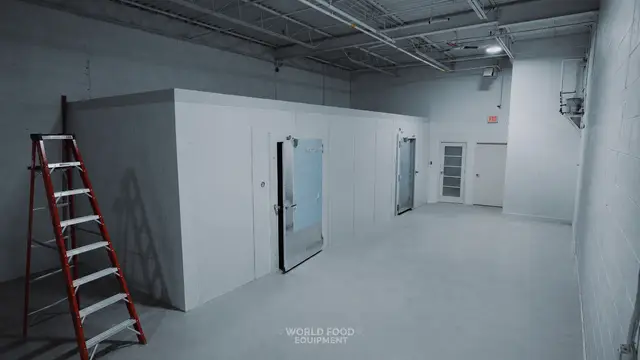
- Think in standard panels: boxes built on standard panel increments quote better and install faster than odd custom dimensions. Common restaurant freezers land between 6x6 and 10x12 feet inside larger custom cold storage footprints for processors and distributors.
A combined cooler-and-freezer build with an insulated partition is often the right answer for restaurants short on floor space. The restaurant buyer’s guide covers the cooler side of that equation.
Panels and insulation: the shell does the work
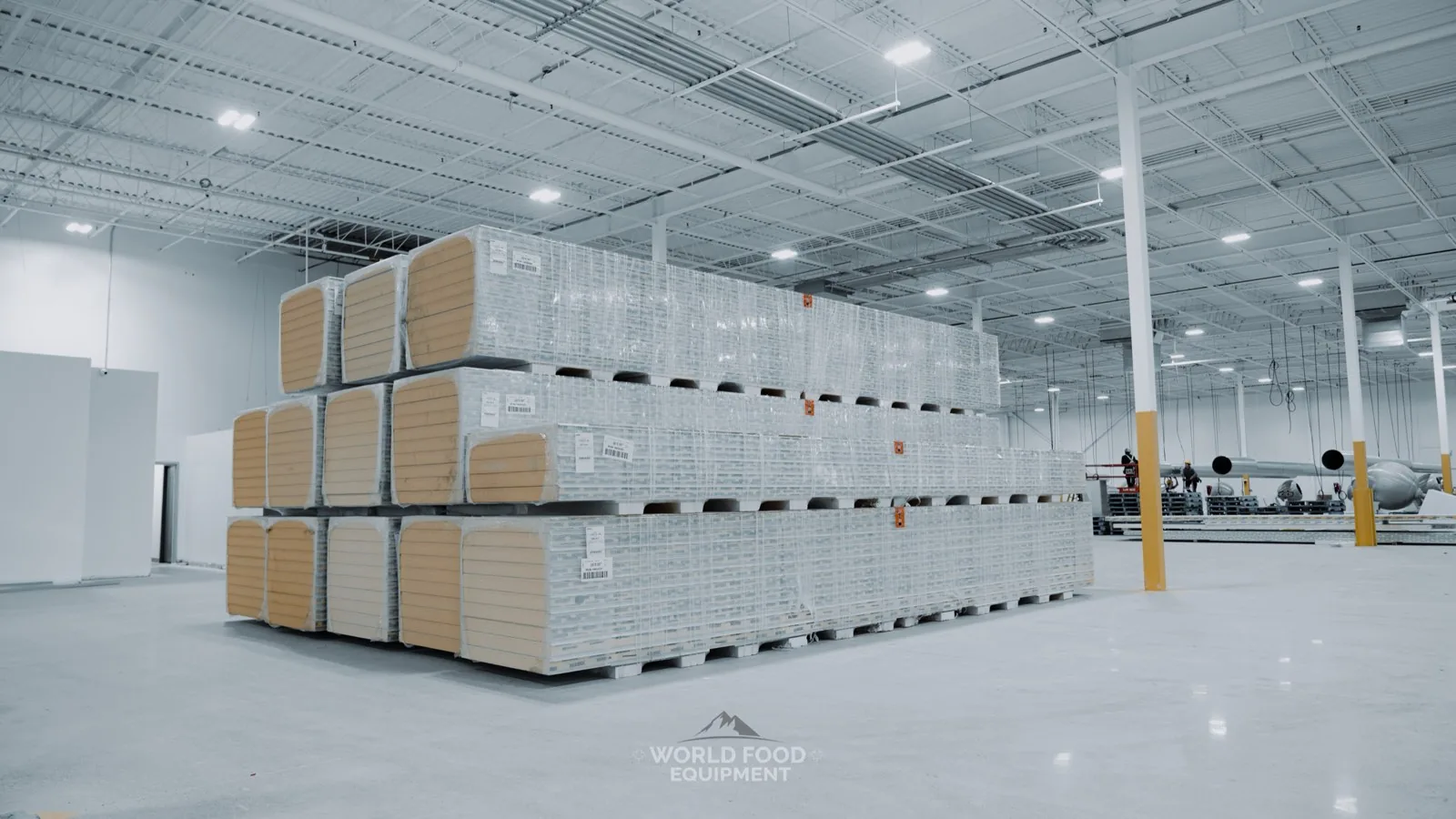
The panel is the spec that decides whether the compressor fights a fair fight. Look for urethane or polyisocyanurate core panels with camlock connections, and compare R-value per inch rather than thickness alone. The two panel systems we install publish their figures:
- Norbec cores: rated at R-7.8 to R-8.2 per inch depending on temperature, which puts a 4-inch wall around R-31 to R-33.
- Kingspan cold storage panels: reach up to R-9 per inch, so a 6-inch freezer wall can land in the low-to-mid R-50s.
The full thickness-by-thickness breakdown, including the federal R-value minimums and fire ratings, lives in our walk-in panel and insulation guide. Supply-only orders and stock thicknesses are on our walk-in cooler and freezer panels page.
What to check on any panel quote:
- Thickness for the duty: 4-inch panel is a workable freezer minimum; 5-inch and 6-inch buy lower running costs and steadier temperature in hot back-of-house spaces.
- Core and facing: urethane or polyisocyanurate core, with food-safe metal facings inside. Ask for the fire-test documentation on the panel system.
- Joint quality: camlock joints pulled tight with gasketed seams are what keep vapour out of the insulation. A soaked panel loses R-value permanently.
- NSF/ANSI 7: the NSF food equipment standard covers the sanitation and food-protection design of commercial refrigerators and freezers. Certified components make health inspections simpler.
Here is how the freezer spec compares against a cooler, line by line:
| Spec | Walk-in cooler | Walk-in freezer |
|---|---|---|
| Holding temperature | 1.7°C to 4°C | minus 18°C or colder |
| Panel thickness | Typically 4-inch | 4-inch minimum, often 5-inch to 6-inch |
| Floor | Sealed slab sometimes acceptable | Insulated floor, always |
| Door | Standard frame and gasket | Heated frame, jamb, and threshold |
| Defrost | Off-cycle (air) defrost | Electric or hot-gas defrost |
| Compressor load | Baseline | Roughly 2x a same-sized cooler |
The floor is where freezers differ most
A freezer floor is a structural decision, not an accessory. Run a box at minus 18°C on a bare slab and the cold drives down into the ground below it. The National Research Council of Canada documented the failure mode decades ago: in fine-grained soils, moisture is drawn to the freezing plane where it forms ice lenses, and the resulting frost heave can lift and crack the slab under cold storage buildings.
The fixes are well established, and which one you need depends on the size of the box and what sits under it:
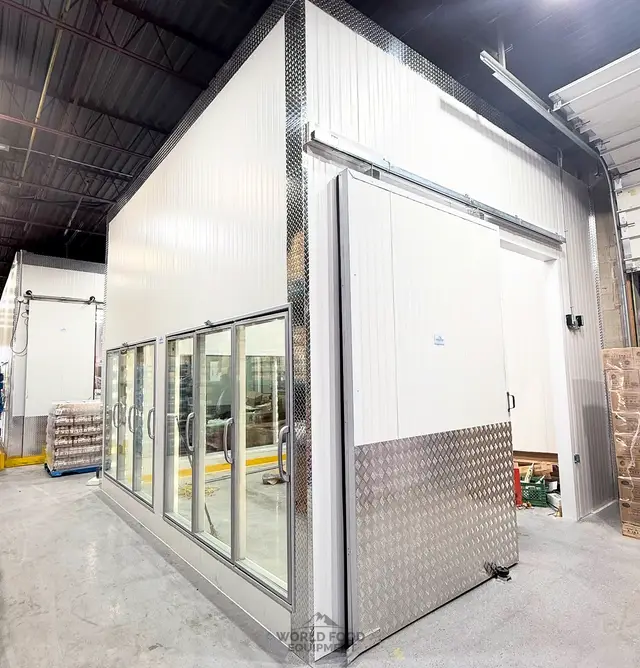
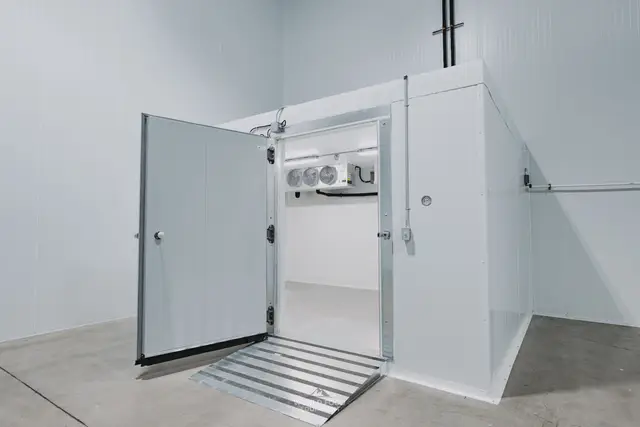
- Insulated floor panels: the standard for kitchen-sized freezers. An insulated panel floor with a protective wear surface sits on the existing slab and breaks the thermal path.
- Underslab insulation: for new construction and larger rooms, rigid insulation goes under the slab itself. For scale, US federal rules require walk-in freezer floors to carry at least R-28 insulation.
- Slab heating: big freezers on grade often add glycol loops or heating cables under the insulation so the ground below never reaches freezing.
- Reinforced wear floors: if pallet jacks or carts roll through the door daily, spec a reinforced or aluminum treadplate surface rated for the load. A cracked floor panel in a freezer is a moisture problem, not just a trip hazard.
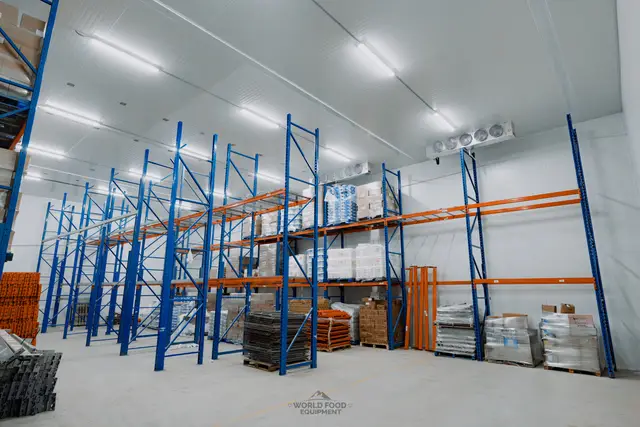
Second-floor and basement installs still need the insulated floor; the concern shifts from frost heave to condensation damaging the structure below. For drive-in and racked freezers, our industrial walk-in freezer planning guide covers heated slabs, rack reviews and the TSSA side.
Doors, hardware, and defrost
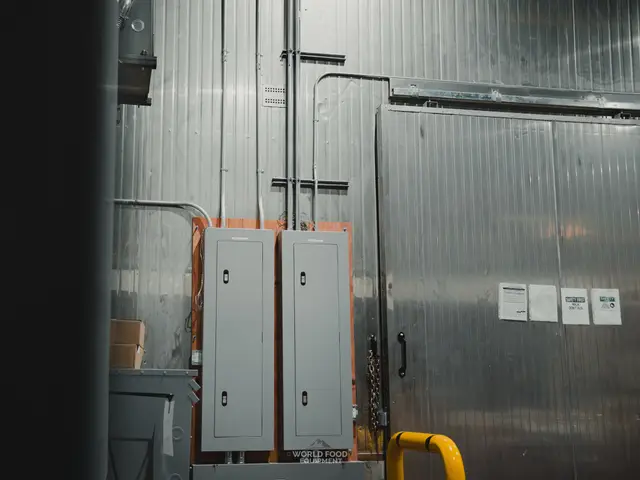
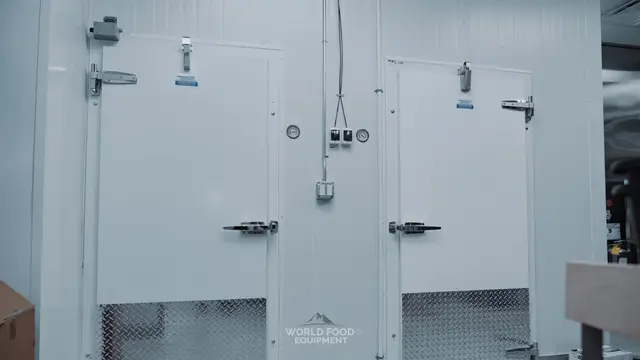
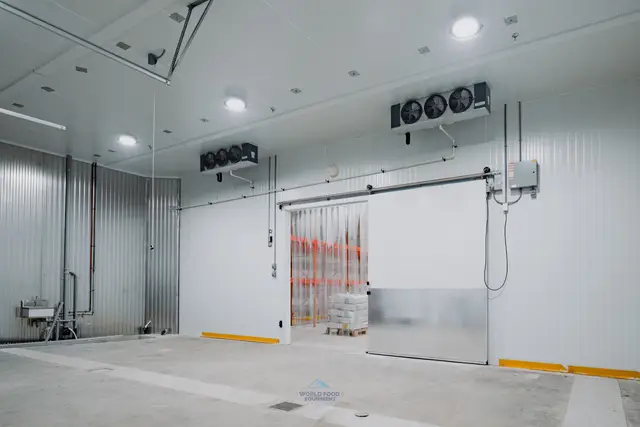
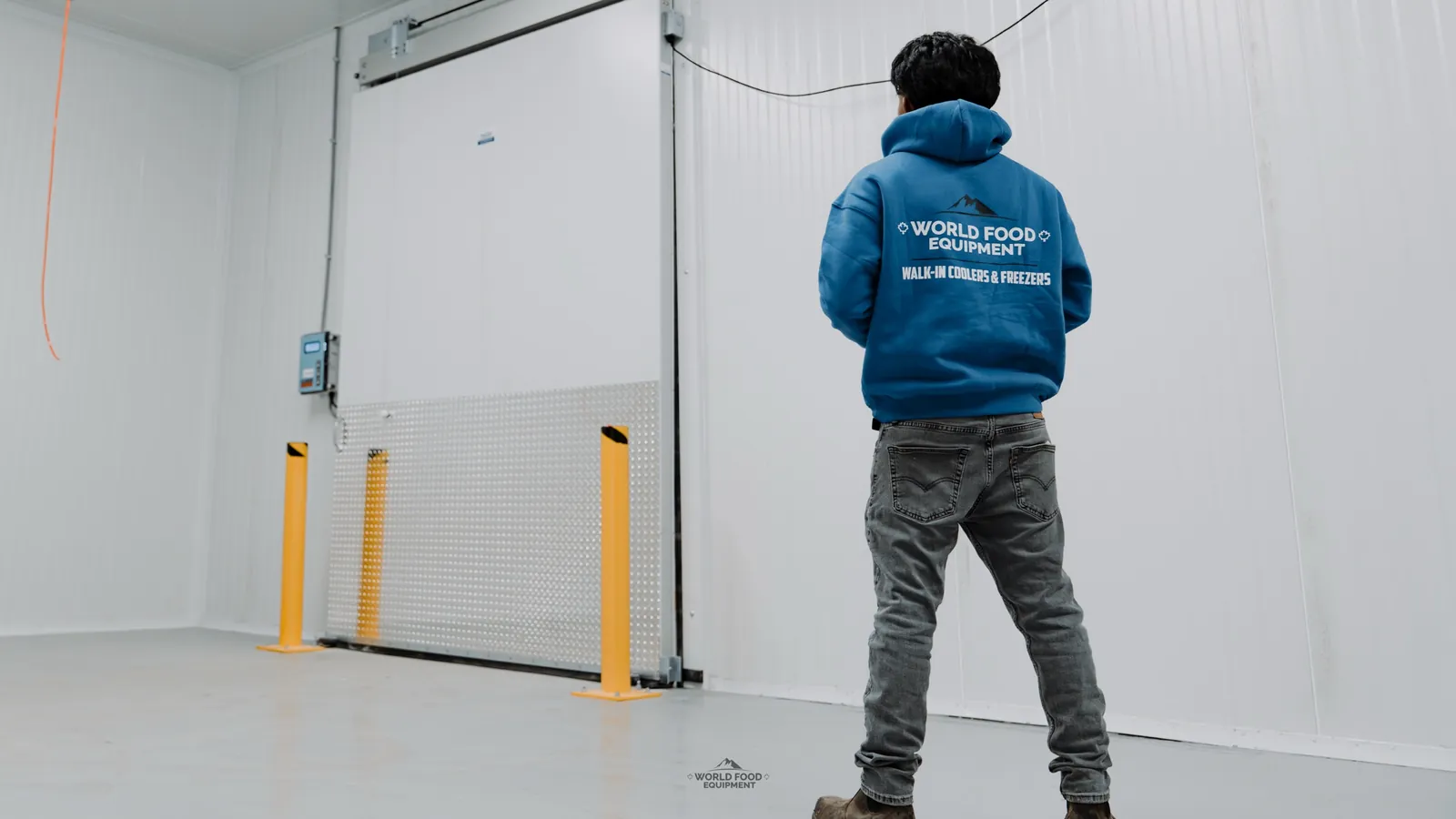
Freezer doors live a harder life than cooler doors, and the hardware list reflects it. The frame, jamb, and threshold carry electric heaters so the gasket seals instead of freezing to the frame; heater draw is significant enough that US efficiency rules cap it at more than double the allowance given to cooler doors. Quality builds use proven hardware, in our case Coldmatic door systems with Kason hinges and latches.
Beyond the door itself, three details separate a freezer that works from one that fights you:
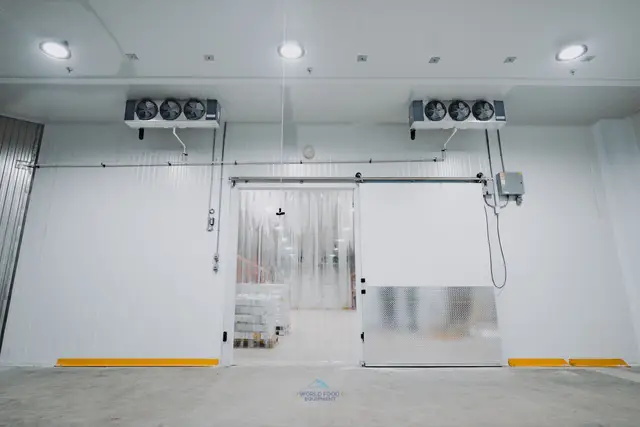
- Self-closing hardware and strip curtains: every second the door stands open, warm moist air pours in and turns to frost on the coil. Cam-lift hinges that swing the door shut and a strip curtain behind it cut that load.
- Defrost done right: electric or hot-gas defrost cycles are standard on freezer evaporators. Timing matters; too few cycles ice the coil, too many waste energy and swing the box warm. When a running box starts icing at the coil, door, or floor, our guide to why walk-in freezers build ice walks the causes and who fixes each one.
- Smart heater controls: NRCan’s walk-in refrigeration guidance notes that anti-sweat heater controls sensing humidity can improve system energy efficiency by two to four percent.
Refrigeration: the system that has to keep up
The refrigeration package is where undersizing hurts most, because a freezer compressor that cannot reach setpoint runs continuously and dies young. Sizing comes from box volume, panel R-value, door count and traffic, ambient conditions, and what temperature product arrives at. There is no reliable one-line formula; a real quote starts with those questions.
The decisions to work through with your installer:
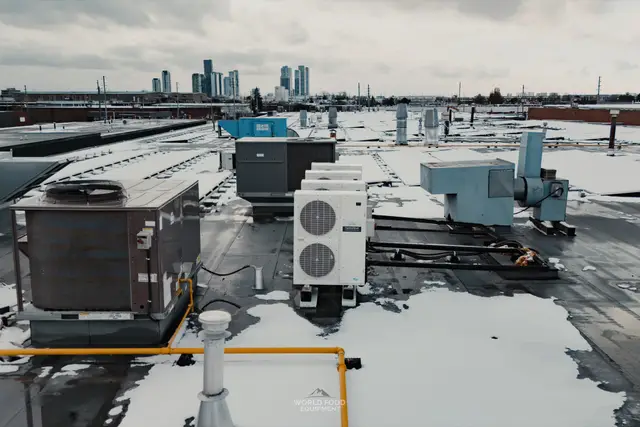
- Self-contained or remote: a self-contained unit keeps everything on the box but dumps its heat into the room. A remote condensing unit moves the compressor and its heat outside or to a mechanical room, which most kitchens prefer.
- Proven components: we spec Copeland and Tecumseh compressors and KeepRite and Heatcraft evaporators and condensing units, sized to the box rather than pulled from a generic chart.
- Energy is a freezer-sized line item: ENERGY STAR reports that refrigeration may use up to 40 percent of a grocery store’s total energy. Panel thickness, door discipline, and heater controls all show up on the hydro bill.
- Blast-freeze zones: processors that need to pull cooked or fresh product down fast can build a blast-freeze zone into a custom freezer, a different duty than storage and one to raise early in design.
The rules: food safety and licensing in Ontario
Ontario’s Food Premises regulation, O. Reg. 493/17, requires that food intended to be sold frozen is kept frozen until sold or prepared for use. The regulation itself does not name a number. Minus 18°C is the Health Canada and CFIA standard, and it becomes binding under the CFIA’s preventive controls if your business holds a federal food licence.
Public health inspectors expect to see frozen food solidly frozen, so the practical bar is the same either way. On the install side, two credentials matter, and both belong to the technicians rather than the company:
- 313A certification: refrigeration and air conditioning systems mechanic is a compulsory trade in Ontario. The refrigeration work on your freezer must be done by someone holding the certificate of qualification or apprenticing under one.
- ODP card: anyone handling refrigerants needs an Ozone Depletion Prevention certificate under Ontario Regulation 463/10, valid for five years.
Ask any bidder directly who holds these tickets on your job. A low quote that dodges the question is not a low quote; it is a liability transfer.
Buying it: new versus used, and what an install looks like
Buy new for the shell and refrigeration whenever the freezer is core to your operation. A used freezer’s panels have usually absorbed moisture you cannot see, the compressor’s history is unknown, and no one warranties any of it.
We sell new built-to-order equipment, and our walk-ins for sale page includes a straight checklist for anyone still weighing a used unit from the resale market. The walk-in cost guide covers what drives quote differences, and financing options spread the spend for newer operations.

A WFE walk-in freezer install runs in a fixed sequence:
- Site check and spec: measurements, electrical capacity, floor condition, and a written spec sheet before the quote.
- Floor prep: the insulated floor system goes down first, levelled and sealed.
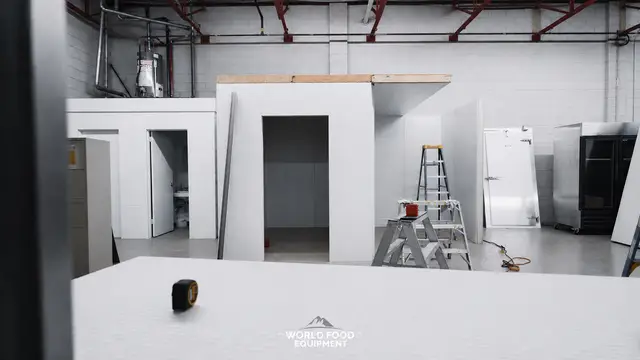
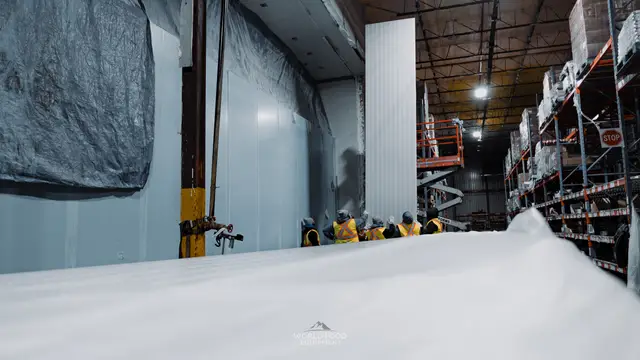
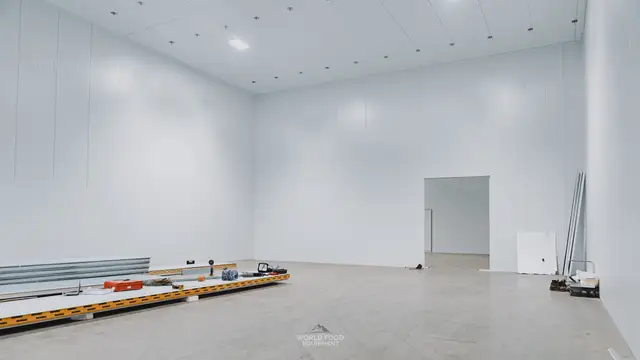
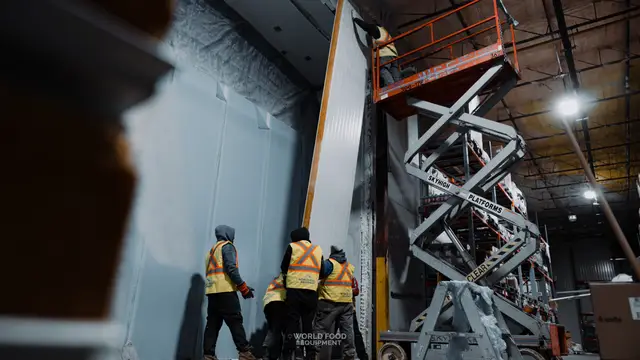
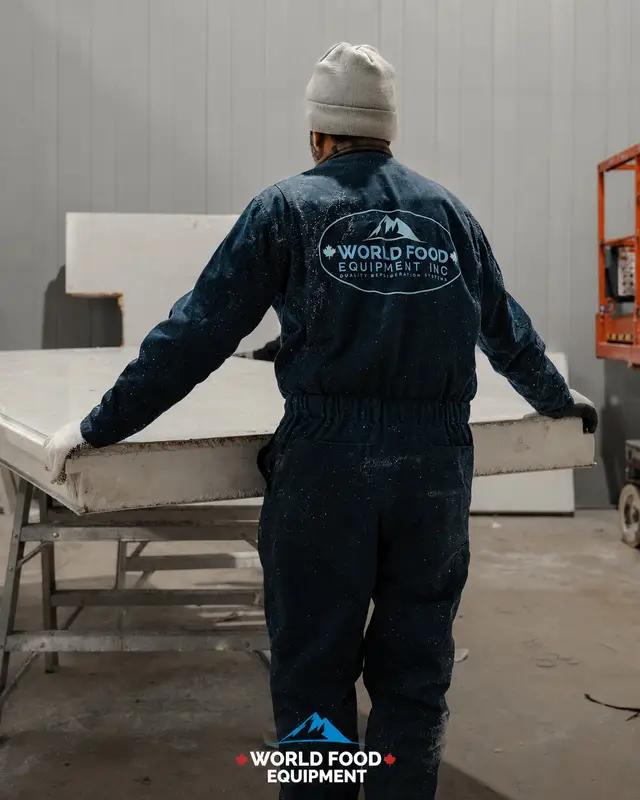
- Panel assembly: walls and ceiling camlocked together with gasketed joints.
- Door and hardware fit: heated frame, hinges, latch, and strip curtain.
- Refrigeration: set, charged, and started by 313A-licensed technicians.
- Commissioning: we pull the box down to minus 18°C and confirm it holds before handover.
On most kitchen-scale builds that is about two weeks of on-site work once panels arrive. If you are replacing an existing freezer rather than adding one, the repair-or-replace assessment is the place to start, and every new build carries our workmanship warranty.
Frequently asked questions
What size walk-in freezer does my business need?
Size from your frozen inventory at its weekly peak plus two to three years of growth, not from your average stock level. Most Ontario restaurants land between 6x6 and 10x12 feet, while processors and distributors typically need larger custom rooms. Frozen product stacks densely, so layout and airflow planning matter as much as the footprint.
Do walk-in freezers need an insulated floor?
Yes, every walk-in freezer needs an insulated floor. Running minus 18°C on a bare slab drives frost into the ground beneath, and the National Research Council of Canada documented that ice lenses forming under cold storage buildings heave and crack slabs. Kitchen-sized boxes use insulated floor panels; larger on-grade freezers add underslab insulation and sometimes slab heating.
How thick should walk-in freezer panels be?
Four-inch insulated panel is the practical minimum for a walk-in freezer, and 5-inch or 6-inch panel is worth the step-up for lower running costs. Manufacturer-rated cores run roughly R-7.8 to R-9 per inch, so a 4-inch wall lands near R-31 and a 6-inch wall can reach the low-to-mid R-50s.
Should I buy a new or used walk-in freezer?
Buy new if the freezer is core to your operation. Used freezer panels often carry hidden moisture damage that permanently lowers their insulating value, compressor history is unknown, and warranties are absent. If you do shop the used market, inspect panel joints, door seals, and floor condition in person, and budget for a refrigeration assessment before committing.
Who can install a walk-in freezer in Ontario?
The refrigeration work belongs to technicians certified in the compulsory 313A trade, and anyone handling refrigerant needs an Ozone Depletion Prevention card under Ontario Regulation 463/10. The walk-in cooler installer licensing checklist covers how to verify both credentials before signing.
Does a walk-in freezer need a heated door?
Yes: freezer doors carry electric heaters in the frame, jamb, and threshold so the gasket seals cleanly instead of freezing to the frame. Without them the door ices shut or the gasket tears when forced open. Humidity-sensing heater controls can trim the energy those heaters use by two to four percent.
Plan Your Build
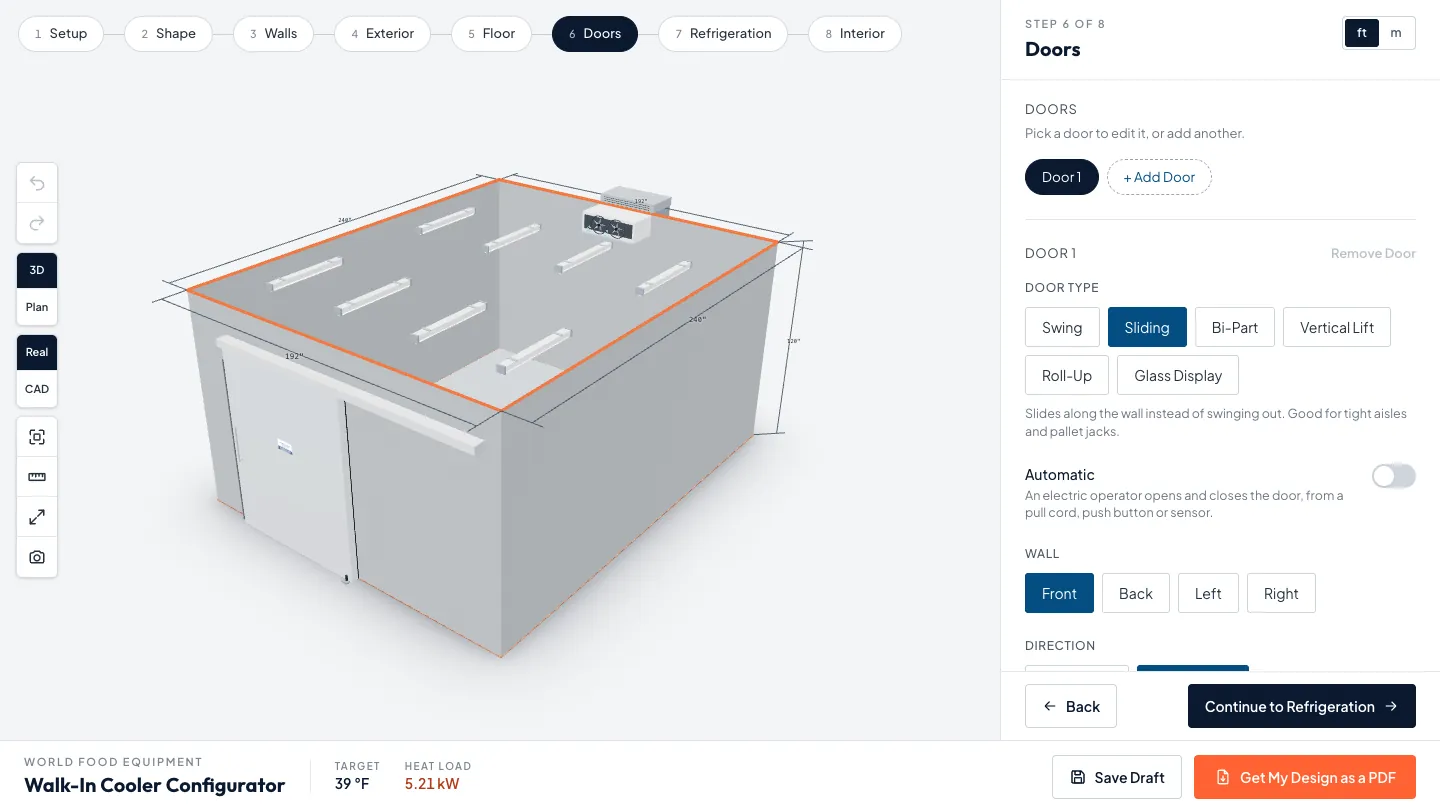
Size your walk-in in the configurator.
Set dimensions, doors, and refrigeration in 3D, then download the spec sheet to share.
Read Next
Plan a Walk-In Cooler or Freezer in 3D: 8 Decisions
The eight decisions that shape every walk-in cooler or freezer, and where to make each one in our free 3D configurator: size, type, panels, floor, doors, refrigeration, racking and lights.
Industrial Walk-In Freezers: What to Plan Before You Build
What changes when a walk-in freezer gets big enough for pallets and forklifts: the slab, the clear height, the doors, the refrigeration plant, and the Ontario rules that start to apply.
Walk-In Cooler & Freezer Doors: Types, Sizes, Options
Swing, sliding, pallet and roll-up doors for walk-in coolers and freezers: which one fits your traffic, the sizes we build to, what a freezer door adds, and the Canadian rule every walk-in door has to meet.
Walk-In Coolers — Custom Builds
See the service page for sizing, anatomy, and what's included in a WFE install.