



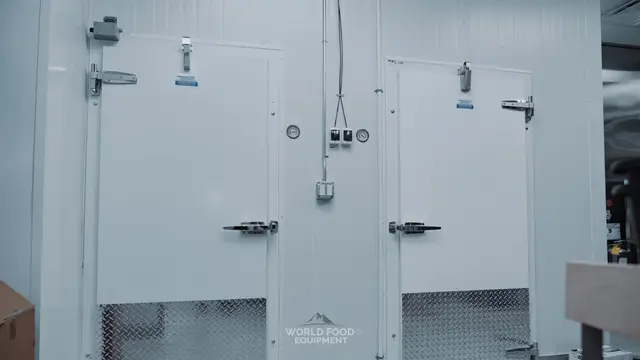
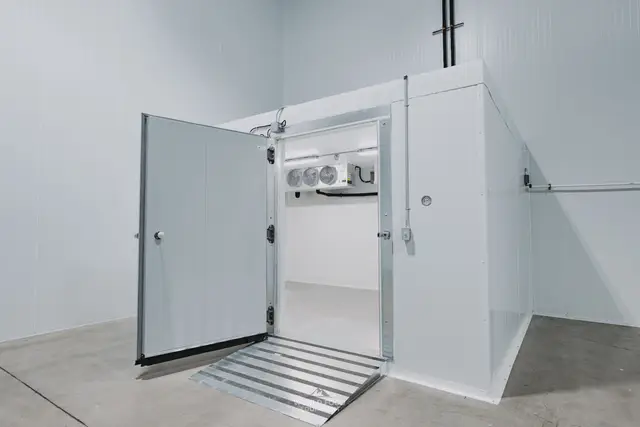

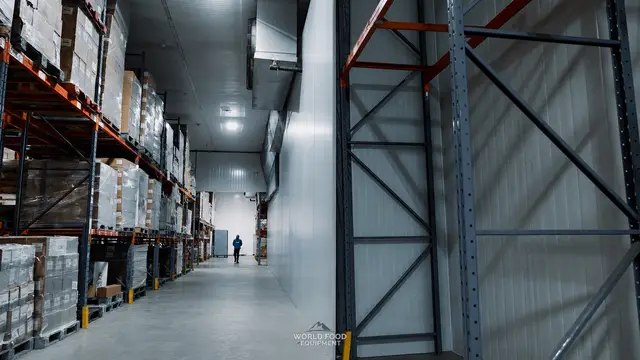



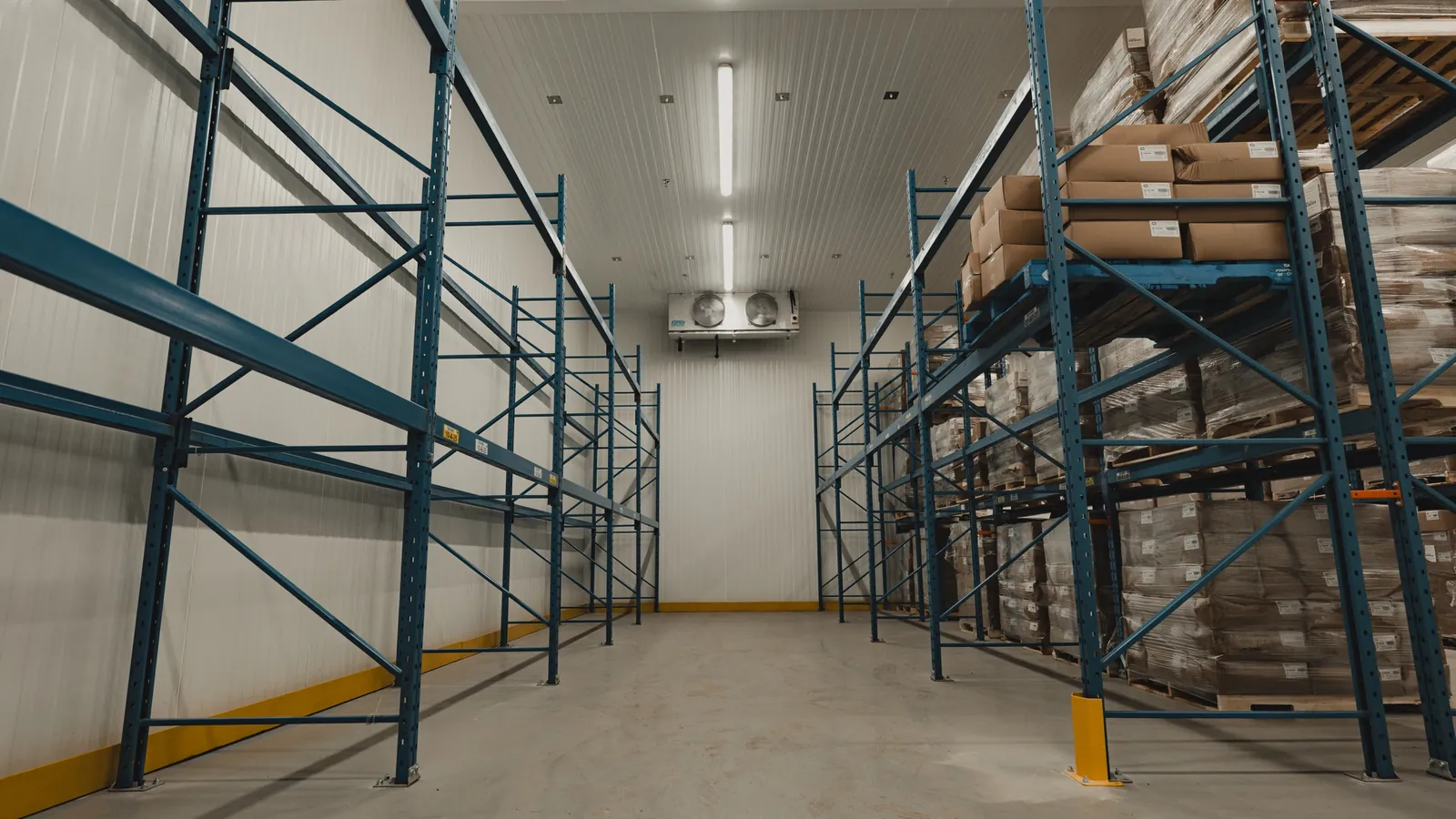
Walk-In Freezer and Cooler Temperature: Safe Setpoints
Walk-in cooler: 1.7°C to 4°C. Freezer: minus 18°C or colder. Setpoints by product, the Ontario Reg 493/17 rule, and why a box reads warmer than its dial.
The single most common service question we get at World Food Equipment is some version of “what should I set my walk-in to?” The numbers are not complicated, but the setpoint that keeps you legal in Ontario is tighter than most operators run, and the box almost never reads exactly what the dial says. This guide gives you the right setpoints for a walk-in cooler and a walk-in freezer, the temperature each food group actually wants, and why a box drifts warm even when the controller looks fine.
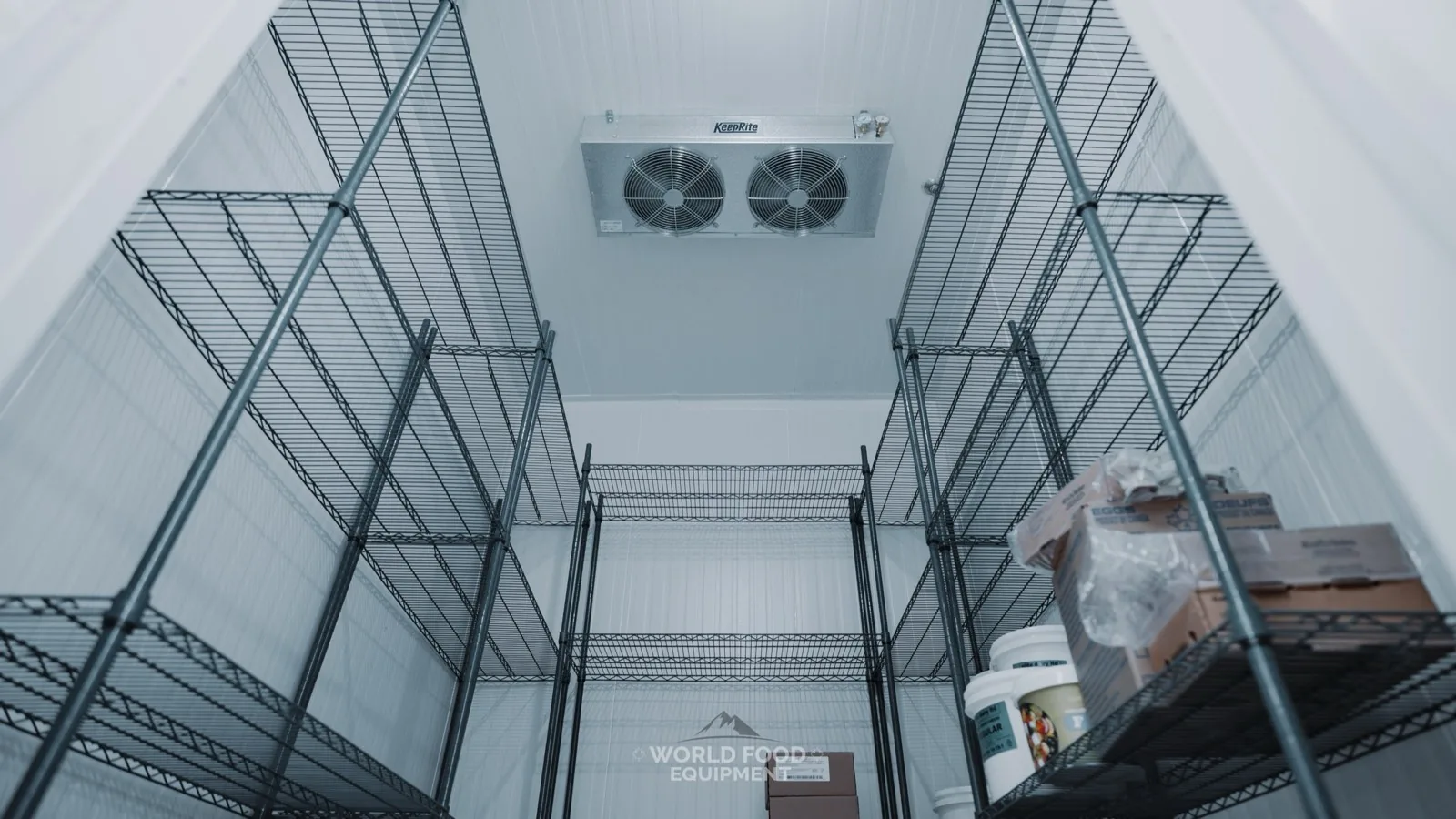
Key takeaways
- Walk-in cooler setpoint: between 1.7°C and 4°C (35°F to 39°F). Most Ontario kitchens run 2°C to 3°C so every shelf stays under the 4°C limit even during a service rush.
- Walk-in freezer setpoint: minus 18°C (0°F) or colder. That is the USDA standard for safe long-term frozen storage, and 0°F rounds to minus 18°C.
- Ontario legal line: 4°C. Under Ontario Regulation 493/17, hazardous food must sit at 4°C or lower, or at 60°C or higher. The range in between is the bacterial danger zone.
- Cooler-versus-freezer split: 0°C. Canada’s Energy Efficiency Regulations define a cooler as designed to run above 0°C and a freezer below 0°C.
- Dial versus box: a walk-in reads warmer than its setpoint because of door traffic, defrost timing, overstocked shelves, ambient heat, or an undersized refrigeration system. Those are spec and commissioning problems, not just dial problems.
- Too cold is real: product parked in the evaporator’s discharge air, or a setpoint pushed toward 0°C to buy margin, freezes lettuce and dairy long before the controller shows a problem.
What temperature should a walk-in cooler be set at?
Run a walk-in cooler between 1.7°C and 4°C (35°F to 39°F), and aim for 2°C to 3°C in a working kitchen. That keeps every shelf under the 4°C ceiling Ontario sets for potentially hazardous food, with enough margin to absorb a door opening or a warm delivery. If you searched “how cold is a walk-in fridge,” the answer is the same: a walk-in fridge, cooler, and chiller are one product under three names.
A lot of operators ask why not just run at 5°C. The 2022 FDA Food Code, section 3-501.16, allows cold holding at 5°C (41°F) or less, but Ontario’s hazardous-food limit is 4°C, so a 5°C setpoint is already over Ontario’s line before the door opens. Setting 2°C to 3°C gives the box room to breathe.
Two more things matter as much as the number on the controller:
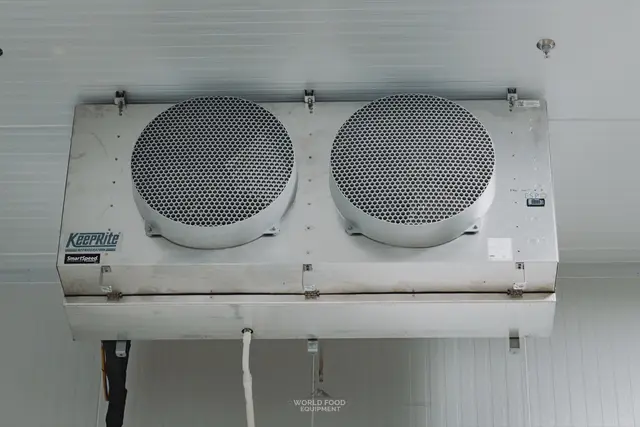
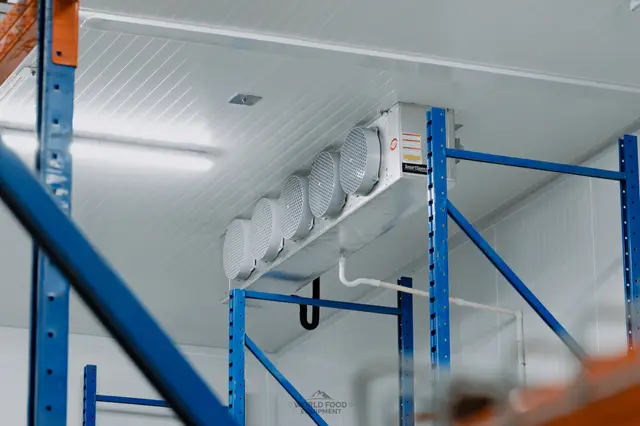
- Air versus product temperature: the controller reads the air near the evaporator, while product in the middle of a tight pallet, or sitting by the door, can run several degrees warmer. Spot-check product with a probe, not just the wall display.
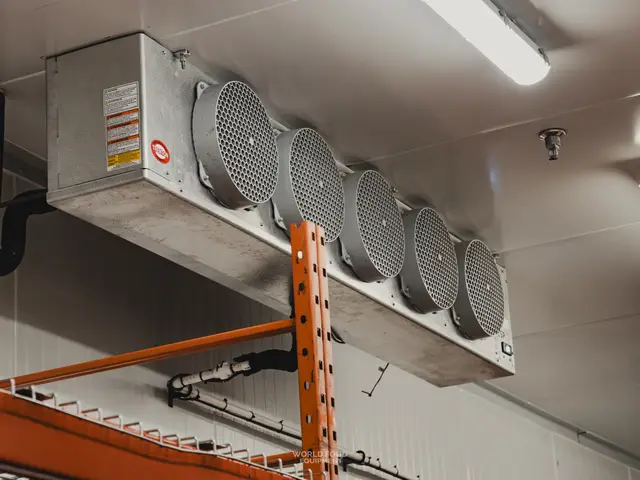
- Warm and cold spots: cold air dumps off the evaporator and pools low, so the shelf nearest the door and the top shelf furthest from the fan are your warm spots. Store your most temperature-sensitive product where the box is coldest.
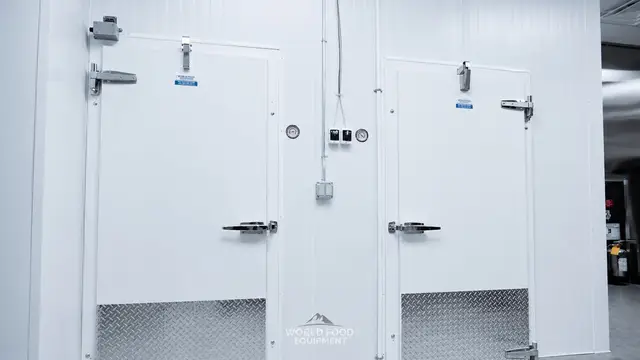
If you are still deciding whether you need a cooler, a freezer, or both, the walk-in cooler versus walk-in freezer guide walks through how the setpoint changes every other spec. For build details, see the walk-in coolers page.
What temperature should a walk-in freezer be set at?
A walk-in freezer should hold minus 18°C (0°F) or colder. The USDA holds that food kept constantly at 0°F stays safe indefinitely, because freezing to that point puts the microbes in food into a dormant state. Many operators run a degree or two colder to cover door traffic and defrost swings.
The Canadian guidance lands on the same number. Health Canada says to keep a freezer at minus 18°C (0°F) or lower, and section 28 of Ontario Regulation 493/17 requires food sold frozen to be kept in a frozen state until it is sold or prepared. In Ontario, minus 18°C is the floor, not the target.
A freezer cannot hold that number with cooler hardware. To actually sit at minus 18°C in an Ontario kitchen, the box needs:
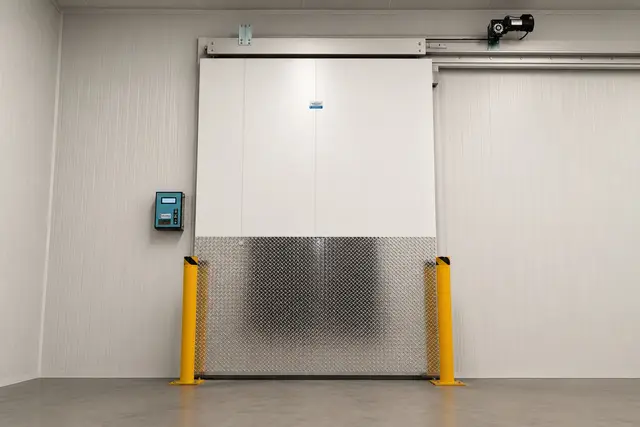
- Heated door frame: without frame and gasket heaters, the door ices at the seal and either stops sealing or rips when forced open mid-service.
- Insulated floor, always: a freezer floor without insulation and an underlay sweats condensation into the building slab and eventually heaves.
- Thicker panel, bigger compressor: in our sizing, a freezer pulls roughly twice the compressor capacity of a same-sized cooler to fight a much larger temperature gap.
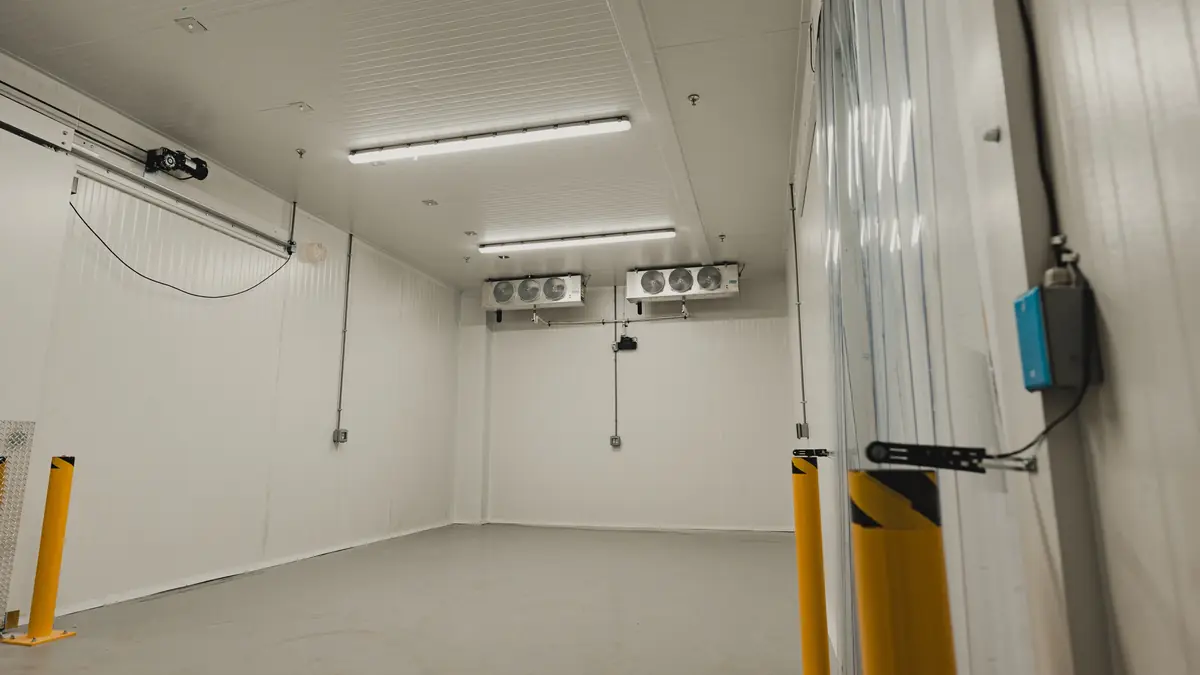
Ice cream and gelato are the usual exception to the minus 18°C rule. Shops storing scoop product often run a dedicated freezer colder, around minus 23°C, to keep texture firm enough to serve. For build specs, see walk-in freezers, and for the budget side, how much a walk-in costs in Ontario breaks down why a freezer runs more than a cooler.
Walk-in cooler and freezer temperature, at a glance
The food decides the setpoint, and the 0°C line is what Canada uses to tell a cooler from a freezer in the first place.
| Box type | Setpoint to run | Reference | What it holds |
|---|---|---|---|
| Walk-in cooler | 1.7°C to 4°C (35°F to 39°F), most run 2°C to 3°C | Ontario Reg 493/17: hazardous food at or below 4°C | Produce, dairy, fresh meat, beverages, cut flowers |
| Walk-in freezer | minus 18°C (0°F) or colder | USDA: 0°F or below for frozen storage | Ice cream, bulk meat, seafood, par-baked goods |
| Combo or multi-temperature (cooler + freezer zones) | Each zone to its own setpoint | NRCan: 0°C divides cooler from freezer | Both, separated by an insulated partition |
Source for the cooler-versus-freezer definition: Natural Resources Canada, walk-in coolers and freezers under the Energy Efficiency Regulations. NRCan defines both as enclosed, walk-in refrigerated spaces under 278.71 m² (3,000 sq ft); a cooler is designed to run above 0°C, a freezer below 0°C.
The number that matters in Ontario: 4°C
In Ontario, the temperature that carries legal weight is 4°C. Ontario Regulation 493/17 (Food Premises), section 27, requires that potentially hazardous food be stored, displayed, and sold only when its internal temperature is 4°C or lower, or 60°C or higher. Anything in between is where the risk lives.
One detail worth getting right: the regulation states 4°C, not 40°F. The popular “40°F” shorthand comes from Health Canada’s plain-language guidance, and 4°C is actually closer to 39°F. If you are tuning a box to meet the Ontario rule, target the 4°C figure, not a rounded Fahrenheit conversion, and read the regulation yourself at Ontario e-Laws, O. Reg. 493/17.
Health Canada calls the range between 4°C and 60°C (40°F to 140°F) the danger zone, because that is where harmful bacteria multiply fastest. The guidance is simple: keep cold food at or below 4°C and hot food at or above 60°C. See Health Canada food safety.
The stakes are not abstract. The Public Health Agency of Canada estimates roughly 4 million Canadians (about 1 in 8) get sick from food each year, with an estimated 11,600 hospitalizations and 238 deaths from domestically acquired foodborne illness. A cooler that drifts to 6°C overnight is exactly how some of that happens.
Setpoints by product: where to put the dial for what you store
The box setpoint is a compromise across everything inside it, so set the room for your most sensitive product and store the rest accordingly. Here is where the common food groups want to sit:
| Product | Target temperature | Notes |
|---|---|---|
| General refrigerated and hazardous food | 4°C (39°F) or below | Ontario’s legal line; the USDA’s household guidance rounds it to 40°F |
| Fresh meat, poultry, seafood | At or below 4°C, in the coldest part of the box | Wrap or seal, store low, use poultry and ground meat within 1 to 2 days |
| Dairy | At or below 4°C | Holds under the general cold-holding rule |
| Produce (cold-storage types) | At or below 4°C | Some items keep better in dry storage, not the cooler |
| Cut flowers | 0°C to 2°C (32°F to 35°F) ideal, high humidity | WFE holds floral coolers to a 1°C to 2°C band; chill-sensitive tropicals get their own warmer zone |
| Ice cream and frozen goods | minus 18°C (0°F) or colder | Scoop shops often run colder for serving texture |
The refrigerated and frozen targets come from USDA FSIS refrigeration guidance and USDA FSIS freezing guidance. The cut-flower range comes from university extension postharvest fact sheets such as Oklahoma State Extension, which notes that flowers held at 41°F can deteriorate up to four times faster than flowers held at 32°F.
If your product mix points at a dedicated build, the florists page covers the flower-cooler spec. A mixed operation that needs both a cooler and a freezer is usually a custom cold storage job.
Setpoint versus actual: why your walk-in reads warmer than the dial
If the controller says 3°C but a probe in the product reads 6°C, the box is not holding its setpoint, and the cause is almost never the dial.
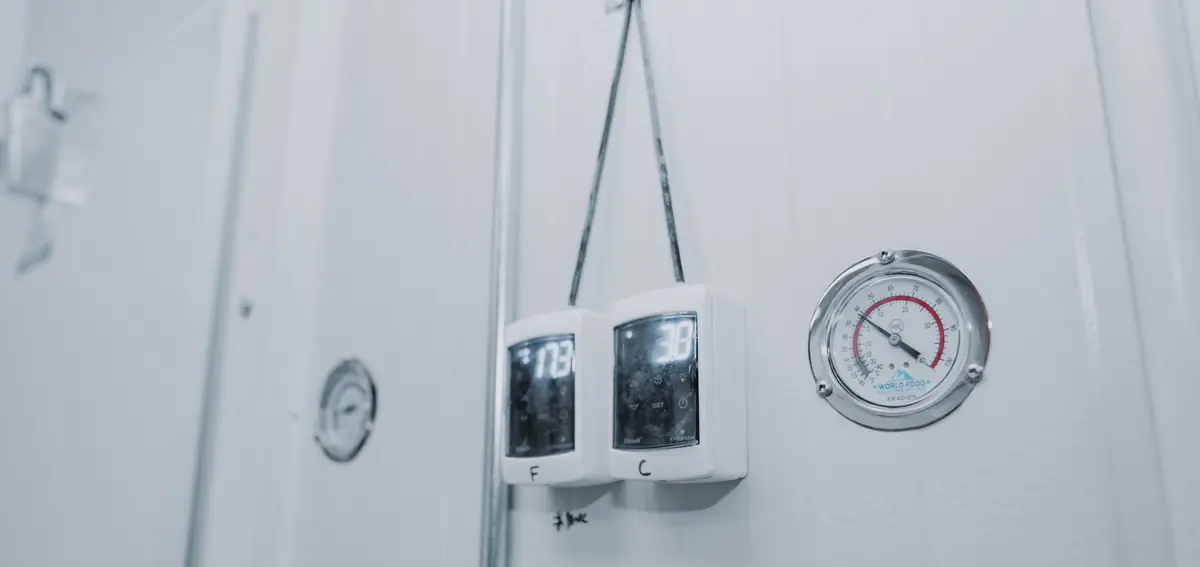
A walk-in drifts warm for a handful of predictable reasons:
- Doors and seals: every open dumps cold air and pulls warm, humid room air in. A gasket that no longer seals, or a door propped during a delivery, keeps the box fighting a losing battle.
- Defrost timing: the evaporator runs a defrost cycle to clear frost off the coil. Too many or too long, and the box rides warm between cycles. Too few, and the coil ices over and stops cooling.
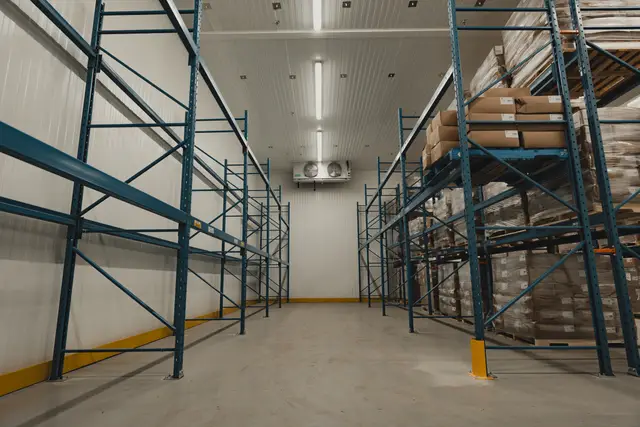
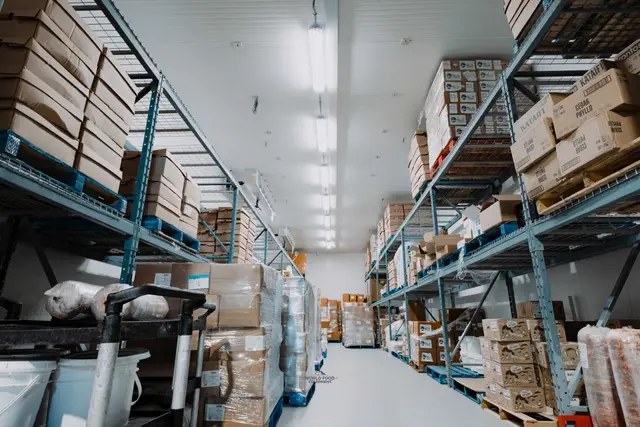
- Overstocked shelves: product packed against the evaporator or jammed wall to wall blocks the airflow the box needs to move cold air around. Hot spots form where air cannot circulate.
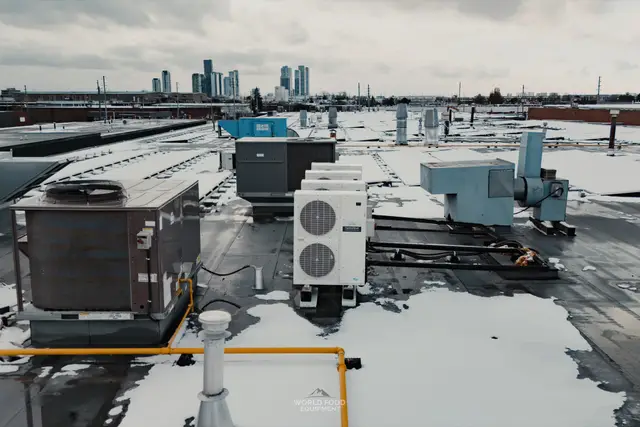
- Ambient heat: an outdoor unit in an Ontario summer, or an indoor box next to a hot line or oven, makes the refrigeration work far harder than a climate-controlled space.
- Undersized or aging refrigeration: a compressor or condensing unit that was undersized for the volume, or that has lost charge over the years, simply cannot keep up on the hottest days.
Door, airflow, and gasket problems you fix in-house. A failing compressor, a low charge, or a controller fault is a service call: WFE repairs walk-in coolers and freezers across Ontario on any brand, starting with a repair-or-replace read. If we built the box, scheduled maintenance is what keeps it from getting to that call.
If the box is warm right now, our walk-in cooler not cooling checklist covers the operator checks and what each symptom points to.
Can a walk-in cooler be too cold?
Yes, and it happens more often than operators expect. A walk-in cooler runs too cold when the setpoint is pushed toward 0°C to buy margin, or when the controller’s differential lets the box overshoot on every cycle. The controller still reads a legal number; the lettuce on the top shelf under the evaporator is frozen anyway.
Two different problems hide behind “my walk-in cooler is freezing up,” and they need different fixes:
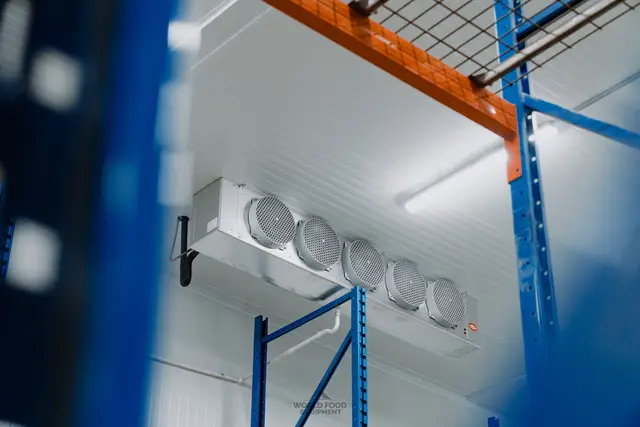
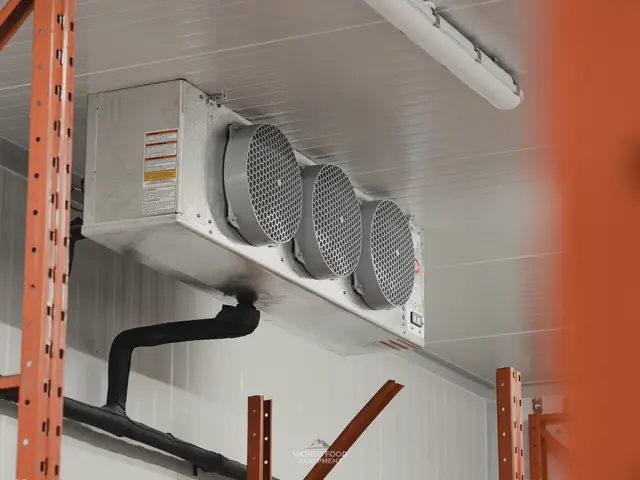
- Product freezing: the evaporator discharges air well below the box setpoint, so anything stacked in that air stream, or touching the ceiling under the coil, freezes first. Move produce, dairy, and eggs out of the discharge path and keep the setpoint at 2°C to 3°C, not 0°C.
- Coil icing up: a coil wrapped in ice means humid air is getting in faster than the defrost cycle clears it. That is a door, gasket, or defrost-setting problem, and the walk-in freezer ice guide walks through where the moisture comes from and who fixes it.
- Chill-sensitive product: tropical flowers take damage well above freezing, which is why Oklahoma State’s cut-flower guidance recommends dual temperature controls when temperate and tropical flowers share a cooler. Store them near the door where the box runs warmest, or give them their own zone.
Multi-temperature cold storage: one room, more than one setpoint
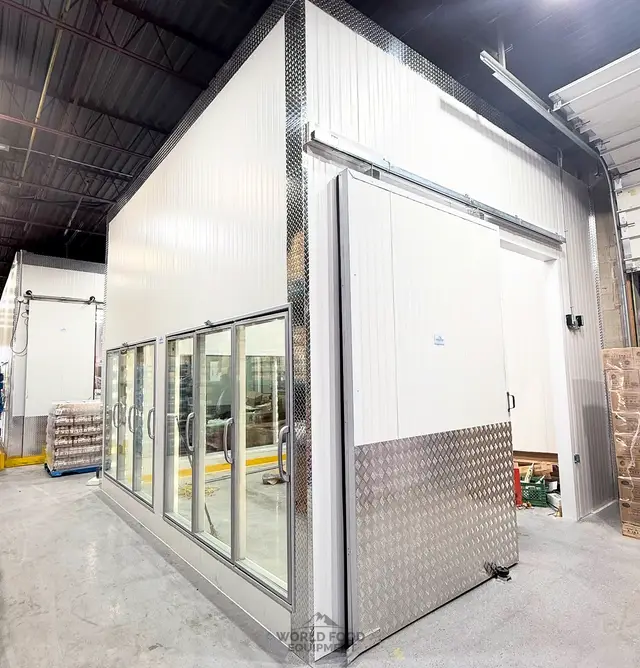
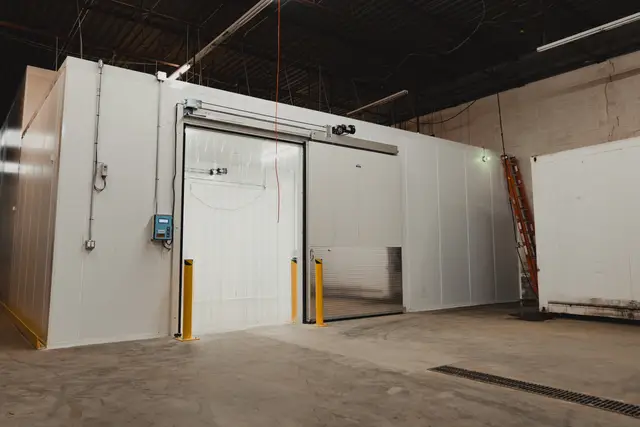
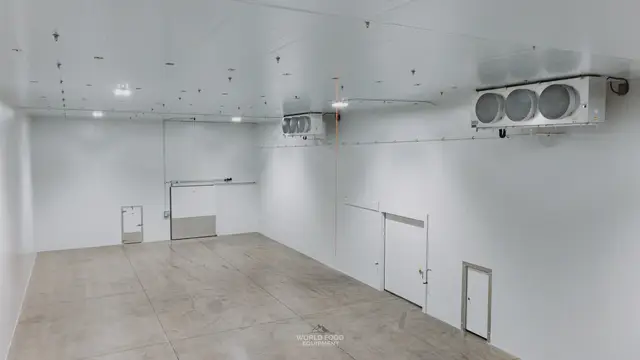
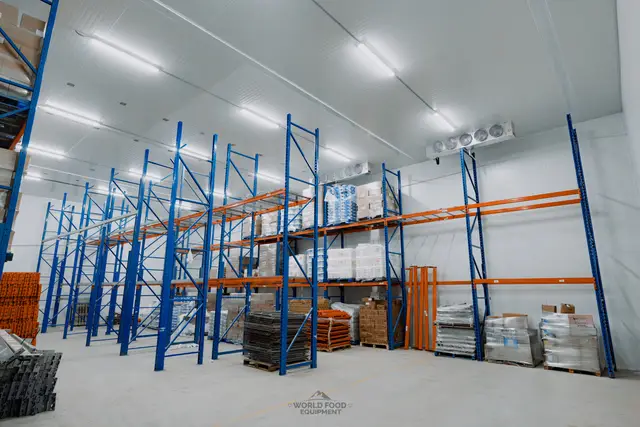
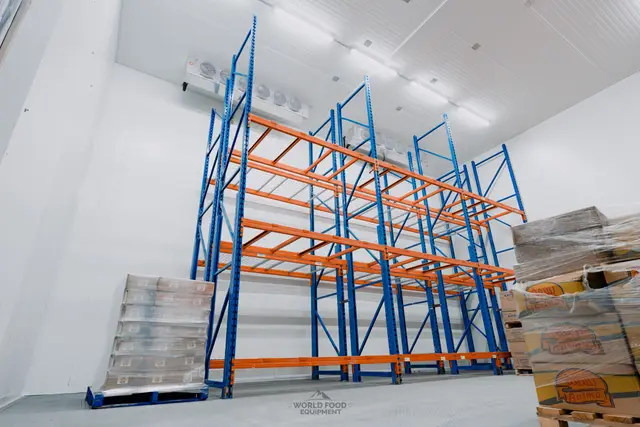
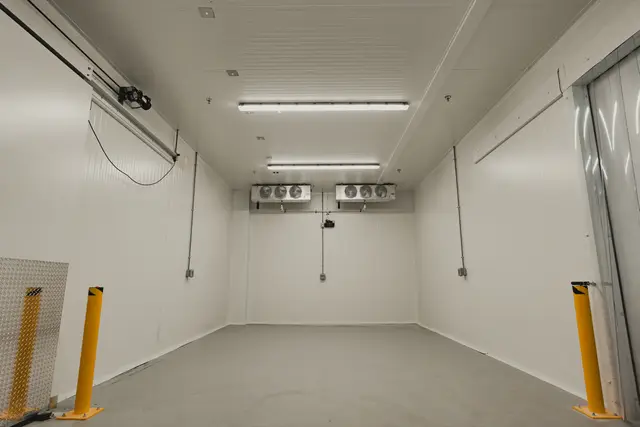
A single box can hold more than one setpoint. A cooler at 3°C with a freezer zone at minus 18°C behind an insulated partition is the most common multi-temperature layout we build. A distributor or processor often runs three zones: a receiving cooler, a frozen zone, and a blast-freeze zone inside a custom freezer for pulling product down fast.
Each zone runs as its own box inside the shell:
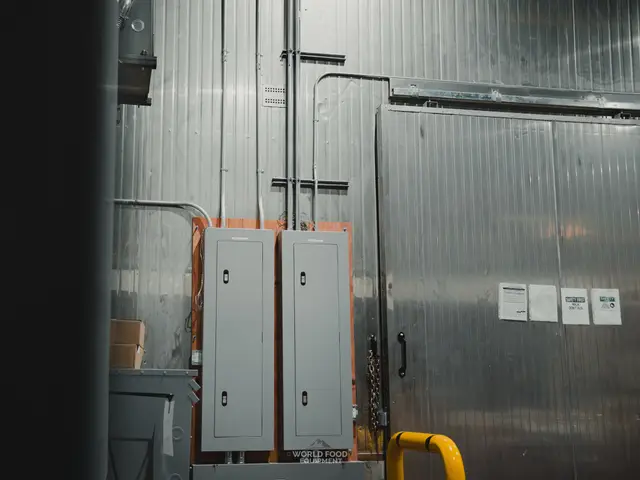
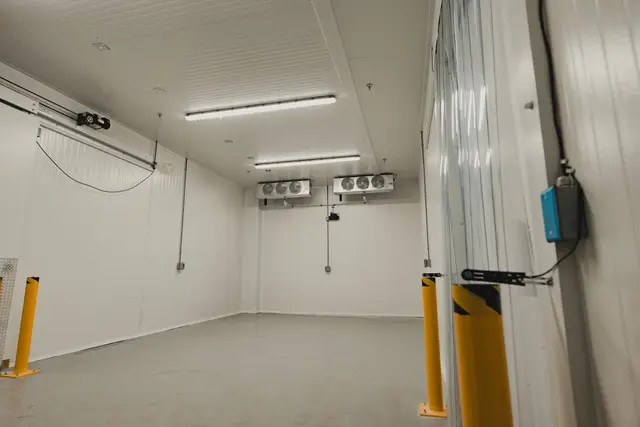
- Own evaporator and controller: each zone holds its own setpoint, and a delivery into the cooler never opens the freezer door.
- Freezer floor and door: the freezer zone still gets an insulated floor and a heated door frame, even inside a cooler shell.
- Warmer surroundings: a freezer zone inside the cooler faces 3°C air on its walls instead of a room-temperature warehouse, which cuts its load.
The cooler versus freezer guide covers when two separate boxes beat one combo, and the custom cold storage page covers how a multi-zone room is sized and partitioned.
How temperature decides the way WFE builds a box
The setpoint is the first number we ask for, because it sizes almost everything else on the build. A box that has to hold minus 18°C is a different machine than one holding 3°C, and getting the spec right up front is what makes the box hold temperature for years instead of struggling from day one.

Here is what the target temperature drives on a WFE install:
- Panel and insulation: a cooler typically runs 4-inch panel around R-27 to R-36; a freezer steps up to thicker panel reaching R-40 and beyond to hold the bigger temperature gap.
- Compressor and refrigeration sizing: we size the condensing unit from the box volume, the temperature delta, the door count, and the ambient conditions, not from a generic chart.
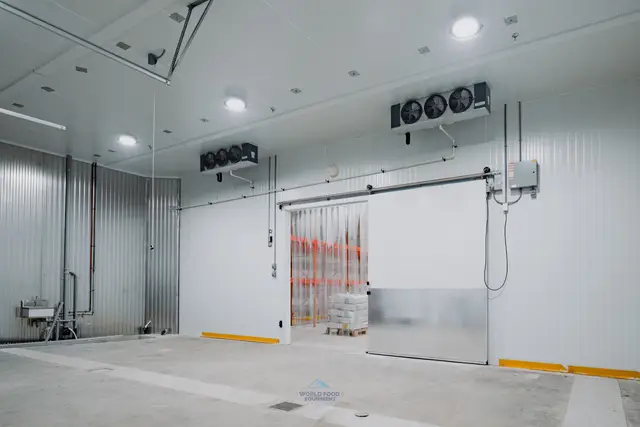
- Door package: freezers get a heated frame, gasket, and threshold so the seal never ices; coolers do not need the heaters.
- Insulated floor: freezers always get an insulated floor with an underlay; coolers can sometimes run on a sealed slab.
- Commissioning to setpoint: before we hand a box over, we pull it down to setpoint and confirm it holds, so you are not discovering a problem during your first busy week.
For the full pre-purchase checklist, the Ontario restaurant buyer’s guide covers sizing, refrigeration choice, permits, the 313A license, and install timelines.
Frequently asked questions
What should a walk-in cooler temperature be?
Set a walk-in cooler between 1.7°C and 4°C (35°F to 39°F), and run 2°C to 3°C in a busy kitchen. Ontario Regulation 493/17 requires hazardous food to be held at 4°C or lower, so running at 2°C to 3°C gives the box margin to absorb door openings and warm deliveries without crossing the legal line.
How cold is a walk-in fridge?
A walk-in fridge is the same thing as a walk-in cooler, and it runs between 1.7°C and 4°C (35°F to 39°F). Most Ontario kitchens set it at 2°C to 3°C so the warmest shelf stays under the 4°C limit in Ontario Regulation 493/17. Set much colder than 2°C, and the evaporator’s discharge air drops below 0°C and freezes produce and dairy stacked under it.
What should a walk-in freezer temperature be?
Set a walk-in freezer at minus 18°C (0°F) or colder. That is the USDA standard for safe long-term frozen storage, and 0°F rounds to minus 18°C. Ice cream and gelato shops often run a dedicated freezer colder, around minus 23°C, to keep scoop product firm enough to serve.
What is the food safety danger zone in Canada?
Health Canada defines the danger zone as the range between 4°C and 60°C (40°F to 140°F), where harmful bacteria multiply quickly. The rule is to keep cold food at or below 4°C and hot food at or above 60°C. In Ontario, Regulation 493/17 makes the 4°C cold-holding figure a legal requirement for hazardous food.
Why is my walk-in cooler not holding temperature?
A walk-in usually drifts warm because of door traffic, a worn gasket, defrost cycles running too long or too short, overstocked shelves blocking airflow, ambient heat, or refrigeration that is undersized or low on charge. Airflow and door issues you can fix in-house. A failing compressor, low charge, or controller fault is a service call, and WFE repairs walk-in coolers and freezers across Ontario on any brand, starting with a repair-or-replace read on the phone.
What causes a walk-in cooler to freeze up?
Two things, and they look different. Product freezing inside a cooler means the setpoint is too close to 0°C or the product sits in the evaporator’s discharge air, so raise the setpoint to 2°C to 3°C and move product out of the air stream. An evaporator coil wrapped in ice means humid air is entering faster than the defrost cycle can clear it, which points to a door, gasket, or defrost-setting problem.
What temperature should a walk-in cooler be for flowers and produce?
Most cold-storage produce holds at or below 4°C, the same baseline as other refrigerated food. Cut flowers keep best near 0°C to 2°C (32°F to 35°F) at high humidity, and WFE holds floral coolers to a 1°C to 2°C band. Chill-sensitive tropical varieties get their own warmer zone rather than a colder food-cooler setpoint.
How cold should a walk-in freezer be for ice cream?
Ice cream needs at least minus 18°C (0°F), the standard for frozen storage. Scoop shops typically run a dedicated freezer colder, often around minus 23°C, so the product stays firm enough to serve straight from the box. A storage-only freezer for sealed tubs can sit closer to minus 18°C.
Plan Your Build
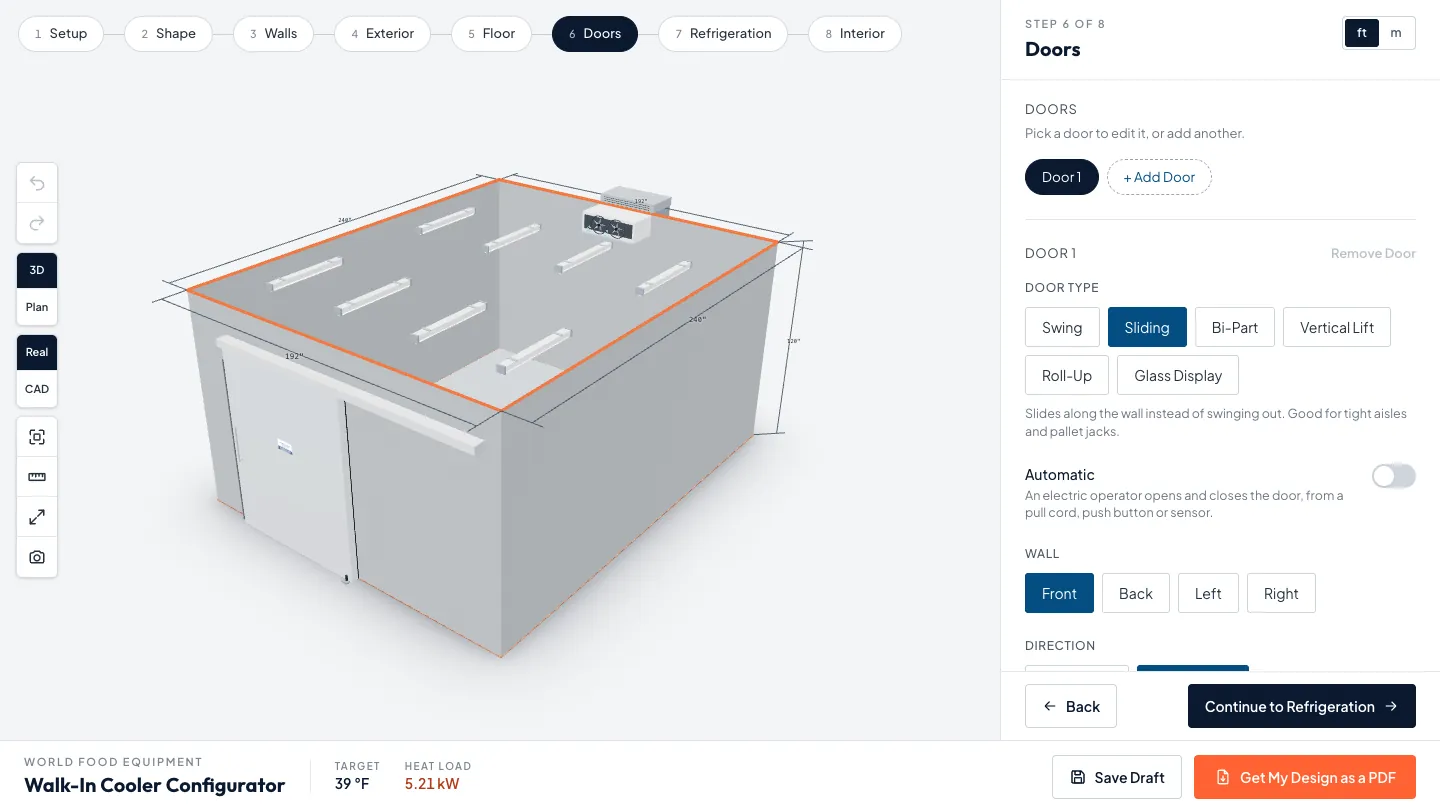
Size your walk-in in the configurator.
Set dimensions, doors, and refrigeration in 3D, then download the spec sheet to share.
Read Next
Plan a Walk-In Cooler or Freezer in 3D: 8 Decisions
The eight decisions that shape every walk-in cooler or freezer, and where to make each one in our free 3D configurator: size, type, panels, floor, doors, refrigeration, racking and lights.
Industrial Walk-In Freezers: What to Plan Before You Build
What changes when a walk-in freezer gets big enough for pallets and forklifts: the slab, the clear height, the doors, the refrigeration plant, and the Ontario rules that start to apply.
Walk-In Cooler & Freezer Doors: Types, Sizes, Options
Swing, sliding, pallet and roll-up doors for walk-in coolers and freezers: which one fits your traffic, the sizes we build to, what a freezer door adds, and the Canadian rule every walk-in door has to meet.
Walk-In Coolers — Custom Builds
See the service page for sizing, anatomy, and what's included in a WFE install.