


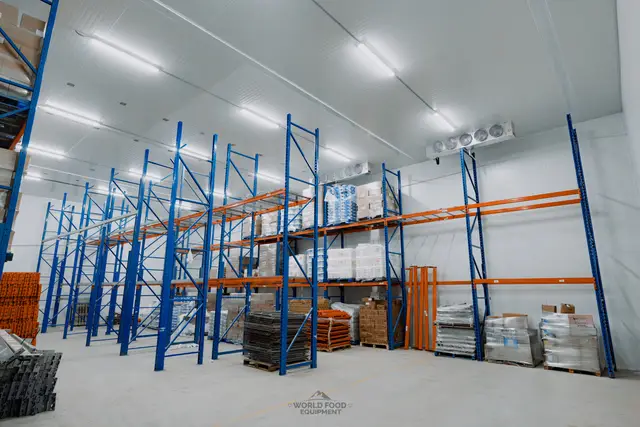
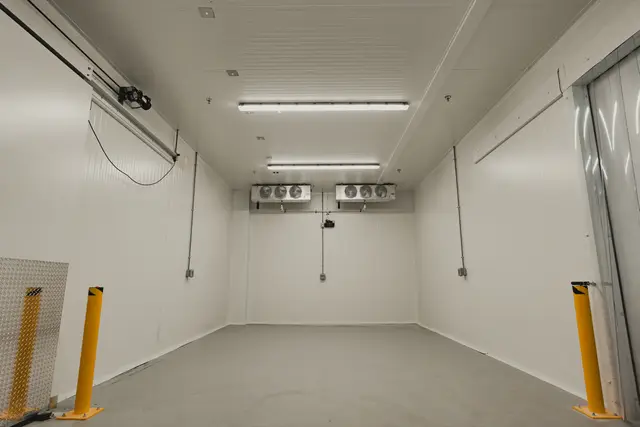
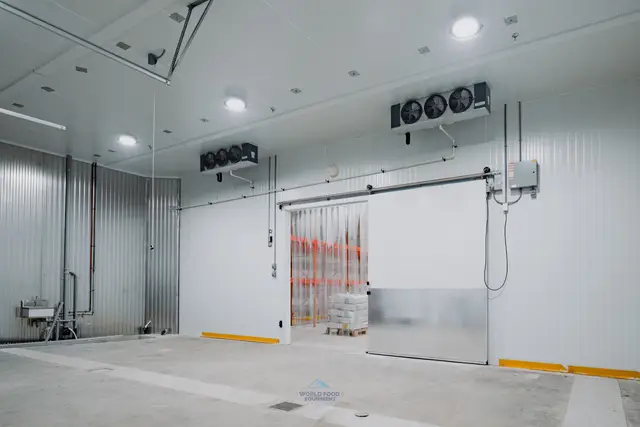
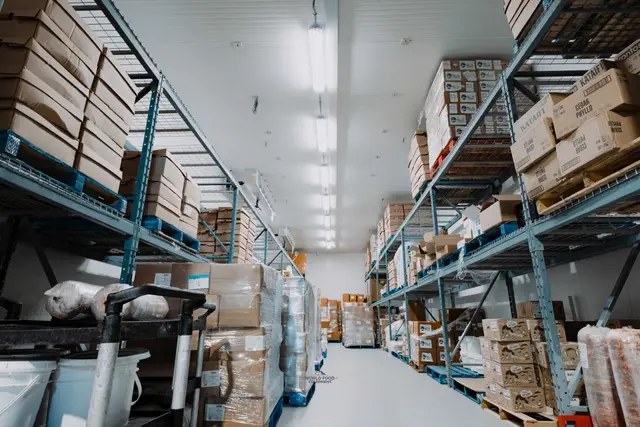

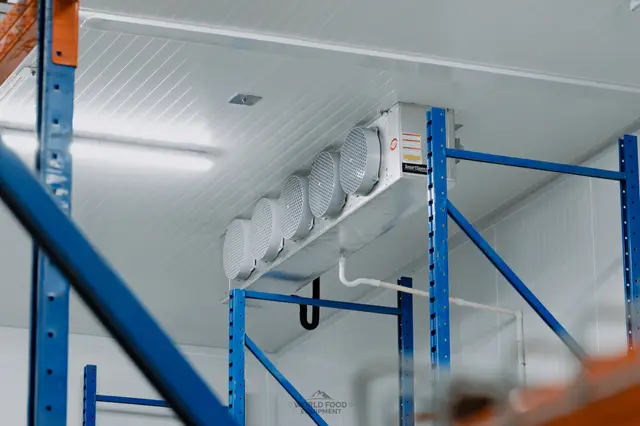
Walk-In Cooler vs Walk-In Freezer: Which Do You Need?
Cooler or freezer? They look identical outside, but the setpoint changes the panel, compressor, floor, door, and hydro bill. How to pick before you get quoted.
Most Ontario operators who call World Food Equipment for a walk-in already know they need cold storage. What they often don’t know is whether they need a cooler, a freezer, or both.
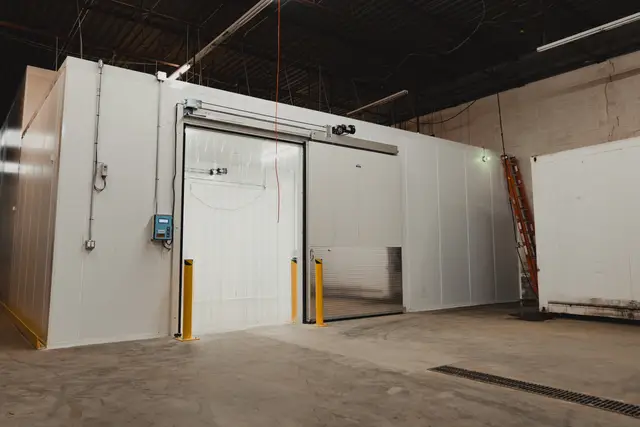
The two look almost identical from the outside, but the temperature setpoint changes nearly every spec inside: panel thickness, compressor size, floor type, door frame, refrigerant charge, and what the box can legally store. This guide is how WFE walks operators through that decision before quoting.
Key takeaways
- Temperature split: a walk-in cooler holds product between roughly 1.7°C and 5°C (35°F to 41°F). A walk-in freezer holds product at minus 18°C or colder (0°F or colder). That single temperature gap is what drives every other spec difference.
- Federal definition: under Canada’s Energy Efficiency Regulations, a walk-in cooler is defined as an enclosed space under 278.71 m² (3,000 sq ft) designed to be cooled to at or above 0°C, and a walk-in freezer is the same enclosure designed to be cooled to below 0°C.
- Who needs which: most restaurants need a cooler. Most ice cream shops, butchers, prepared-food producers, and bulk-meat operators need a freezer. Many growing operations need both, either as two separate boxes or as a combo unit with a partition.
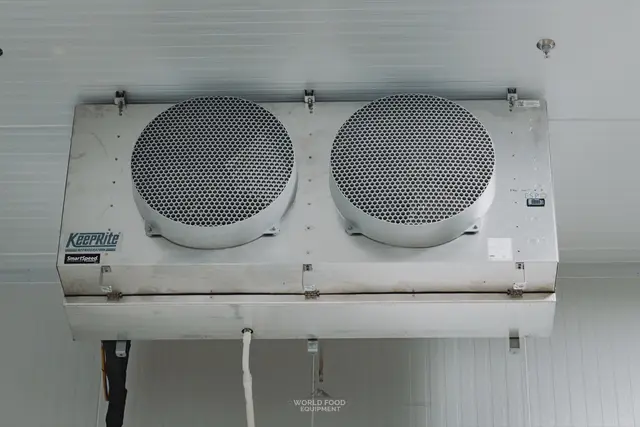
- Freezer cost: a walk-in freezer costs more to install, more to run, and uses roughly twice the compressor capacity of a same-sized cooler (around 1 HP versus 1/2 HP for a typical restaurant-scale build).
- Walk-in vs reach-ins: operators trying to decide between a walk-in and a row of reach-ins should usually pick a walk-in once the operation exceeds about 60 covers per service or stores more than three pallets of inventory.
Walk-in cooler temperature vs walk-in freezer temperature
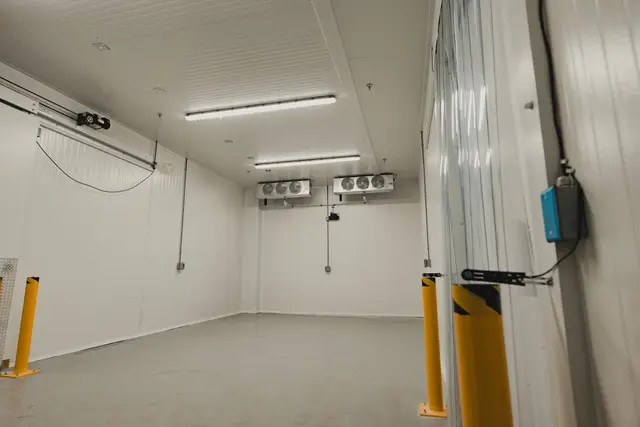
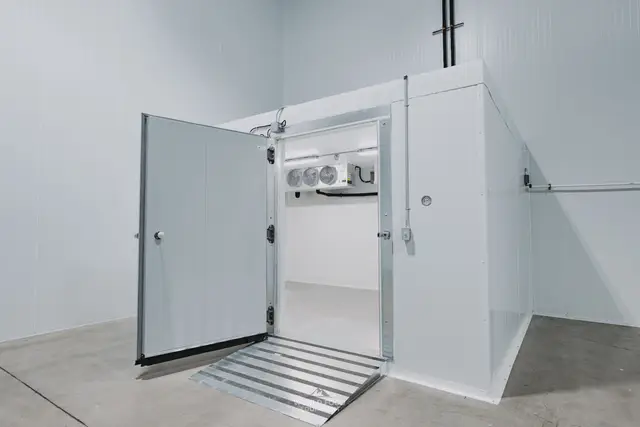
Walk-in coolers and walk-in freezers are the same idea (insulated room with a refrigeration system) sized for two different jobs. The job is set by the food.
A walk-in cooler keeps perishable food cold but unfrozen. Produce, dairy, beverages, raw meat for daily use, prepared salads, and cut flowers all live in a cooler.
Ontario Regulation 493/17 (Food Premises) requires hazardous foods to be held at 4°C or colder, which is why most restaurant coolers run a slight margin below that threshold. For the regulatory and licensing detail (313A, ESA, Public Health), see the walk-in cooler buyer’s guide for Ontario restaurants.
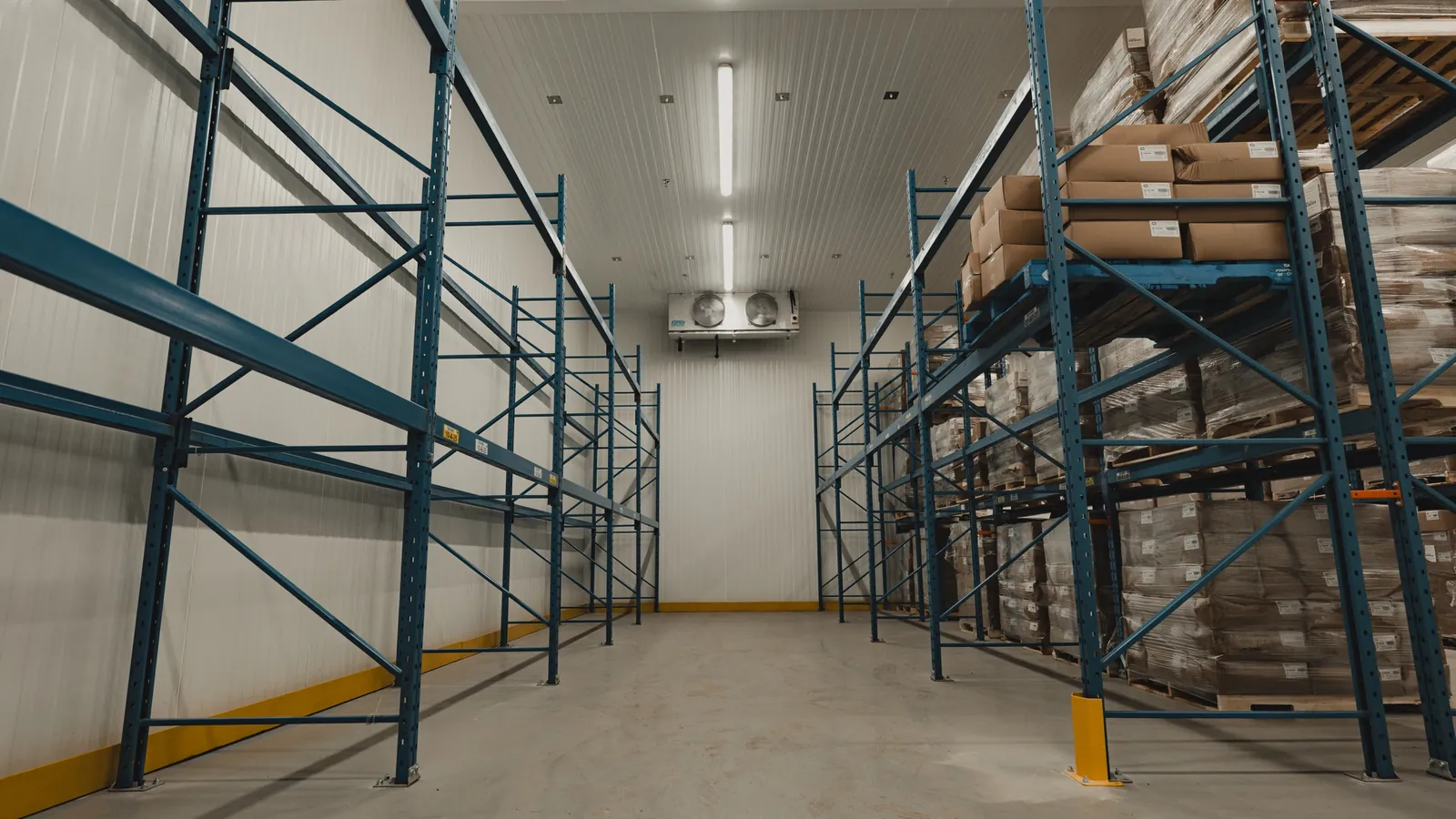
A walk-in freezer keeps food frozen solid for long-term storage. Ice cream, raw bulk meat, frozen seafood, par-baked goods, and frozen prepared meals all live in a freezer at roughly minus 18°C or colder. At that temperature most microbial activity stops, water inside the product crystallizes, and shelf life jumps from days to months.
The federal definition matters because it sets the equipment certification boundary. Source: Natural Resources Canada, Walk-in freezer and walk-in cooler components, Energy Efficiency Regulations.
Above 0°C, the regulation treats the box as a cooler; below 0°C, as a freezer. Manufacturers spec each accordingly.
For the exact setpoints by product, and why a box often reads warmer than the number on the dial, see our walk-in cooler and freezer temperature guide.
Side-by-side: walk-in cooler versus walk-in freezer
The temperature difference drives every other spec. Here is what changes from one to the other in a typical Ontario restaurant-scale install:
| Spec | Walk-in cooler | Walk-in freezer |
|---|---|---|
| Operating temperature | 1.7°C to 5°C (35°F to 41°F) | minus 18°C or colder (0°F or colder) |
| Federal regulatory threshold | At or above 0°C | Below 0°C |
| Panel thickness (typical) | 4 inches urethane | 5 inches urethane |
| Insulation R-value (typical) | R-32 to R-38 | R-40 to R-45 |
| Floor | Insulated panel or sealed slab | Insulated panel always, often with structural underlay |
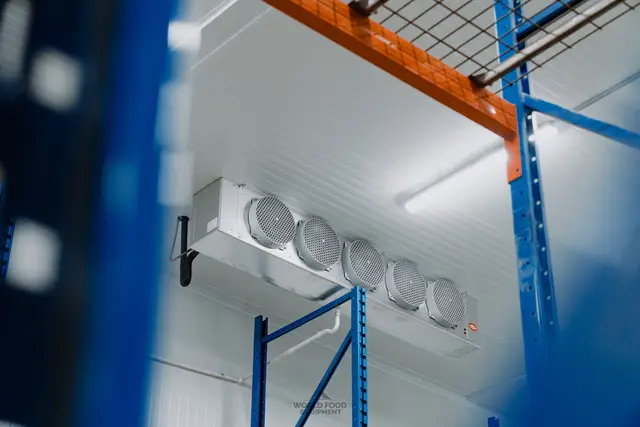
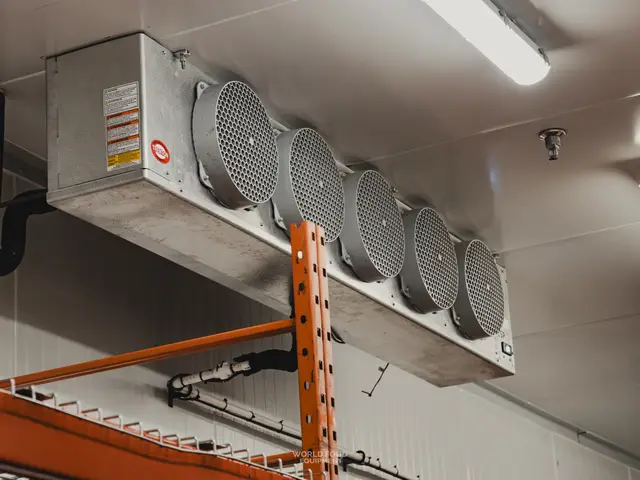
| Compressor (typical 6×8 box) | ~1/2 HP | ~1 HP |
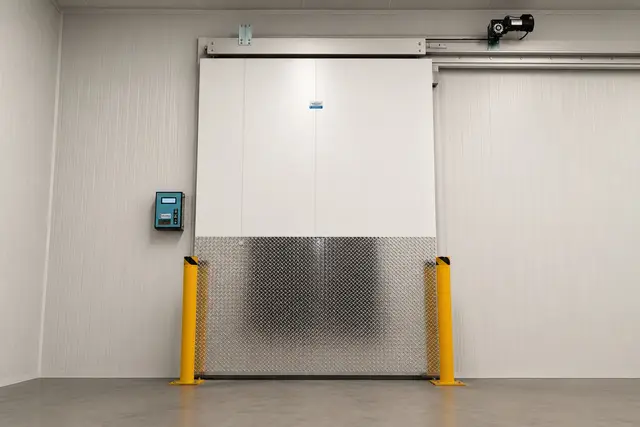
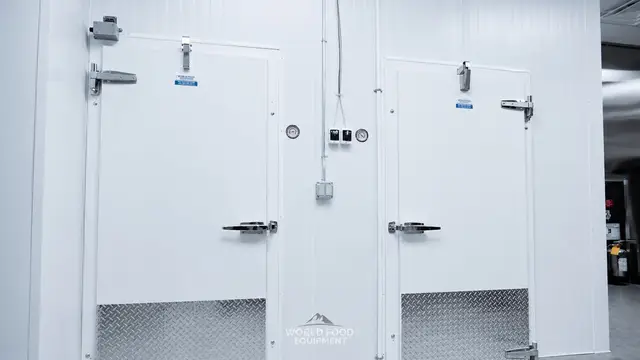
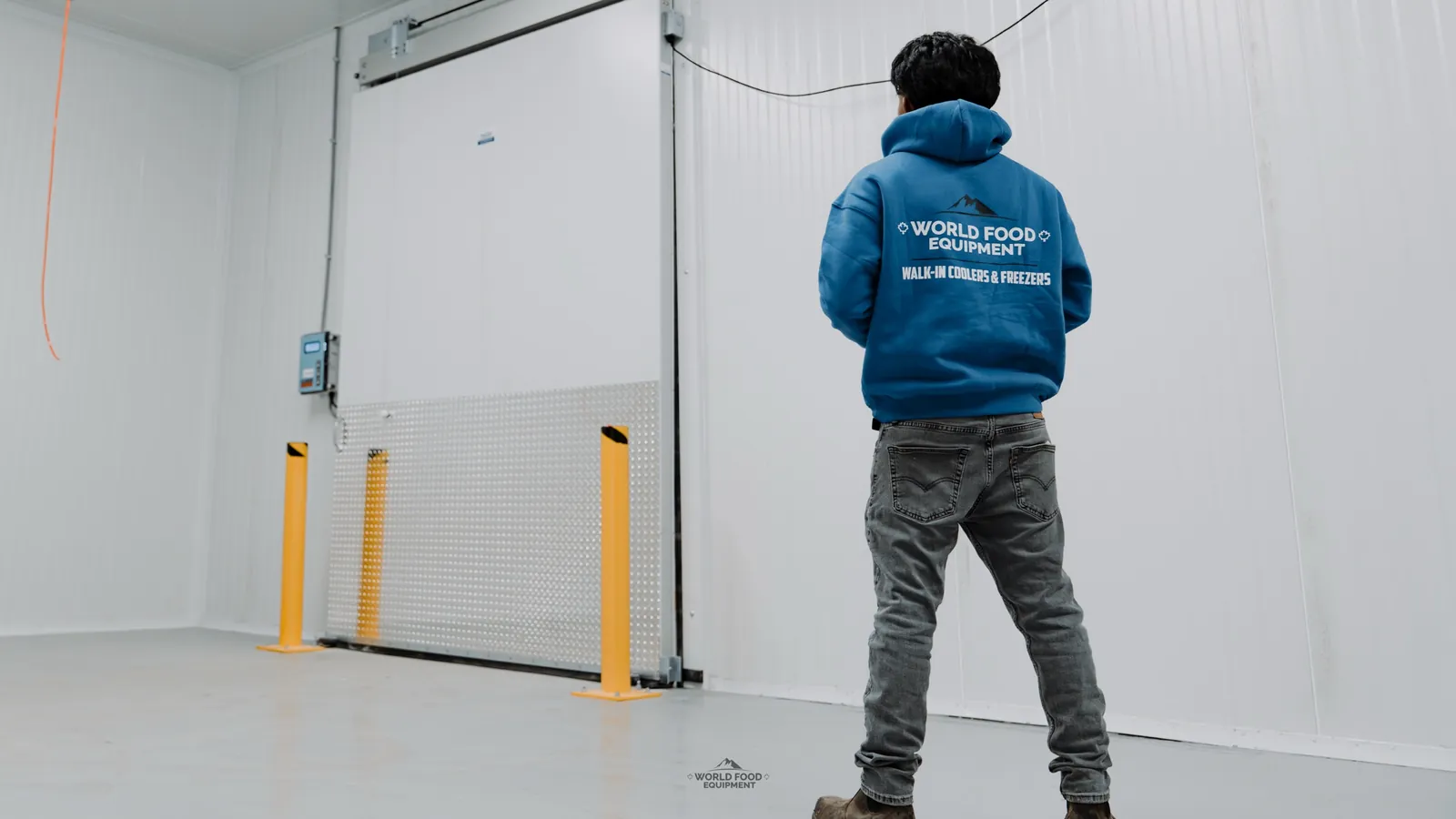
| Door | Standard swing or sliding | Heated frame mandatory, gasket and threshold heater |
| Energy use (rough, per cu ft per year) | Lower | 2 to 3 times higher |
| Common contents | Produce, dairy, beverages, fresh meat, flowers | Ice cream, bulk meat, seafood, frozen prepared foods |
| Typical Ontario restaurant size | 6×8 to 8×12 | 6×6 to 6×10 (often smaller than the cooler) |
The two specs that operators most often underestimate are the floor and the door. A freezer floor that has not been insulated and underlaid will sweat condensation through to the building slab and eventually heave. A freezer door without a heated frame will ice up at the gasket and either fail to seal or rip when forced open during service.
When you need a walk-in cooler
A walk-in cooler is the default cold storage for any operation that turns inventory in days, not months. Typical Ontario operators who specify a cooler as their primary box:
- Restaurants with daily produce, dairy, and protein deliveries. See the restaurant refrigeration market page for build examples.
- Grocery stores, convenience stores, and corner markets that turn dairy, deli, and produce in a week. See grocery and retail refrigeration.
- Florists holding cut stems and arrangements at 2°C to 4°C with high humidity.
- Coffee shops and bakeries holding dairy, prepared salads, and short-shelf-life pastry components.
- Pharmaceutical distributors holding refrigerated drug product at 2-8°C in a monitored, access-controlled cold room.
For the full spec walk-through on a cooler build, see the walk-in cooler service page.
When you need a walk-in freezer
A walk-in freezer makes sense when inventory cycles in weeks or months instead of days, or when product needs to stay frozen for safety and not just for shelf life. That’s the line between a cooler operation and a freezer operation. Typical Ontario operators who specify a freezer as their primary box:
- Butcher shops and meat processors holding bulk carcasses and primal cuts at minus 18°C.
- Ice cream parlours and gelaterias holding finished product at minus 18°C to minus 23°C.
- Seafood retailers and wholesalers holding flash-frozen product.
- Caterers and prepared-meal producers batching meals on slow weeks and pulling them for catered events.
- Bakeries running par-baked or frozen-dough programs that need volume freezer storage.
For freezer-specific panel and refrigeration detail, see the walk-in freezer service page. The full spec walkthrough, from floor systems to heated doors to who is licensed to install, lives in the commercial walk-in freezer buyer’s guide.
When you need both: separate boxes or a combo unit?
Operations that handle both fresh and frozen product at volume usually need both a cooler and a freezer. WFE specs this two ways:
Two separate boxes. Independent envelopes, independent refrigeration systems, independent doors. Each runs at its design temperature; either can be serviced without taking the other offline. Right when there is floor space, when each zone is large enough to justify its own footprint, or when the operation may expand one side without the other.
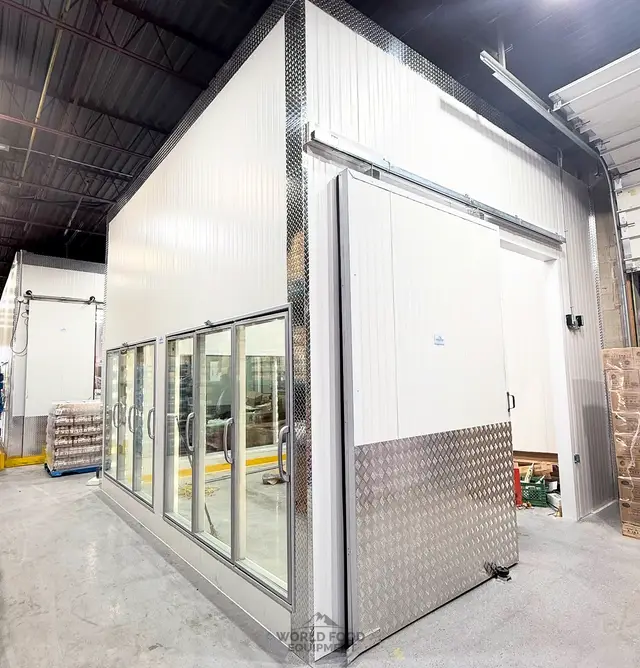
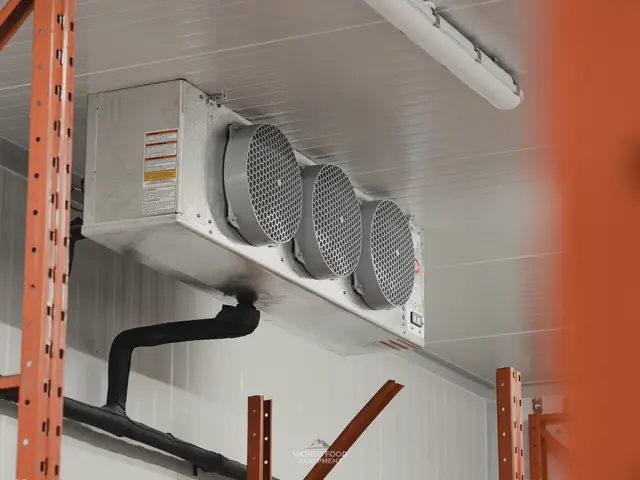
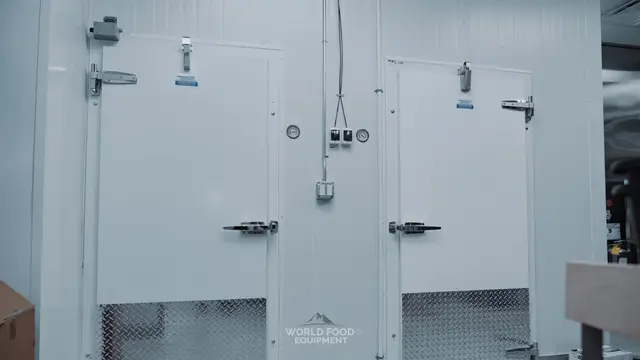
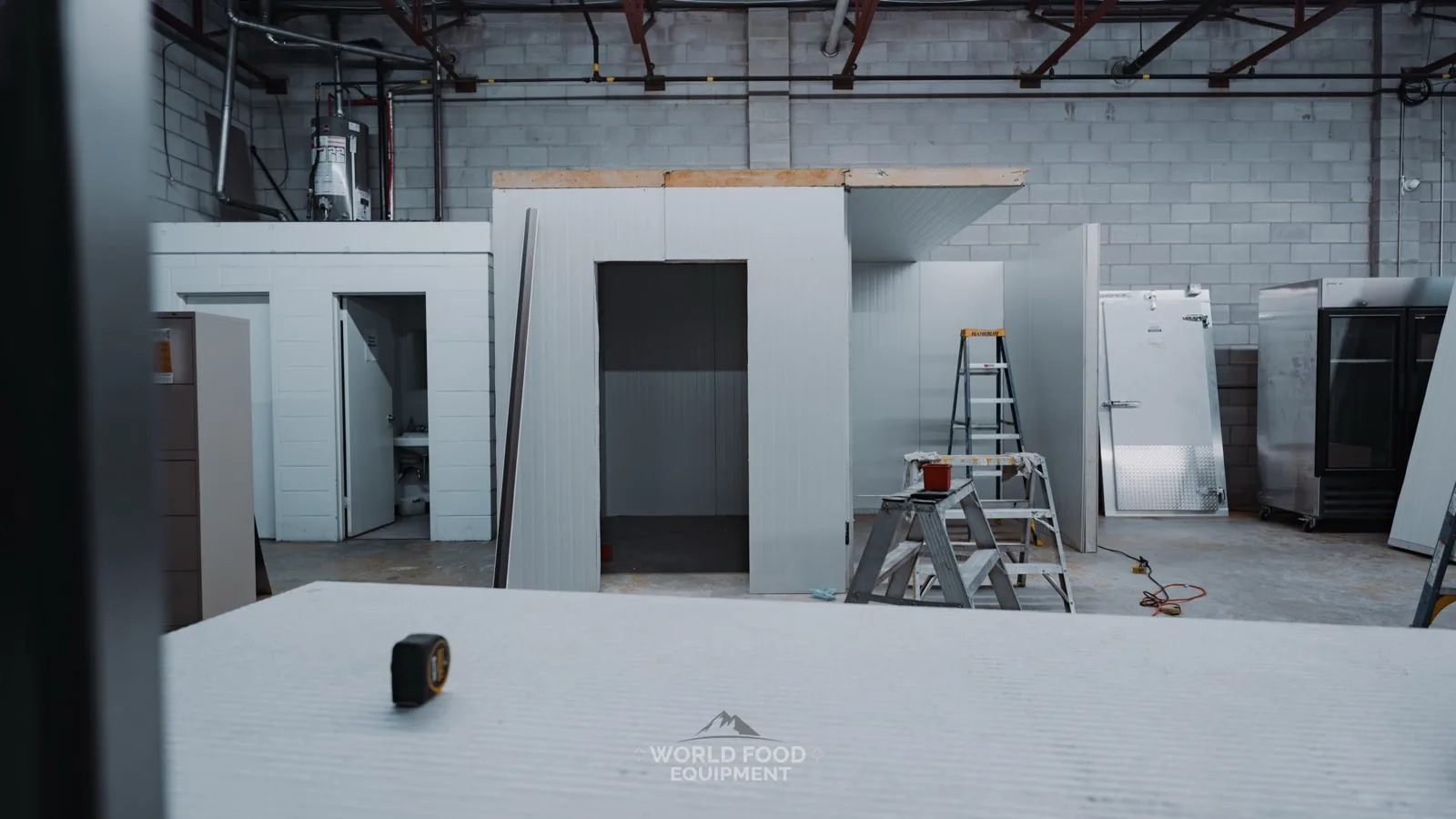
Combo unit (cooler and freezer in one envelope). A single insulated shell with an internal partition, two evaporator coils, two condensing units, and two doors. Saves floor space and shares some panel cost. Right when floor area is tight or when one of the two zones is small enough that a standalone box does not pay off. WFE specs combos regularly for tight-footprint restaurants and growing florists, butchers, or grocery operators.
For non-standard envelopes (oversized, custom shape, mezzanine builds), see the custom cold storage service page.
Walk-in versus reach-in: a quick aside
A separate question some operators ask is whether to skip the walk-in entirely and run a row of reach-in coolers or freezers instead. The decision usually comes down to volume and workflow.
Reach-ins make sense when the operation is small (under 60 covers per service for restaurants), when floor space cannot fit a walk-in, or when product needs to live right at the prep station. Reach-ins are also useful as a secondary unit alongside a walk-in (a beverage merchandiser at the bar, a freezer display at the front of house). See the reach-in refrigeration service page for the build details.
Walk-ins win once the operation scales past a few pallets of inventory or once the kitchen runs more than about 60 covers a service. A walk-in offers more storage per dollar of install, less heat dumped into the kitchen, fewer compressor cycles, and crew can stage inventory inside the box rather than holding a reach-in door open across the prep aisle.
Cost and energy differences
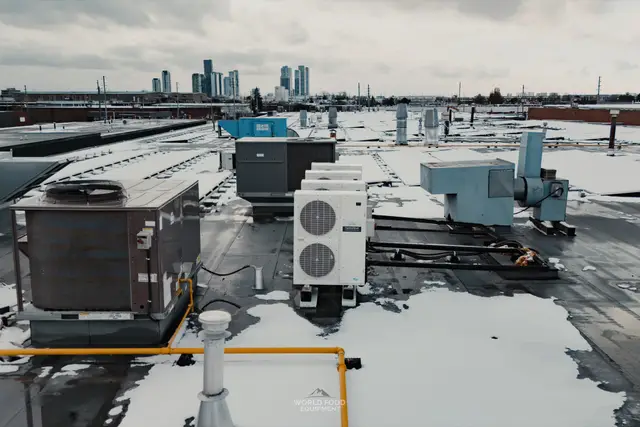
A freezer install costs more up front and more to run. The drivers are thicker panels, larger compressor, heated door frame and threshold, and (for outdoor builds) a low-ambient-rated condensing unit. Energy use per cubic foot is typically two to three times that of a comparable cooler because the system has to maintain a larger temperature delta against the building ambient.
For the full cost breakdown on a walk-in cooler install in Ontario, see how much does a commercial walk-in cooler cost in Ontario. For lease-to-own and equipment-finance options that cover either build, see the financing page.
How WFE specs cooler versus freezer on a real install
The site visit is where the cooler-versus-freezer decision gets locked. WFE walks the operator through five questions:
- What product lives in the box? Fresh produce and dairy push toward a cooler. Bulk meat, ice cream, and frozen prepared foods push toward a freezer.
- How fast does inventory cycle? Daily and weekly cycles push toward cooler. Monthly cycles and seasonal batching push toward freezer.
- What is the floor area available? Tight floor area pushes toward a combo unit; ample area pushes toward two separate boxes.
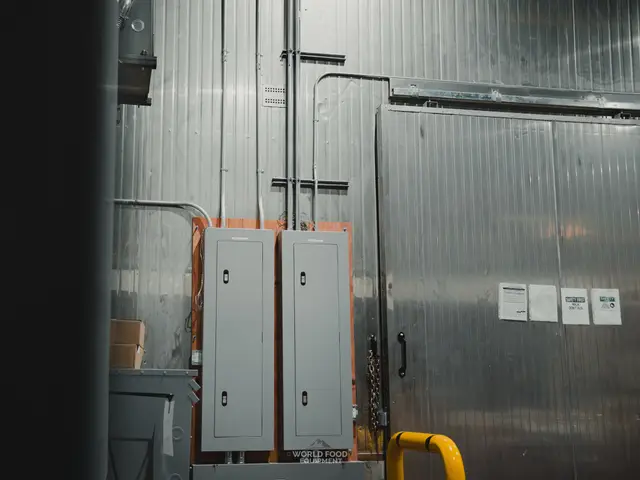
- What is the electrical capacity at the panel? Freezer compressors draw more amperage; some retrofits need a panel upgrade.
- Is the box replacing a failing existing unit? If yes, see walk-in cooler repair or replace for the diagnostic and replacement-quote workflow.
The output is a written spec sheet (panel thickness, refrigeration HP, door spec, floor spec, electrical load) before the quote lands. Refrigeration work is done by 313A-licensed technicians in WFE’s in-house crew, electrical is filed through ESA notification, and commissioning is documented at handoff. WFE installs cooler, freezer, and combo builds across the GTA from Toronto and Mississauga through Eastern and Northern Ontario.
Frequently asked questions
Can a walk-in cooler be used as a freezer?
No. The panel insulation, compressor sizing, door frame, and floor on a cooler are all spec’d for above-zero temperatures.
Trying to drive a cooler down to freezer setpoints will short-cycle the compressor, sweat the floor and door, and fail to maintain temperature. Operations that need frozen storage should spec a freezer or a combo unit from the start, not retrofit a cooler.
Can a walk-in freezer be used as a cooler?
It’s possible but rarely worth it. The compressor on a freezer is sized for low-temp operation and will short-cycle on a cooler setpoint, the heated door frame is unnecessary energy draw, and the panel insulation is more than a cooler needs.
The conversion requires swapping the compressor and reprogramming the controls. Most operators are better off selling or repurposing the existing freezer and installing a properly spec’d cooler.
What temperature should a walk-in cooler and walk-in freezer be set to?
A walk-in cooler typically runs between 1.7°C and 5°C (35°F to 41°F), with most Ontario restaurant coolers set at 2°C to 3°C to stay below the 4°C food-safety threshold from Ontario Regulation 493/17. A walk-in freezer runs at minus 18°C or colder (0°F or colder); ice cream operators often run minus 23°C or colder to hold scoop texture.
Is a combo cooler-and-freezer unit cheaper than two separate boxes?
Sometimes. A combo unit shares the outer panel envelope and uses one common wall (the partition) between the two zones, which saves some panel material and floor space.
Refrigeration is still two separate systems with two condensing units, so that cost does not change. Combo units pay off most when floor area is tight, when one of the two zones is small (say a 4×6 freezer zone alongside a 6×10 cooler zone), or when the operator wants both zones inside one envelope for workflow reasons.
Does WFE install walk-in freezers across Ontario, not just the GTA?
Yes. WFE installs walk-in coolers, freezers, and combo units across the GTA, Southwestern Ontario, Eastern Ontario, and Northern Ontario. The 313A-licensed in-house crew travels to the site for any install, and ESA notification is filed through a Licensed Electrical Contractor regardless of municipality.
Plan Your Build
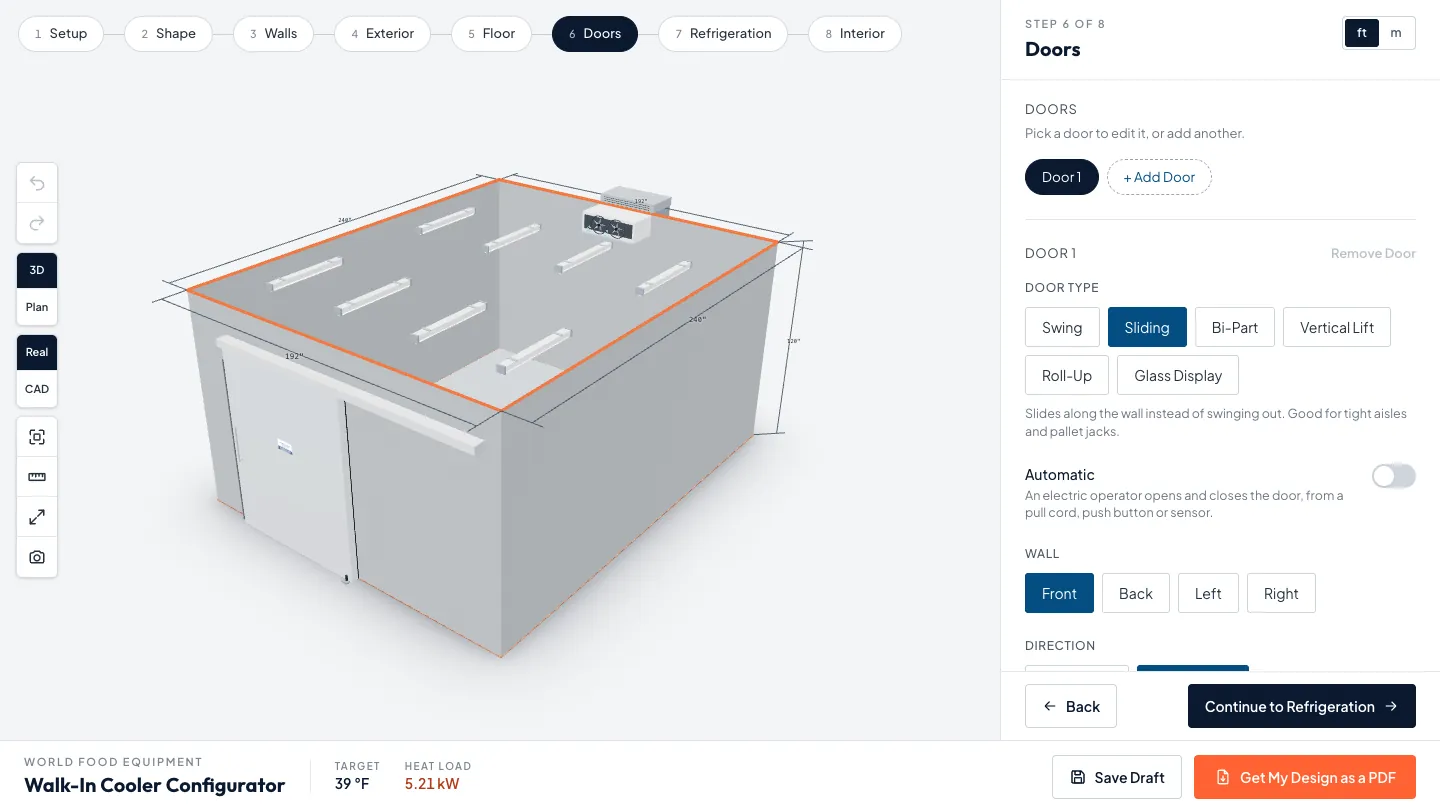
Size your walk-in in the configurator.
Set dimensions, doors, and refrigeration in 3D, then download the spec sheet to share.
Read Next
Plan a Walk-In Cooler or Freezer in 3D: 8 Decisions
The eight decisions that shape every walk-in cooler or freezer, and where to make each one in our free 3D configurator: size, type, panels, floor, doors, refrigeration, racking and lights.
Industrial Walk-In Freezers: What to Plan Before You Build
What changes when a walk-in freezer gets big enough for pallets and forklifts: the slab, the clear height, the doors, the refrigeration plant, and the Ontario rules that start to apply.
Walk-In Cooler & Freezer Doors: Types, Sizes, Options
Swing, sliding, pallet and roll-up doors for walk-in coolers and freezers: which one fits your traffic, the sizes we build to, what a freezer door adds, and the Canadian rule every walk-in door has to meet.
Walk-In Coolers — Custom Builds
See the service page for sizing, anatomy, and what's included in a WFE install.