

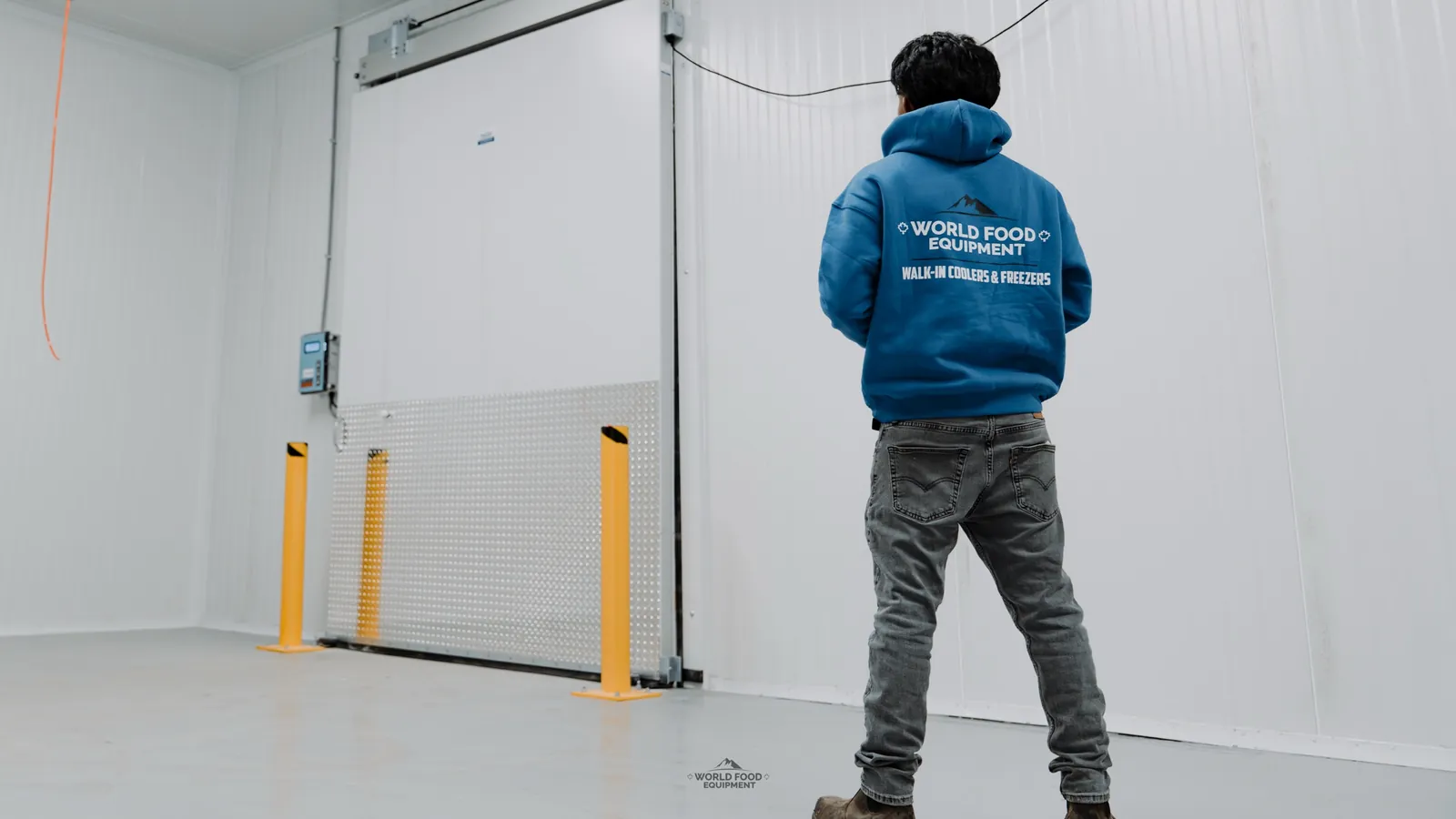
Case Study · Video Walkthrough
CJR Grocers — 140 ft of Failed Freezer Wall Replaced While the Store Stayed Open
The Build
A failed freezer wall, and a facility that couldn't shut down
Left alone, the failure would have taken out the whole freezer. The complication was that CJR couldn't shut down to fix it: a grocery operation with coolers full of product, scheduled deliveries, and customer traffic can't absorb a multi-week cold storage shutdown. So WFE planned the rebuild around live operations, with the unaffected sections of the envelope running through the whole job and the failed 140 ft section coming down and going back up in sequenced phases.
Build Sequence
From empty shell to operational.
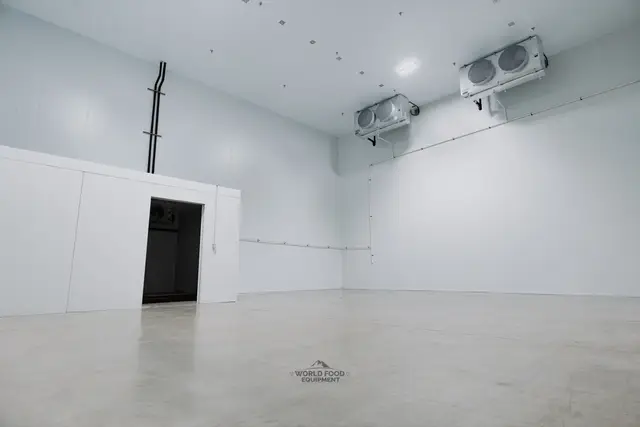
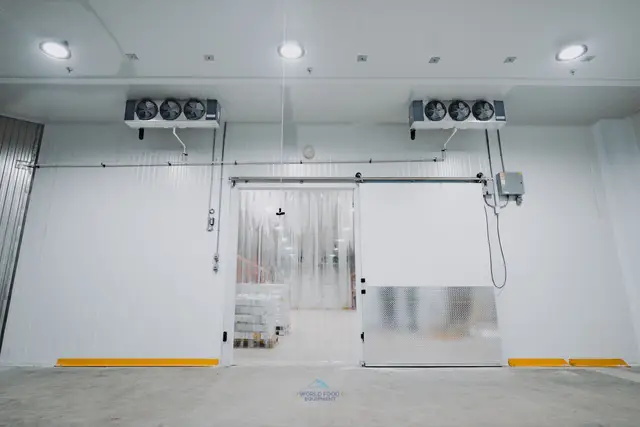
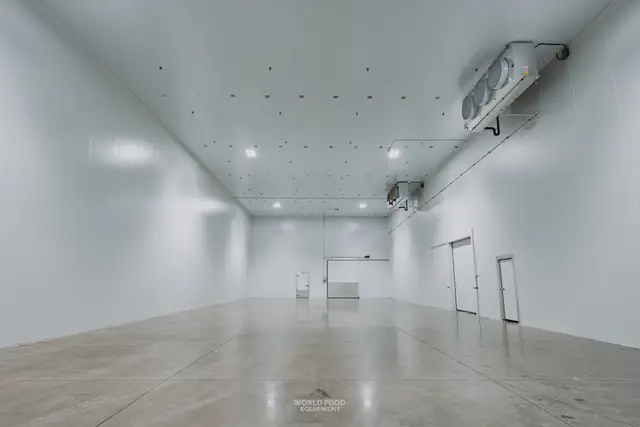
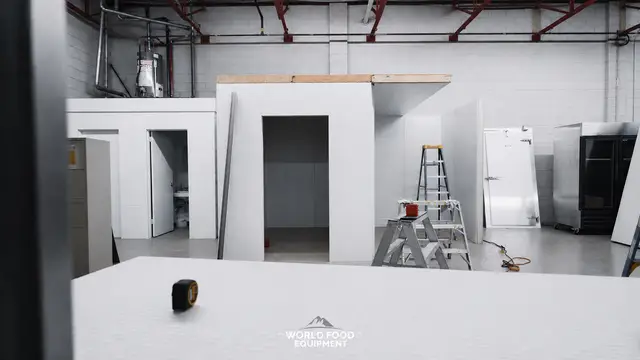
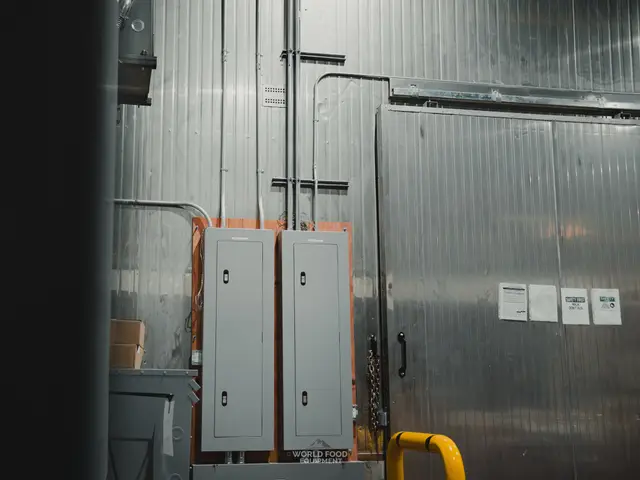
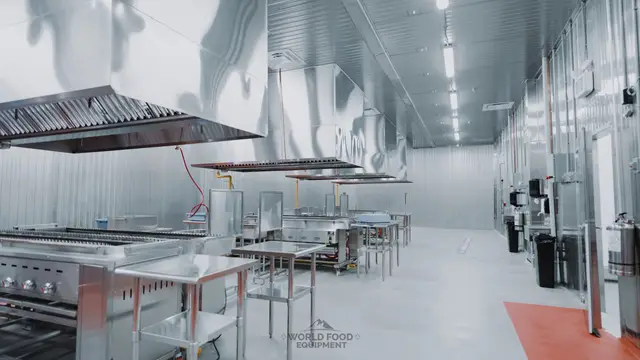
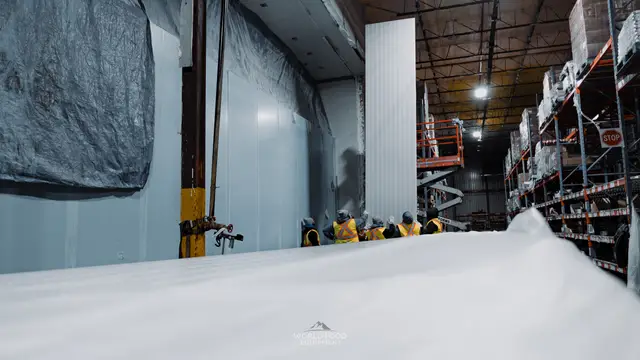
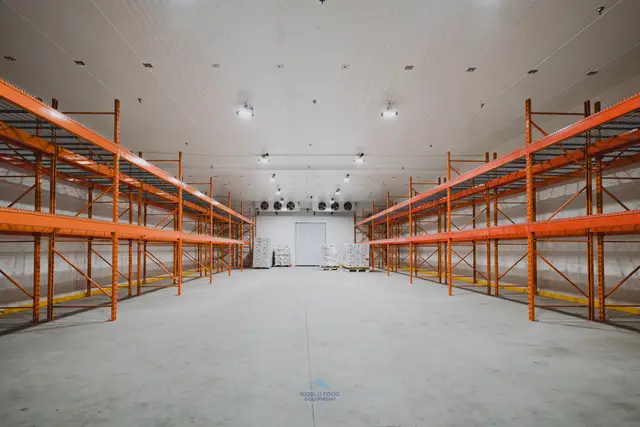
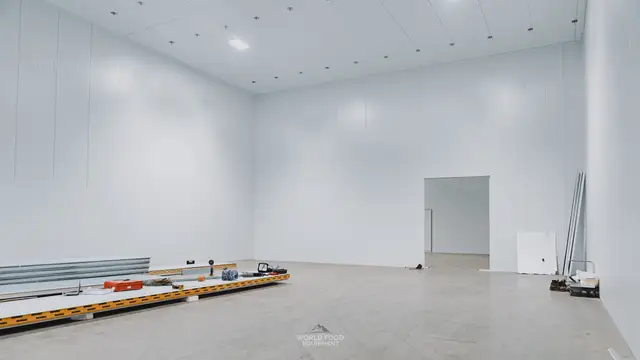
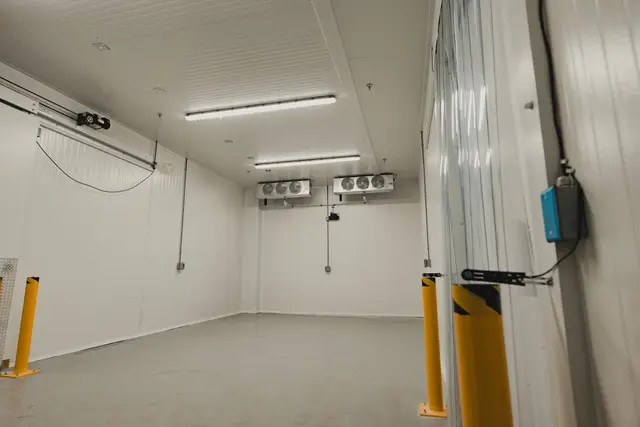
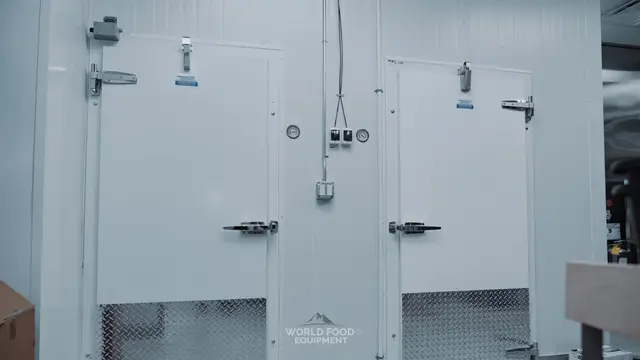
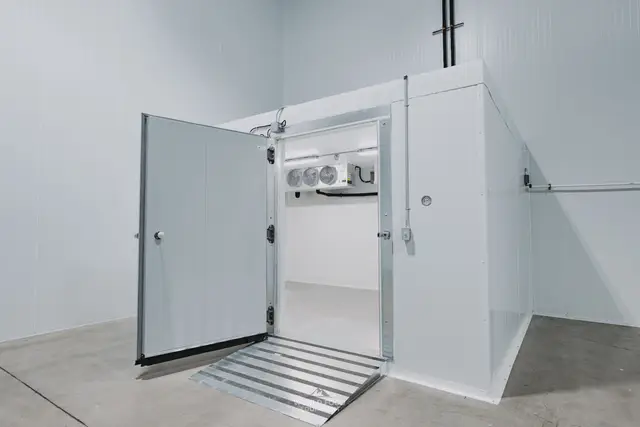
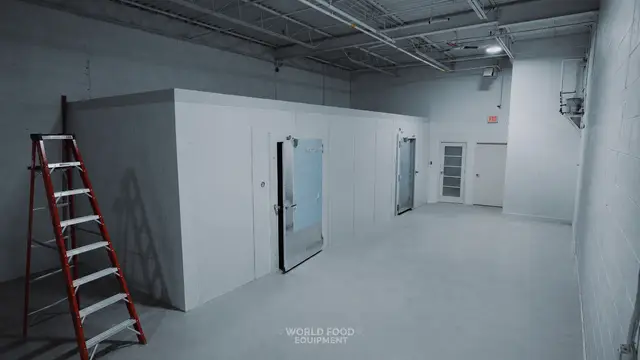
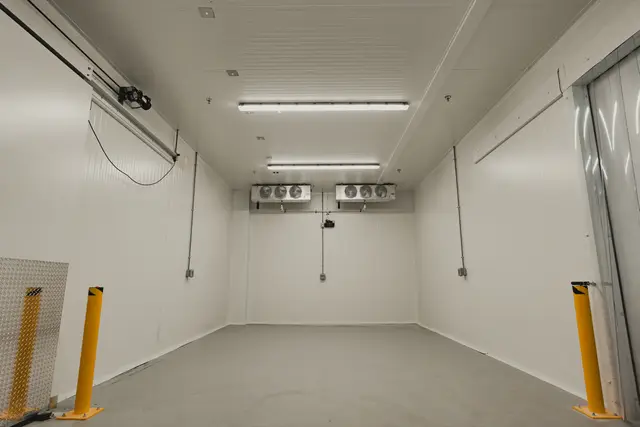
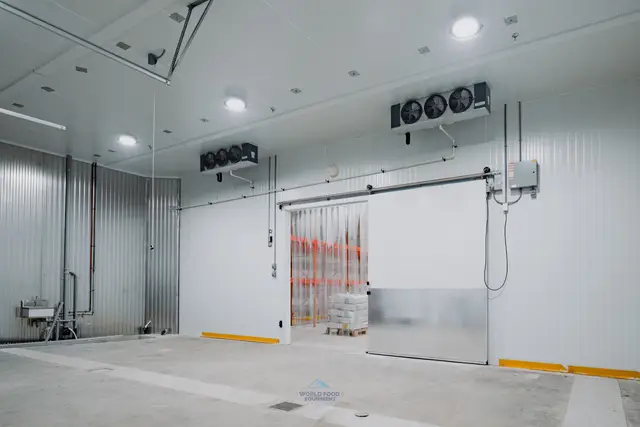
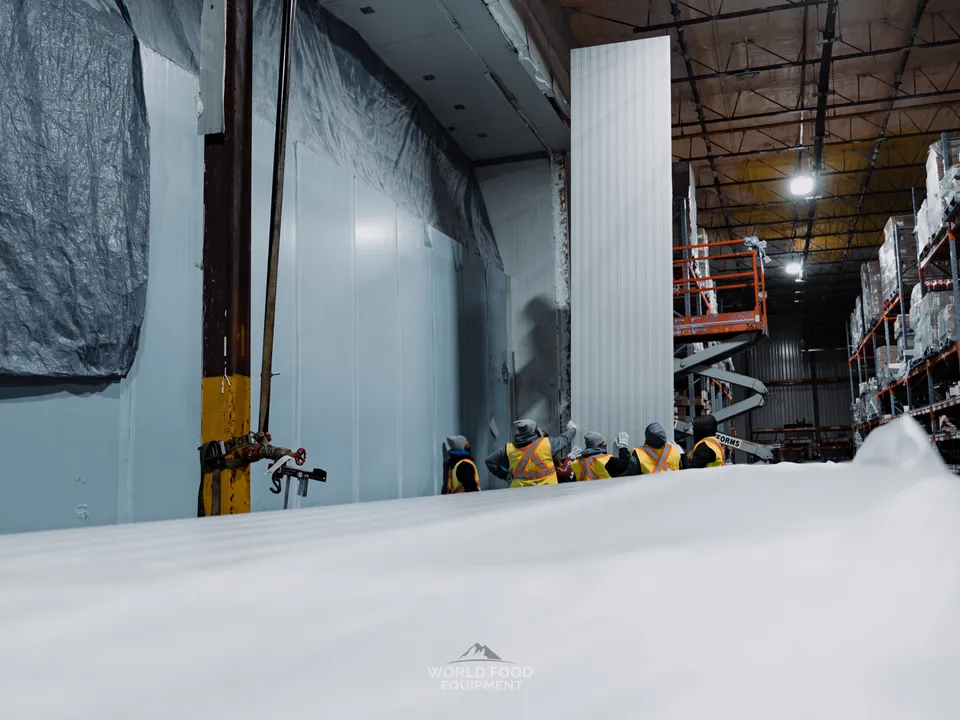
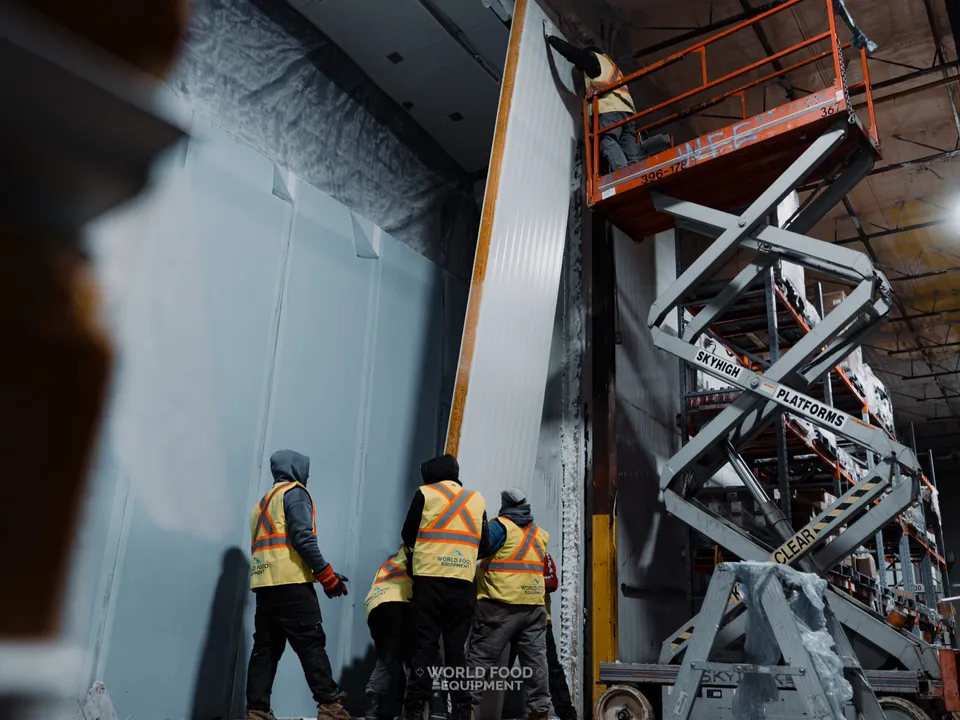
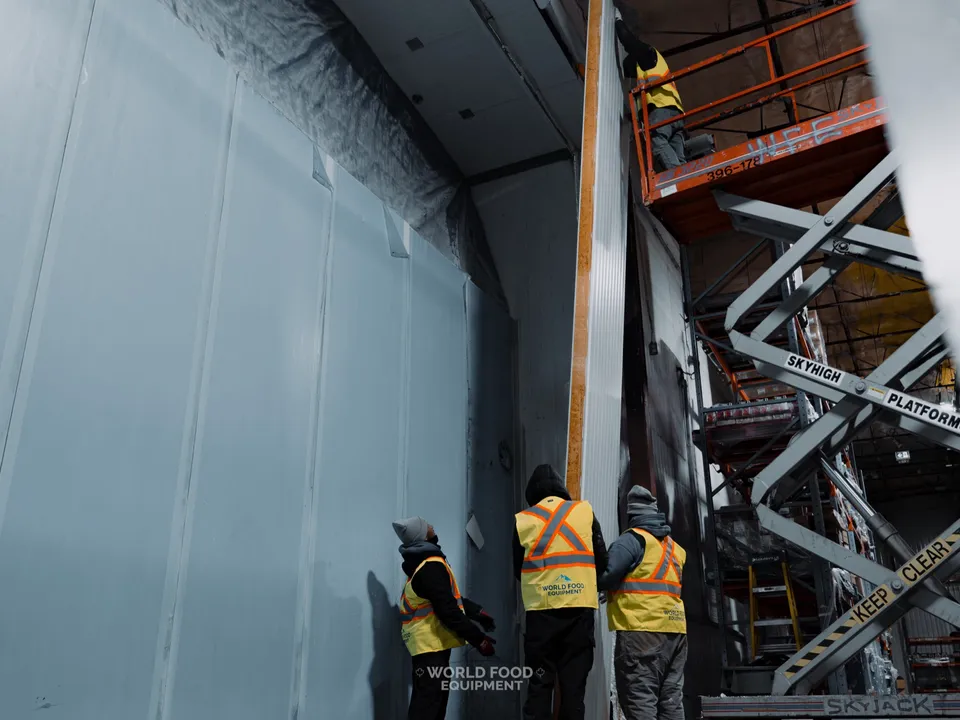
Moments from the build, in order. Each frame is a real WFE installation photo from the project.
Detail Gallery
Operational, in detail.
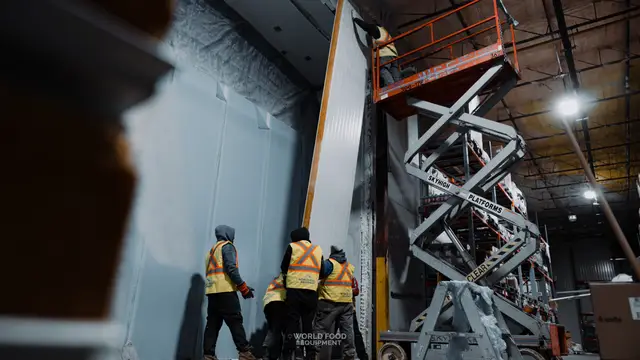
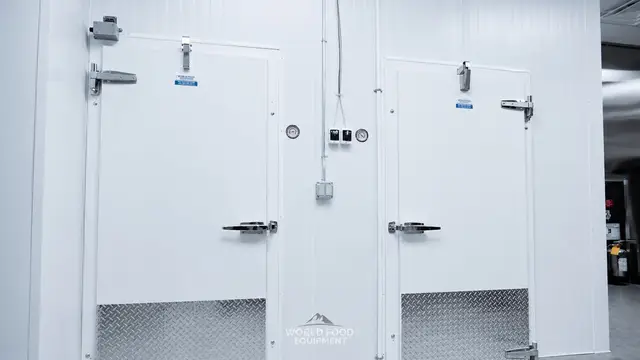
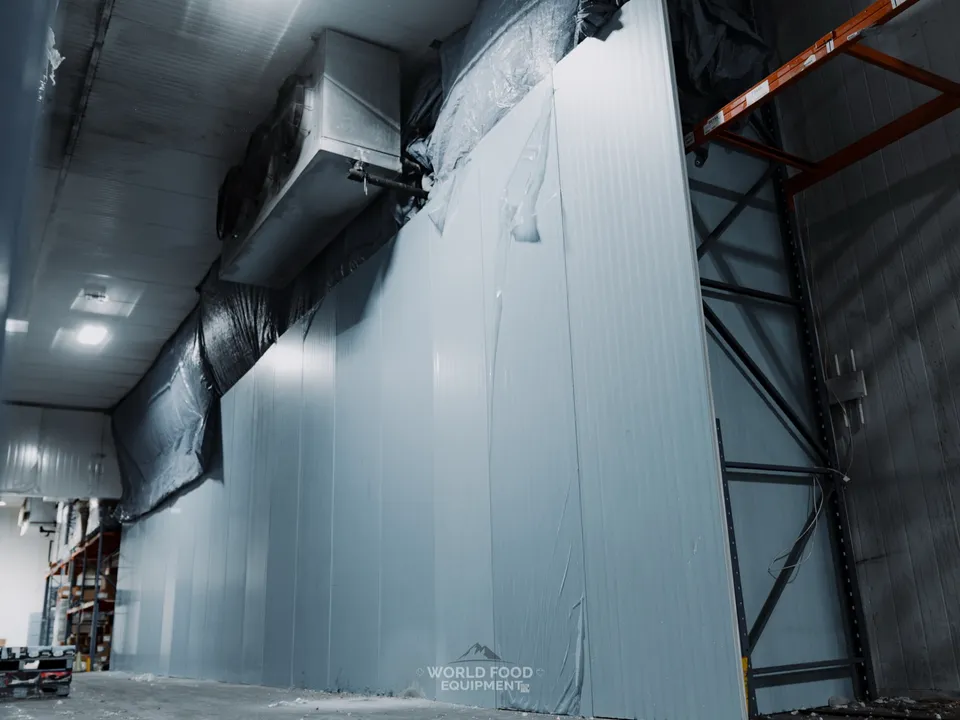
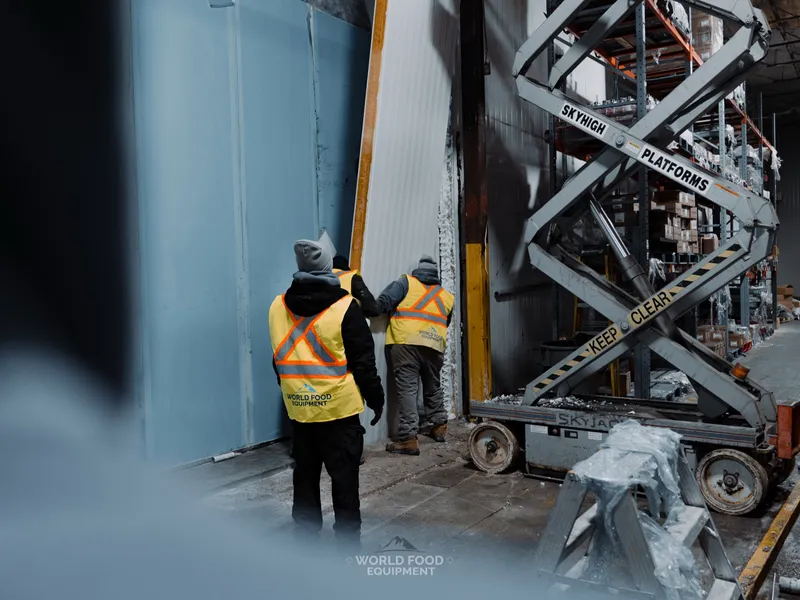
Tall insulated panel positioned at the rebuilt base. Scissor lift staged for the next run up.
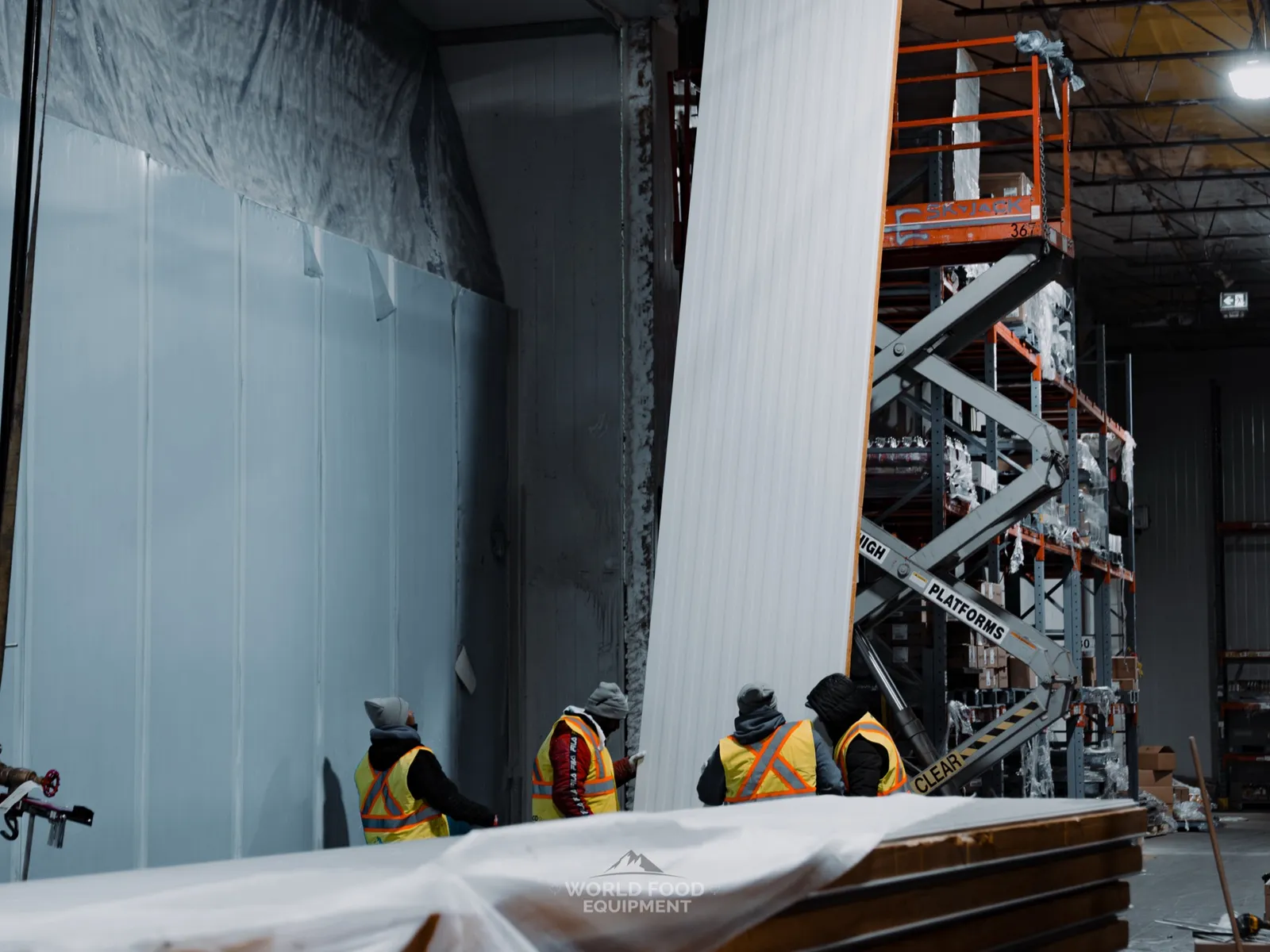
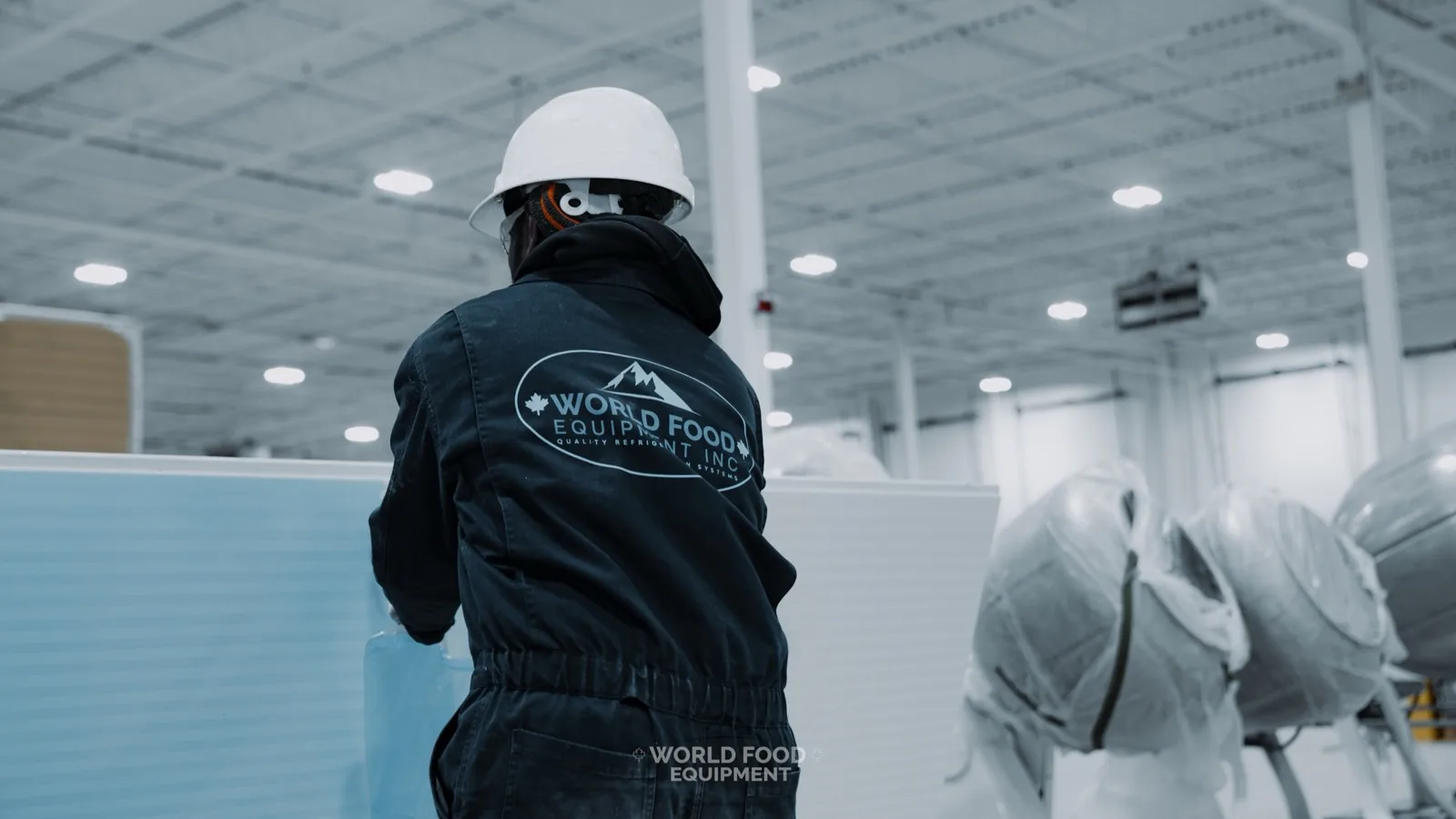
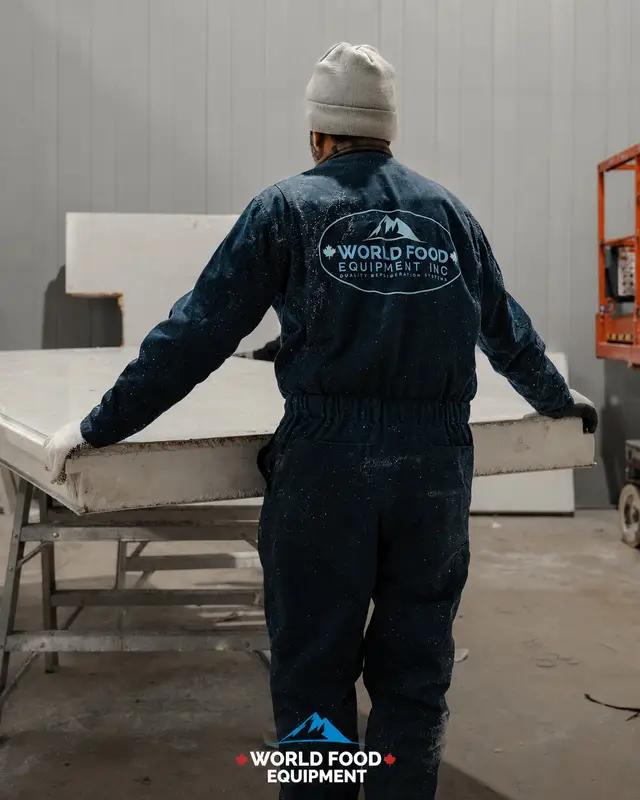
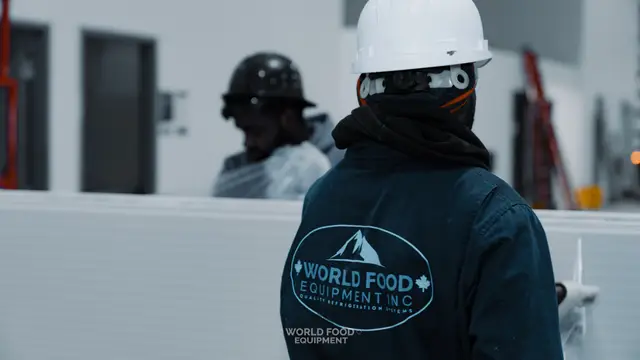
WFE crew on site in branded hi-vis. The 140 ft rebuild ran with WFE's own crew, not subbed out.
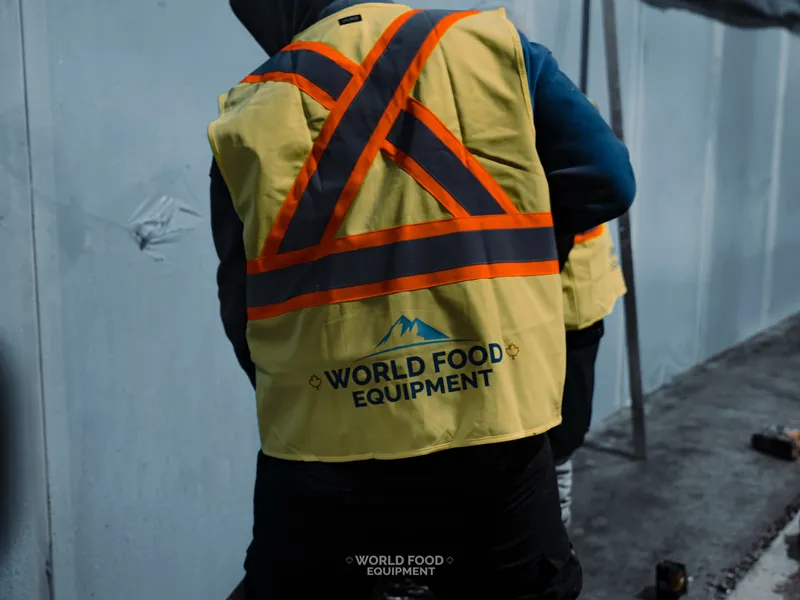
Heavy-gauge insulated freezer panels do not go up alone. Crew working a panel into place at the rebuilt base.
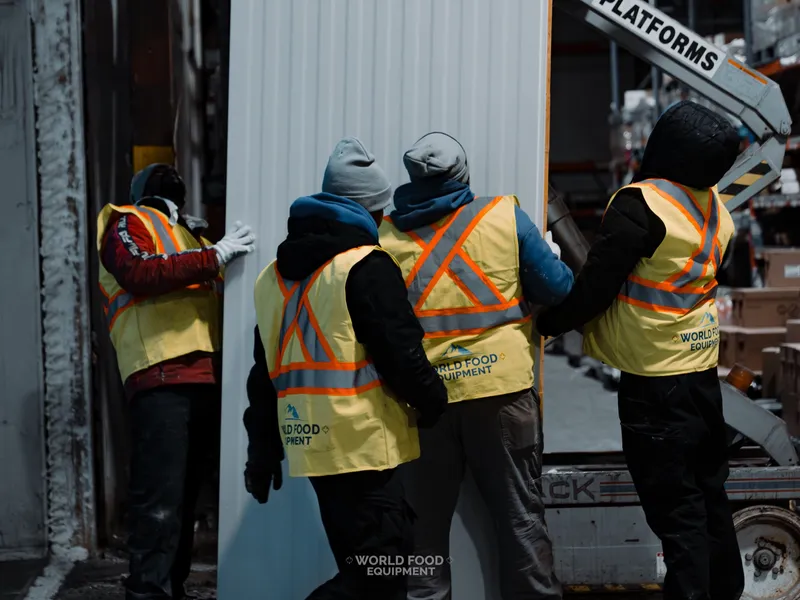
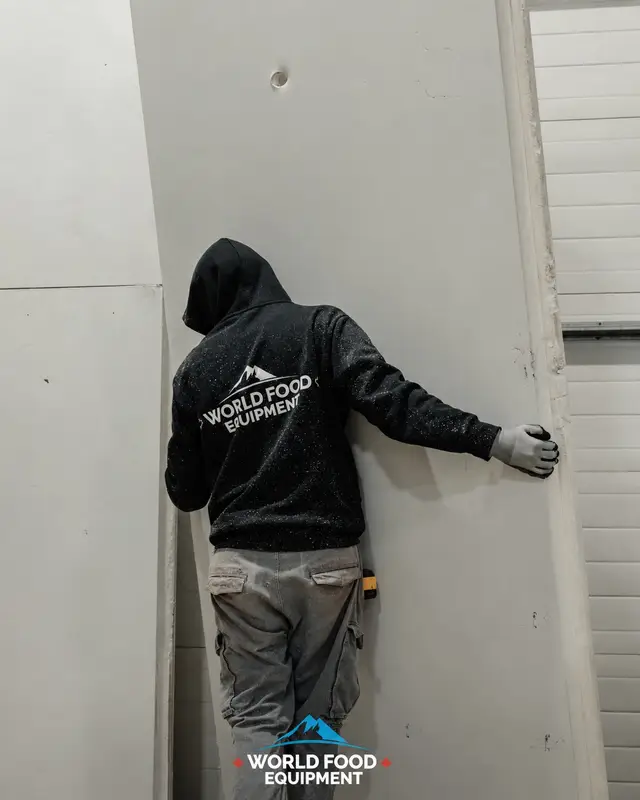
Panel-to-panel seam meeting where the new wall met existing structure. Vapor barrier sealed before the panels closed up.
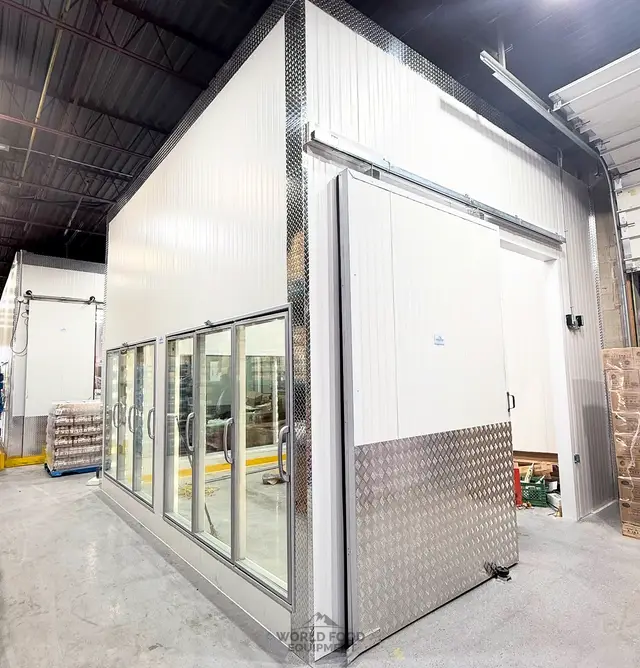
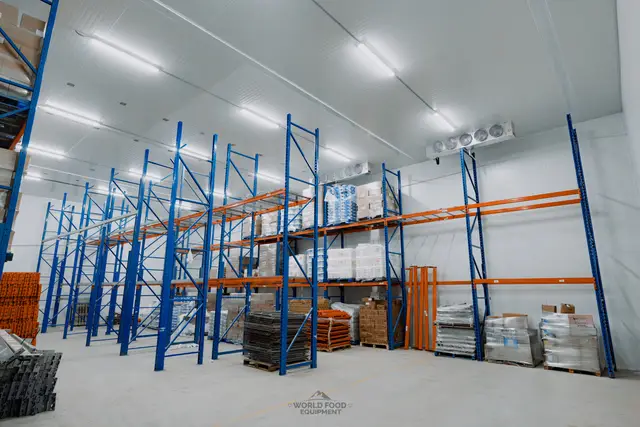
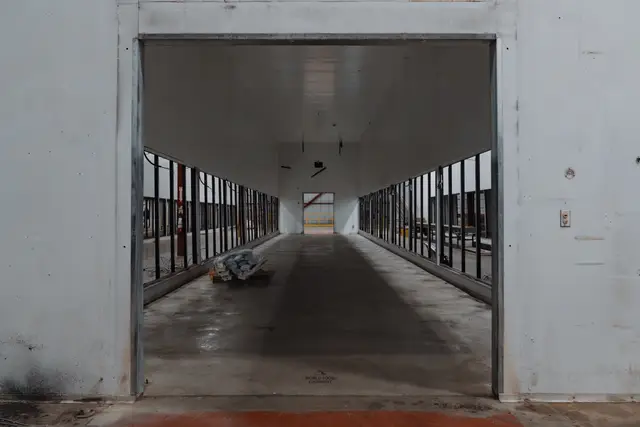
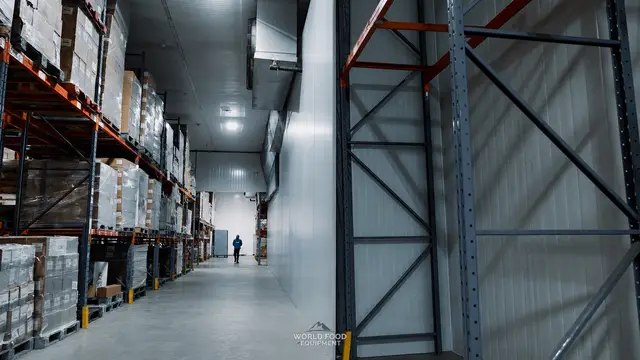
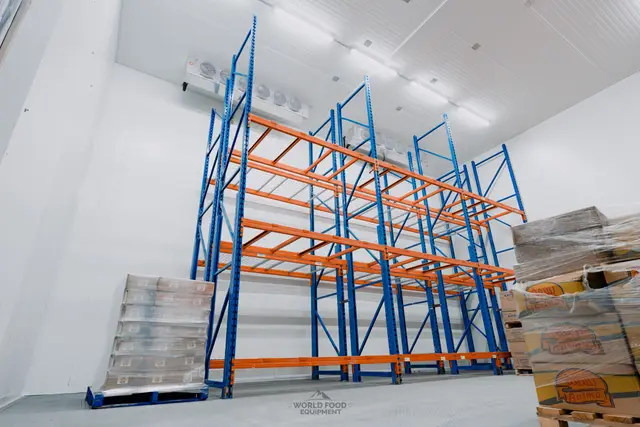
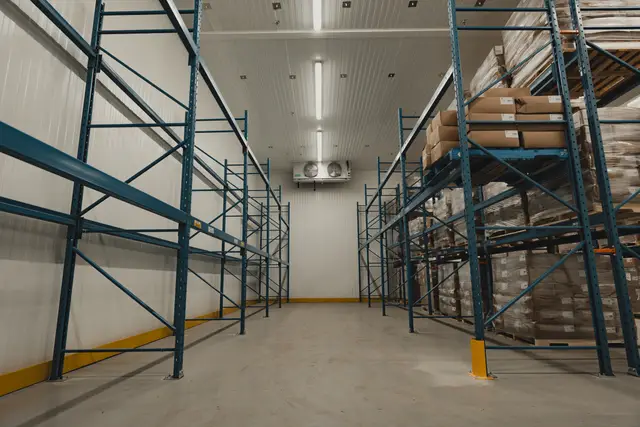
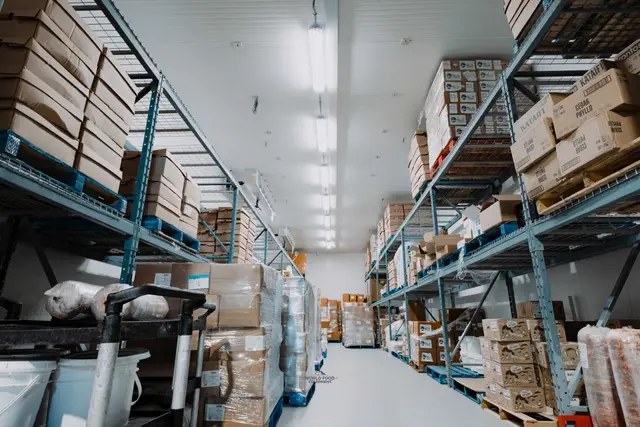
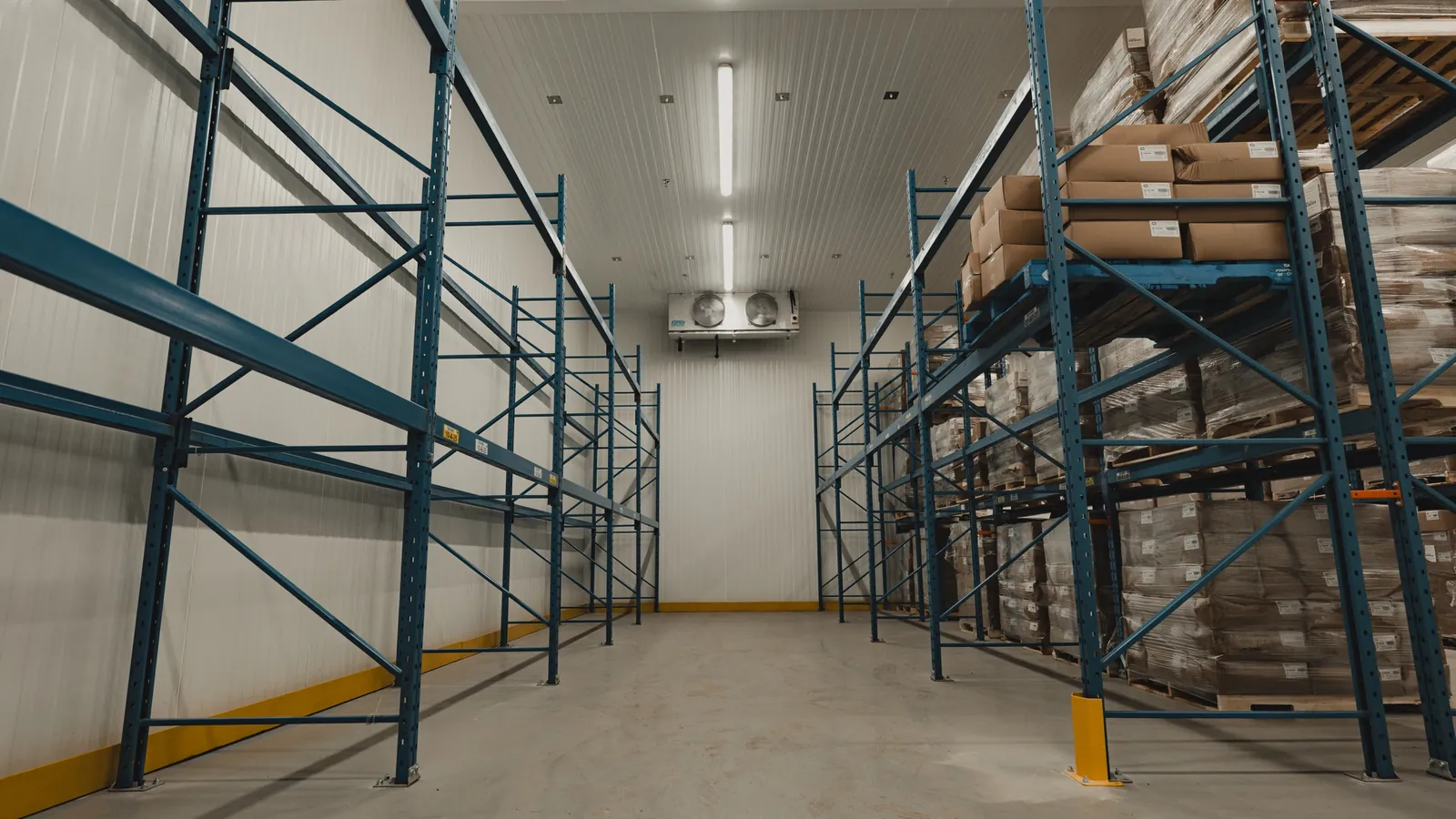
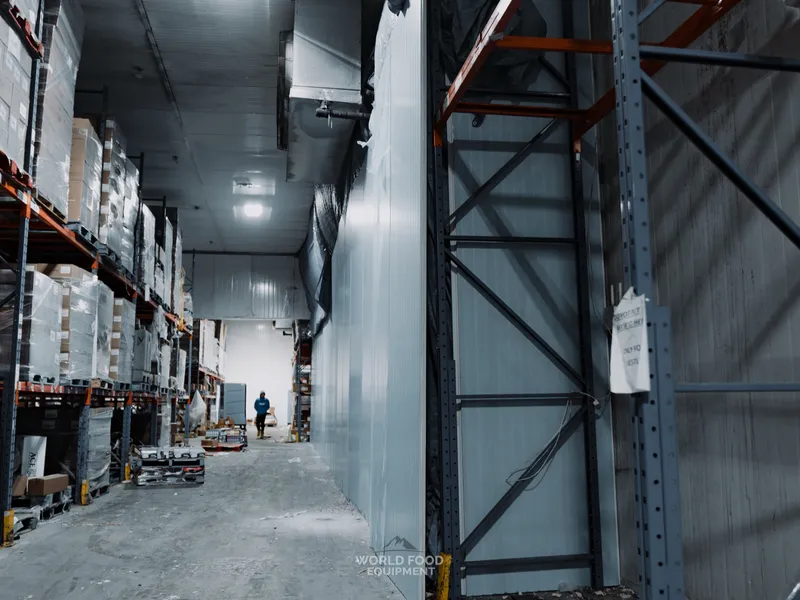
Operational aisle alongside the rebuilt section. Grocery distribution kept running while WFE moved through the next phase.
What's in the Build
Spec'd for the work.
Every component sized for the project's actual load, door-cycle profile, and shift volume. Nothing pulled from a catalogue.
140 ft of freezer wall panels cracking from the base up, with cold air leaking through the failures. Diagnostic visit identified ground movement under the original concrete pad as the root cause. Full wall replacement required, not patch repair.
CJR Grocers could not shut the facility down for the rebuild. WFE sequenced the work so refrigeration on the unaffected sections stayed online and the failed 140 ft section came down and went back up in phases. Cold chain held through every phase of the job.
Failed panels removed in sections. New concrete poured under the failure zone to address the ground shift that had caused the cracking. Foundation rebuilt to support the new wall instead of repeating the original failure mode.
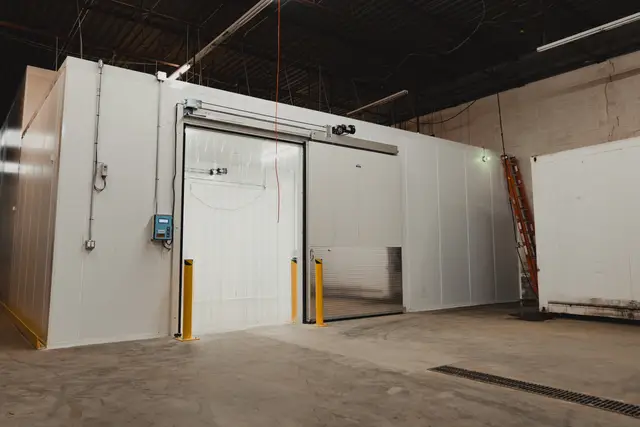
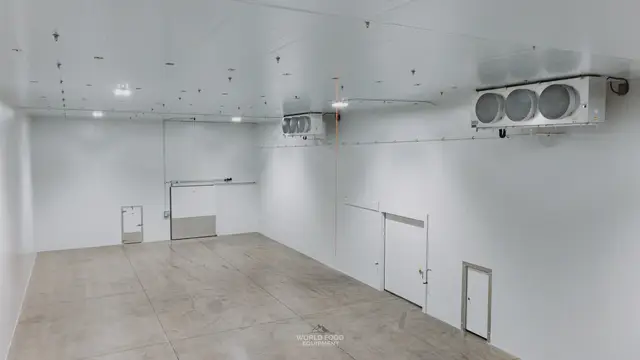
140 ft of new insulated panels set against the rebuilt concrete base. Crew working with scissor lifts and tight access alongside operating grocery infrastructure. Vapor barrier sealed and pressure-checked before the panels closed up.
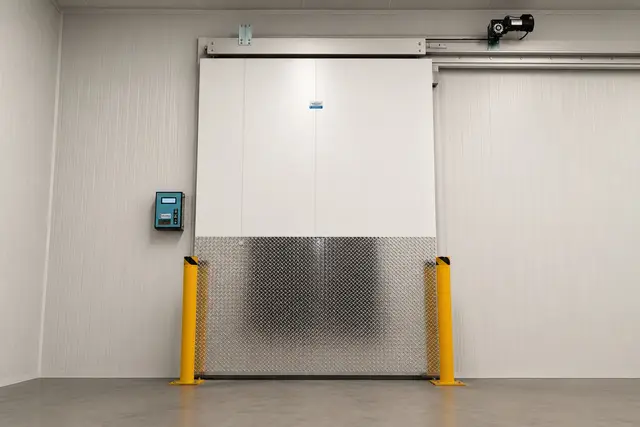
New steel guards installed at the floor line of the rebuilt wall. Protects against routine forklift contact at the base, the impact damage that contributed to the original failure mode. Built so the next ten years of grocery operations do not crack the new wall the way they cracked the old one.
Refrigeration on the rebuilt section isolated during demolition and panel install, then recommissioned cleanly once the new envelope was sealed. Freezer back to spec, cold chain restored across the full envelope, facility never lost a day of grocery operations.
Equipment Sourced From
Manufacturers listed are representative of WFE's standard build kit; exact units sized per project.
Outcome
How it landed.
CJR Grocers stayed open for the full duration of the wall rebuild. 140 ft of new insulated panels installed against a freshly poured concrete base, new steel impact guards at the floor line, refrigeration recommissioned cleanly. The freezer is back to spec, the original failure mode mitigated, and the operator did not lose a day of grocery operations through any of it.
Deep Dive
Everything had to go: panels, concrete, steel guards
A wall failure at this scale is not a patch job. The root cause was under the floor, not in the panels: ground movement under the original concrete pad was cracking the wall from the base up. Patching the panels would have left the foundation problem in place to crack the new wall the same way. So the fix rebuilt from the slab up, new concrete under the failure zone, new insulated panels against the rebuilt base, and steel impact guards at the floor line to take the routine forklift contact that wears a base-of-wall down over time.
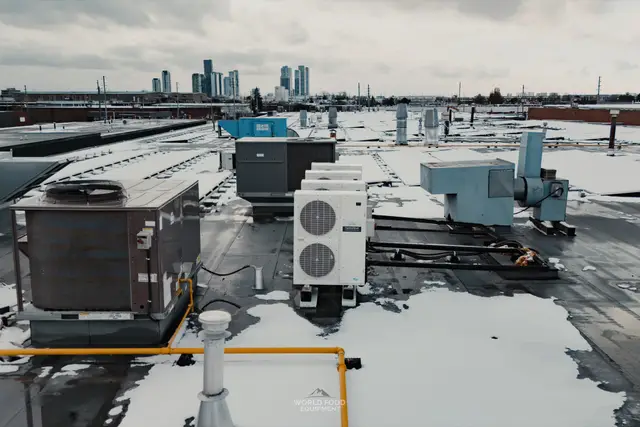
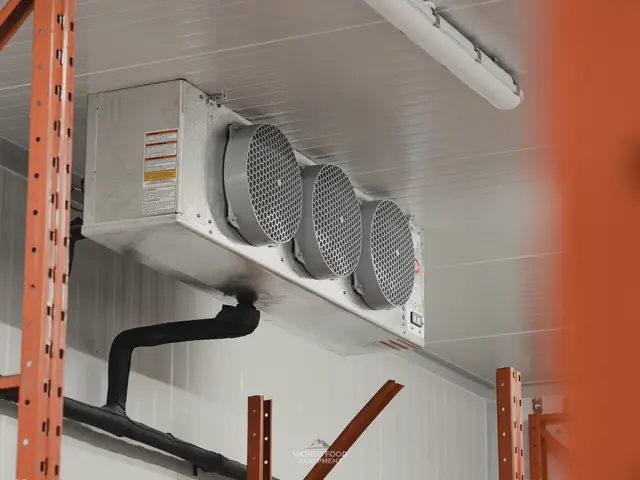
Refrigeration plant detail
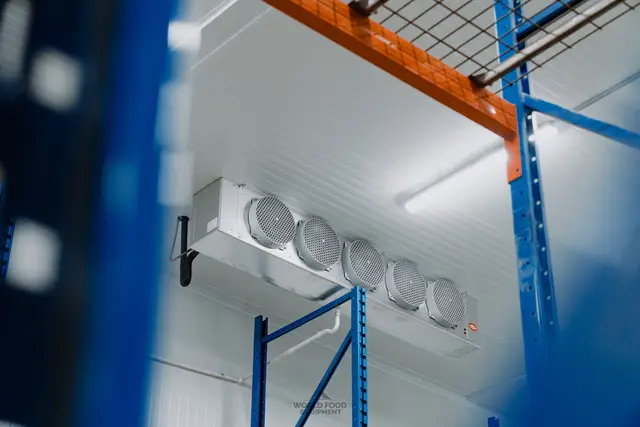
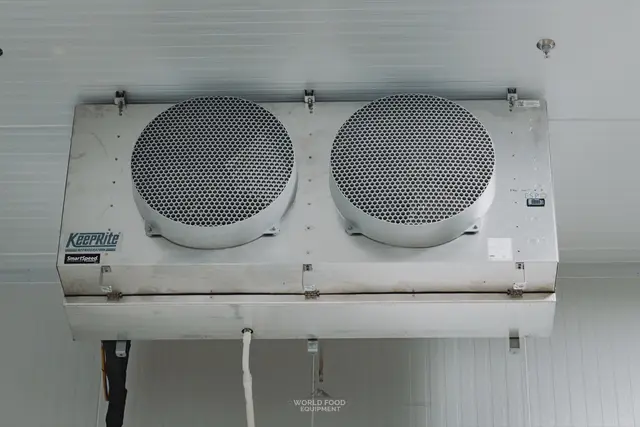
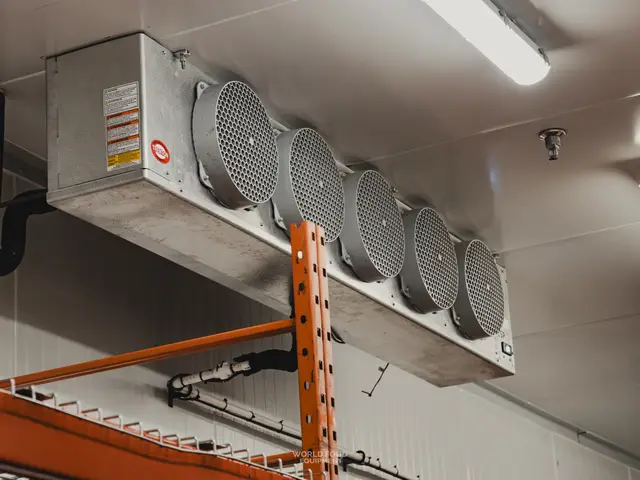
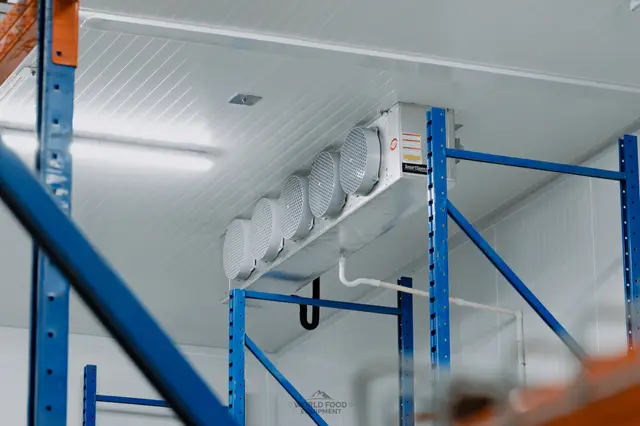
Existing refrigeration plant retained on the operational sections of the CJR envelope. Refrigeration on the rebuilt 140 ft section isolated during demolition and panel install, then recommissioned against the new wall once the envelope was sealed and pressure-tested. No new condensing units or evaporators introduced. The rebuild restored the existing plant to full operating spec.
Project FAQ
01 How did the CJR freezer wall fail?
A 140 ft section of the freezer wall was cracking, with cold air leaking out at the failure points. The root cause was ground movement under the original concrete pad. The slab was shifting, which stressed the insulated panels above it from the base up. Once the panels crack, the vapor barrier breaks and the failure accelerates. By the time WFE was on site the wall section needed full replacement, not patching.
02 Can WFE repair a walk-in freezer while the facility stays open?
Yes, on most failure types. The CJR rebuild was sequenced around live grocery operations: refrigeration on the unaffected sections kept running, the failed wall came down and went back up in phases, and the recommissioned refrigeration brought the rebuilt section back online without forcing the operator to shut the facility down. Whether this approach works depends on the failure scope, how much of the refrigeration plant has to come offline, and whether temporary cold storage is needed to cover product during the work. WFE diagnoses on site before quoting the rebuild approach.
03 What caused the wall failure at CJR — and how was it prevented from repeating?
Ground movement under the original concrete pad. The fix involved pouring new concrete under the failure zone to address the shift, then installing new steel impact guards at the floor line, both to absorb routine forklift contact that contributes to base-of-wall damage over time and to add structural protection against the original failure mode. The rebuilt section is now protected the way it should have been from the start.
This Build Maps To
Service. Market. Coverage area.
Walk-In Cooler Repair or Replace
Decide whether to repair an aging unit or rebuild. CJR's scope was exactly this kind of call.
Service detailGrocery + Retail
Cold storage for grocery distribution and retail operations.
Market detailBrampton
Grocery and halal market density across the 410/407 corridor.
CoverageFree Quote — No Obligation
Get a Quote
Within One Business Day.
Tell us what you need. One of our senior project advisors will personally review your requirements and respond within one business day, with a ballpark number, not a runaround.
Free Site Assessment
We visit your location and measure. No assumptions, no surprises.
In-House Crews Only
Our long-tenured in-house team does the install. No third-party subcontractors.
Custom-Designed to Your Floor Plan
Every unit engineered to your exact dimensions, not pulled from a catalog.
Prefer to talk? Call us directly, answered 24/7:
(289) 813-5293Tell us about your project
We respond within one business day. No spam, no sales pressure.